Understanding mass Math Worksheets for Ages 8-9
3 filtered results
-
From - To
Unlock math mastery with our "Understanding Mass Math Worksheets for Ages 8-9". These expertly designed worksheets help young learners grasp essential concepts of mass and weight through engaging activities. Our exercises are perfect for classroom or home use, ensuring children comprehend units of mass measurement, comparisons, and conversions. Enhance problem-solving skills with real-world examples and playful illustrations that make learning fun and effective. Foster a solid mathematical foundation with our comprehensive resources, tailored to your child's educational needs. Set them on the path to success with Kids Academy’s exceptional math worksheets. Explore today!
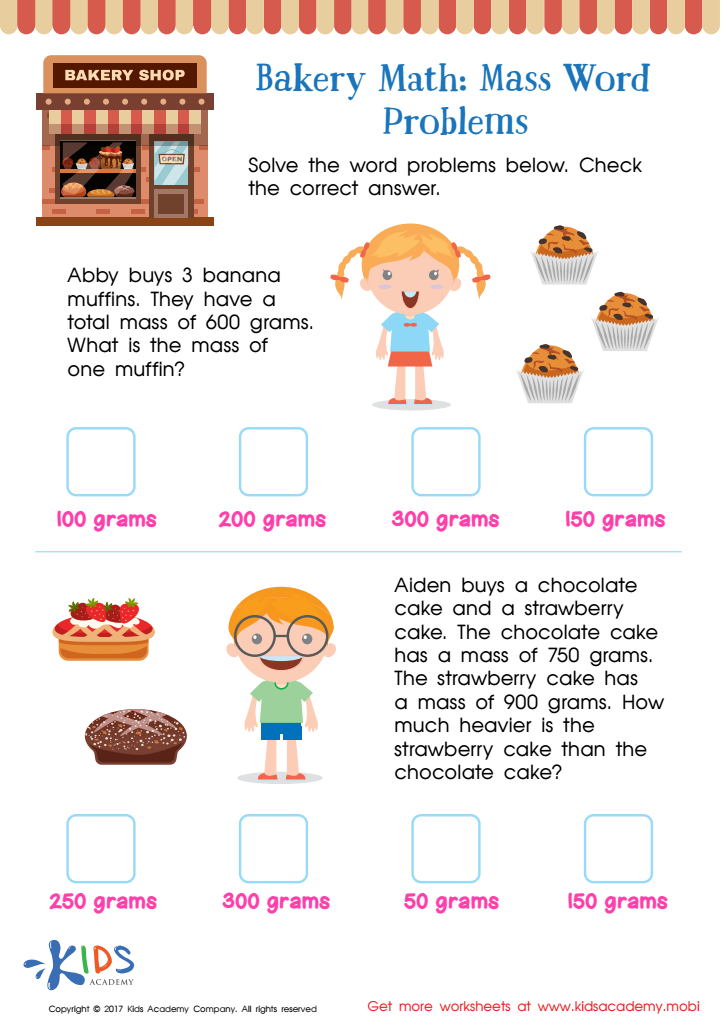
Mass Word Problems Worksheet
 Assign to My Students
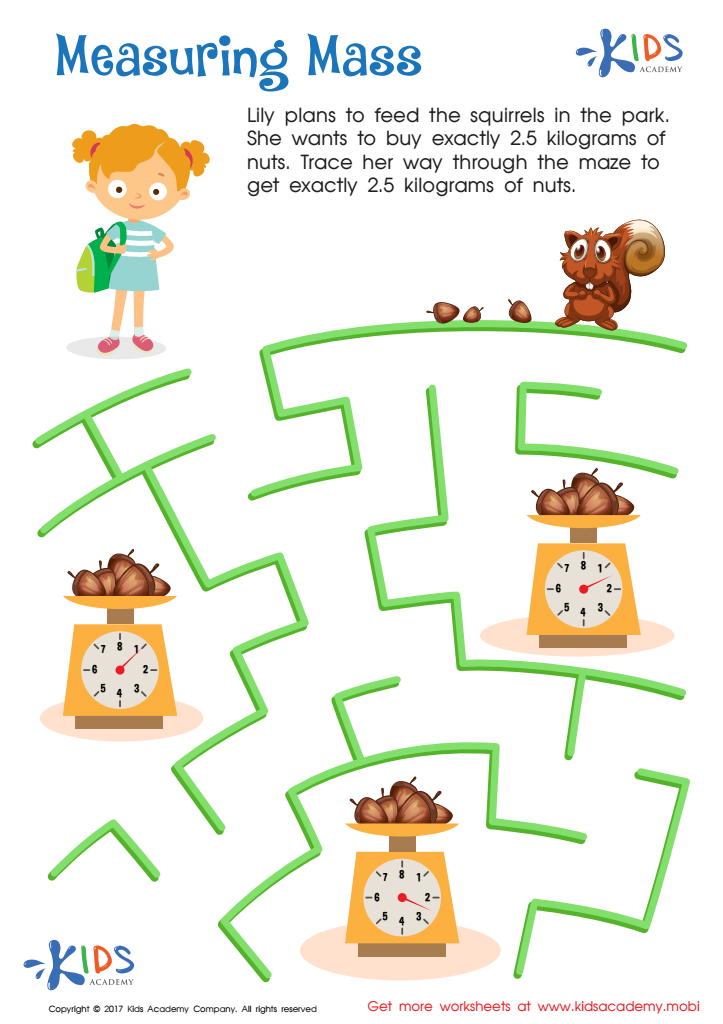
Measuring Mass Worksheet
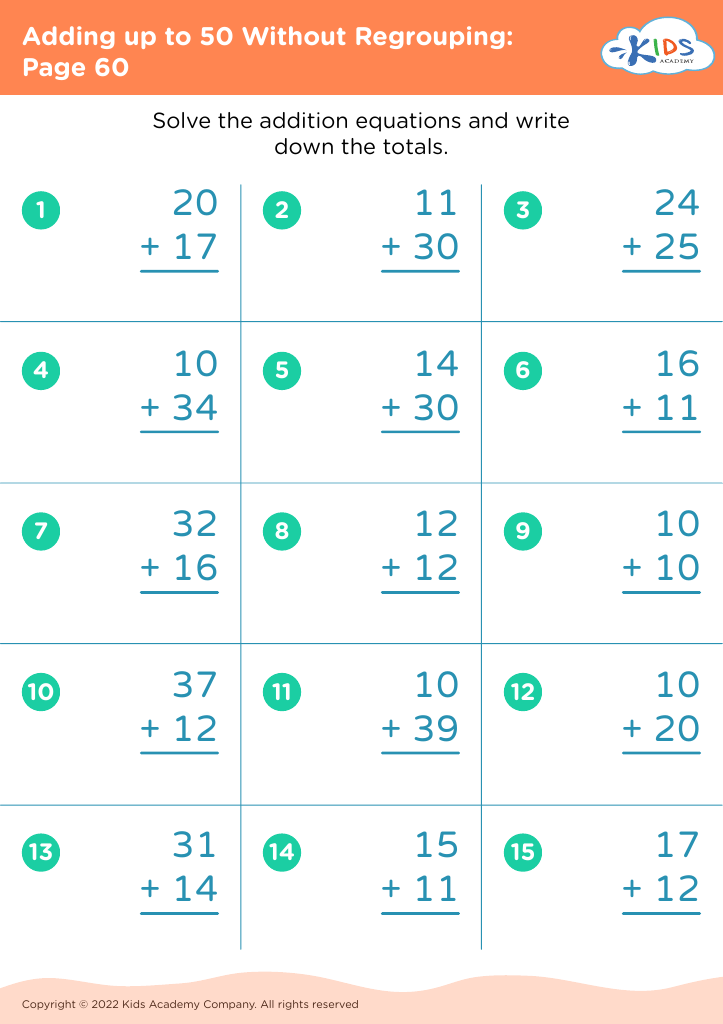








Understanding math concepts at an early age, particularly between the ages of 8-9, is crucial for several reasons. Firstly, foundational math skills act as the building blocks for more advanced mathematical understanding. Learning about mass, for instance, not only familiarizes children with units of measurement but also enhances their ability to solve more complex problems later on.
When children grasp the concept of mass, they begin to develop critical thinking and problem-solving skills. These skills are essential not just in math, but in other subjects and everyday life. Mass measurement supports their learning about attributes of matter and concepts like density, helping them make connections between math and science.
Parents and teachers should also recognize that early competence in math fosters a child's confidence and a positive attitude toward learning. Children who struggle with basic concepts can quickly become discouraged, potentially leading to a longer-term disengagement from the subject.
Finally, today's world increasingly values STEM (Science, Technology, Engineering, and Mathematics) education. Encouraging proficiency in math at a young age opens doors to future academic and career opportunities, setting the foundation for lifelong learning and success. By focusing on these early math concepts, we equip our children with the tools needed for a bright and intellectually fulfilling future.








