Understanding sequencing Math Worksheets for Ages 8-9
7 filtered results
-
From - To
Discover the world of sequencing with our engaging math worksheets designed for children ages 8-9. These worksheets offer a fun and interactive way for young learners to grasp the concept of order. Through a variety of exercises, kids will enhance their critical thinking skills, learn to arrange numbers and events chronologically, and develop a strong foundation for more complex math topics. Each worksheet is tailored to suit multiple learning styles, ensuring that every child finds joy in practicing sequencing. Perfect for both classroom and home use, these resources will make mastering sequencing an enjoyable adventure in learning!
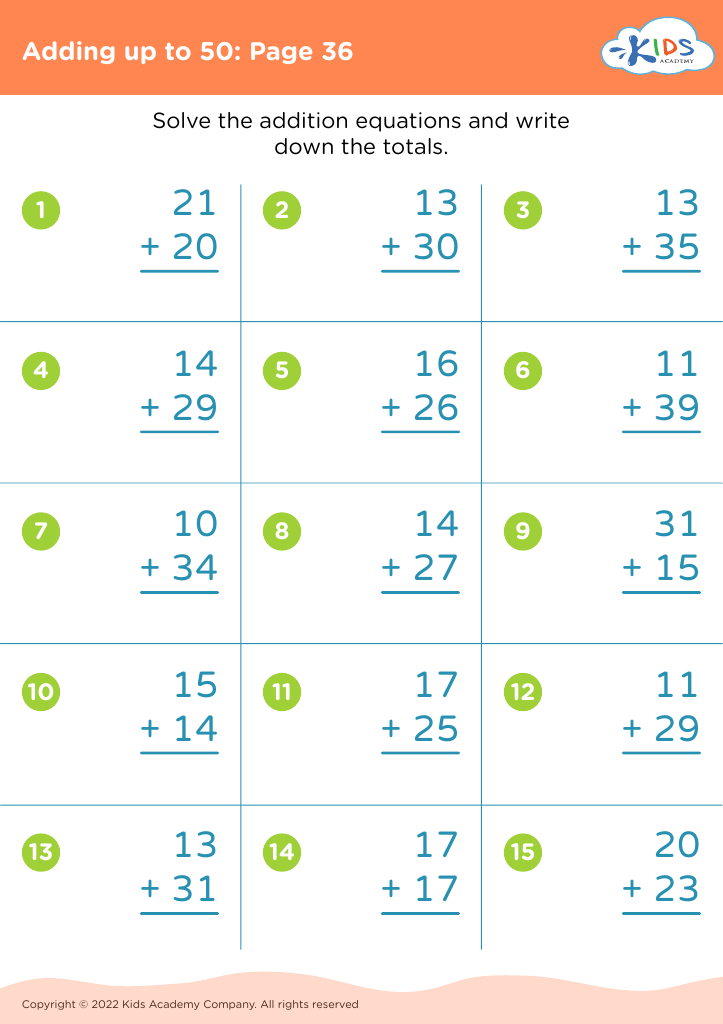
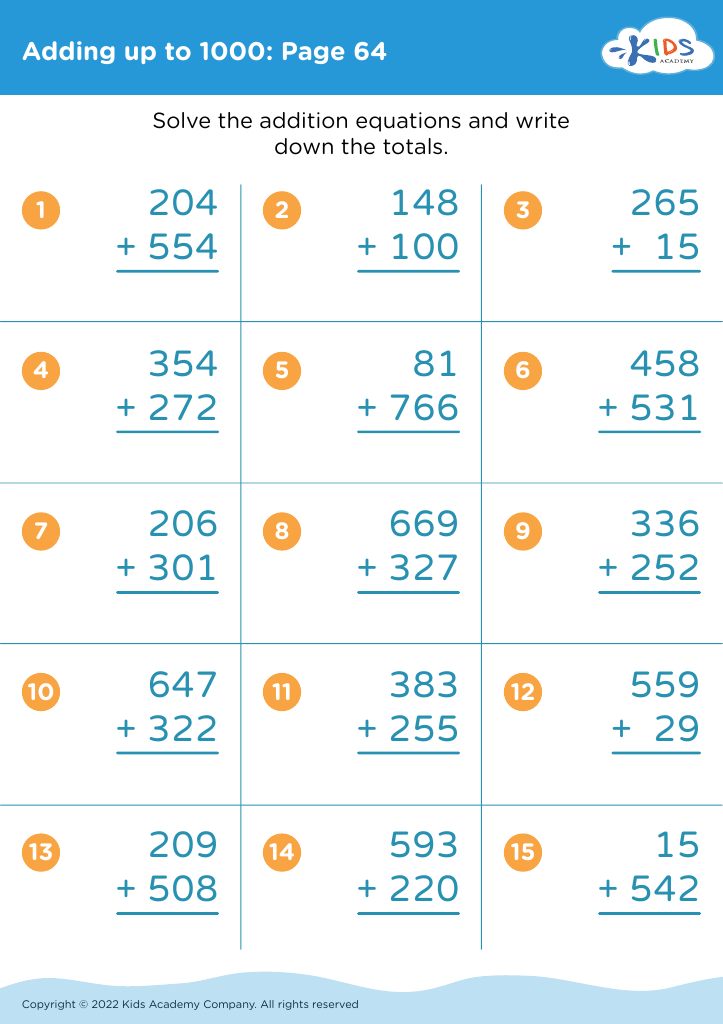
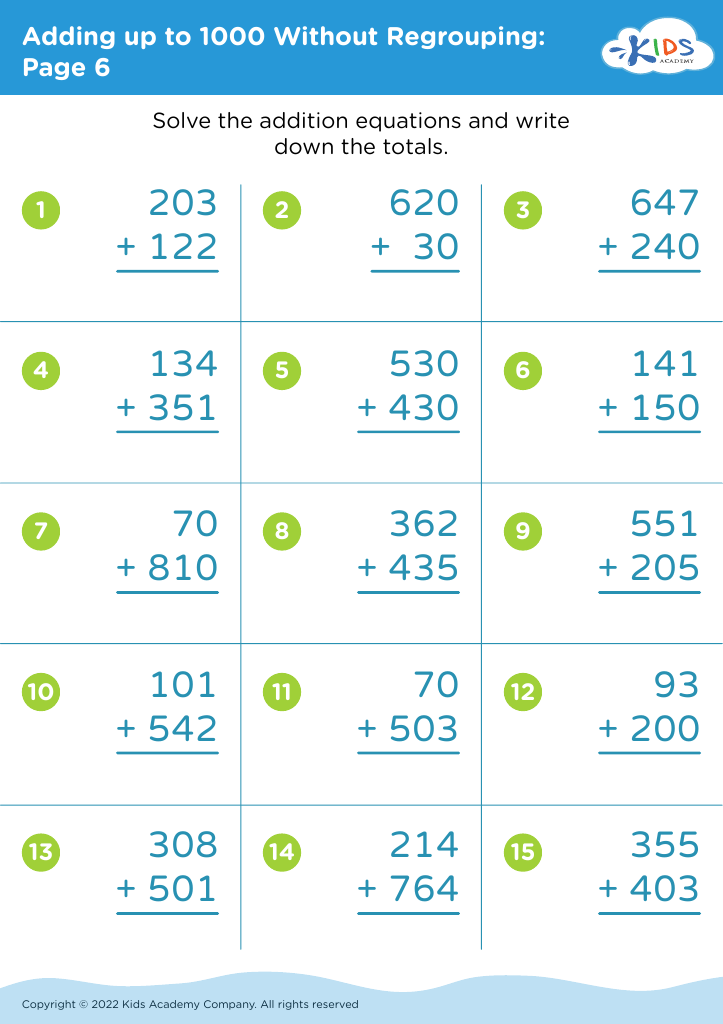
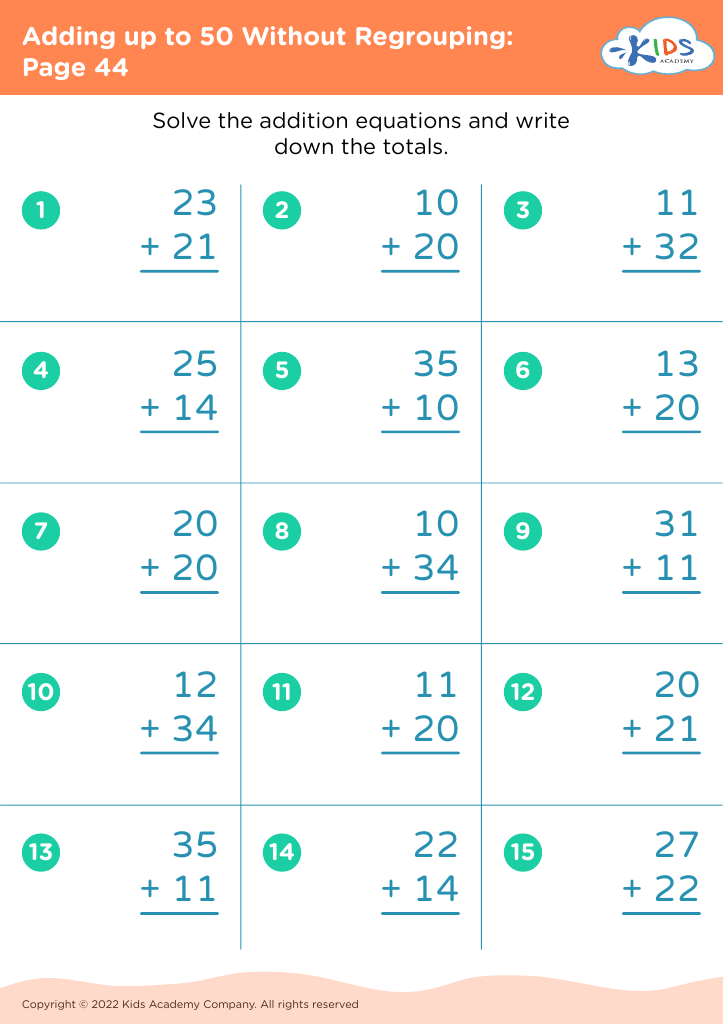








Understanding sequencing in math is crucial for children aged 8-9, as it lays the foundation for their overall mathematical skills. During these formative years, children are transitioning from basic arithmetic to more complex concepts such as multiplication, division, and the beginnings of algebra. Sequencing helps them recognize patterns, a skill vital for problem-solving and logical reasoning.
By grasping the concept of sequencing, children learn how to follow a set of steps to arrive at a solution. This ability to organize information and think critically is not only essential in mathematics but also in everyday scenarios and future academic pursuits. For parents and teachers, encouraging mastery of sequencing can create confident learners who approach challenges with a growth mindset.
Moreover, sequencing is linked to other subjects, such as reading and science, allowing for interdisciplinary learning. When children understand how to sequence, they can apply the same reasoning to timelines in history or steps in scientific experiments. By supporting their grasp of sequencing, parents and teachers invest in a pivotal skill that cultivates a well-rounded education, ultimately guiding children toward greater achievement and independence in their learning journeys.








