Visual perception improvement Math Worksheets for Ages 8-9
3 filtered results
-
From - To
Boost your child's visual perception skills with our engaging Math Worksheets designed for ages 8-9! These printable resources specifically target essential visual processing abilities, enhancing your child's ability to quickly and accurately interpret visual information. By solving a wide variety of math problems and puzzles, students will strengthen their spatial awareness, pattern recognition, and attention to detail—all crucial skills for academic success. Each worksheet is crafted to ensure enjoyable learning experiences while promoting analytical thinking. Perfect for homeschooling or supplementary practice, these worksheets will help shape confident, capable learners. Discover the joy of math with our interactive visual perception improvement materials today!
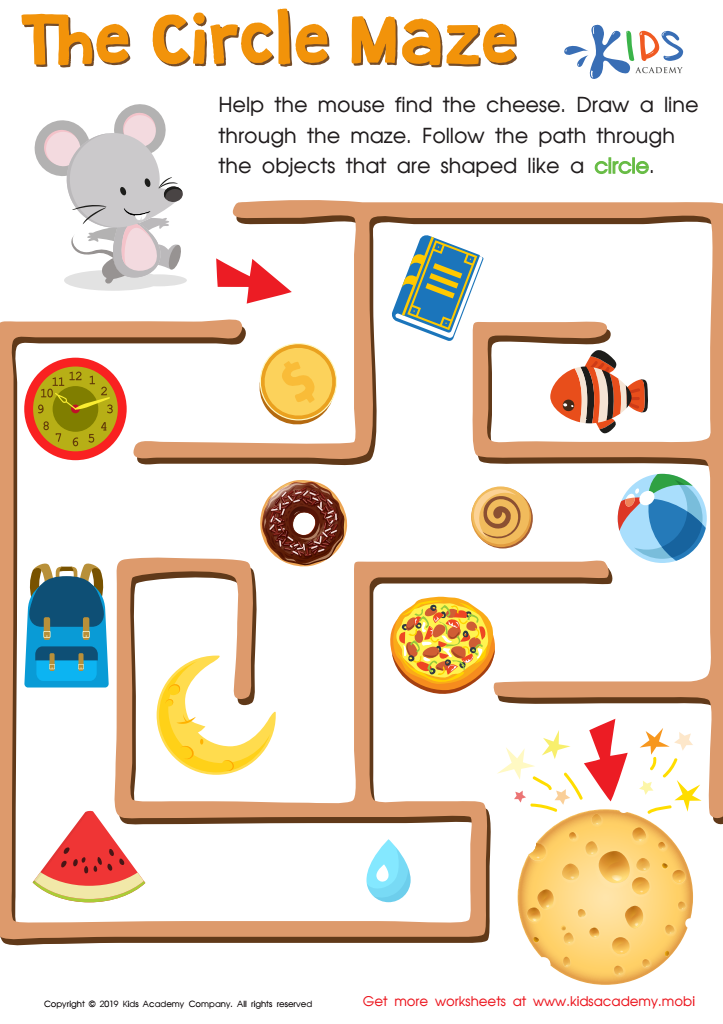
The Circle Maze Worksheet
 Assign to My Students








Visual perception is a crucial skill that significantly impacts a child's ability to grasp mathematical concepts, particularly for ages 8-9. At this developmental stage, children often engage with complex visual elements in math, such as graphs, geometric shapes, and graphs. Improved visual perception skills enable students to accurately interpret and understand these elements, leading to enhanced problem-solving abilities and a deeper comprehension of mathematical relationships.
Parents and teachers should care about visual perception in math because it serves as a foundation for not only math skills but also lifelong learning. When children can easily interpret visual information, they develop crucial skills such as spatial awareness and critical thinking. These abilities are essential in various fields, from engineering to art.
Moreover, children who struggle with visual perception may face challenges in math that can negatively impact their confidence and motivation. By prioritizing visual perception improvement, parents and educators can foster a more supportive learning environment, helping children to overcome these challenges and achieve greater success in math. Ultimately, focusing on visual perception can lead to enhanced academic performance, increased self-esteem, and a more positive attitude towards learning, setting the stage for future educational achievements.








