Rounding numbers Rounding Worksheets for Ages 8-9
6 filtered results
-
From - To
Help your 8-9-year-olds master the essential skill of rounding numbers with our engaging Rounding Worksheets! Designed to enhance their math proficiency, these printable activities offer fun and interactive exercises tailored specifically for third-graders. Kids will learn to round numbers to the nearest ten, hundred, and beyond, boosting their confidence in handling larger numbers and preparing them for more complex math concepts. Each worksheet combines practical examples and colorful visuals to make learning enjoyable. Perfect for classroom use or at-home practice, these worksheets lay a solid foundation for your child's future mathematical success. Explore now!
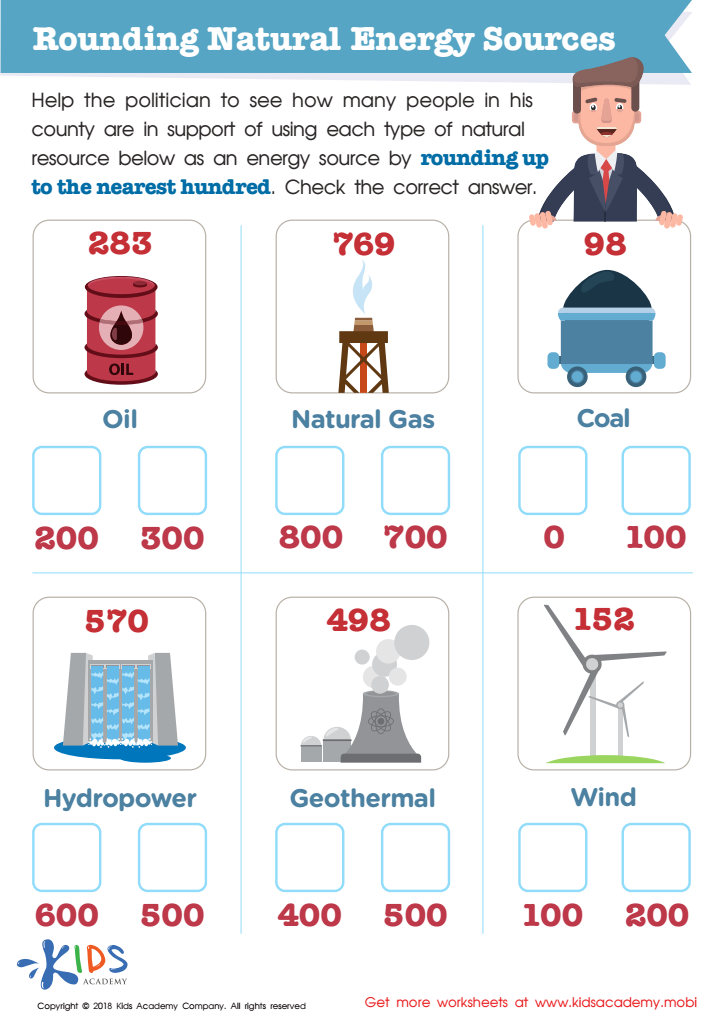
Rounding Natural Energy Sources Worksheet
 Assign to My Students
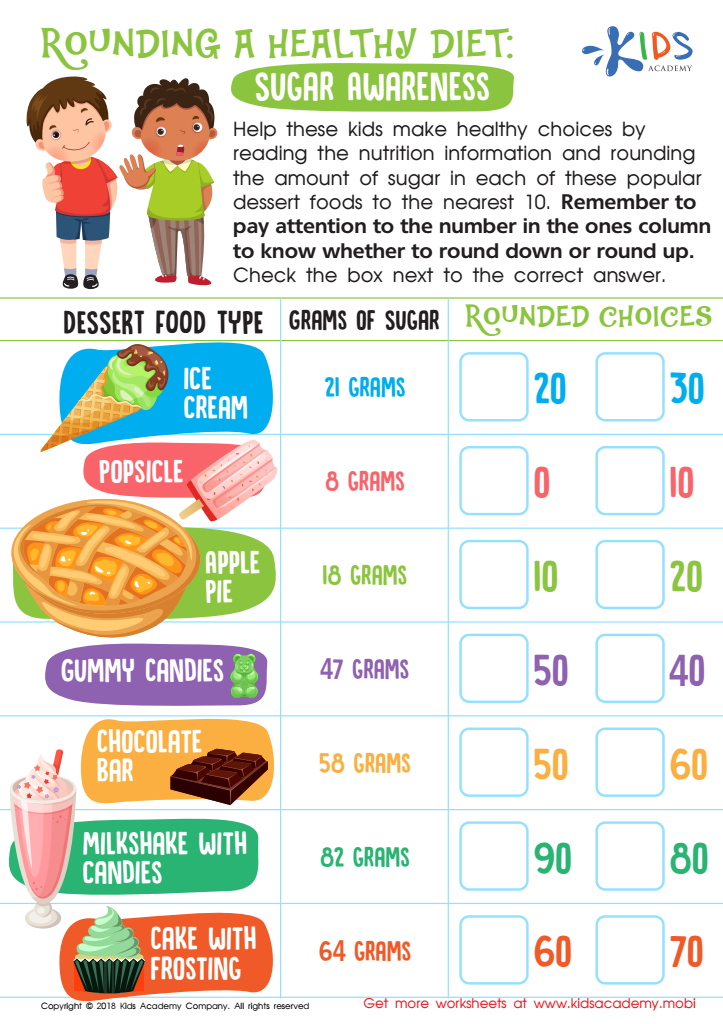
Rounding Healthy Diet Worksheet
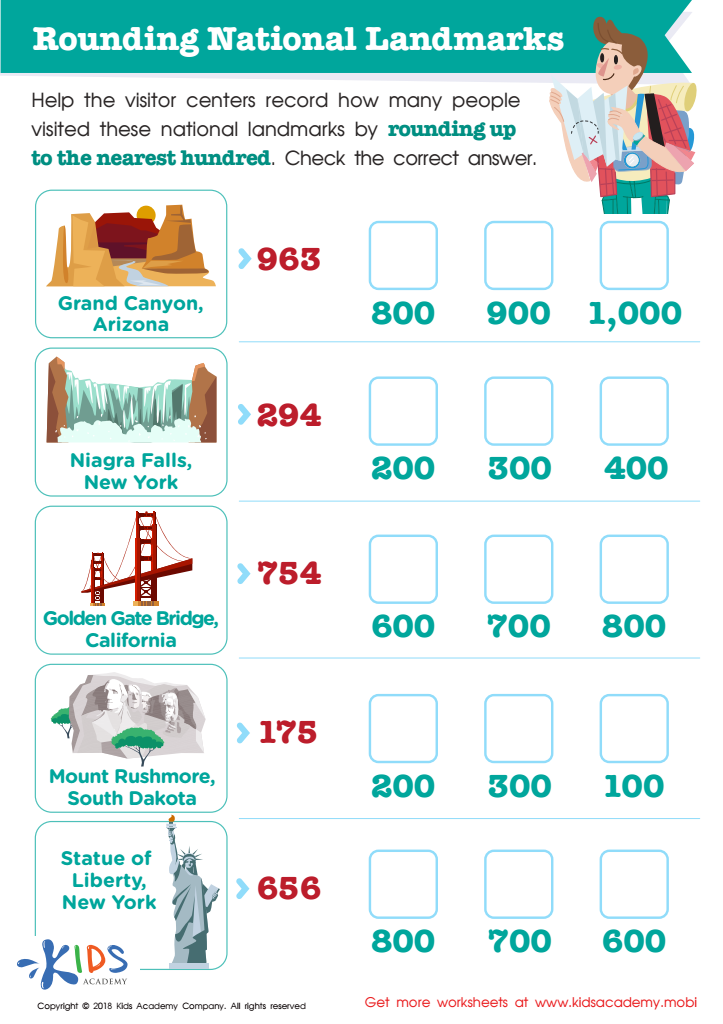
Rounding National Landmarks Worksheet
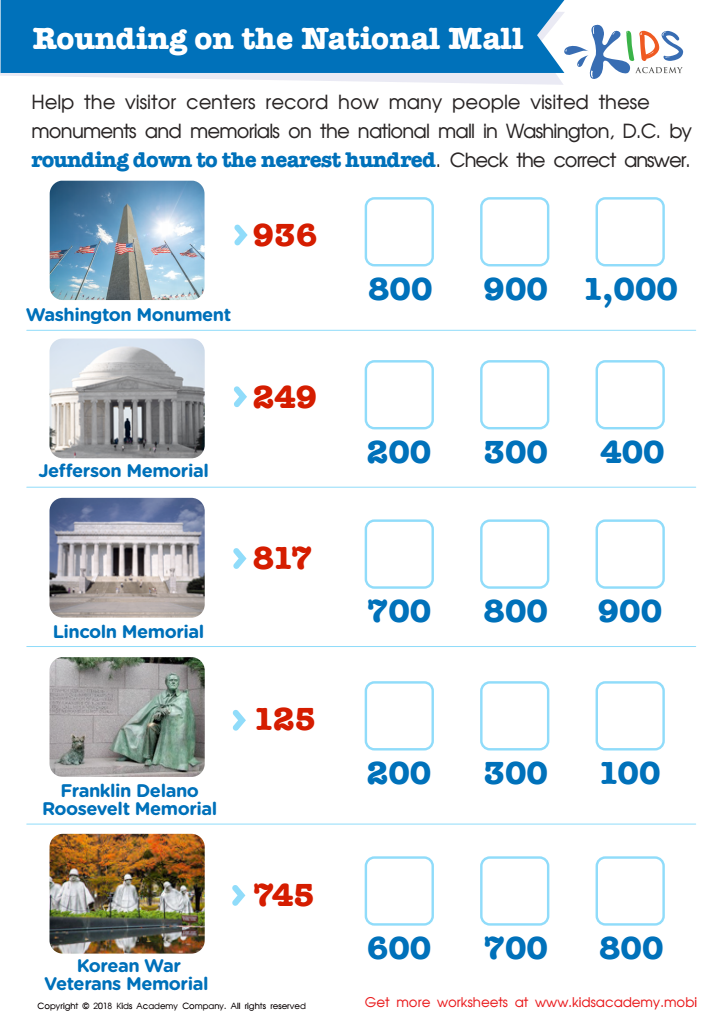
Rounding on the National Mall Worksheet
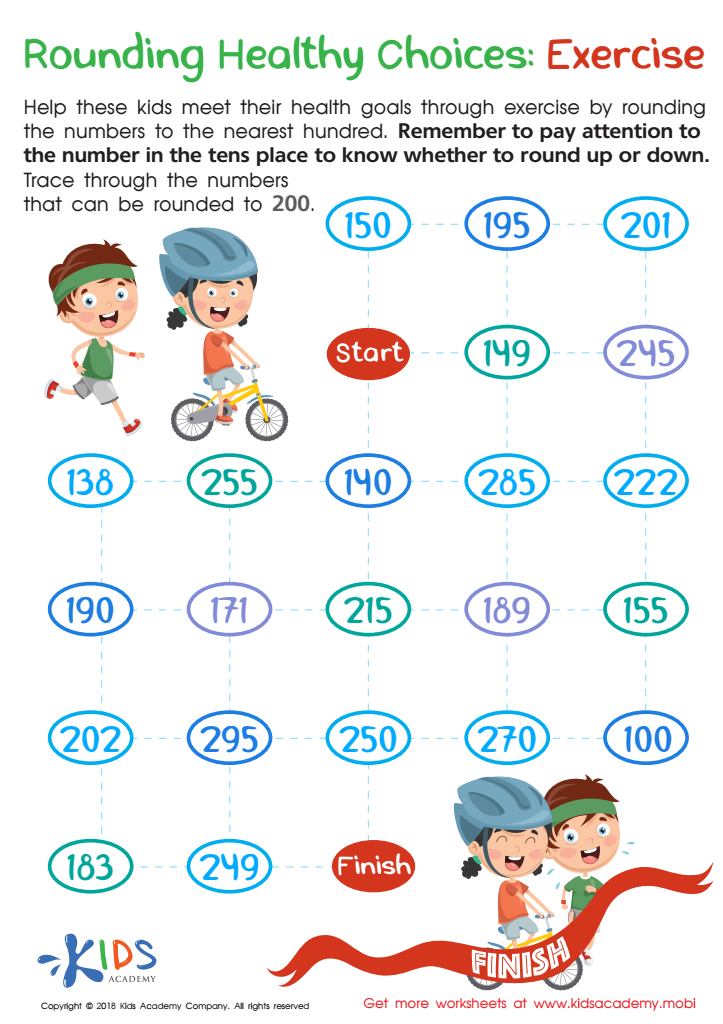
Rounding Healthy Choices Exercise Worksheet
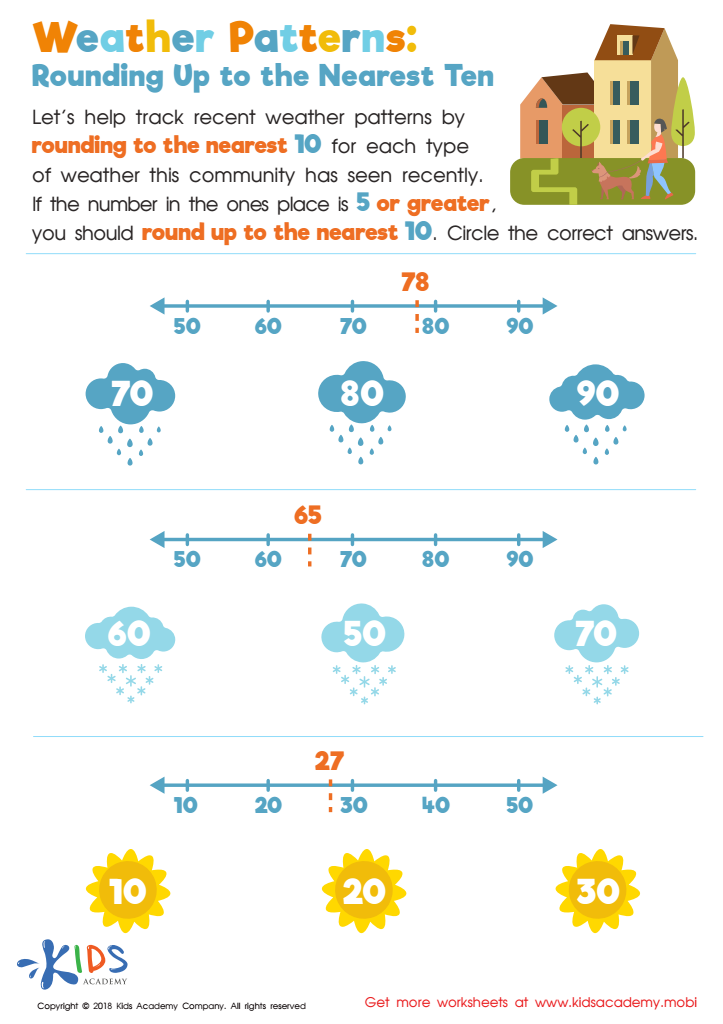
Weather Patterns Worksheet






Rounding numbers is an essential skill for children aged 8-9 as it builds a strong mathematical foundation and nurtures critical thinking. Parents and teachers should care about this skill because it helps students estimate and simplify numerical information, making day-to-day tasks more manageable. For instance, when shopping, rounding allows children to quickly approximate the total cost, fostering a practical understanding of money management. This, in turn, enhances their ability to budget and make informed financial decisions.
Additionally, rounding aids in grasping more complex mathematical concepts. It links to place value understanding and serves as a stepping stone for operations like addition, subtraction, multiplication, and division, where estimating intermediate steps can speed up problem-solving. By mastering rounding, students boost their confidence in handling numbers, leading to greater success in mathematics.
Furthermore, developing this skill fosters analytical thinking. It teaches kids to discern essential information and make judgments about the significance of numbers based on context, enhancing their problem-solving abilities. Attentive guidance from parents and teachers in learning and practicing rounding equips children with lifelong skills, crucial for academic growth and everyday decision-making, such as estimating distances, understanding statistics in media, or comparing quantities in various situations. Hausd With consistent support, children gain both competence in math and practical life competence, readying them for future challenges.








