Problem-Solving Skills Two-step Word Problems Worksheets for Ages 8-9
12 filtered results
-
From - To
Enhance your child's critical thinking with our engaging Two-step Word Problems Worksheets designed specifically for ages 8-9. These printable worksheets focus on developing essential problem-solving skills by guiding young learners through a variety of real-world scenarios that require two-step calculations. Each worksheet not only challenges students to think critically and analyze information but also supports their understanding of addition, subtraction, multiplication, and division. With clear instructions and enjoyable examples, kids will gain confidence in their math abilities while discovering the joy of learning through problem-solving. Perfect for both classroom activities and at-home practice, these worksheets foster a strong mathematical foundation.
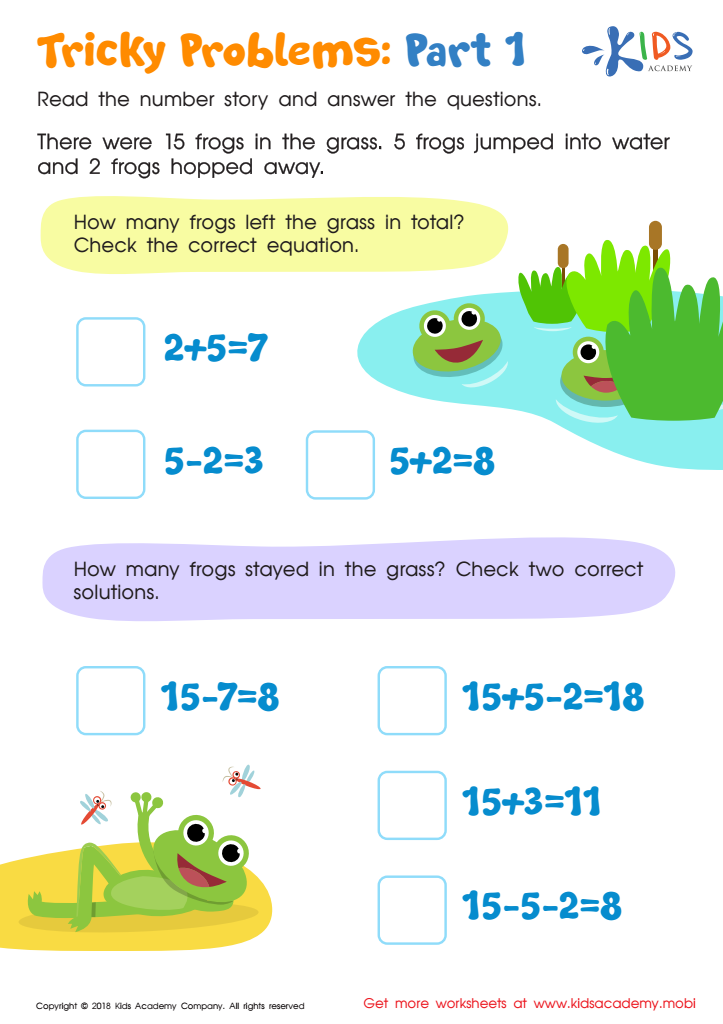
Tricky Problems Worksheet: Part 1
 Assign to My Students
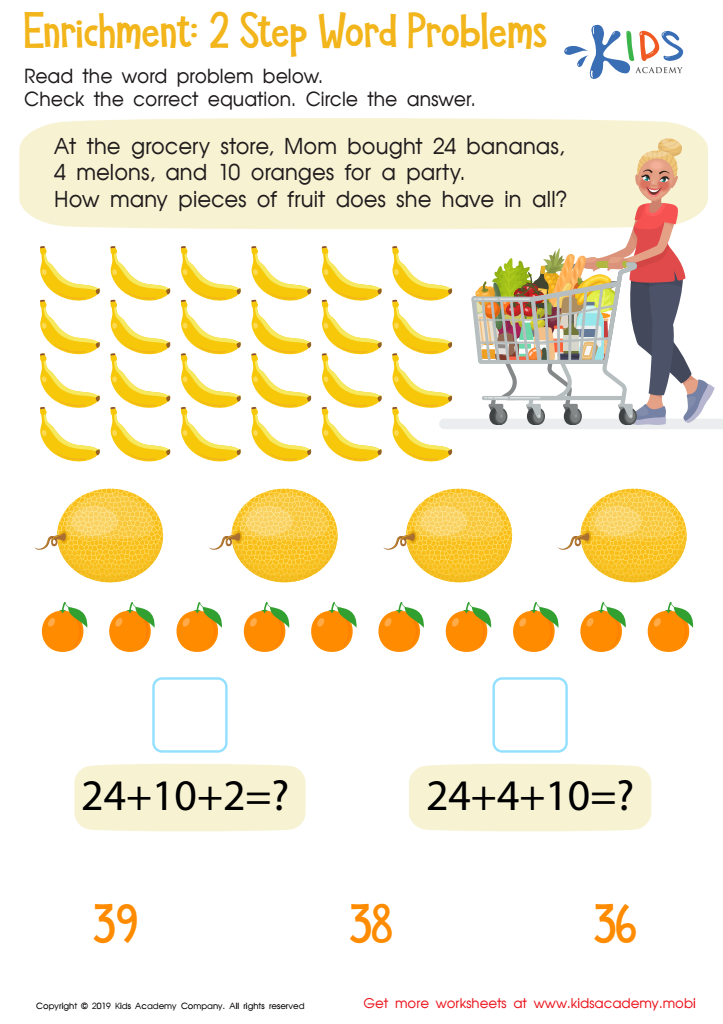
Enrichment -2 Step Word Problems Worksheet
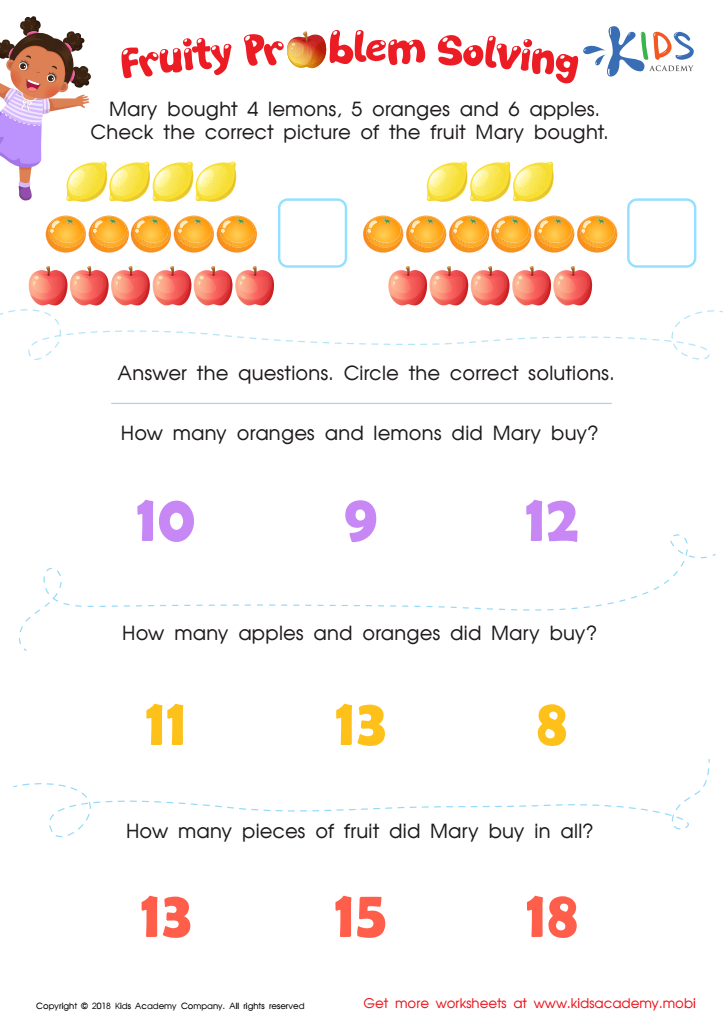
Fruity Problem Solving Worksheet
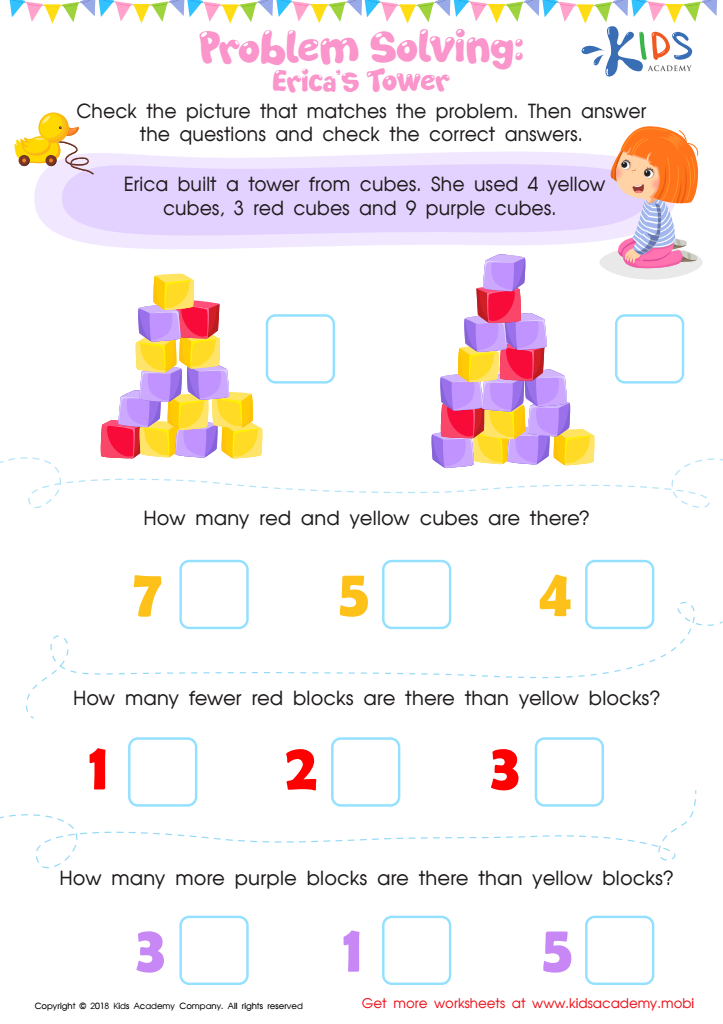
Problem Solving: Erica's Tower Worksheet
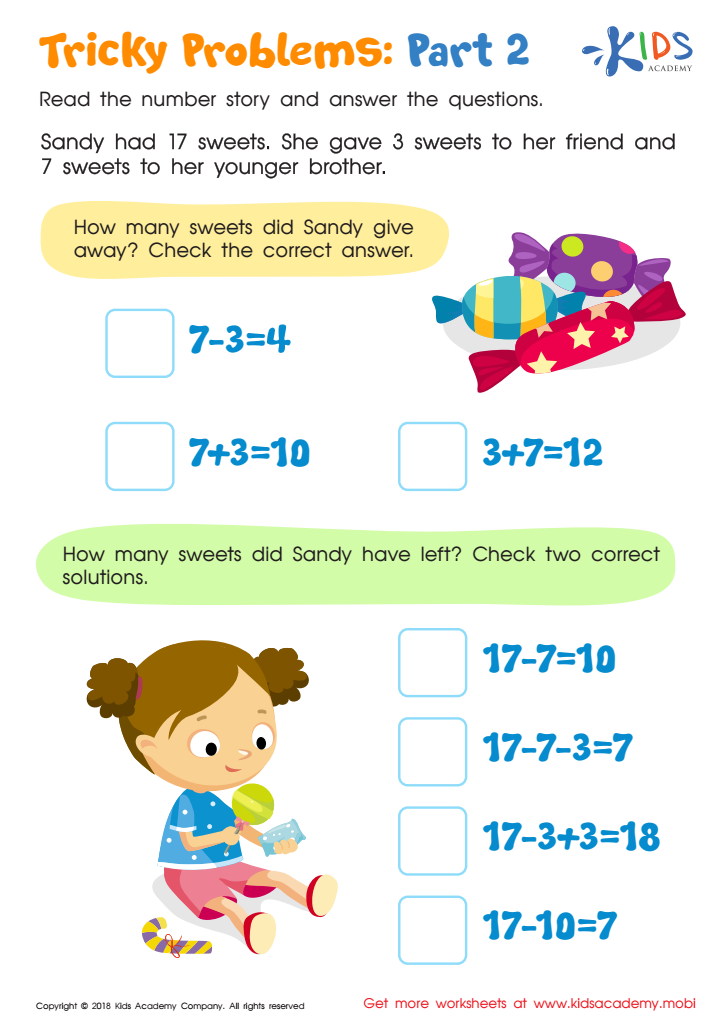
Tricky Problems Worksheet: Part 2
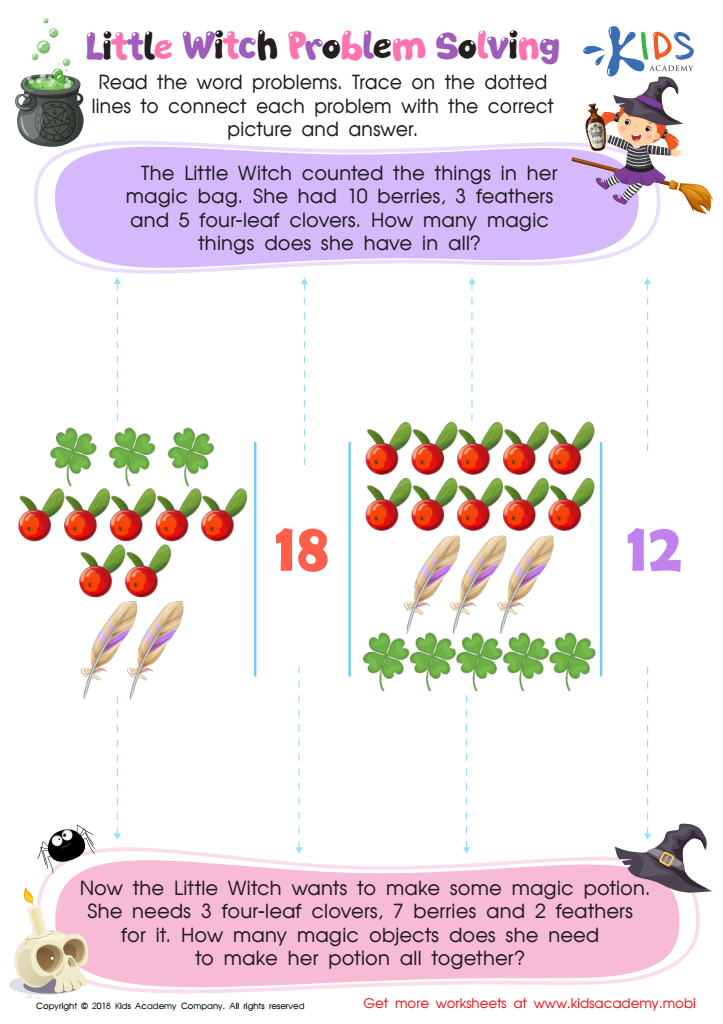
Little Witch Problem Solving Worksheet
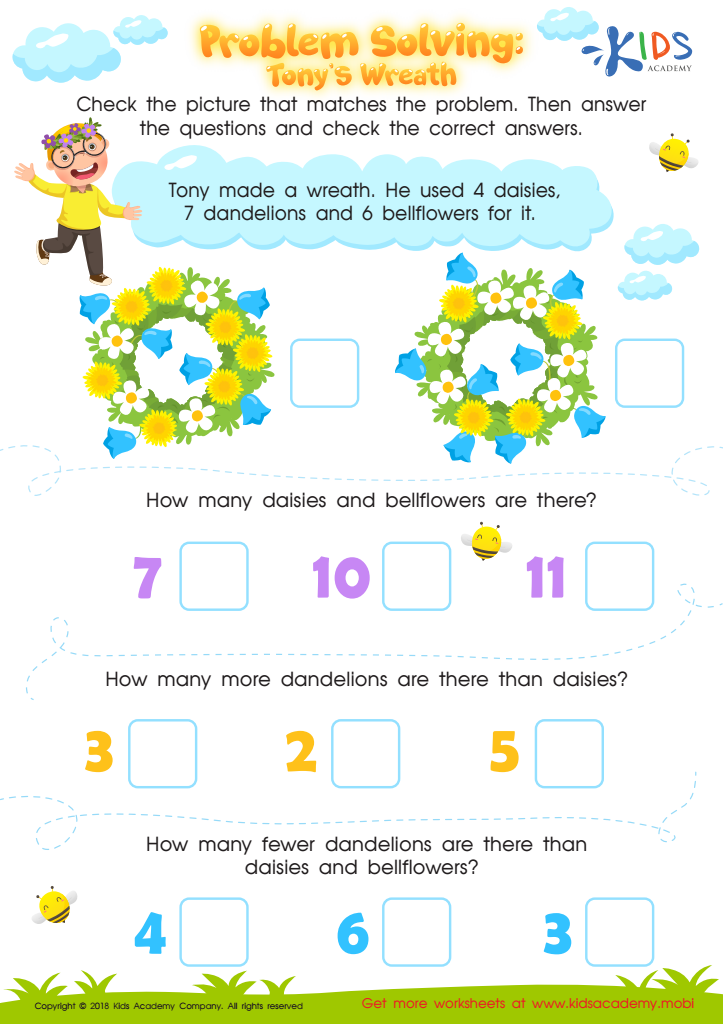
Problem Solving: Tony's Wreath Worksheet
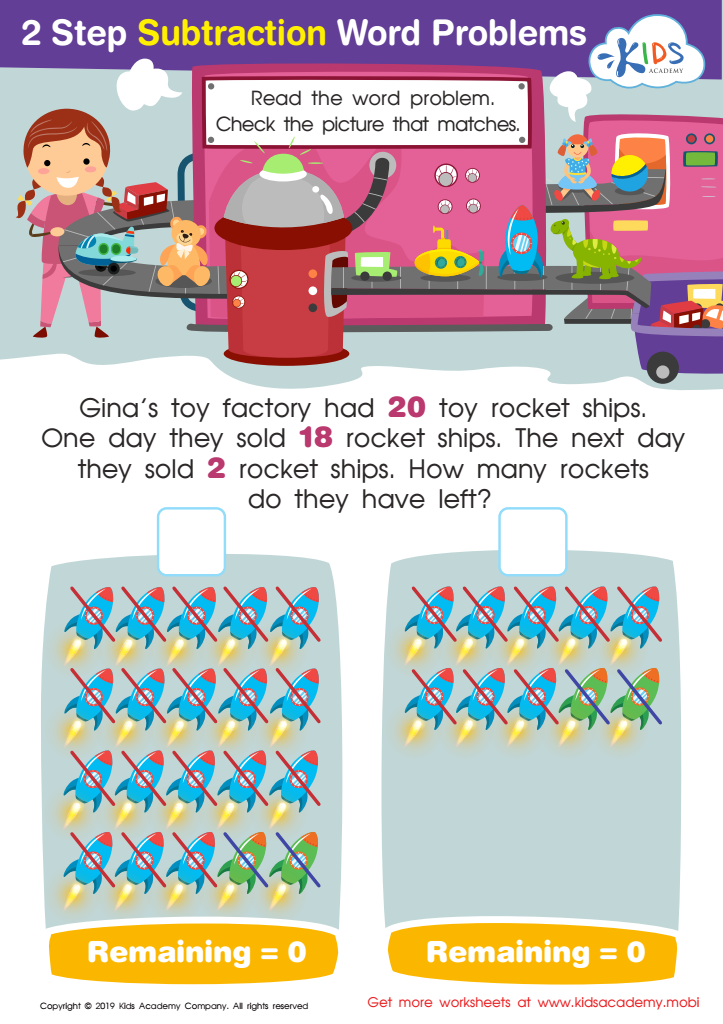
Step Subtraction Word Problems Worksheet
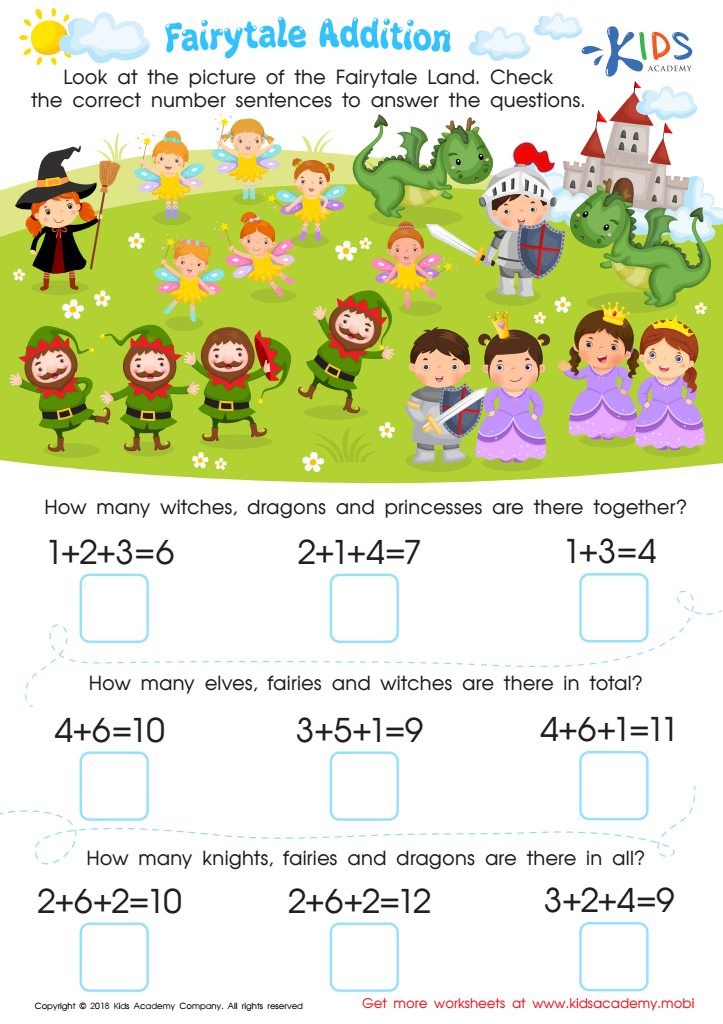
Fairytale Addition Worksheet
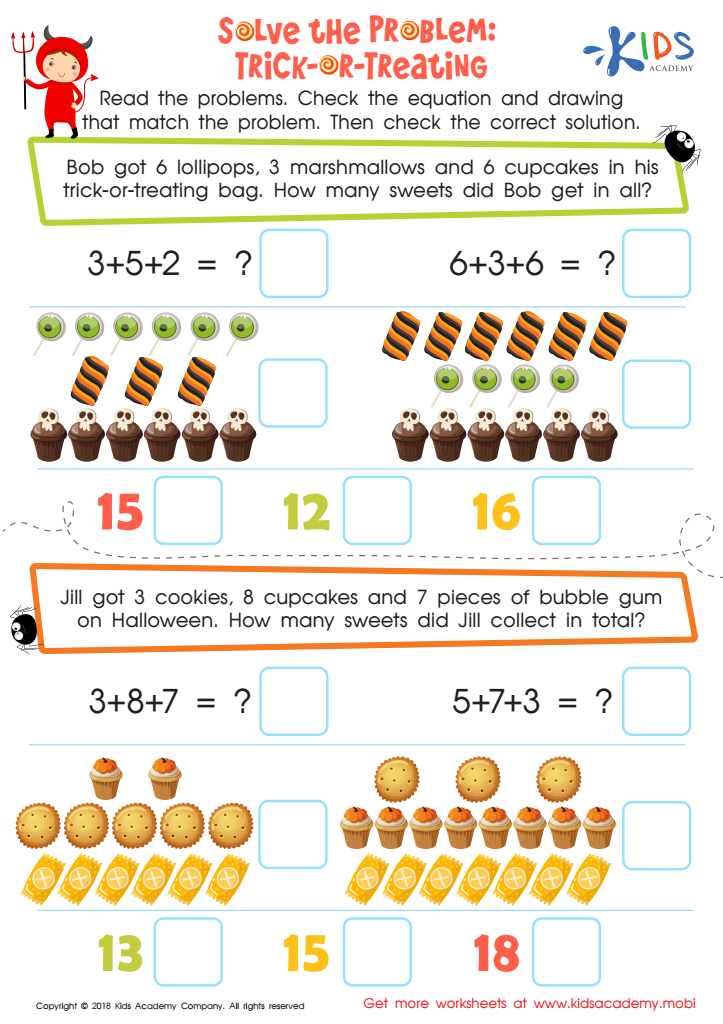
Solve the Problem: Trick–or–treating Worksheet
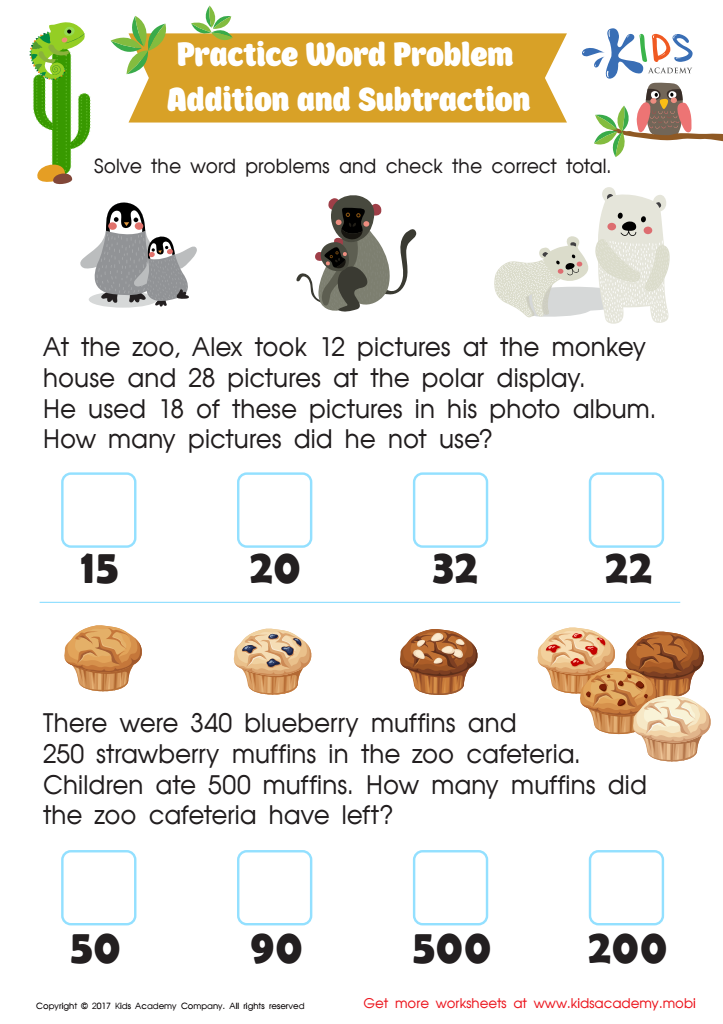
Addition and Subtraction: Word Problems Worksheet
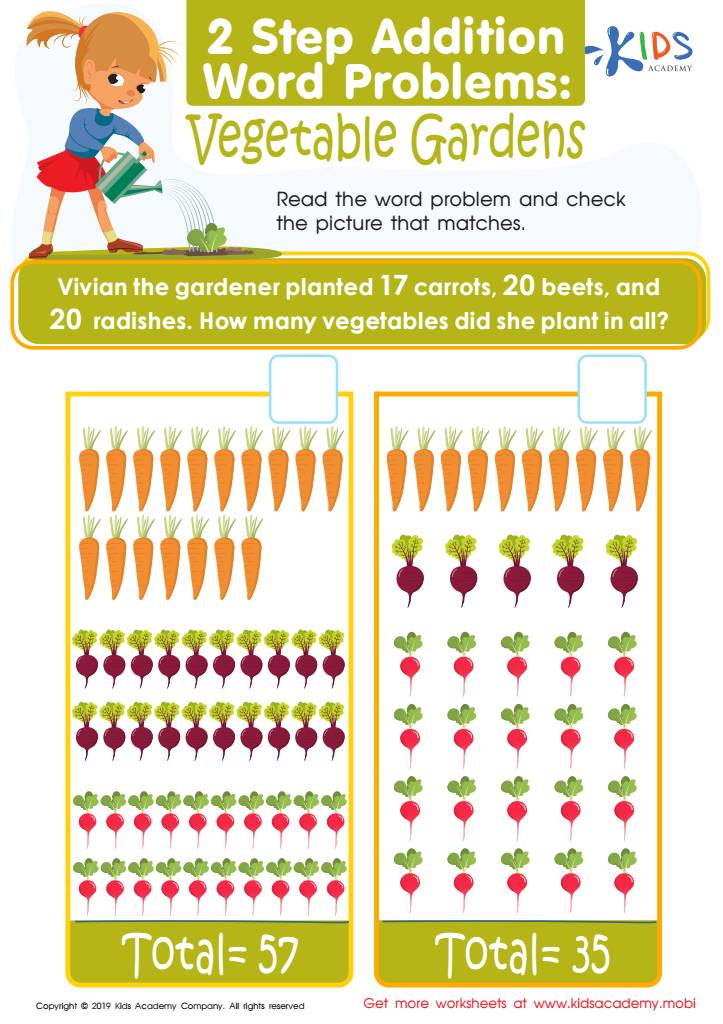
Vegetable Gardens Worksheet



Problem-solving skills, particularly in the context of two-step word problems, are essential for children aged 8-9 as they provide a foundation for critical thinking and mathematical reasoning. At this age, students are transitioning from basic arithmetic to more complex problem-solving tasks. These two-step problems encourage children to read carefully, analyze the information presented, and extract pertinent data to arrive at a solution.
When parents and teachers emphasize the importance of these skills, they help foster perseverance and resilience in students. Encountering and overcoming challenges in problem-solving reinforces a growth mindset—teaching children that effort and strategy lead to success. Additionally, mastering these skills equips students with abilities that extend beyond mathematics; they will encounter multi-step challenges in science, technology, and everyday life.
Moreover, strong problem-solving skills can build confidence in learners, making them more willing to tackle difficult concepts in the future. As learners develop proficiency across various subjects, they’ll appreciate that problem-solving is a valuable, transferable skill. Thus, investing time and resources to promote two-step word problem-solving not only benefits students academically but also prepares them for life’s complexities, fostering well-rounded individuals equipped for the future.