
Phonics practice Building Vocabulary Worksheets for Ages 8-9
3 filtered results
Difficulty Level
Grade
Age
-
From - To
Subject
Activity
Standards
Enhance your child's reading skills with our Phonics Practice Building Vocabulary Worksheets tailored for ages 8-9. These engaging worksheets are designed to bolster phonics comprehension, expand vocabulary, and improve reading fluency. Each activity aims to make learning enjoyable while reinforcing essential reading concepts. Perfect for classroom use or extra practice at home, these worksheets cater to a variety of learning styles, ensuring every child has the tools they need to succeed. Dive into our dynamic collection to support your child's literacy journey and watch their confidence soar as they master new words and phonics rules.
Favorites
With answer key
Interactive
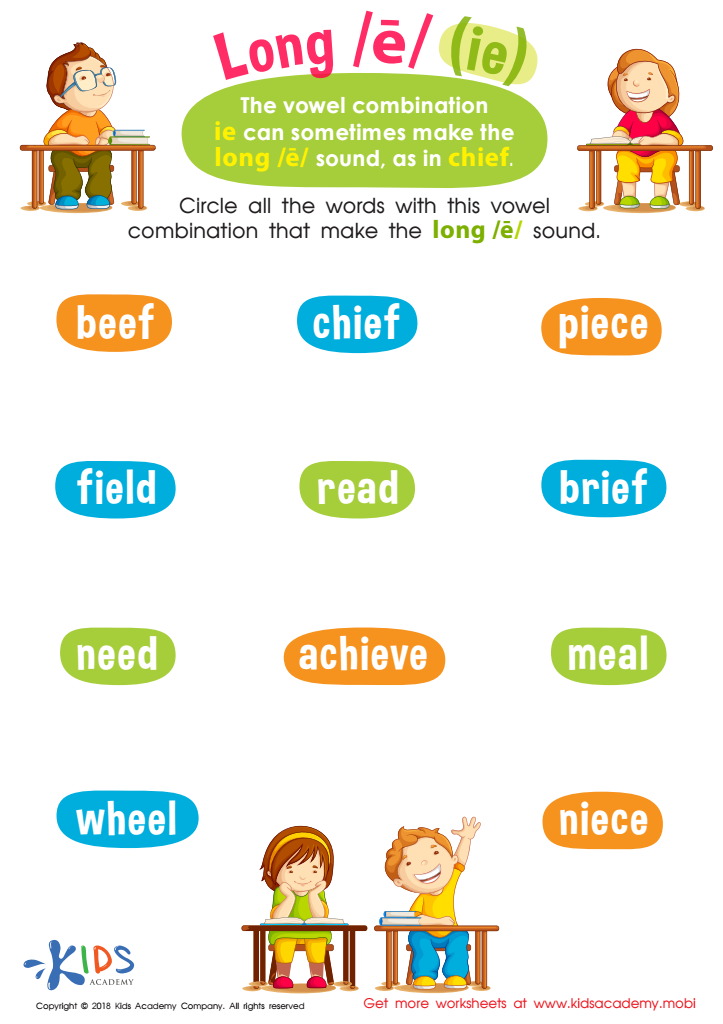
Reading: Long E and IE Worksheet
Ask your child to name some words with the long /e/ sound they hear every day. Then, read aloud all the words in the worksheet with them. Ask them to circle the words containing ie that make this sound.
 Assign to My Students
Reading: Long E and IE Worksheet
Worksheet











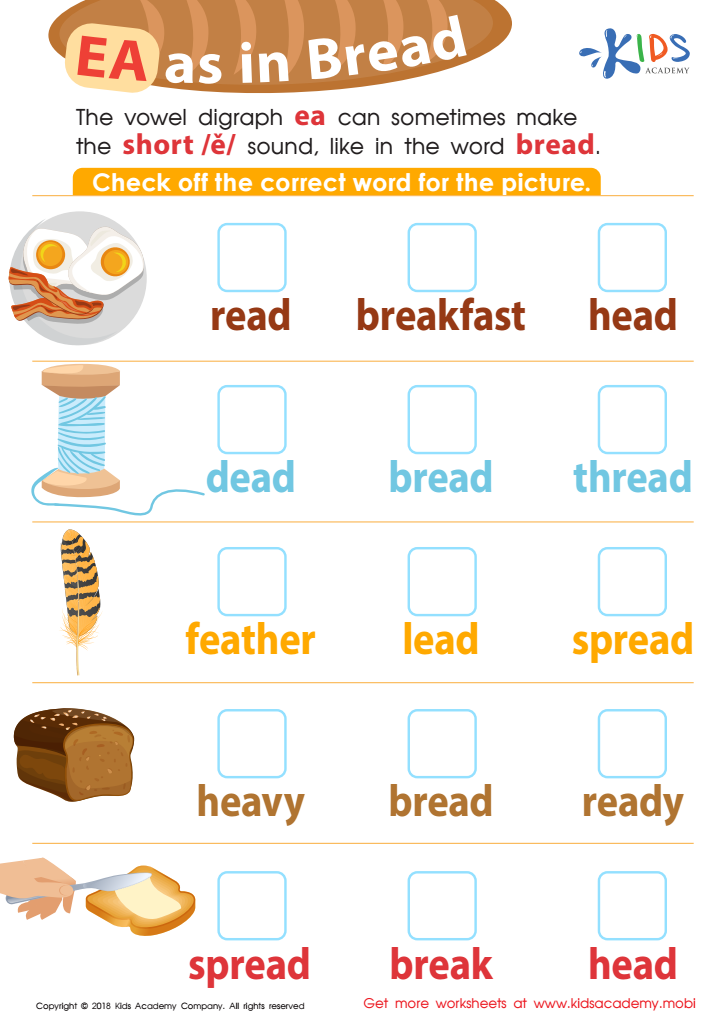
Reading: EA as in Bread Worksheet
The vowel digraph ea can be read in two ways. Examples of the long sound are "read" and "lead"; examples of the short sound are "bread" and "head". Ask your kids to give you more examples and then have them check off the correct word for the pictures on this worksheet. This will help them understand the ea sound.
Reading: EA as in Bread Worksheet
Worksheet
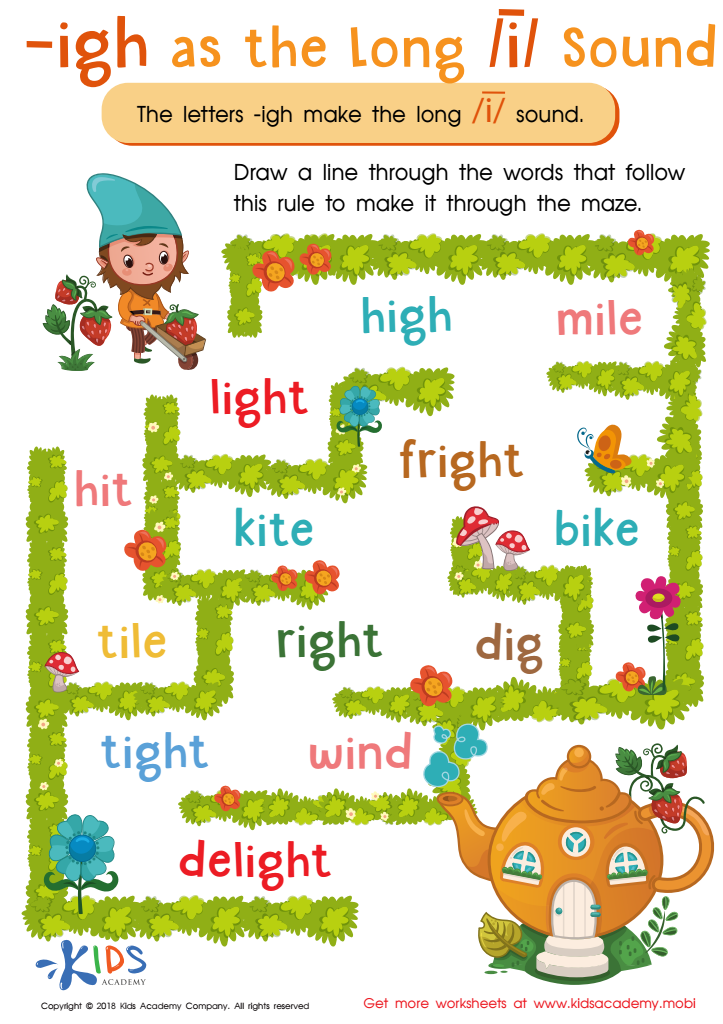
Reading: IGH as Long I Worksheet
Kids can have fun and learn with this maze! They'll look for and read words with the 'long I' sound spelled 'igh'. Most words ending with 'T' have this spelling. Decode words while learning about long vowel sounds and their spellings.
Reading: IGH as Long I Worksheet
Worksheet
Join Kids Academy for Free
Who is primarily going to use this learning content?






.jpg)

Phonics practice and vocabulary building are crucial components of literacy development for children ages 8-9, often referred to as early middle graders. At this stage, phonics practice helps children solidify their understanding of the relationship between letters and sounds, which is essential for decoding words. As they encounter more complex texts, being proficient in phonics enables them to read fluently and with greater comprehension.
Building a robust vocabulary is equally important. A rich vocabulary encourages children to understand and express themselves more accurately and confidently. When children know more words, they are better equipped to grasp nuanced meanings in various subjects, thereby enhancing their academic performance across the curriculum. Moreover, a strong vocabulary fosters social communication skills, which are vital for building relationships and engaging effectively in the classroom and beyond.
Engaging in regular phonics and vocabulary activities can also make learning enjoyable and foster a love for reading. This, in turn, supports continuous learning and intellectual curiosity. By prioritizing these practices, parents and teachers can help children overcome language barriers, reduce frustration in reading tasks, and build a solid foundation for their future academic and personal success.








