Contextual understanding Reading Worksheets for Ages 8-9
6 filtered results
-
From - To
Unlock your child's reading potential with our Contextual Understanding Reading Worksheets designed for ages 8-9! These engaging worksheets help young learners improve their comprehension skills by focusing on the importance of context in determining the meaning of words and phrases. Activities include reading passages followed by questions that challenge students to think critically about the text and derive meaning from context clues. Ideal for both classroom and home learning, these worksheets make reading fun while reinforcing essential skills. Enhance your child's ability to understand and interpret texts with our easy-to-use, printable resources tailored specifically for this age group!
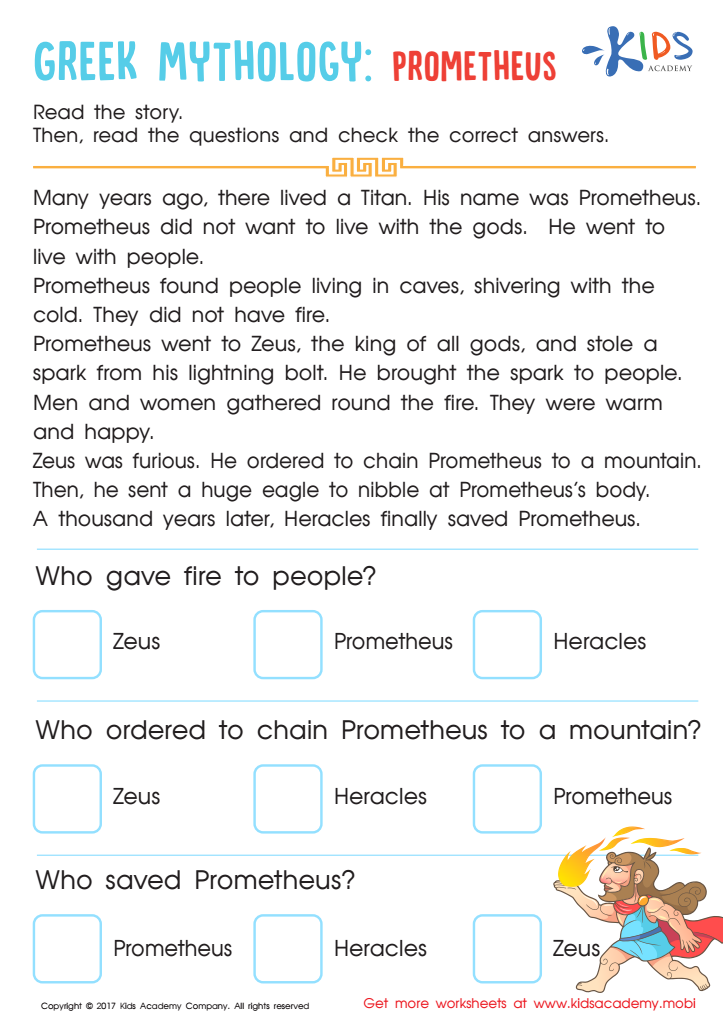
Prometheus Story Worksheet
 Assign to My Students
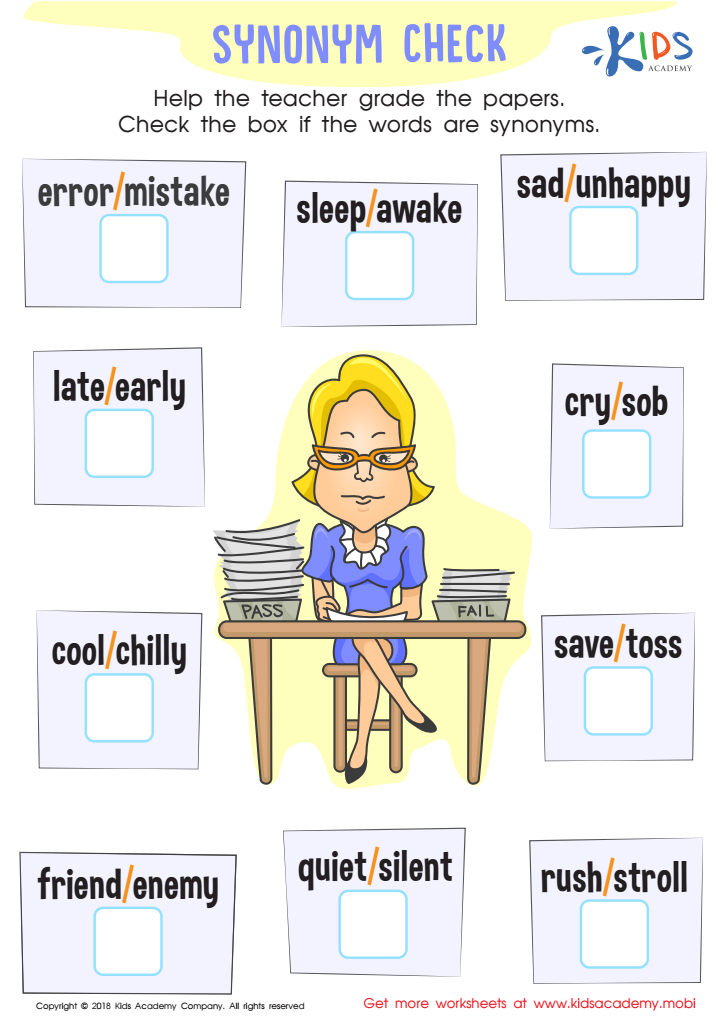
Synonym Check Worksheet
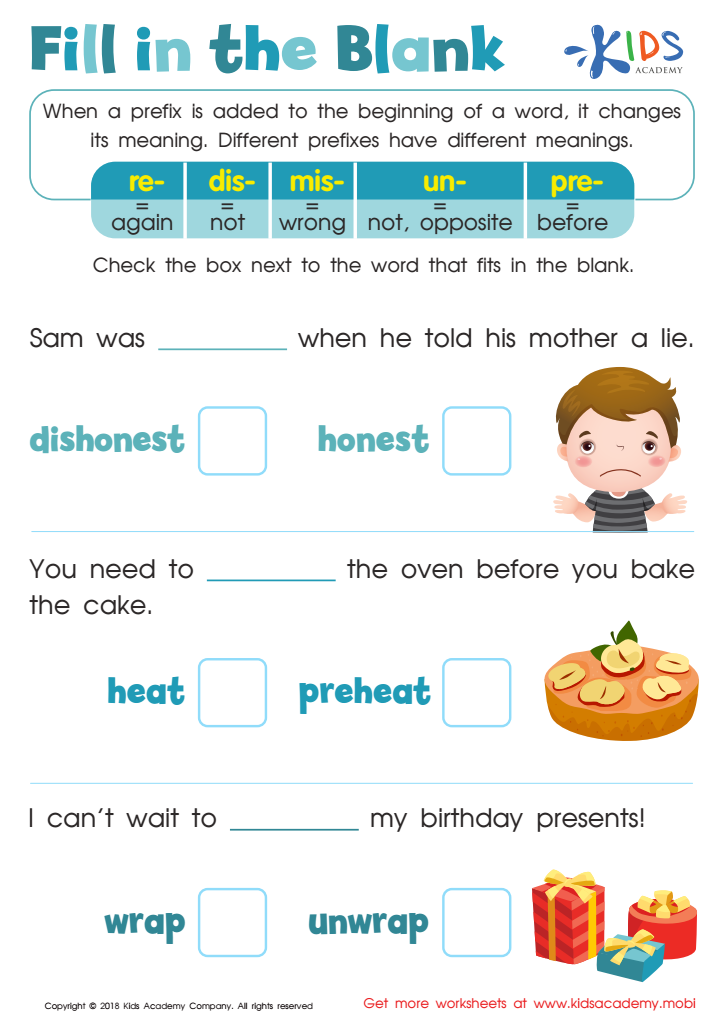
Reading: Fill in the Blank Worksheet
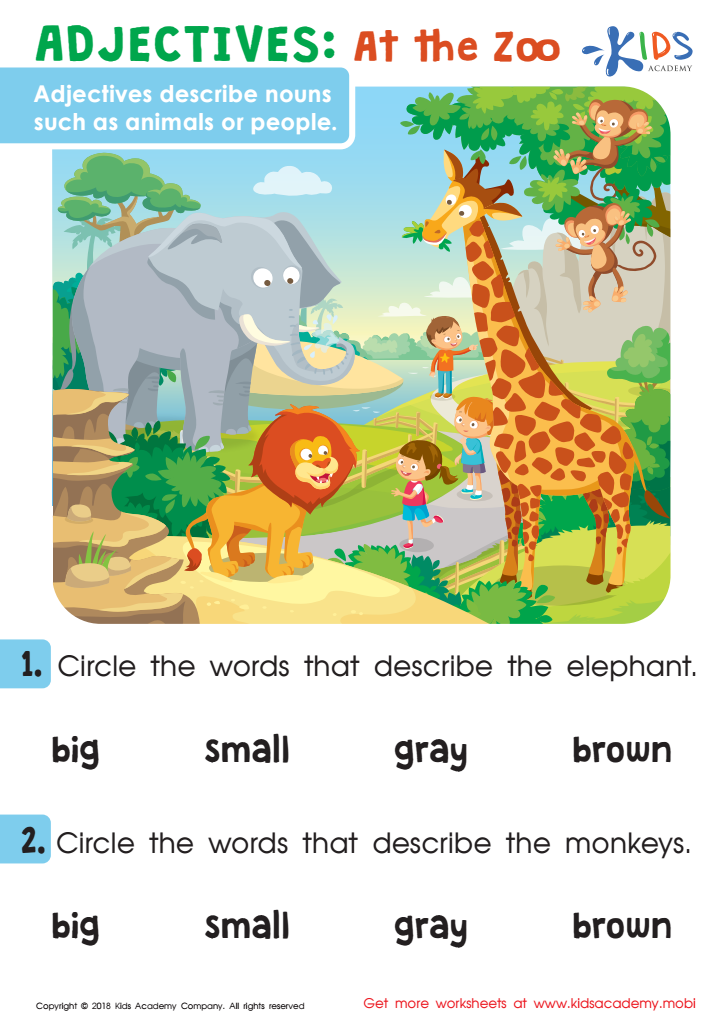
Adjectives: At The Zoo Worksheet
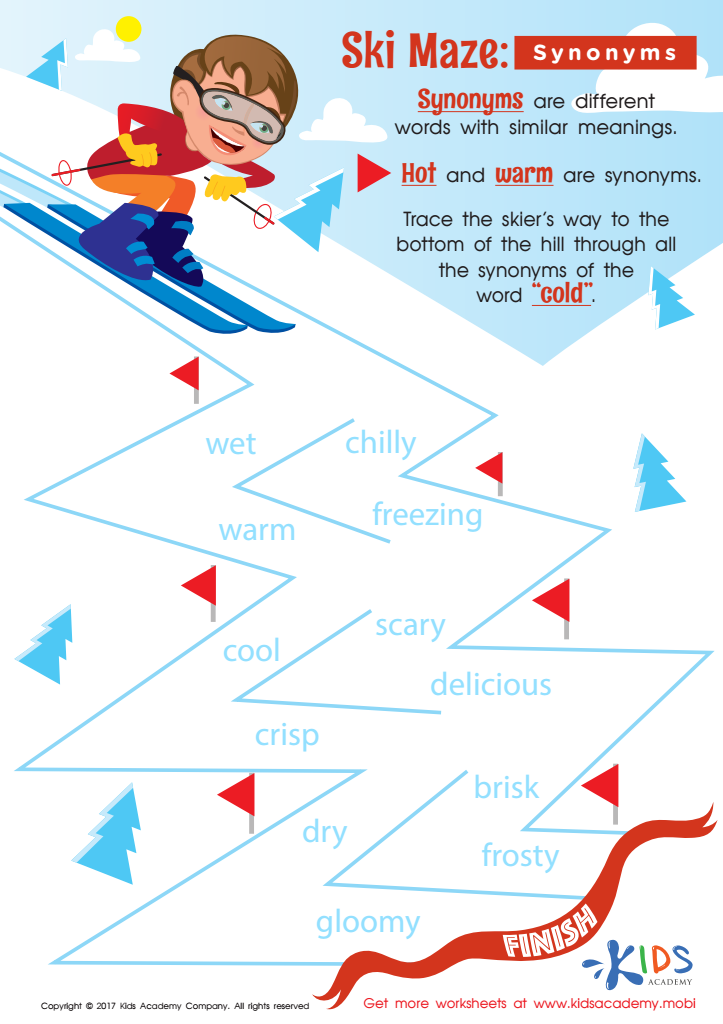
Free Printable Synonym Worksheet
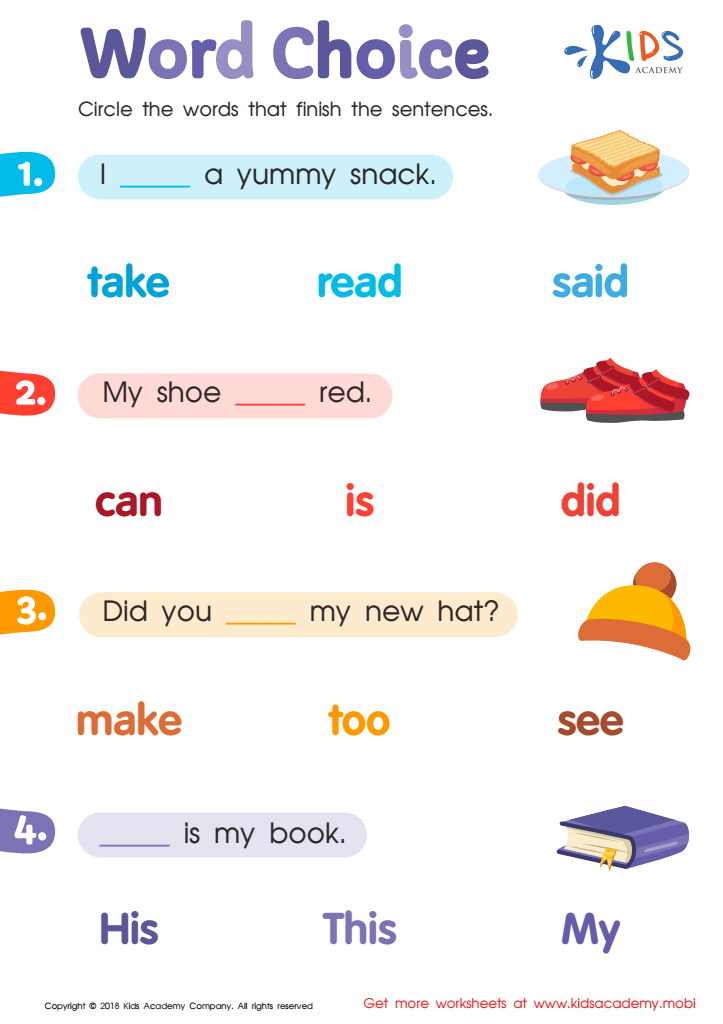
Word Choice Worksheet








Contextual understanding in reading is crucial for children aged 8-9, as it significantly enhances their comprehension and engagement with texts. At this developmental stage, children are transitioning from learning to read to reading to learn, making it essential for them to grasp not only the words but also the meaning behind them within different contexts.
When parents and teachers emphasize contextual understanding, they help children make connections between the text and their prior knowledge, experiences, and the broader world. This deepens their understanding and fosters critical thinking skills, enabling them to interpret themes, characters, and settings more effectively. Moreover, children become more fluent readers as they learn to use context clues—such as surrounding words and phrases—to deduce meanings, which ultimately boosts their vocabulary and overall language skills.
Additionally, recognizing the importance of context aids in developing empathy and cultural awareness, as children encounter diverse perspectives through various literary genres. By prioritizing contextual understanding, parents and teachers empower children not only to appreciate literature but to cultivate analytical and reflective thinking skills that are vital for their academic and personal growth. This foundation lays the groundwork for lifelong learning and a love for reading.








