Rhyme recognition Reading Comprehension Worksheets for Ages 8-9
3 filtered results
-
From - To
Unlock the joy of reading with our Rhyme Recognition Reading Comprehension Worksheets designed specifically for children aged 8-9. These engaging worksheets enhance literacy skills by focusing on rhyme recognition, helping young learners develop phonemic awareness and improve their reading fluency. Each activity is crafted to encourage critical thinking and comprehension, allowing students to identify and analyze rhyming words in various contexts. Our resources cater to different learning styles, ensuring every child finds joy in mastering reading. Dive into a treasure trove of exercises that make learning fun and effective while building a strong foundation for future reading success!
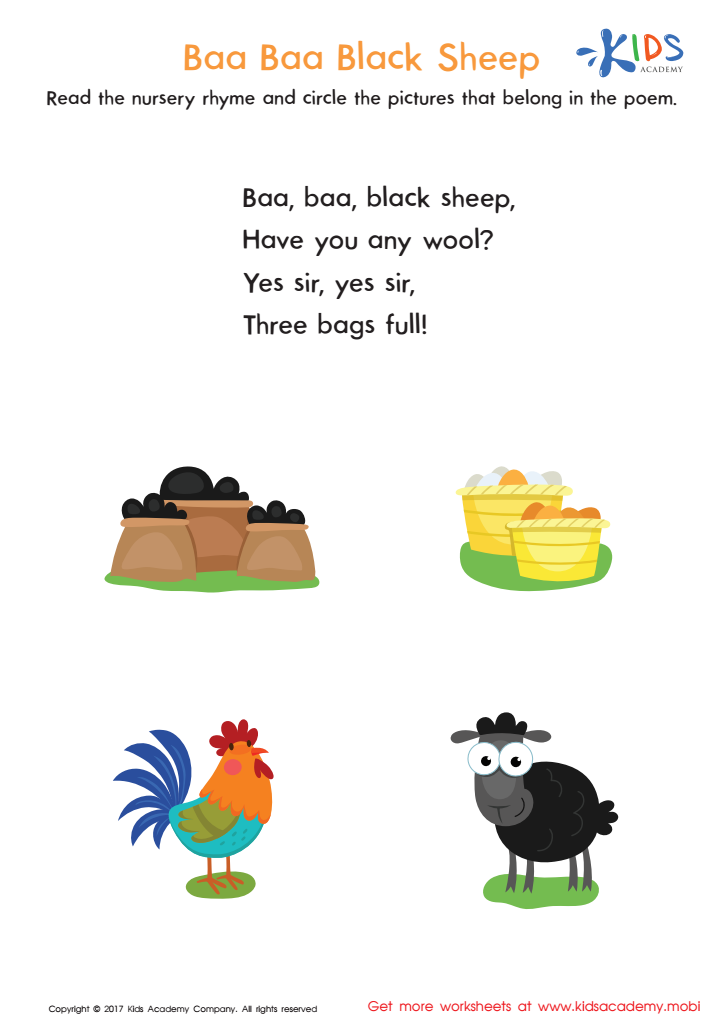
Baa Baa Black Sheep Printable
 Assign to My Students
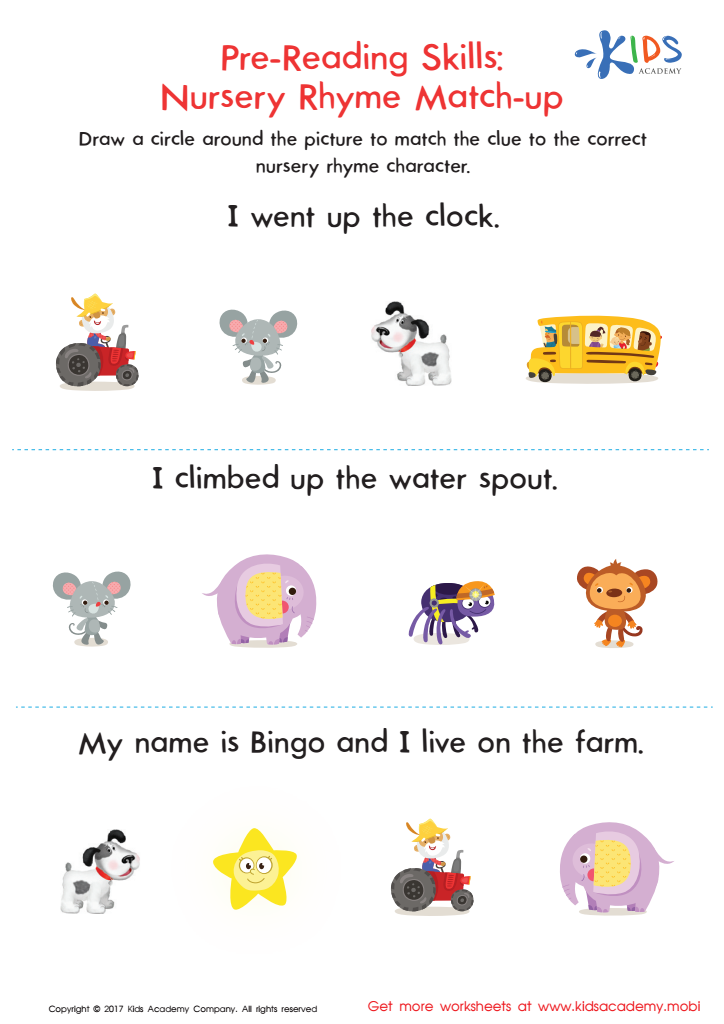
Nursery Rhyme Match–Up Worksheet
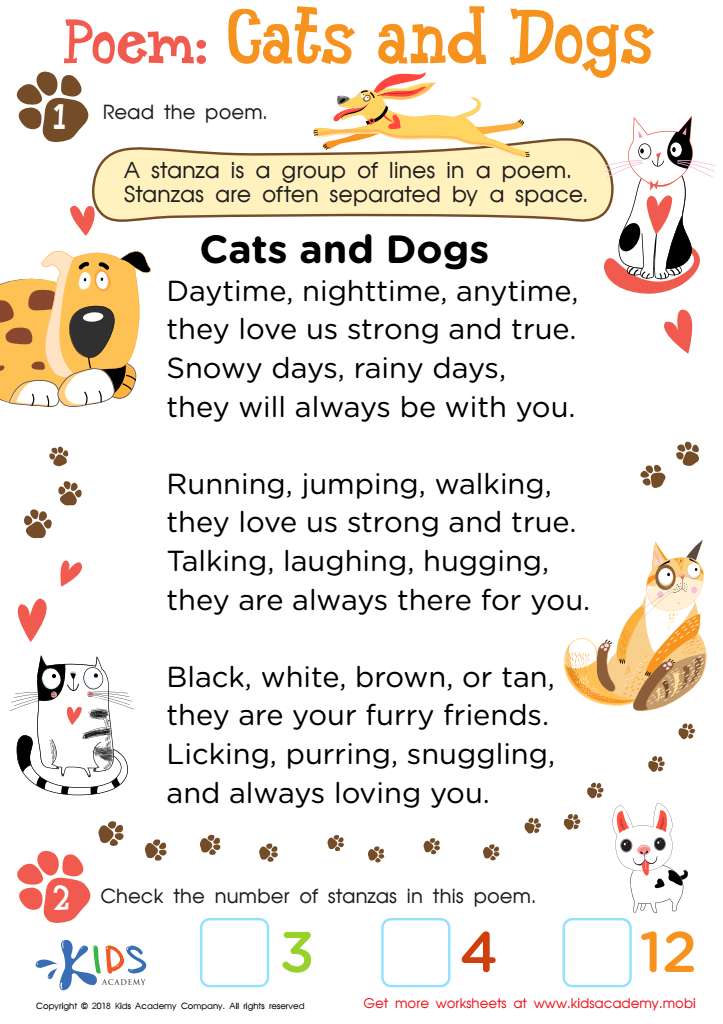
Poem: Cats and Dogs Worksheet


.jpg)





Rhyme recognition is an essential component of reading comprehension for children ages 8-9, as it lays the groundwork for language, literacy, and cognitive development. When children learn to identify and produce rhymes, they enhance their phonemic awareness, fostering a deeper understanding of how sounds construct words. This skill is crucial for decoding unfamiliar words and contributes to overall reading fluency.
Moreover, rhyme recognition aids in improving vocabulary and comprehension skills. By engaging with rhyming texts, students encounter diverse language patterns and contextual clues, allowing them to infer meanings and develop critical thinking skills. When reading becomes an enjoyable and rhythmic activity, children are more likely to engage with texts, cultivating a lifelong love for reading.
Parents and teachers play a vital role in supporting rhyme recognition through various activities, such as reading poems, singing songs, and playing word games. This not only strengthens literacy skills but also enhances phonological awareness, which is closely tied to academic success. In a world filled with visual stimuli, prioritizing rhyme recognition can help children become proficient readers who can analyze, infer, and synthesize information effectively, ultimately fostering their overall educational journey.








