Moral understanding Reading Fiction Worksheets for Ages 8-9
3 filtered results
-
From - To
Explore our engaging "Moral Understanding Reading Fiction Worksheets" designed for ages 8-9! Our resources help children delve into the moral lessons embedded in various stories, enhancing both their reading skills and their ability to comprehend ethical concepts. Each worksheet features captivating fiction excerpts followed by thought-provoking questions that spark discussion about characters' choices, values, and consequences. By analyzing narratives, students develop critical thinking and empathy, which are essential for personal growth. Perfect for classrooms or home learning, these worksheets are a great way to foster a deeper understanding of morality while enjoying the world of fiction. Start your journey today!
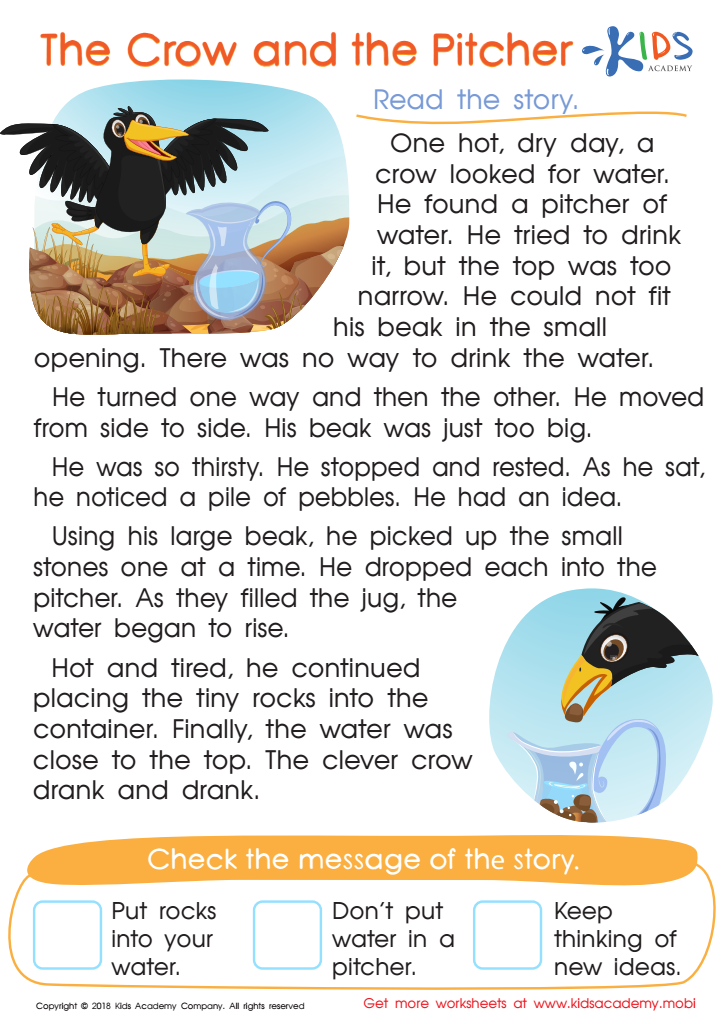
The Crow and the Pitcher Worksheet
 Assign to My Students
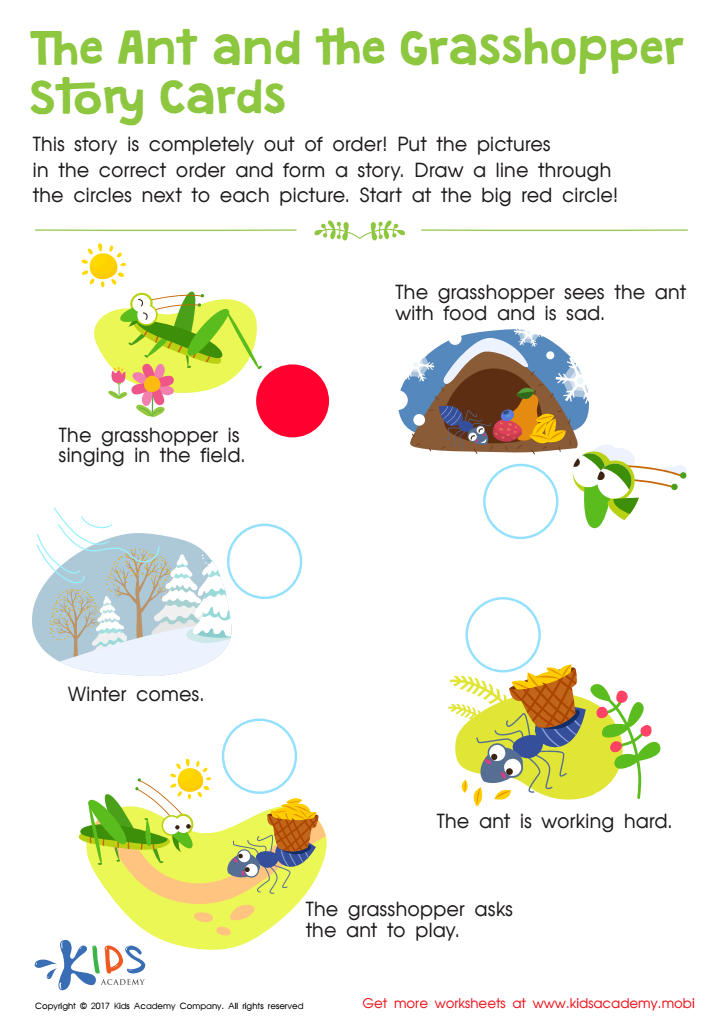
The Ant and The Grasshopper Worksheet
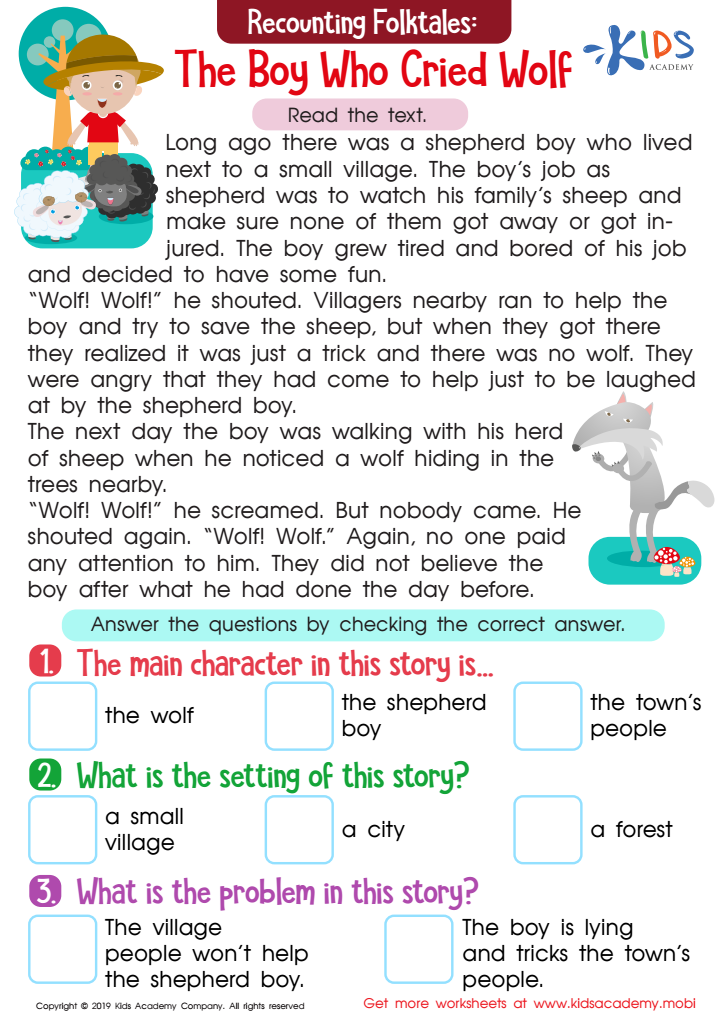
The Boy Who Cried Wolf Part 1 Worksheet



.jpg)
.jpg)



Parents and teachers should prioritize moral understanding through reading fiction for children aged 8-9 because this age represents a crucial developmental stage in forming values and social awareness. At this age, children begin to comprehend complex ethical concepts like empathy, justice, and responsibility. Fictional stories provide unique scenarios where characters face moral dilemmas, allowing young readers to explore the consequences of decisions and the importance of understanding diverse perspectives.
Reading fiction encourages children to engage with characters' emotions, fostering empathy and helping them relate to others’ experiences and feelings. These narratives often depict consequences, illustrating the impact of behaviors on oneself and the community. Discussing these themes can create a safe space for children to explore their values, ask questions, and articulate their own morals.
Moreover, moral understanding through fiction strengthens critical thinking skills, as children learn to assess various viewpoints and implications of actions. In a world increasingly characterized by social challenges and conflicts, nurturing moral awareness is essential for holistic development. By integrating fiction into educational and family reading routines, adults can guide children in becoming thoughtful, compassionate individuals who care about the welfare of others, ultimately preparing them to contribute positively to society.








