Critical Thinking Governance and Civics Worksheets for Ages 8-9
5 filtered results
-
From - To
Unlock your child's potential with our "Critical Thinking Governance and Civics Worksheets" designed specifically for ages 8-9. These engaging worksheets encourage young learners to explore fundamental civic concepts and develop vital critical thinking skills. Through interactive activities and thought-provoking questions, children will analyze and evaluate information related to governance, responsibilities, and civic involvement. Ideal for both classroom and home settings, these resources foster inquiry, discussion, and a deeper understanding of democratic principles. Equip your child with the tools they need to think critically about their role in society while making learning fun and accessible. Explore our worksheets today!
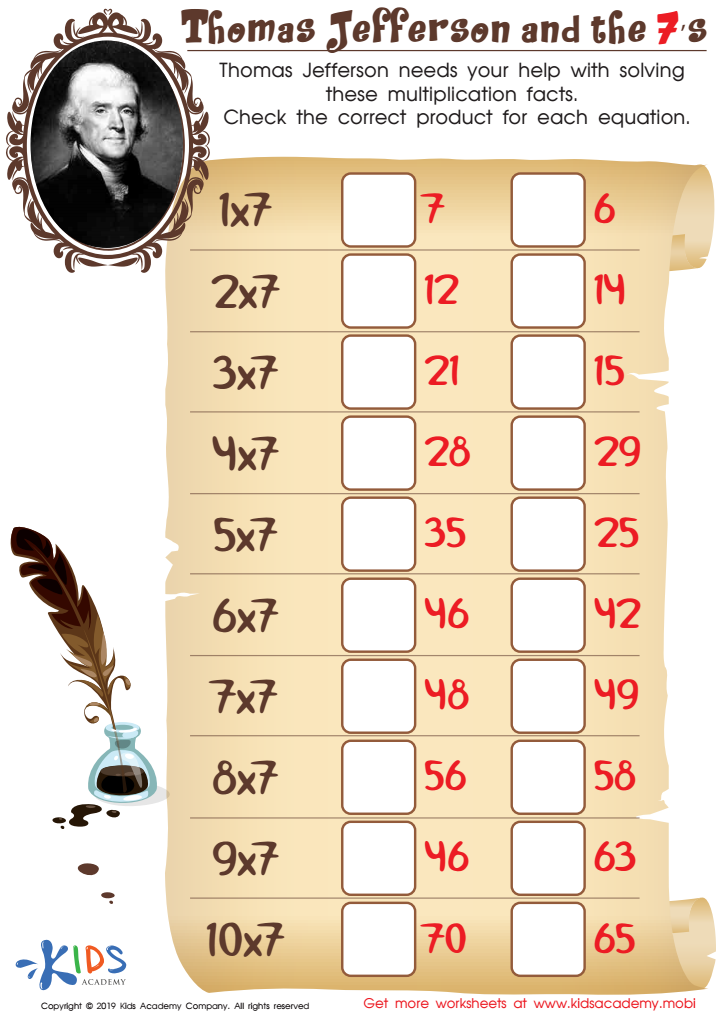
Thomas Jefferson and the 7’s Worksheet
 Assign to My Students
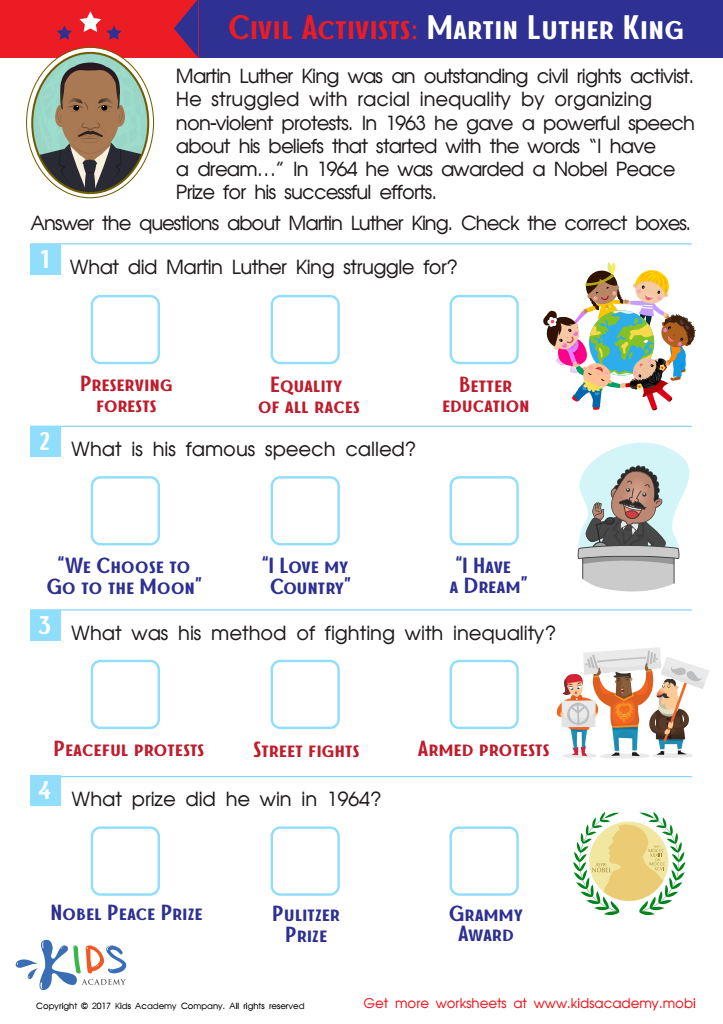
Martin Luther King Worksheet
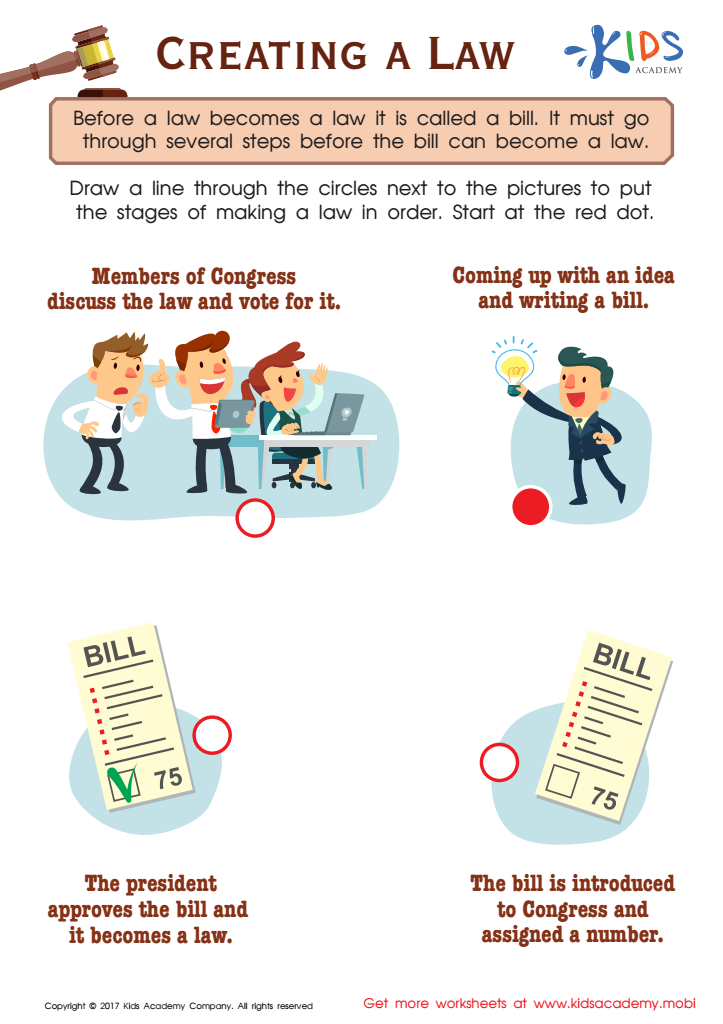
Creating a Law Worksheet
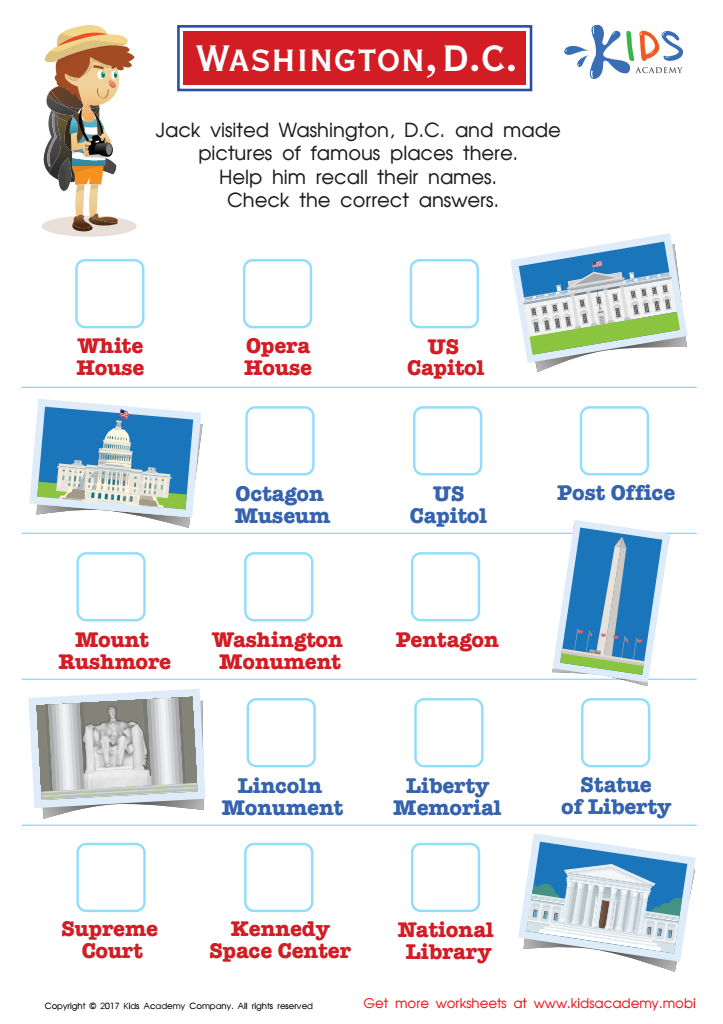
Washington D.C. Printable Worksheet
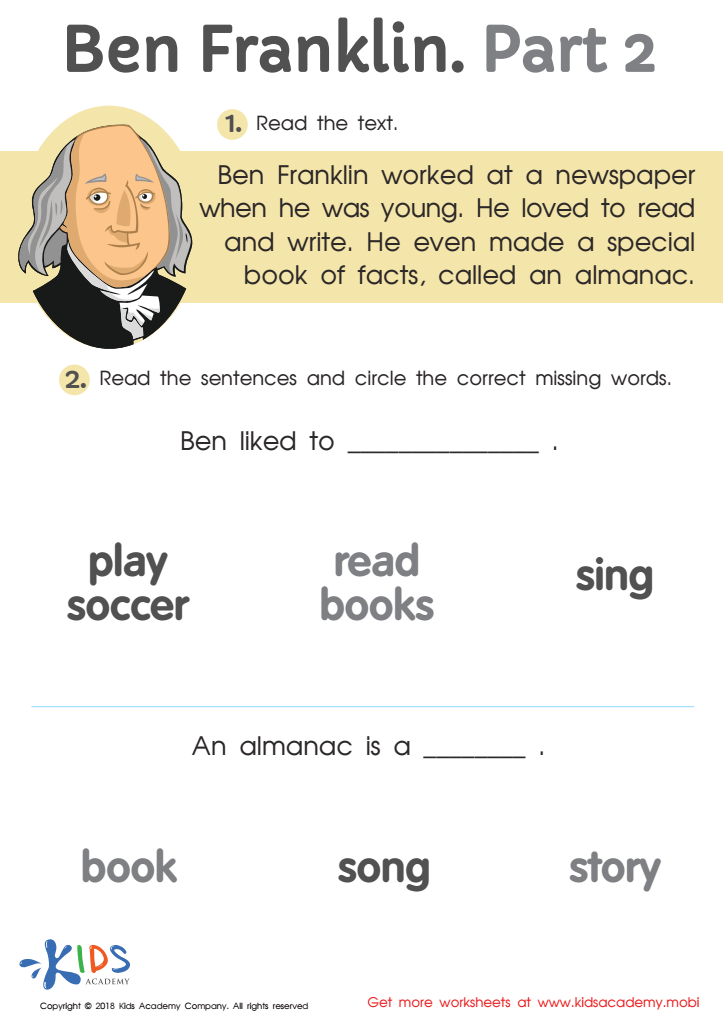
Ben Franklin Part 2 Worksheet


Teaching critical thinking, governance, and civics to children aged 8-9 is essential for their holistic development and future citizenship. At this age, children begin to formulate their own opinions and understand the world around them. Engaging them in critical thinking helps cultivate their ability to analyze information, question assumptions, and make informed decisions. This cognitive skill set empowers children to navigate complexities in society as they learn to differentiate between facts and misinformation.
Incorporating governance and civics into lessons broadens their understanding of their rights and responsibilities within a community. It lays the foundation for responsible citizenship, helping children grasp the importance of participation in democratic processes. Learning about governance encourages respect for diverse viewpoints and fosters empathy, critical skills in an interconnected world.
Moreover, cultivating critical thinkers prepares children to be active participants in shaping their communities. Parents and teachers play a pivotal role in this process. By caring about critical thinking and civics education, they are investing in creating informed, thoughtful, and engaged individuals who are equipped to tackle societal challenges. Ultimately, their involvement shapes a generation that values justice, equity, and collaborative problem-solving, essential for a thriving democratic society.








