Syllable identification Grammar Worksheets for Ages 8-9
4 filtered results
-
From - To
Explore our engaging Syllable Identification Grammar Worksheets designed for children ages 8-9! These worksheets aim to enhance your child's understanding of syllables, enabling them to break words into manageable parts for improved reading and writing skills. Each worksheet includes fun exercises that encourage students to identify and count syllables in various words, while also developing their phonemic awareness. Perfect for classroom use or at-home learning, our resources foster a love for language through interactive and educational activities. Help your child build a strong foundation in grammar with these creative and effective worksheets! Start their journey to language mastery today.
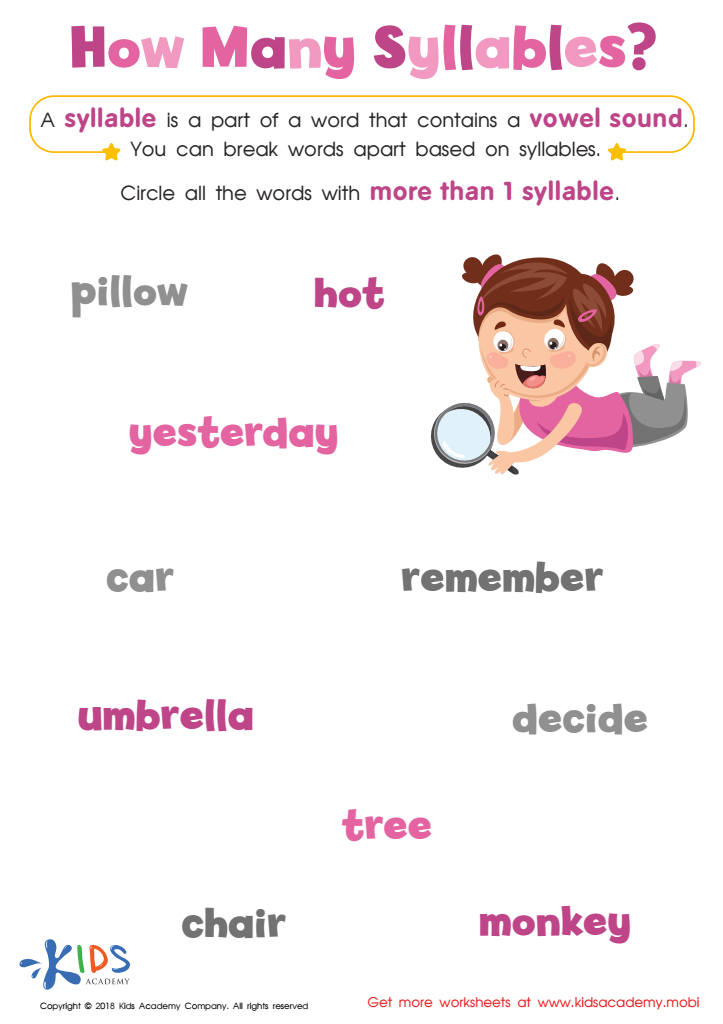
Reading: How Many Syllables Worksheet
 Assign to My Students
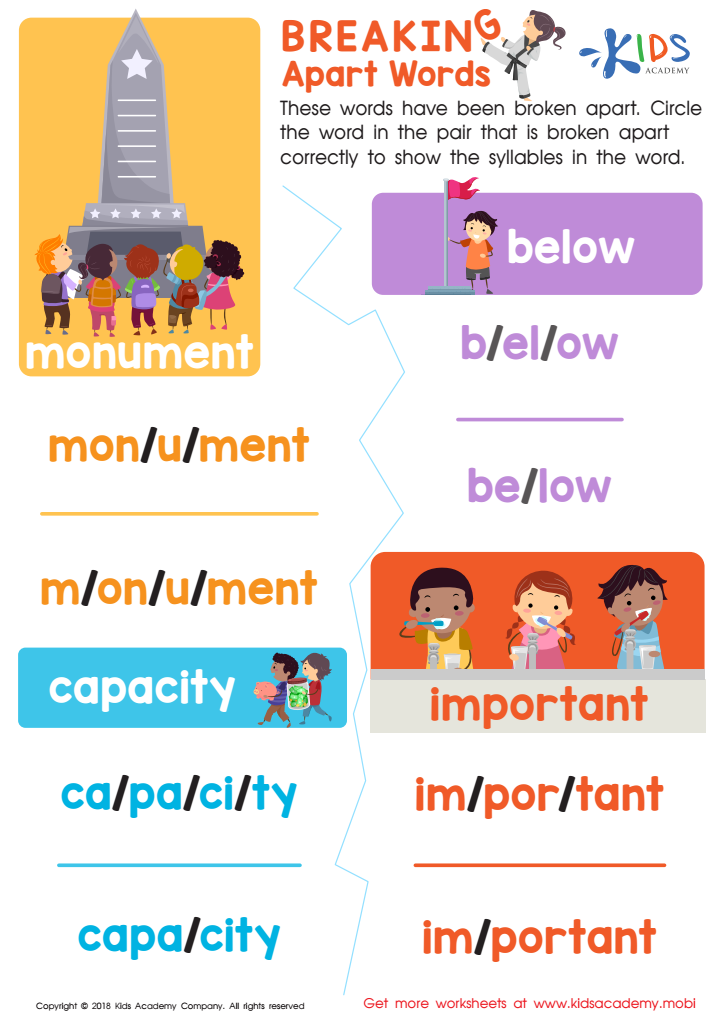
Breaking Apart Words Worksheet
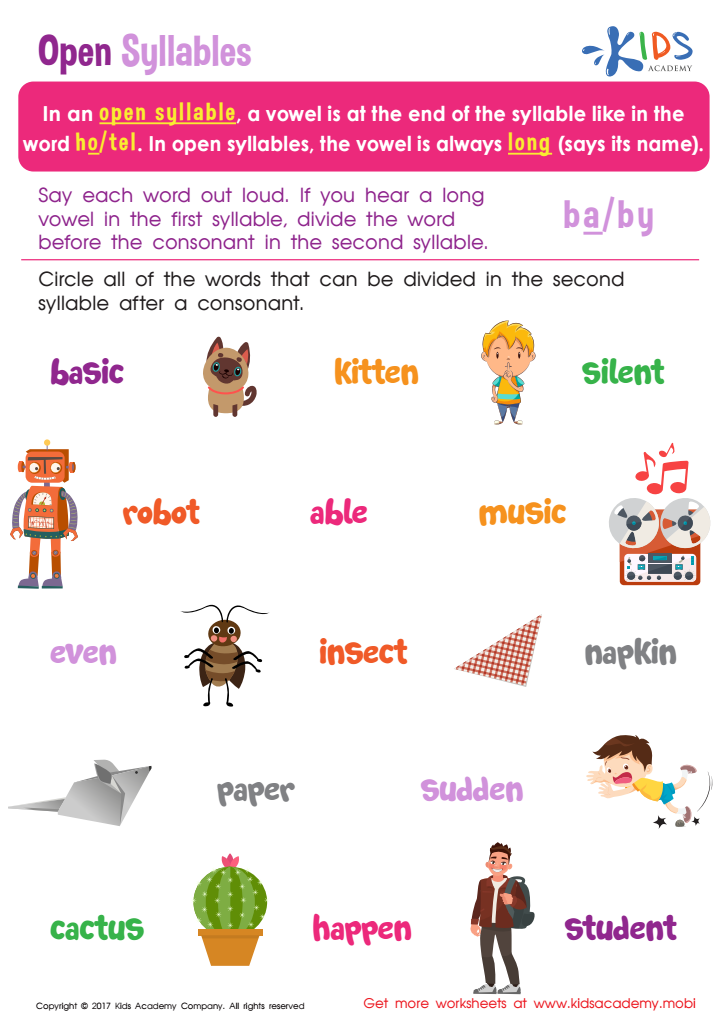
Open Syllable Printable Worksheet
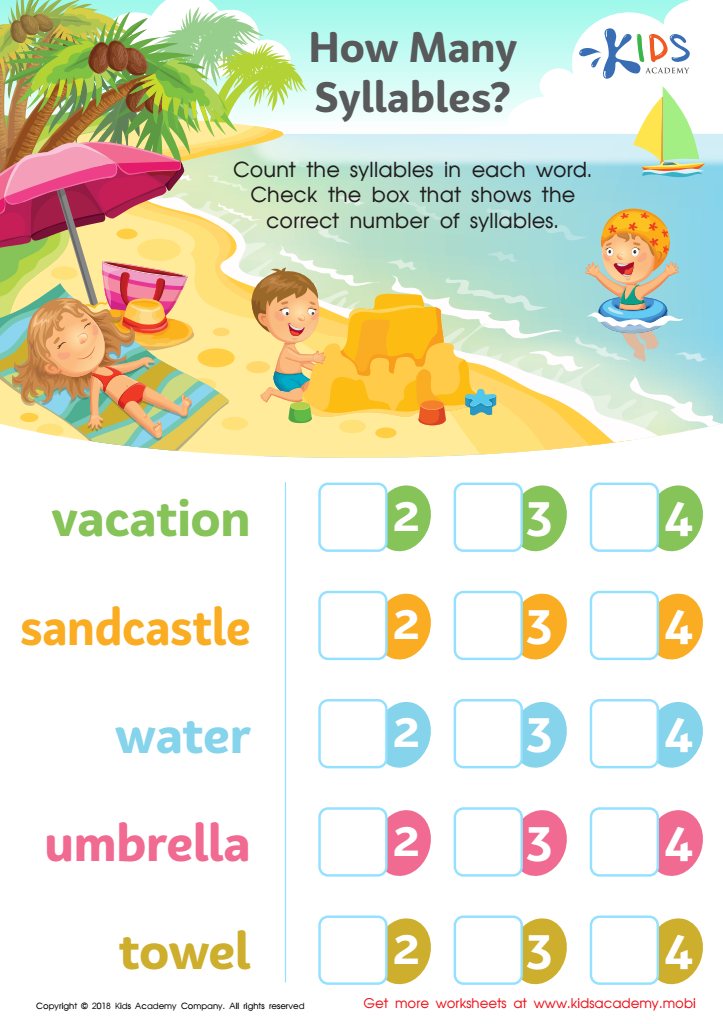
How Many Syllables Worksheet



.jpg)




Syllable identification is a vital component of developing strong literacy skills in children aged 8-9. At this stage of language development, children transition from learning to read to reading to learn, making a solid grasp of syllables essential. Understanding syllables helps improve pronunciation, spelling, and overall reading fluency. When children can recognize and manipulate syllables, they become more confident in decoding unfamiliar words, which enhances their comprehension abilities.
Furthermore, syllable identification plays a crucial role in phonemic awareness, an important skill linked to later reading success. As children learn to break words into syllables, they cultivate an understanding of word structure and phonics, leading to improved vocabulary and overall language skills. This is especially significant at this age when curriculum demands increase, requiring children to engage with increasingly challenging texts.
Moreover, teaching syllable identification lays the groundwork for effective writing skills. Children who can discern syllables are better equipped to understand word formation, enhancing spelling skills and creativity when composing their own texts. Therefore, parents and teachers must prioritize syllable identification, fostering an engaging learning environment that emphasizes its importance for both reading and writing development. Nurturing these skills paves the way for a child's academic success and overall literacy proficiency.








