Word identification Writing Worksheets for Ages 8-9
6 filtered results
-
From - To
Our Word Identification Writing Worksheets designed for ages 8-9 help young learners enhance their literacy skills through engaging and educational activities. Emphasizing word recognition and vocabulary development, these worksheets support children in mastering the fundamentals of spelling and reading comprehension. With exercises that encourage identifying, writing, and using words in context, students gain confidence and proficiency in their language abilities. Explore our diverse and expertly crafted resources to inspire a love of learning and boost academic success in your child. Perfect for both classroom use and at-home practice, these worksheets are essential tools for your child's educational journey.
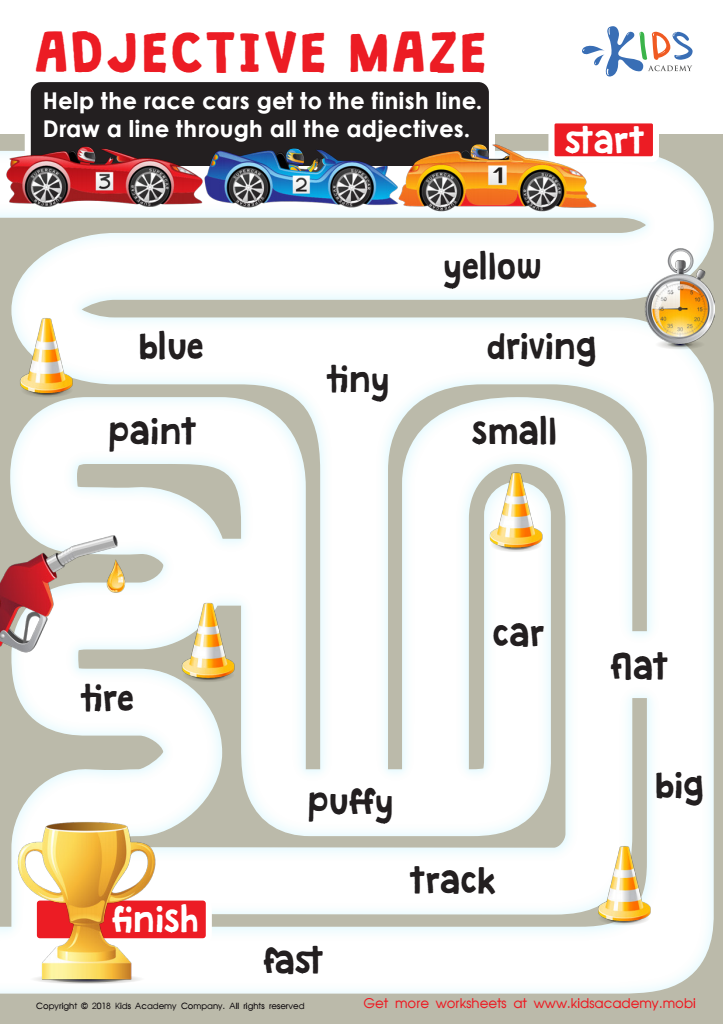
Adjective Maze Worksheet
 Assign to My Students
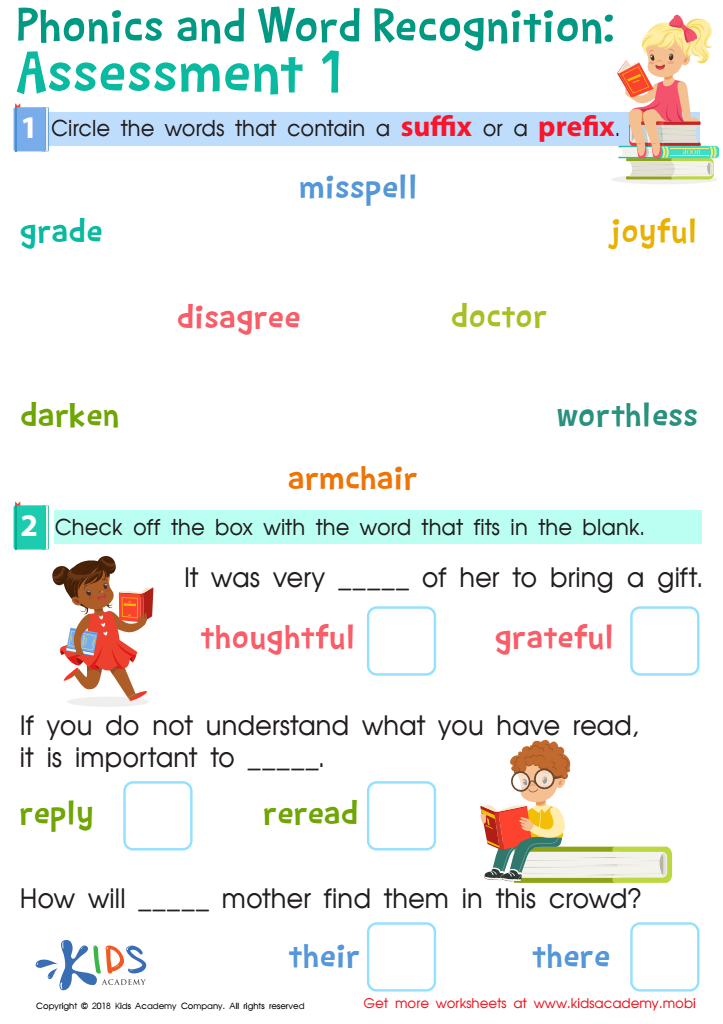
Phonics and Word Recognition: Assessment 1 Worksheet
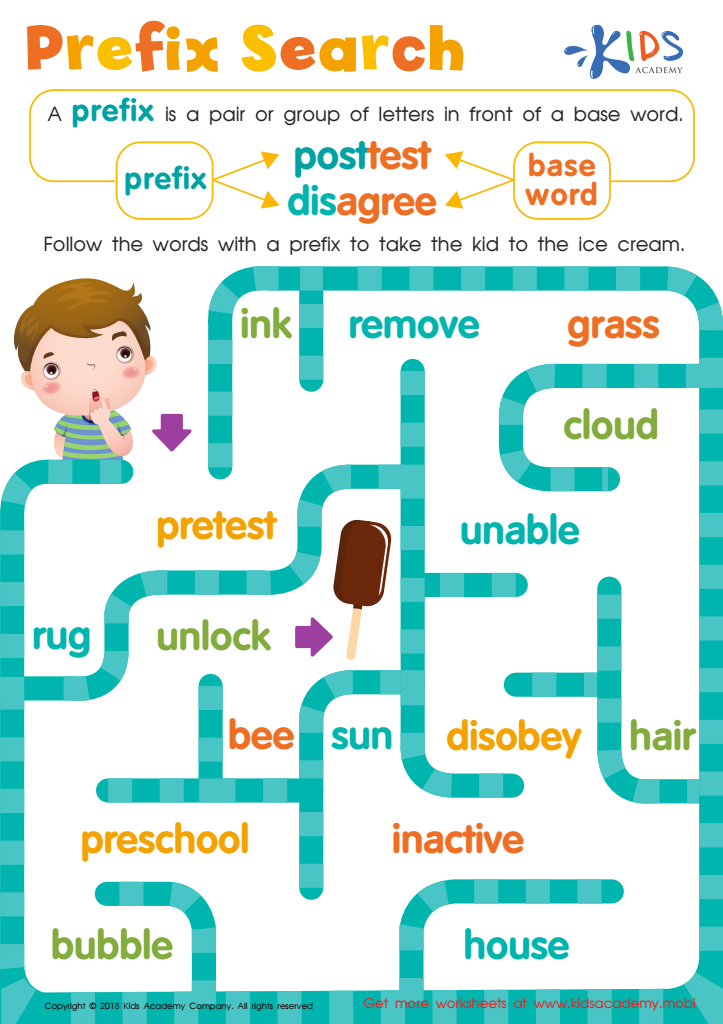
Reading: Prefix Search Worksheet
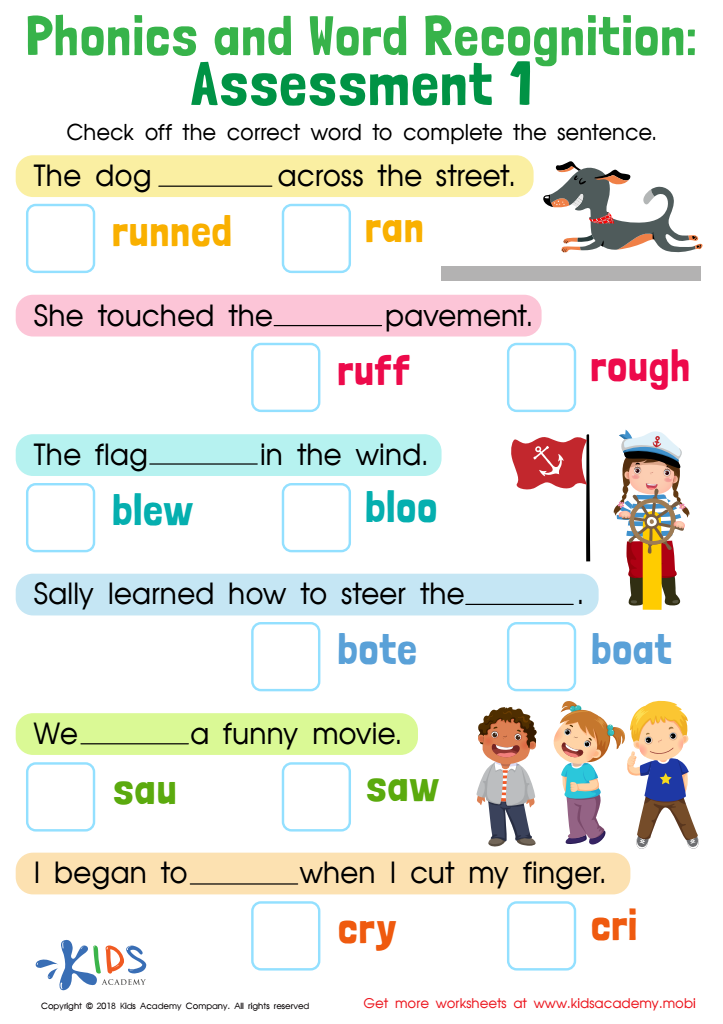
Phonics and Word Recognition: Assessment 1 Worksheet
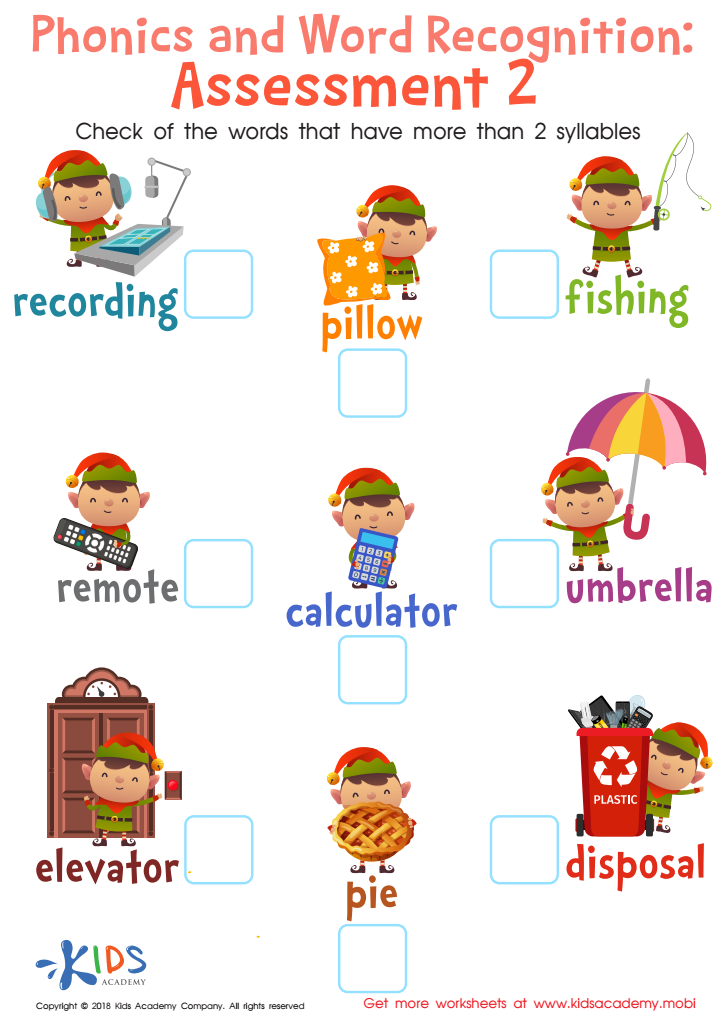
Phonics and Word Recognition: Assessment 2 Worksheet
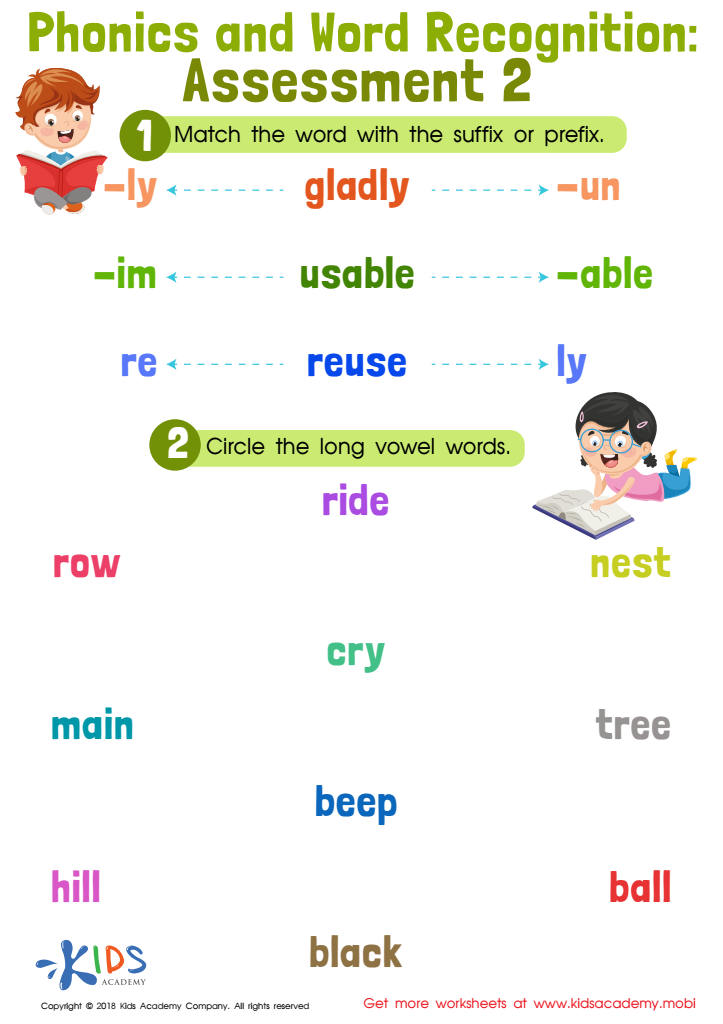
Phonics and Word Recognition: Assessment 2








Word identification and writing proficiency are crucial skills for children aged 8-9, falling typically within the second and third grade. During these formative years, young learners transition from basic decoding to more comprehensive reading and writing activities, which are essential for academic success and overall cognitive development.
Firstly, word identification is foundational for reading fluency. Fluent readers can effortlessly decode and recognize words, enabling them to focus on comprehension rather than the mechanics of reading. This skill is vital for academic subjects, as nearly all areas of learning depend on the child's ability to read and understand text efficiently.
Secondly, writing skills are equally important. By expressing their ideas clearly and coherently on paper, children enhance their communication abilities. Writing practice allows them to organize thoughts, expand their vocabulary, and understand grammar rules. These skills not only boost their performance in language arts but also improve their capability to articulate thoughts across various subjects, promoting universal academic growth.
Furthermore, early proficiency in these areas lays the groundwork for future educational endeavors. Struggles in word identification and writing at this critical age can lead to long-term academic challenges and decreased self-esteem. Hence, parents and teachers should prioritize and support the development of these skills to ensure children thrive both academically and personally. By doing so, they instill confidence, facilitate lifelong learning, and pave the way for successful futures.








