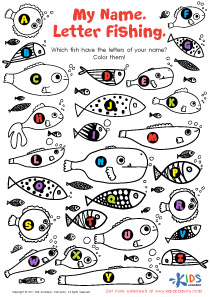
Letter formation ABC Order Worksheets for 8-Year-Olds
3 filtered results
-
From - To
Enhance your child's letter formation skills with our engaging ABC Order Worksheets, tailored specifically for 8-year-olds. These printable worksheets from Kids Academy focus on perfecting handwriting through fun, alphabet-based exercises, while reinforcing correct alphabetical sequences. Each activity encourages individualized practice with uppercase and lowercase letters, promoting mastery in writing and organization. Help your child boost their confidence and proficiency in letter formation, all while enjoying interactive and educational activities. Ideal for at-home learning or classroom use, our worksheets are a valuable resource for fostering essential literacy skills in young learners.

Letter A Tracing Page
 Assign to My Students



Letter P Tracing Page
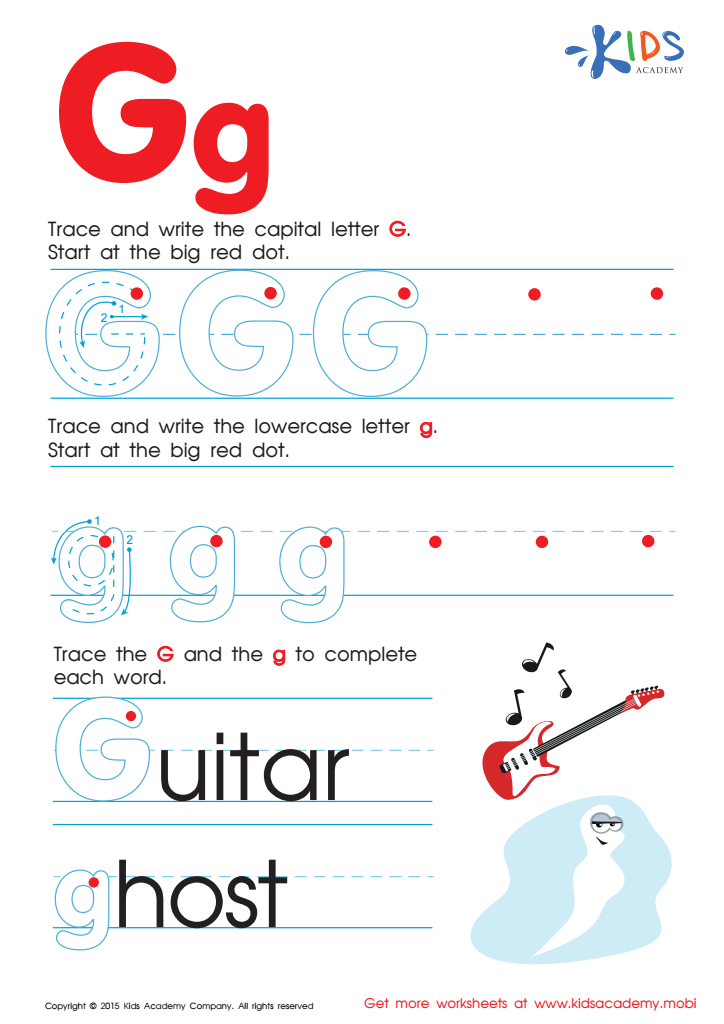
Letter G Tracing Page







Understanding and practicing proper letter formation and ABC order are essential skills for 8-year-olds, playing a crucial role in their educational and developmental journey. Fine motor skills are refined through consistent practice of letter formation, ensuring that children can write legibly and efficiently. Good handwriting supports better note taking, facilitates clear communication, and helps in avoiding unnecessary confusion, fostering academic success and confidence.
Learning and remembering the alphabetical sequence assists in developing organizational skills, critical thinking, and problem-solving abilities. It forms the backbone of literacy, enabling smoother navigation of dictionaries, indexes, and other reference tools—skills integral to advanced learning. The ABC order also lays the groundwork for understanding categorization, which is beneficial across various subjects like reading, math, and even sciences.
Beyond academics, this fosters independence and self-reliance, as children are better equipped to handle tasks requiring alphabetical sorting or searching. Learning these skills extends beyond the classroom, preparing them for everyday activities such as using phone books, understanding alphabetical filing systems, and even engaging with technology interfaces requiring this knowledge.
In summary, prioritizing the mastery of letter formation and ABC order not only supports academic excellence but also equips children with practical life skills, enhancing their overall cognitive development and paving the way for lifelong learning success.