Rhyme recognition Alphabet Worksheets for 8-Year-Olds
3 filtered results
-
From - To
Discover our engaging Rhyme Recognition Alphabet Worksheets designed specifically for 8-year-olds! These interactive worksheets combine fun and learning, helping children enhance their phonemic awareness and vocabulary. Through stimulating exercises, kids will identify rhyming words, strengthen their pronunciation skills, and explore the fascinating world of sounds. Each worksheet provides a visually appealing layout to keep young learners motivated while building essential literacy skills. Ideal for classroom use or at-home learning, our materials promote reading readiness in an enjoyable way. Let your child embark on a rhyming adventure and boost their confidence in language arts with our Rhyme Recognition Alphabet Worksheets today!
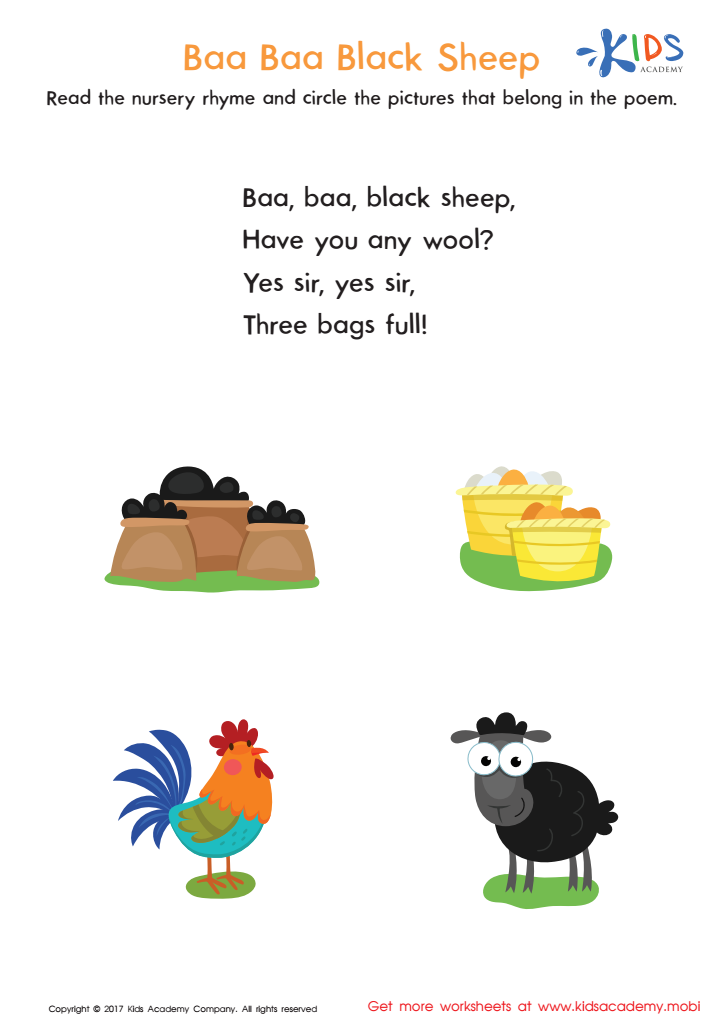
Baa Baa Black Sheep Printable
 Assign to My Students
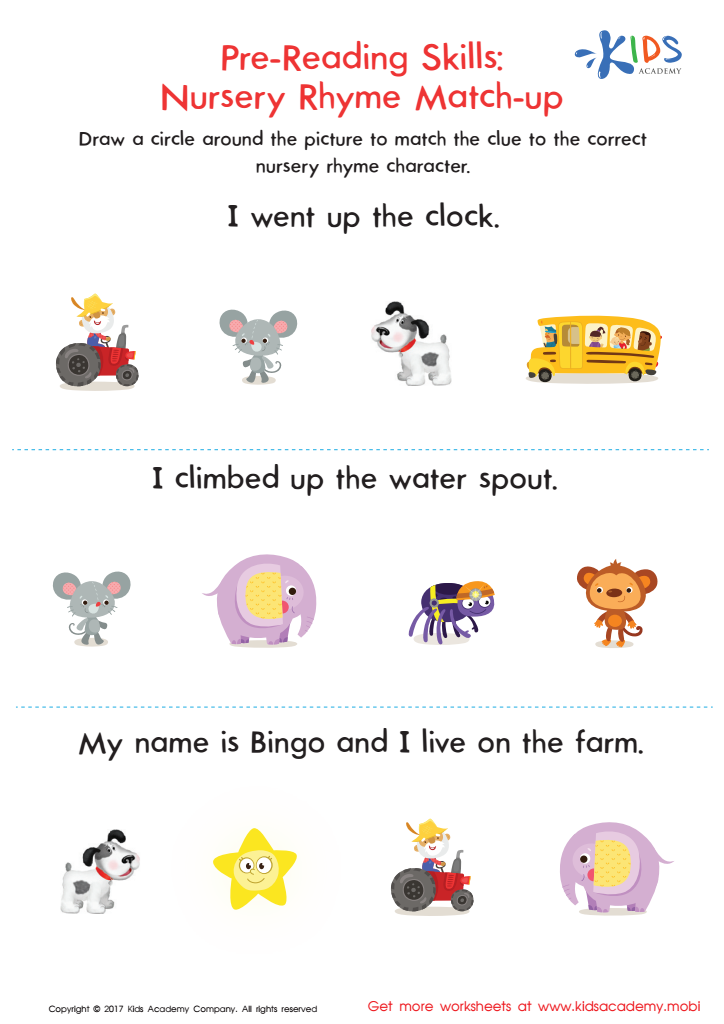
Nursery Rhyme Match–Up Worksheet
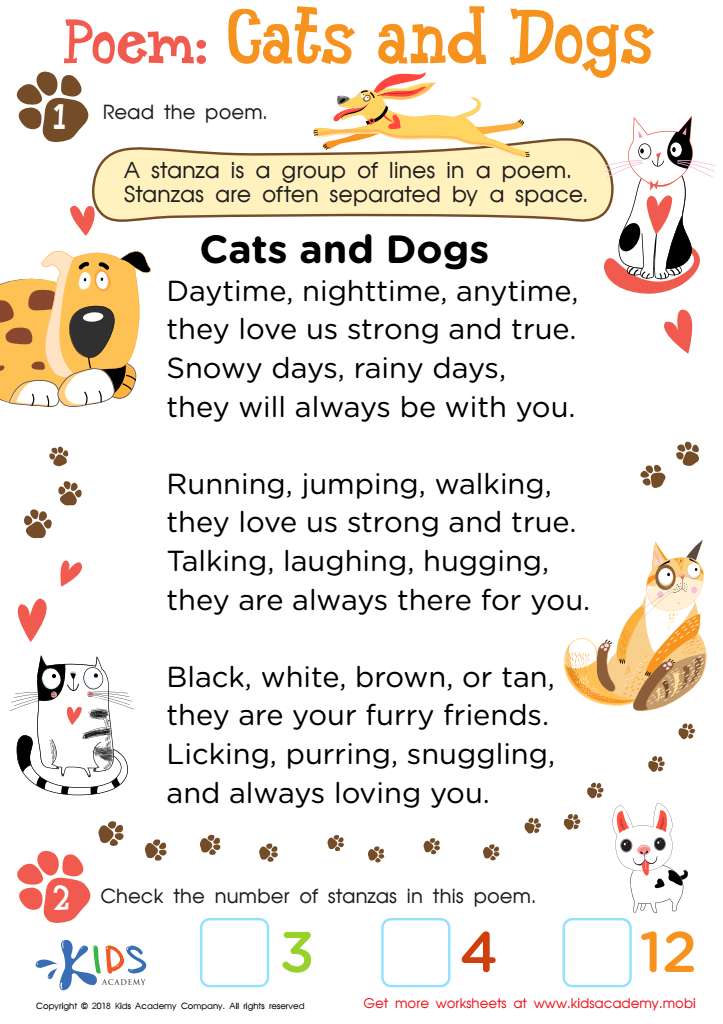
Poem: Cats and Dogs Worksheet







Rhyme recognition and an understanding of the alphabet are crucial components of literacy development for 8-year-olds. At this age, children solidify their reading and writing skills, making it essential for parents and teachers to recognize the significance of these foundational elements.
Rhyme recognition supports phonemic awareness, enabling children to identify and manipulate sounds in words. This skill contributes to improved reading fluency and comprehension as children learn to decode words and understand their meanings effortlessly. Additionally, engaging with rhyming words enhances their vocabulary and pronunciation skills, helping them become more confident readers.
Moreover, the alphabet is the core building block of written language. Mastering the alphabet allows children to spell, read, and write effectively. Understanding the relationship between letters and sounds, known as phonics, further strengthens their reading abilities, laying the groundwork for advanced literacy skills.
By emphasizing rhyme recognition and alphabet competencies, parents and teachers foster a love for reading, which correlates with academic success as children progress through school. Fostering these skills promotes critical thinking, creativity, and communication—essential tools for lifelong learning. Ultimately, nurturing these abilities allows children to become proficient, engaged readers and learners.







