Letter recognition Tracing Letters Worksheets for 8-Year-Olds - Page 2
26 filtered results
-
From - To
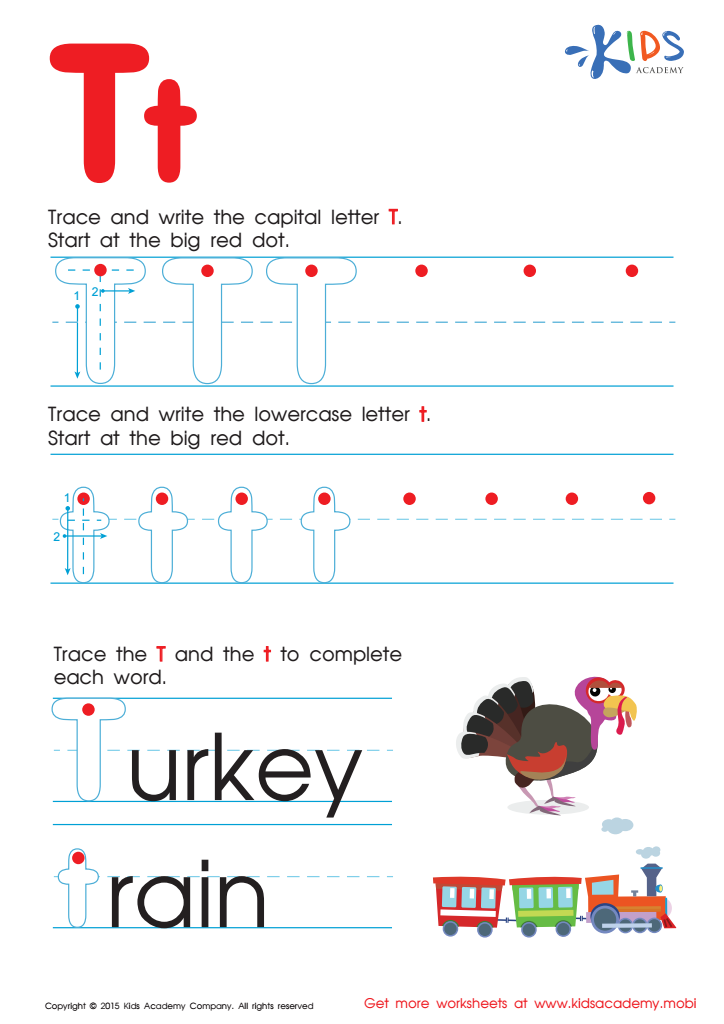
Letter T Tracing Page
 Assign to My Students

Letter D Tracing Page







Letter recognition and tracing letters are foundational skills for 8-year-olds that significantly impact their academic success. At this age, children are refining their reading and writing abilities, and letter recognition plays a crucial role in both. Recognizing letters easily transforms them into fluent readers, which is essential for understanding classroom materials across subjects. Tracing letters, on the other hand, strengthens fine motor skills and reinforces memory. This dual approach improves their ability to write neatly and legibly, an important competency for expressing ideas clearly in almost every area of learning.
Additionally, engaging children in letter tracing aids in developing focus and patience. The repetitive action of tracing allows them to concentrate on forming each letter correctly, building perseverance that is applicable beyond literacy. For parents and teachers, incorporating these activities into daily routines demonstrates a commitment to foundational learning, setting children up for long-term educational success. Moreover, these practices create an interactive and fun learning environment, fostering a love for literacy. Ultimately, the combination of letter recognition and tracing acts as a stepping stone to higher literacy skills, ensuring children are not only meeting current academic standards but are also well-prepared for future challenges.








