
Vowel Recognition Vowels Worksheets for 8-Year-Olds
6 filtered results
Difficulty Level
Grade
Age
-
From - To
Subject
Activity
Standards
Discover our engaging Vowel Recognition Worksheets designed specifically for 8-year-olds. These worksheets make learning vowels exciting and accessible, guiding children through various activities that help identify and pronounce vowel sounds. Perfect for enhancing literacy skills, each worksheet includes colorful and interactive exercises that inspire confidence and enjoyment in reading. Whether in the classroom or at home, our vowel worksheets support educational growth by focusing on mastering essential phonics concepts. Help your child excel in reading with our well-crafted resources, perfect for developing strong vocabulary and comprehension skills tailored for young learners. Explore today and watch your child thrive!
Favorites
With answer key
Interactive
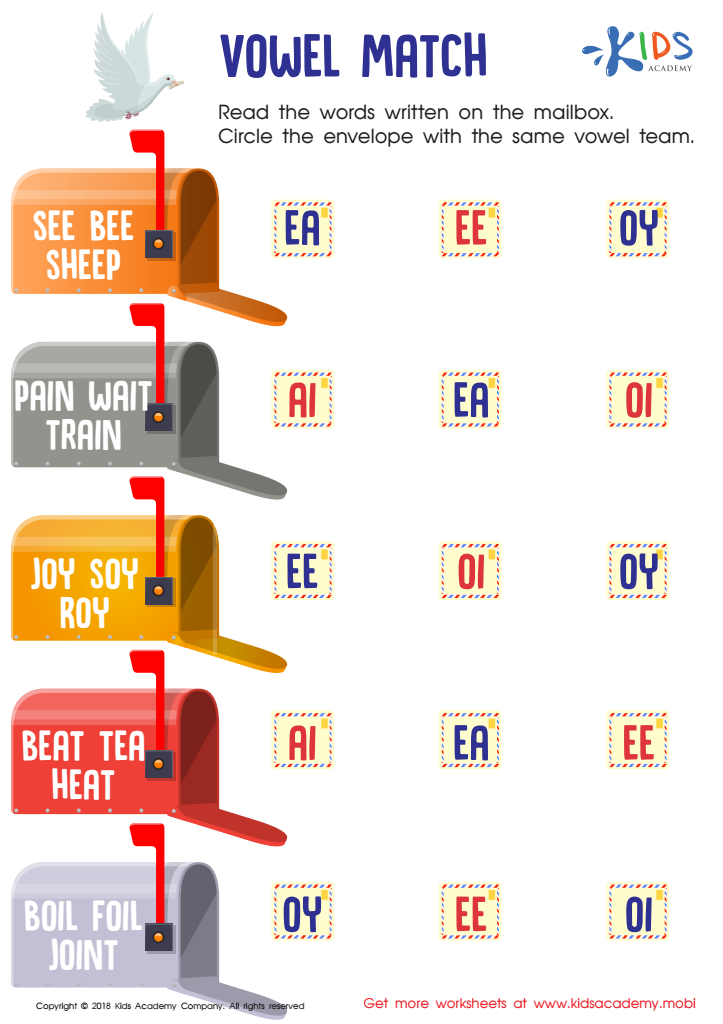
Vowel match Worksheet
Early readers can find vowel teams (digraphs) tricky. This simple worksheet helps kids match words with the right digraphs and learn to read! They'll practice reading words from different families, and linking the letters to their sounds. It's a fun way to get kids sending letters to the right addresses!
Vowel match Worksheet
Worksheet
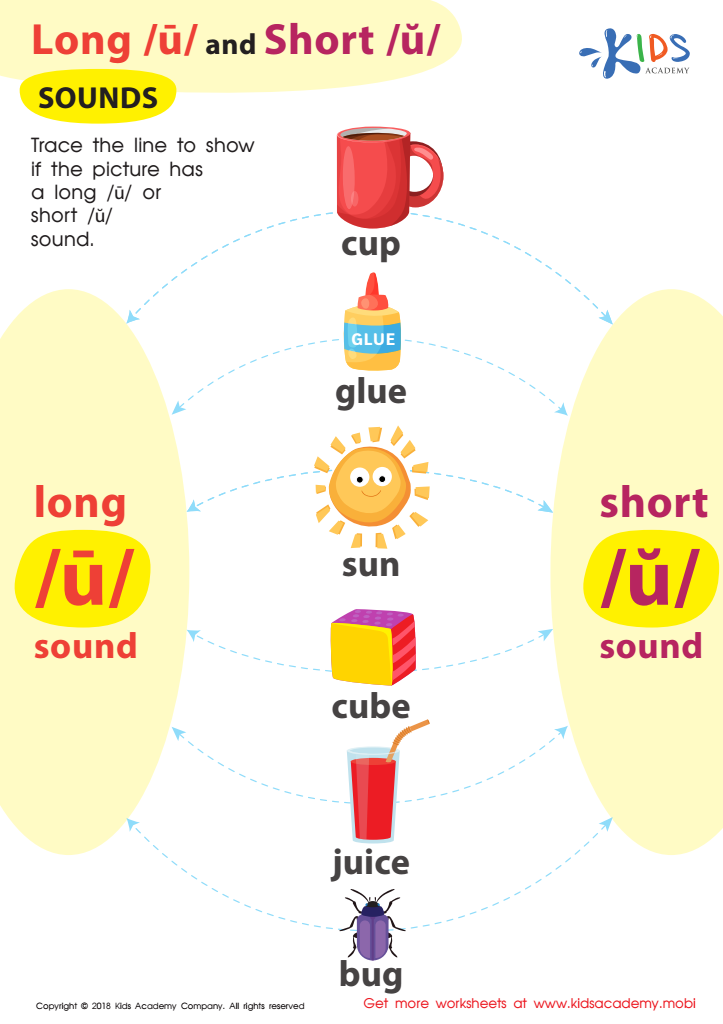
Reading: Long U and Short U Sounds Worksheet
Learning about long and short vowel sounds can be tricky, especially with the letter U. Extra practice with this worksheet is recommended for mastering this sound. Children read words with the different vowel sounds and categorize them. Great for instruction, practice and reteaching in reading classes.
Reading: Long U and Short U Sounds Worksheet
Worksheet
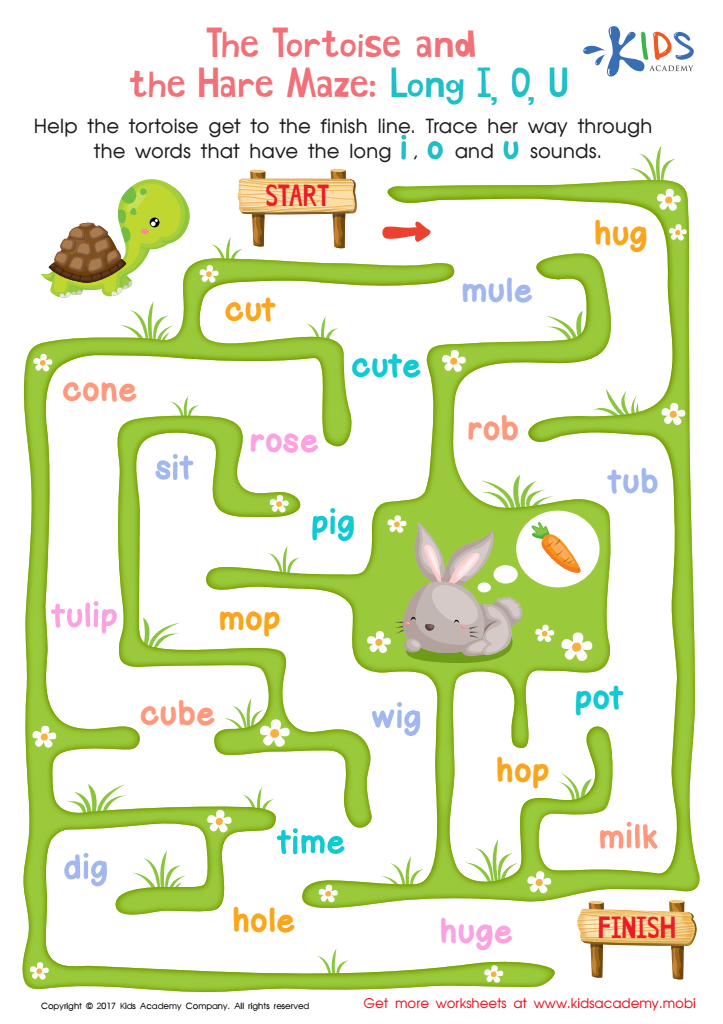
Long I, O, U Words Worksheet
This fun phonics worksheet has your child race the tortoise and hare to the finish line. Find all the long vowel sounds to win! It'll help your child's recognition of long I, O, and U words without him realizing it!
Long I, O, U Words Worksheet
Worksheet
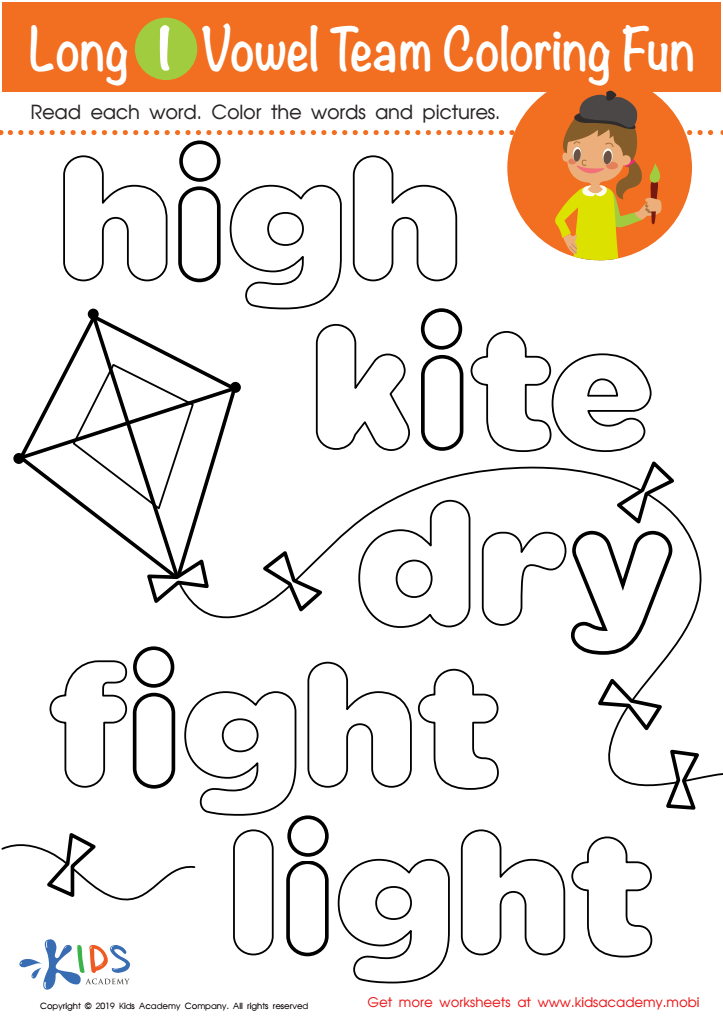
Long I Vowel Team Coloring Worksheet
This worksheet provides practice with letter combinations that make the long "i" sound while enhancing creativity and motor skills with a fun coloring activity. Unknowingly, new readers learn key phonics skills while having fun!
Download (PDF)
 Assign to My Students
Assign to My Students
Long I Vowel Team Coloring Worksheet
Worksheet
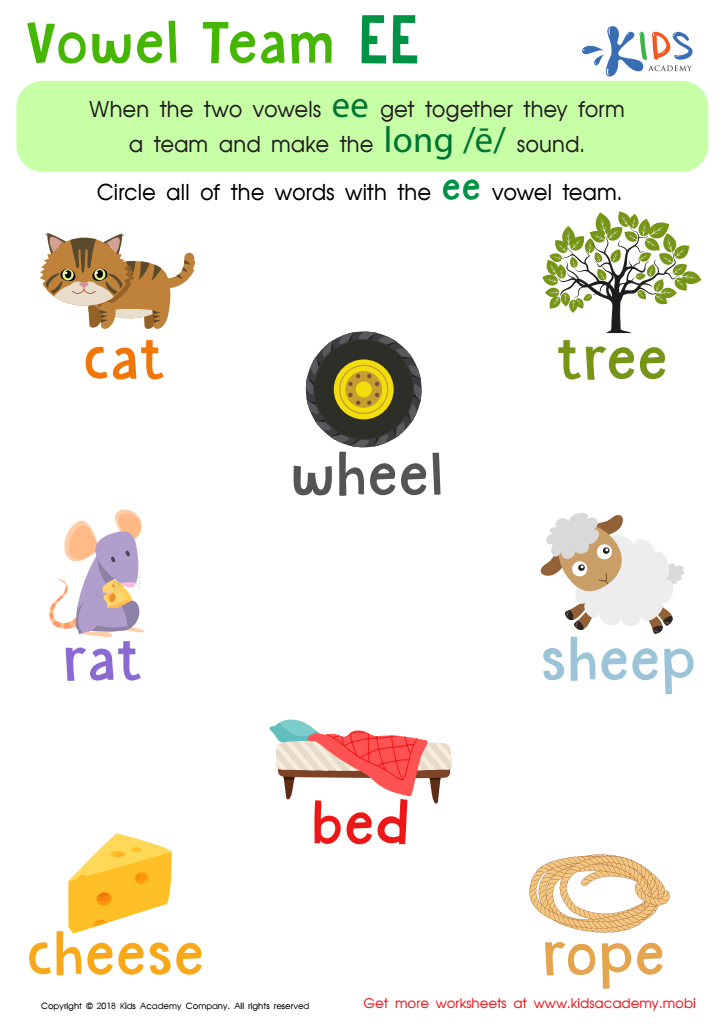
Reading: Vowel Team EE Worksheet
This worksheet is perfect for helping young learners master the /ee/ vowel team. It shows the first vowel with a long sound and the second vowel silent. It also provides pictures for unfamiliar words for readers of all levels. It's an ideal resource for teaching phonics skills.
Reading: Vowel Team EE Worksheet
Worksheet
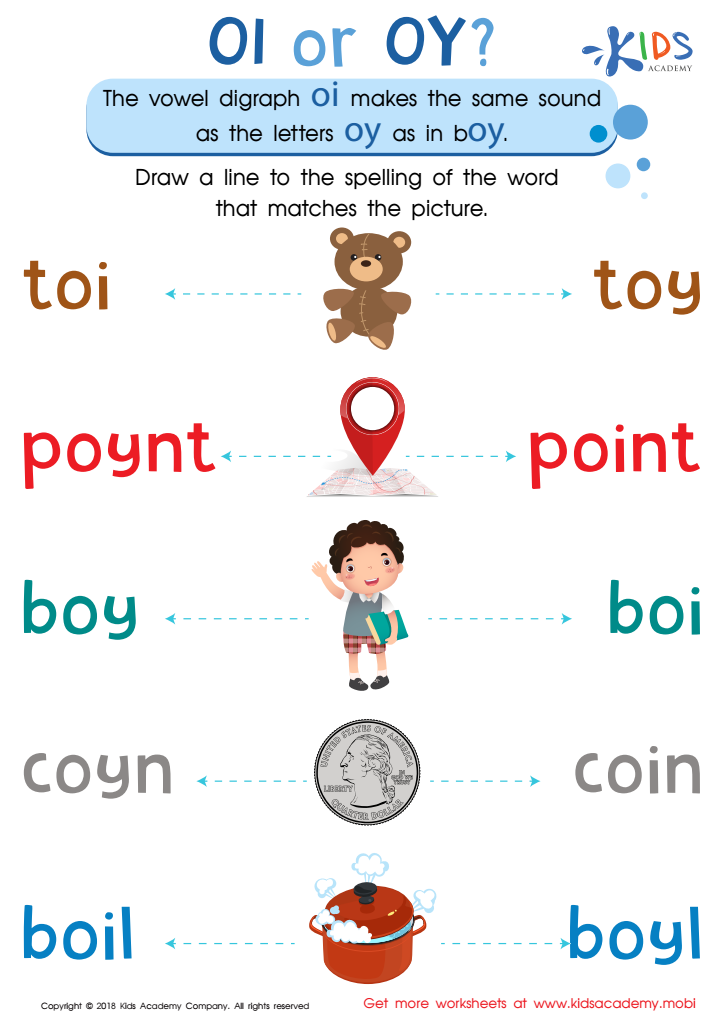
Reading: OI and OY Worksheet
Ask your students if they know the rule for words with /oi/ or /oy/ sound. If not, it's easy to learn! Rule: If /oy/ at end of word, spell with 'oy'; if /oi/ in middle of word, spell with 'oi'. Use this worksheet to help them master these digraphs and improve their ability to decode.
Reading: OI and OY Worksheet
Worksheet
Join Kids Academy for Free
Who is primarily going to use this learning content?





Parents and teachers should prioritize vowel recognition for 8-year-olds because it is foundational for reading proficiency and effective communication. Vowels are integral to the structure of words, forming the nucleus around which consonants cluster. Mastery of vowel sounds enhances phonemic awareness, allowing children to decode new words, recognize familiar ones, and improve their spelling accuracy. At this age, reading skills are transitioning from basic decoding to more fluent reading, and strong vowel recognition accelerates this transition.
As cognitive and linguistic skills develop, fluency and comprehension skills become pivotal. A lack of vowel recognition can hinder a child's ability to sound out new words, leading to frustration and a reluctance to read, which in turn negatively impacts academic performance across subjects. Proper understanding of vowel sounds also plays a critical role in writing, as it helps children spell words correctly and thus communicate more effectively.
Moreover, the confidence gained from reading well can influence a child's self-esteem and enthusiasm for learning. Investing time in vowel recognition can therefore pave the way for academic success and foster a lifelong love for reading. Teachers and parents can achieve this through engaging activities, targeted practice, and positive reinforcement, ensuring that every child has a strong linguistic foundation.







