Analog clock reading Worksheets for 8-Year-Olds
3 filtered results
-
From - To
Discover our engaging Analog Clock Reading Worksheets designed specifically for 8-year-olds! These worksheets provide an exciting way for children to master the art of telling time. Through a variety of activities, including drawing the hands of clocks and matching times, students will develop their understanding of both digital and analog time concepts. Aligned with educational standards, these resources help enhance critical thinking and problem-solving skills while making learning fun. Perfect for classroom use or at-home practice, our worksheets are a great way to reinforce time-telling skills in young learners. Start your child’s journey toward clock-reading confidence today!
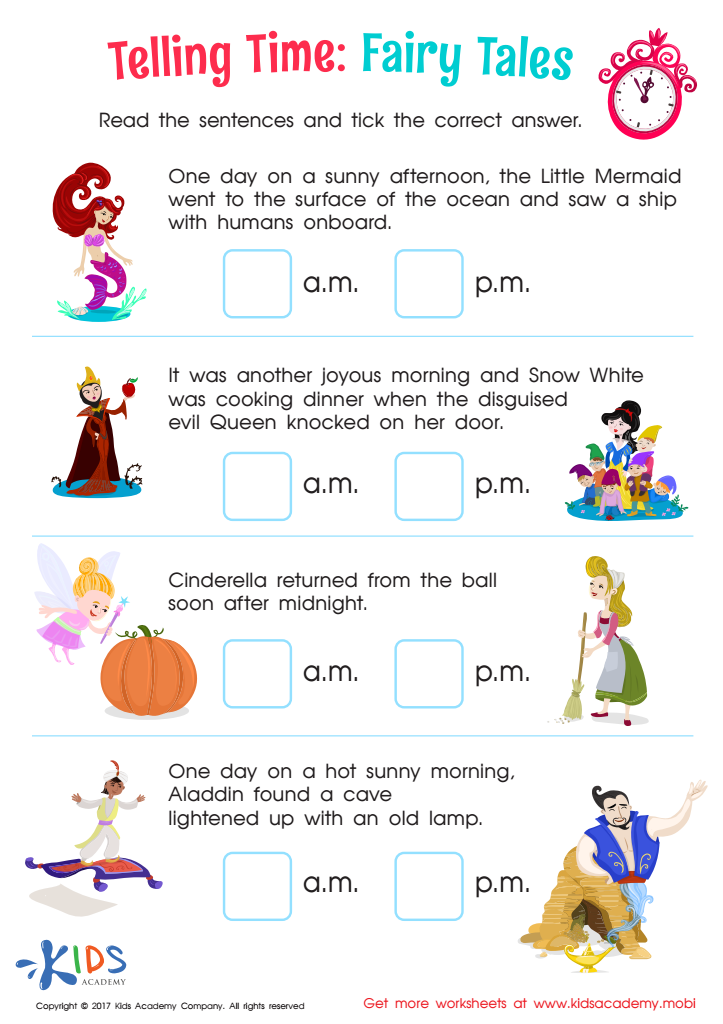
Telling Time: Fairy Tales Worksheet
 Assign to My Students
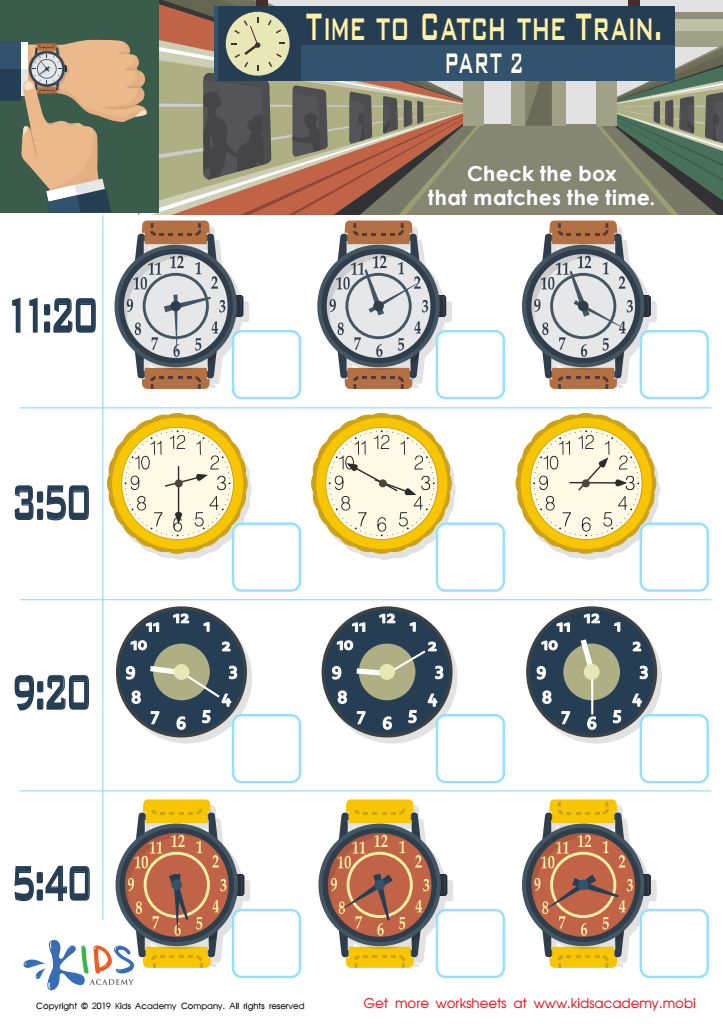
Time to Catch the Train Part 2 Worksheet








Teaching 8-year-olds to read analog clocks is crucial for their cognitive and life skills development. Firstly, analog clocks enhance children's ability to understand time as a continuous, flowing concept, rather than just discrete numerical digits found on digital displays. This fosters a deeper understanding of timing, such as spending various lengths of time on activities or grasping the concept of time intervals.
Additionally, reading an analog clock helps develop critical thinking and problem-solving skills. Kids must interpret the position of the hour and minute hands, fostering their logical reasoning and spatial awareness. Moreover, as analog clocks remain prevalent in architecture, public spaces, and traditional schooling, mastering this skill helps children navigate their environments confidently.
Learning to read analog clocks also promotes responsibility and independence. Children who can manage their time effectively are better equipped to adhere to schedules, complete homework, and participate in extracurricular activities. Finally, teaching this skill can create bonding moments between parents or teachers and children, making learning interactive and enjoyable. By valuing analog clock reading, we prepare our young learners for the future, ensuring they have the necessary tools to understand and manage their time efficiently.








