Comparing weights Worksheets for 8-Year-Olds
3 filtered results
-
From - To
Discover our engaging "Comparing Weights Worksheets" designed specifically for 8-year-olds! These worksheets help young learners develop essential skills in measurement and comparison. Students will explore different weights and learn to identify the heavier and lighter items through fun and interactive activities. Each worksheet features colorful illustrations and real-life scenarios that make math both enjoyable and relatable. Perfect for home or classroom use, our resources promote critical thinking and enhance mathematical understanding. With varying levels of difficulty, they cater to diverse learners, ensuring everyone can succeed. Visit our website today to access and download these valuable educational tools!
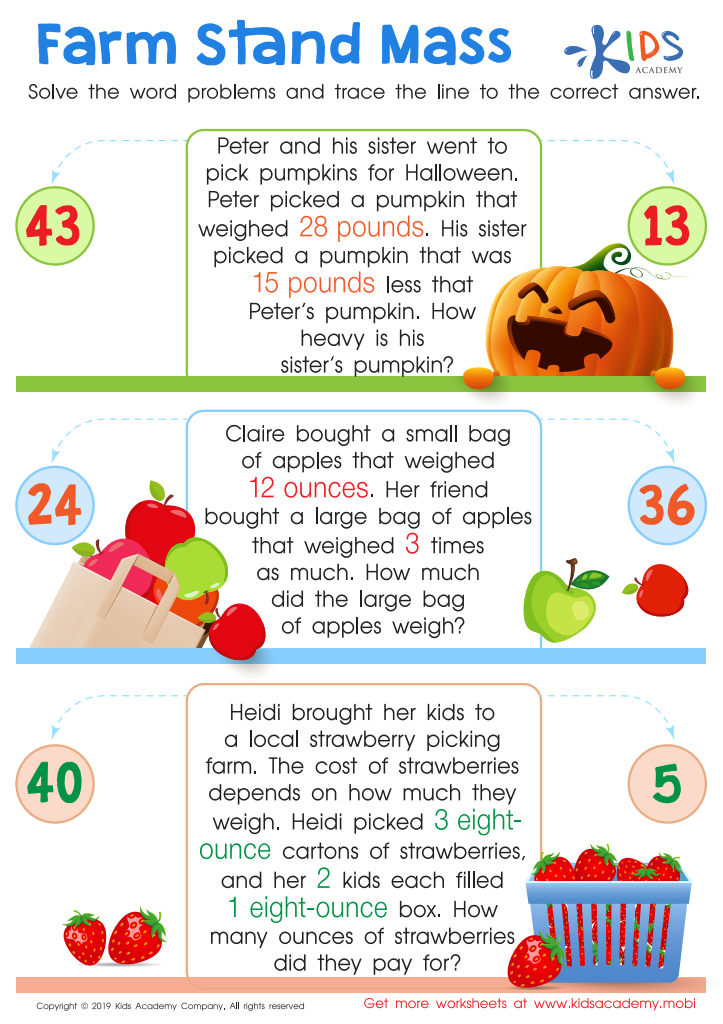
Farm Stand Mass Worksheet
 Assign to My Students
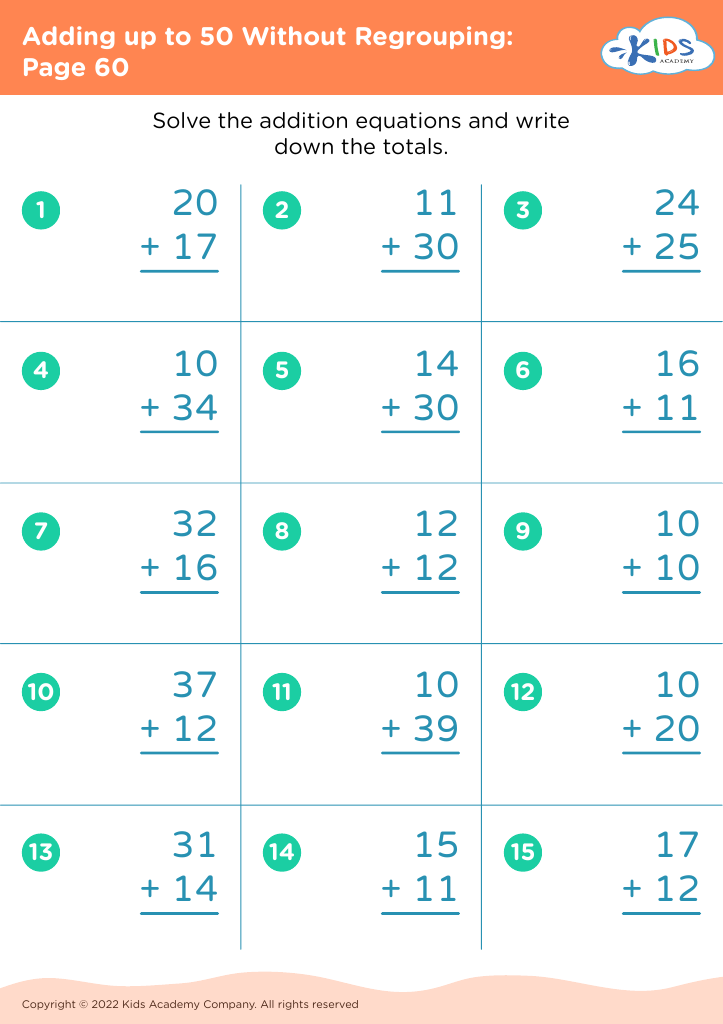
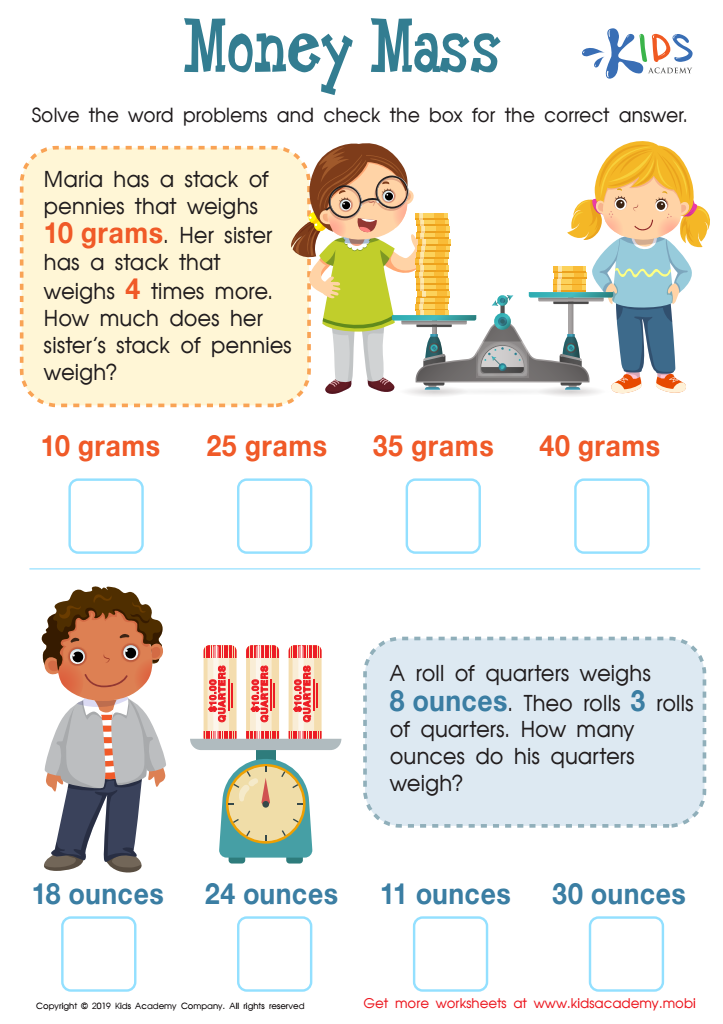
Money Mass Worksheet






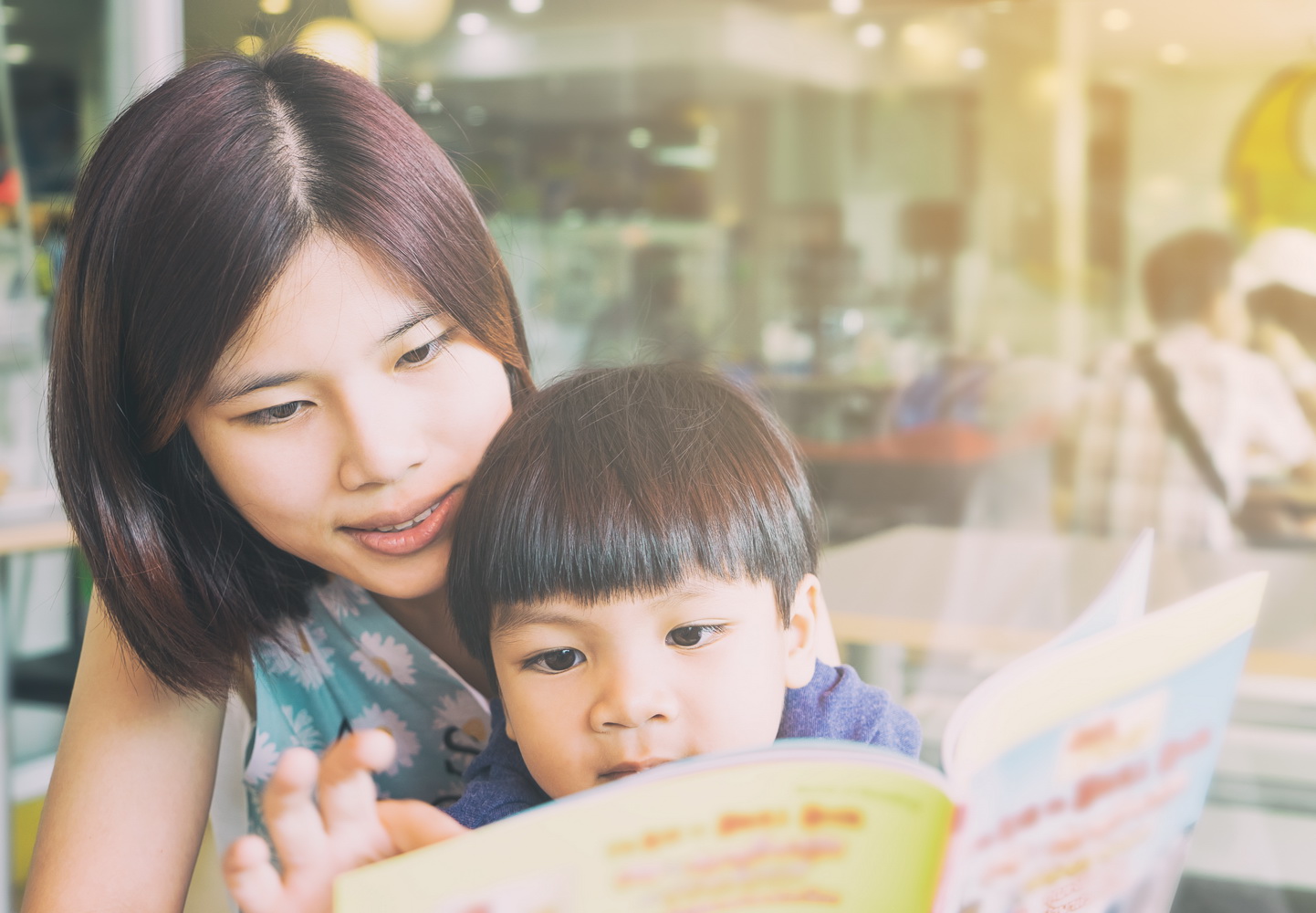

Comparing weights for 8-year-olds is crucial for several reasons that impact both health and development. Firstly, it helps to identify if a child is growing at a healthy rate compared to their peers. Monitoring weight provides insights into nutritional status, as underweight or overweight children may face health risks. Teachers and parents can use weight comparisons as a springboard for discussions about healthy eating habits and physical activity, promoting a balanced lifestyle from a young age.
Furthermore, weight comparisons can highlight potential developmental issues. If a child’s weight deviates significantly from the average for their age group, it may indicate underlying health conditions that need addressing. Early intervention can help prevent long-term complications and foster a healthy body image.
Additionally, understanding the social implications of weight is essential. Children who are out of the normal weight range may experience bullying or low self-esteem, impacting their social skills and emotional well-being.
Overall, by taking weight comparisons seriously, parents and teachers can better support the physical and emotional development of children, fostering an environment where healthy choices are prioritized, and children thrive both in and out of the classroom.








