Develop counting skills Worksheets for 8-Year-Olds
7 filtered results
-
From - To
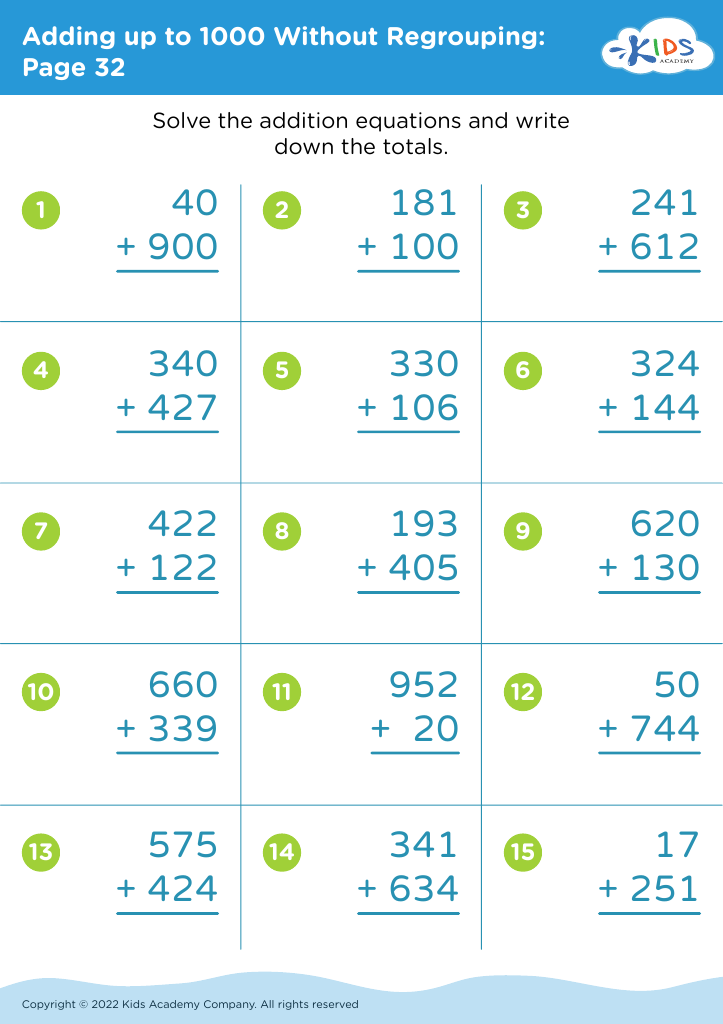
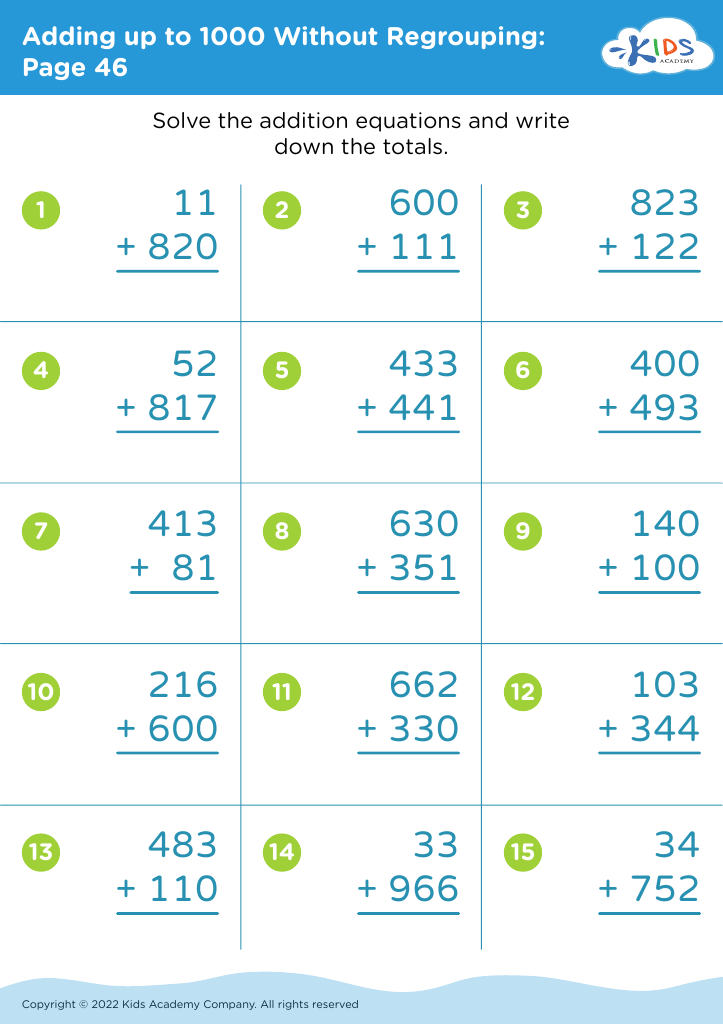
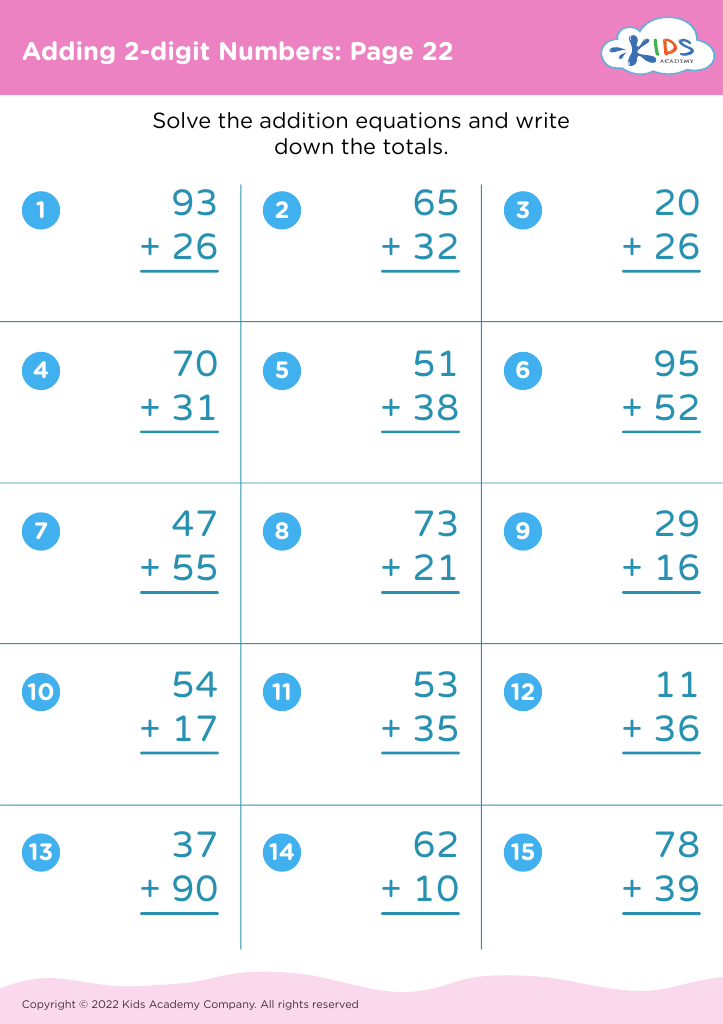
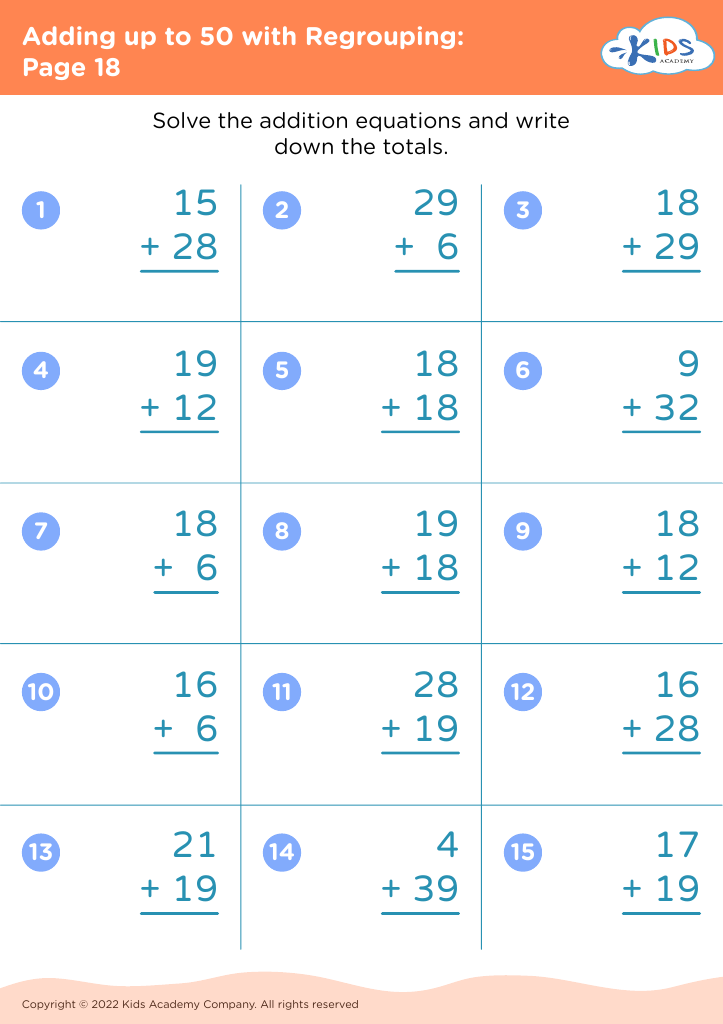
Welcome to our "Develop Counting Skills Worksheets for 8-Year-Olds" page! Here, you'll find a variety of engaging and interactive worksheets designed to enhance your child's counting abilities. Our resources focus on essential skills such as number recognition, skip counting, addition, and subtracting basic quantities. Each worksheet is tailored to make learning fun while providing practical exercises that strengthen your child's mathematics foundation. Suitable for classroom use or at-home practice, our counting worksheets align with educational standards to foster skill retention and application. Explore our collection today and empower your 8-year-old to master counting skills in an enjoyable way!
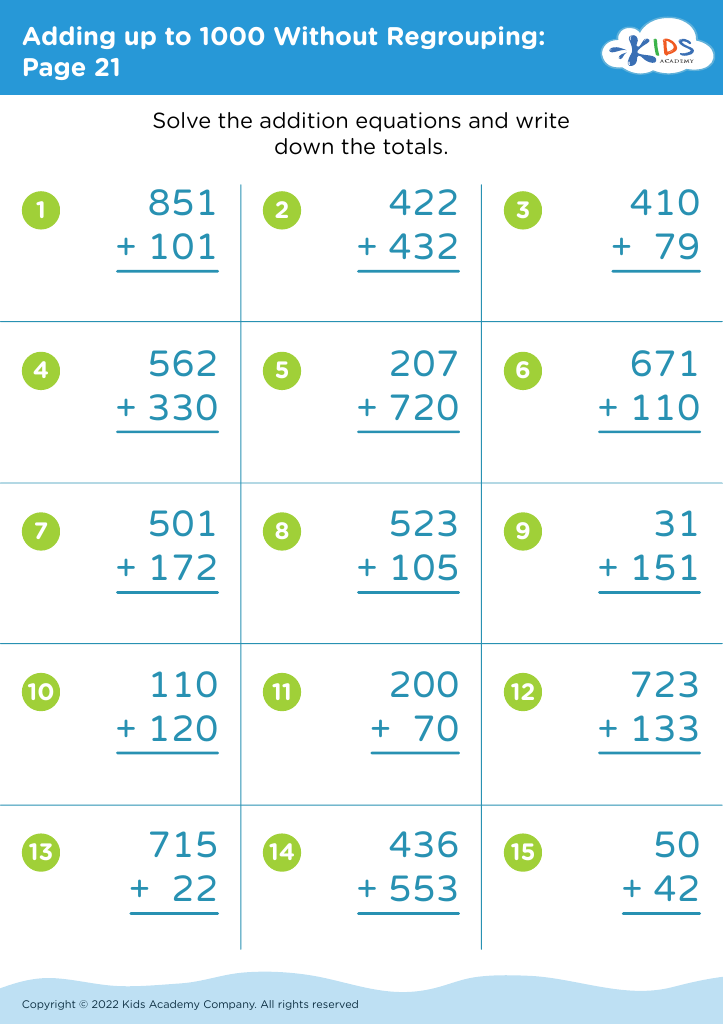
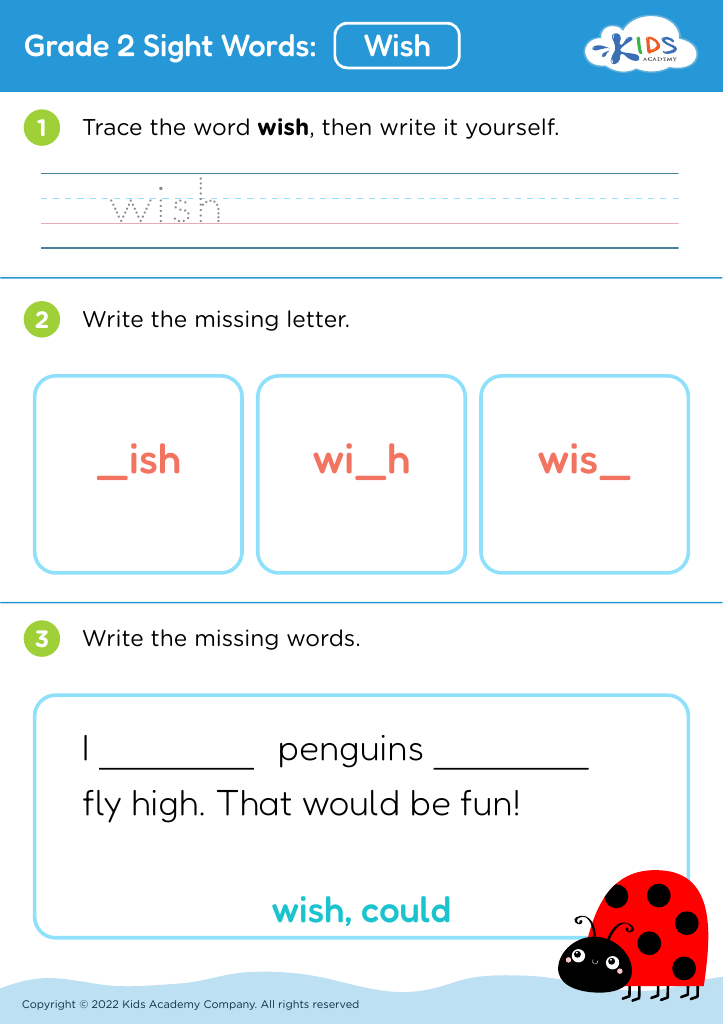
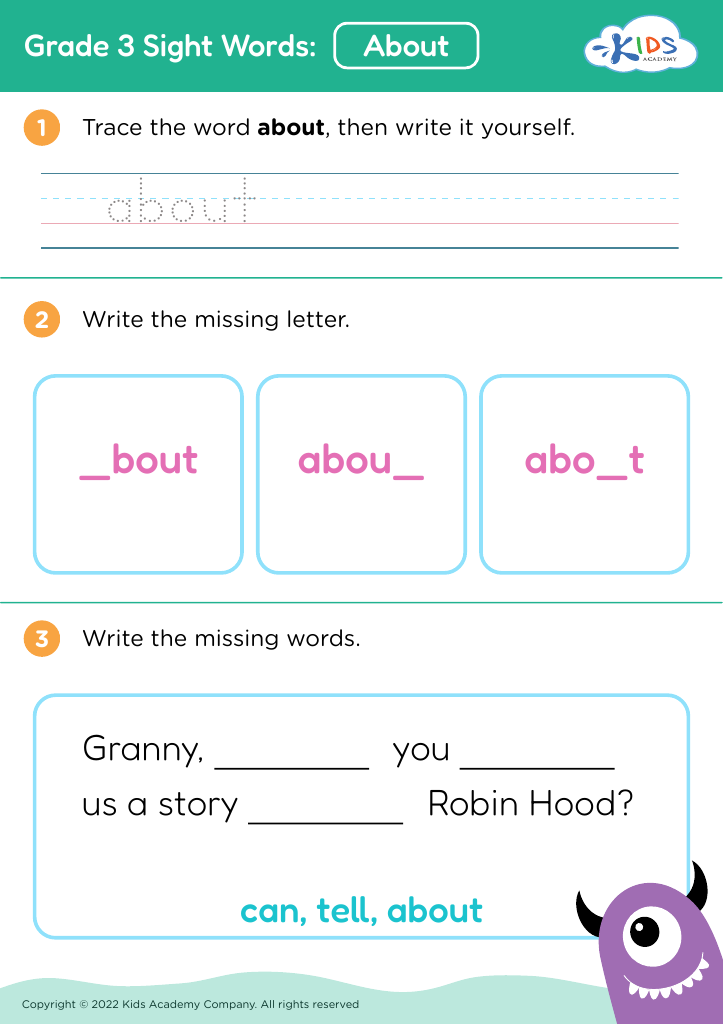








Developing counting skills in 8-year-olds is crucial for their overall mathematical understanding and cognitive development. At this age, children are transitioning from basic counting to more complex mathematical concepts, including addition, subtraction, and problem-solving abilities. Strong counting skills serve as a foundation for these advanced skills, enabling students to grasp more intricate mathematical concepts later on.
Furthermore, counting skills foster critical thinking and logical reasoning. Engaging in counting activities enhances their attention to detail, encouraging them to approach problems systematically. These skills are not only vital in mathematics but are also applicable in everyday situations, from shopping to cooking.
Parents and teachers should also recognize that counting skills contribute to a child's confidence and enthusiasm for learning. Mastery of counting breeds a sense of achievement, motivating children to tackle more challenging problems and subjects. Highlighting the importance of counting can enhance a child’s engagement with math, making it a fun and interactive experience rather than a chore.
Ultimately, a solid foundation in counting not only aids academic success but also prepares children for real-world applications. By prioritizing these skills, parents and teachers empower their children with the tools necessary for lifelong learning and development.








