Fractions understanding Worksheets for 8-Year-Olds
3 filtered results
-
From - To
Explore our engaging Fractions Understanding Worksheets designed specifically for 8-year-olds! These creative resources help young learners grasp essential fraction concepts through fun and interactive activities. Our worksheets provide colorful visuals and diverse exercises that cater to different learning styles, ensuring students can identify, compare, and simplify fractions with ease. With step-by-step guidance, kids will build confidence in mastering fractions, making math enjoyable and accessible. Ideal for classroom use or at-home practice, these worksheets encourage foundational skills for future mathematical success. Download now to inspire your child's love for learning and enhance their understanding of fractions today!
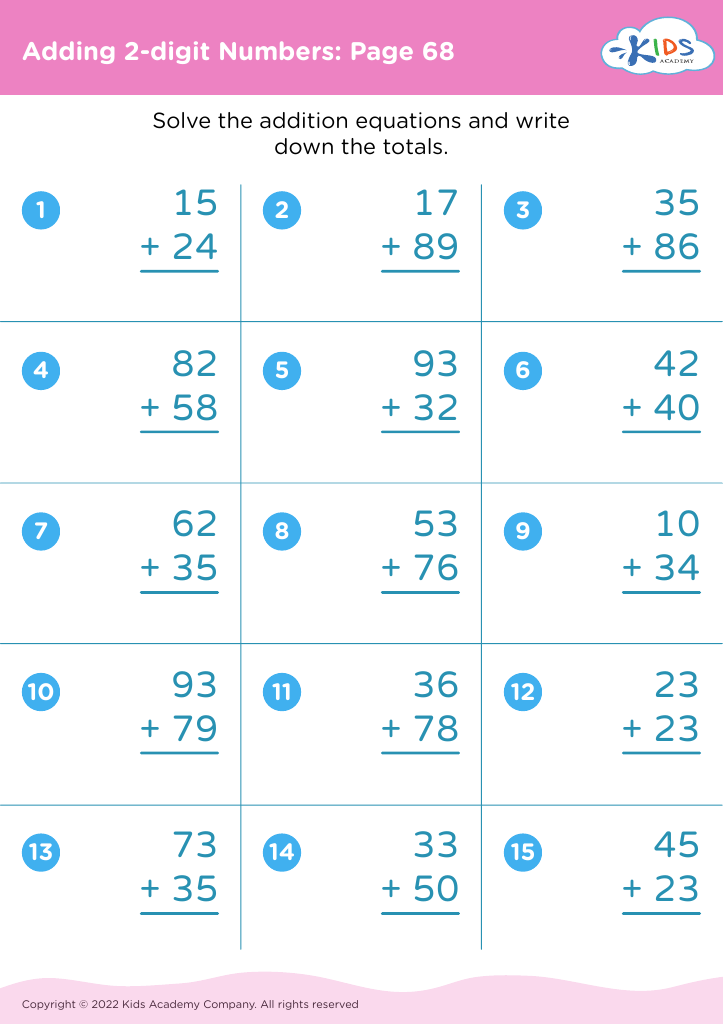
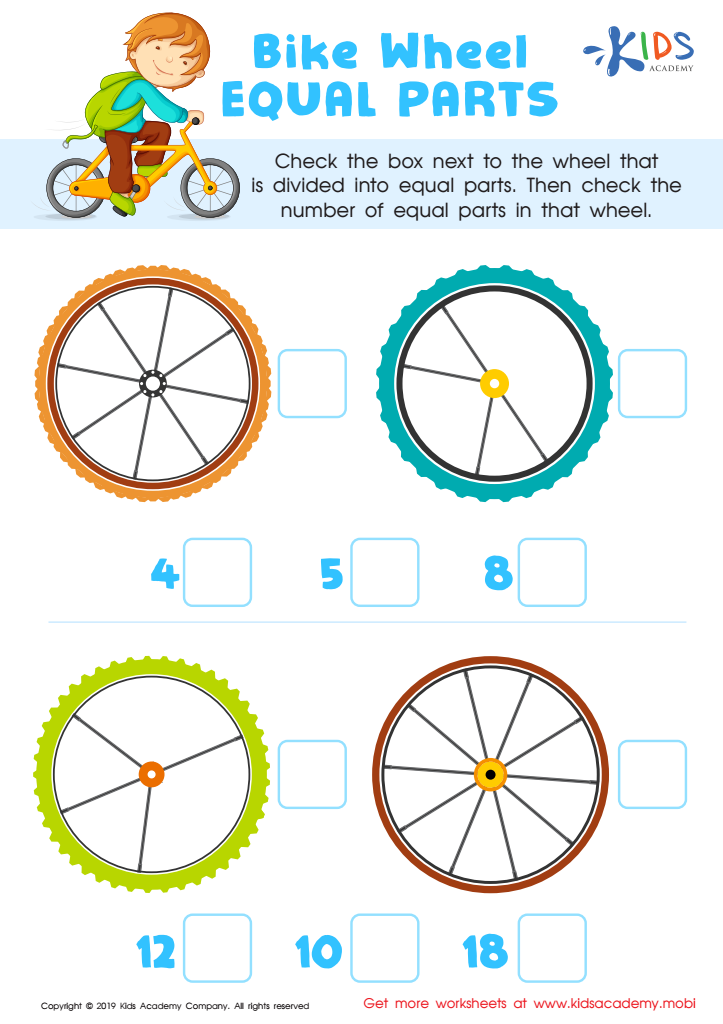
Bike Wheel Equal Parts Worksheet
 Assign to My Students
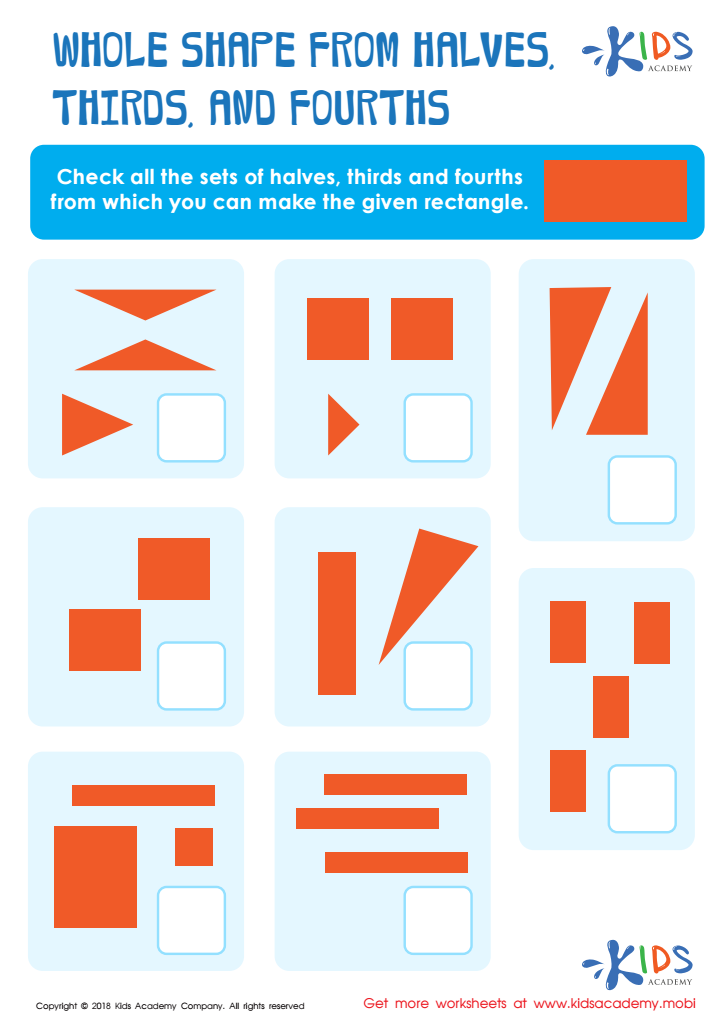
Whole Shape from Halves, Thirds and Fourths Worksheet






Understanding fractions is crucial for 8-year-olds as it lays the foundation for advanced mathematical concepts and skills. At this age, children begin to transition from whole numbers to more complex numerical representations, and grasping fractions helps them develop critical thinking and problem-solving abilities.
First, fractions are used in everyday life, from cooking to sharing resources, making it essential for kids to understand concepts of division and equality. When children learn about halves, quarters, or eighths, they become more adept at measuring, comparing, and understanding proportions, all of which are applicable in real-world scenarios.
Moreover, understanding fractions enhances their ability to engage with topics such as multiplication and division. It helps them recognize relationships among numbers, which is vital for success in advanced mathematics later on. Foundational comprehension of fractions boosts confidence in math, promoting a positive attitude toward the subject.
Finally, an early understanding of fractions contributes to improved cognitive skills, fostering the ability to think abstractly and make connections between concepts. It is essential for parents and teachers to prioritize fraction understanding not just for academic achievement, but for fostering overall mathematical fluency and confidence in their children.








