Identify numbers Worksheets for 8-Year-Olds
3 filtered results
-
From - To
Discover a fun and engaging way for 8-year-olds to master number identification with our comprehensive worksheets! Designed to enhance essential math skills, these worksheets offer a variety of interactive activities that encourage individual learning and mastery of numbers. Children will enjoy identifying, writing, and comparing numbers through vibrant visuals and engaging exercises tailored to their age group. Our printable worksheets not only support classroom learning but also promote confidence and independence when tackling number recognition. Perfect for parents and educators, these resources are ideal for enhancing the learning experience while providing kids with the tools they need for academic success.
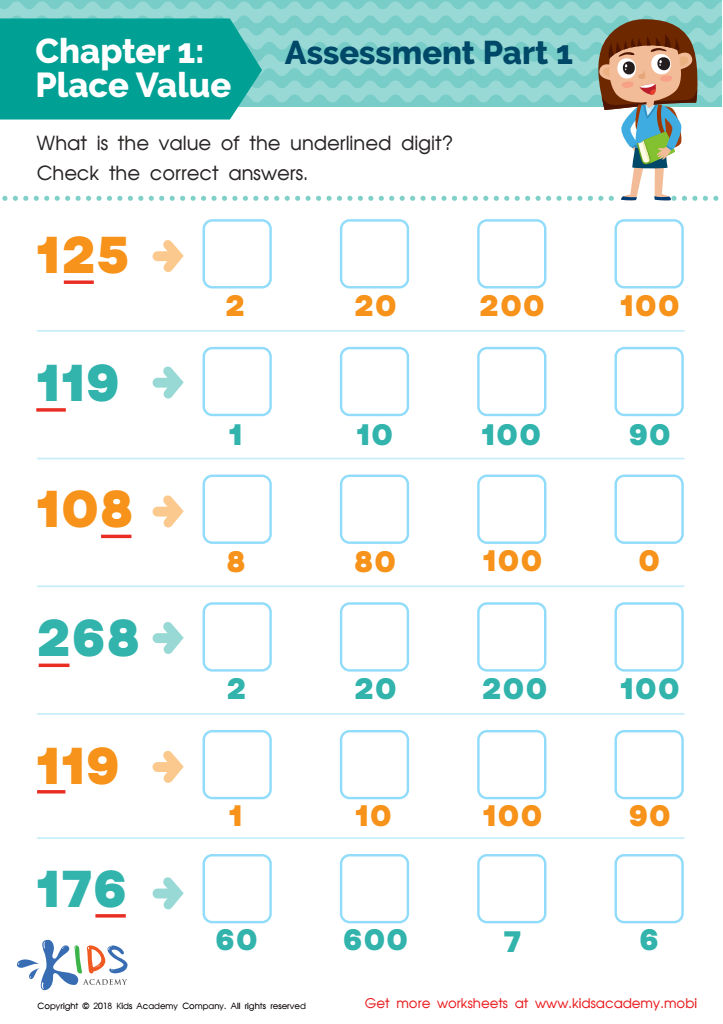
Place Value: Chapter 1 Worksheet
 Assign to My Students
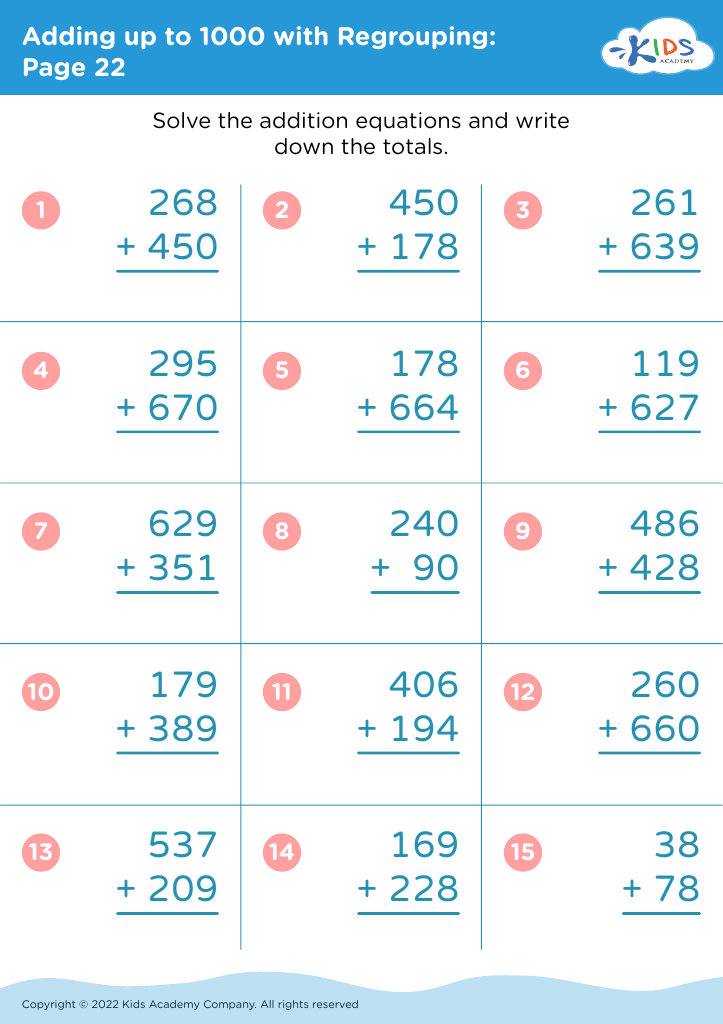
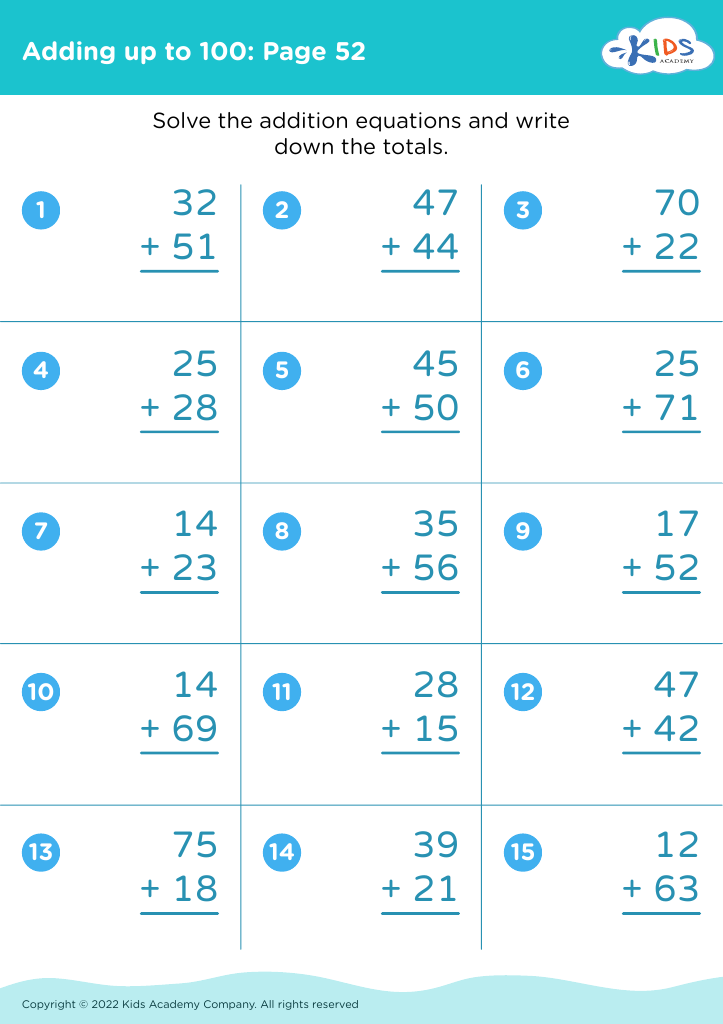







Identifying numbers is a foundational skill critical for 8-year-olds that lays the groundwork for future mathematical understanding. At this age, children are transitioning from basic arithmetic to more complex concepts, making number identification vital. Parents and teachers should care because just knowing numbers facilitates a child's ability to perform tasks such as addition, subtraction, and even the exploration of more advanced topics like multiplication and division.
When children confidently recognize and understand numbers, they can better engage in word problems and practical applications, enhancing their problem-solving skills. Furthermore, number sense promotes critical thinking, enabling students to analyze quantitative information they encounter in daily life, whether in shopping scenarios or through technology.
Additionally, fostering a strong grasp of numbers boosts a child’s confidence, reducing math anxiety. Engaging children with fun activities involving numbers, like games or real-world applications, makes learning enjoyable and interactive while promoting cognitive development. Teachers can integrate number identification in various subjects, ensuring a well-rounded education. Overall, prioritizing number identification can lead not only to improved academic performance but also to a lifelong appreciation for mathematics as a valuable life skill.








