
Improve problem-solving skills Worksheets for 8-Year-Olds
6 filtered results
Difficulty Level
Grade
Age
-
From - To
Subject
Activity
Standards
Enhance your child's problem-solving skills with our engaging worksheets designed specifically for 8-year-olds. Our resources provide age-appropriate puzzles, critical thinking exercises, and real-life scenarios that encourage young learners to think analytically and creatively. Each worksheet includes fun and interactive activities that make learning enjoyable, helping children develop essential cognitive skills while boosting their confidence. Whether at home or in the classroom, these worksheets are perfect for reinforcing problem-solving techniques in mathematics, logic, and everyday challenges. Empower your child to tackle obstacles with ease and foster a lifelong love for learning with our expertly crafted problem-solving skills worksheets!
Favorites
With answer key
Interactive
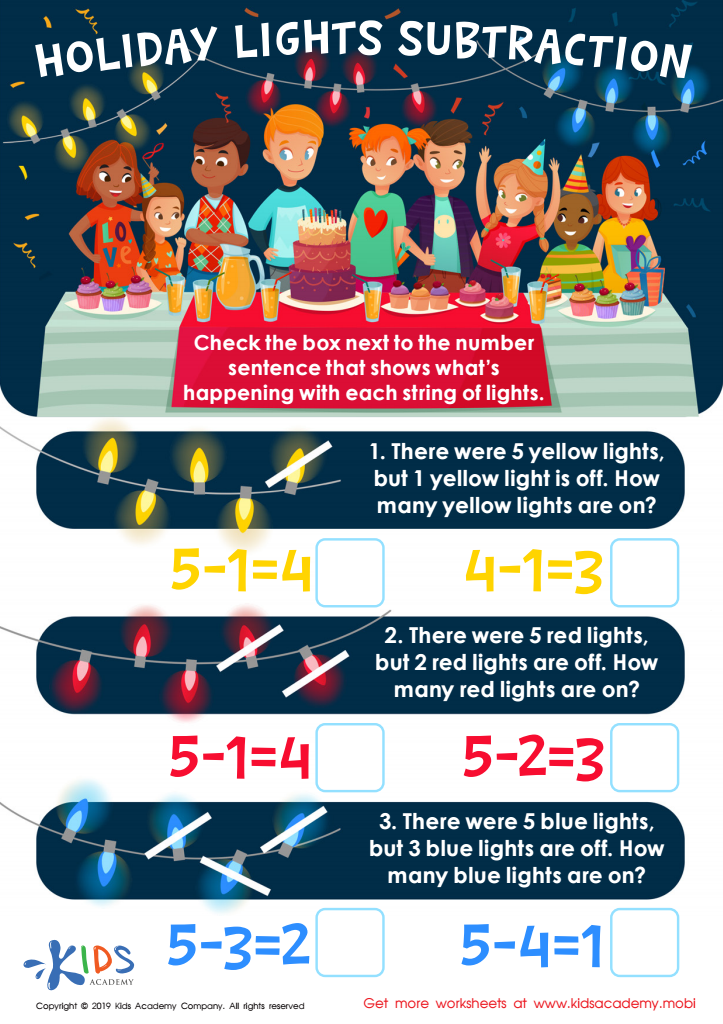
Holiday Lights Subtraction Worksheet
Before tackling the math problem, get your kids ready by asking them to share their favorite holiday and why. Then, look at the picture on the worksheet with them. Help them examine the numbers and problems, and select the number sentence that shows what's happening with each string of light. 80 words.
 Assign to My Students
Holiday Lights Subtraction Worksheet
Worksheet
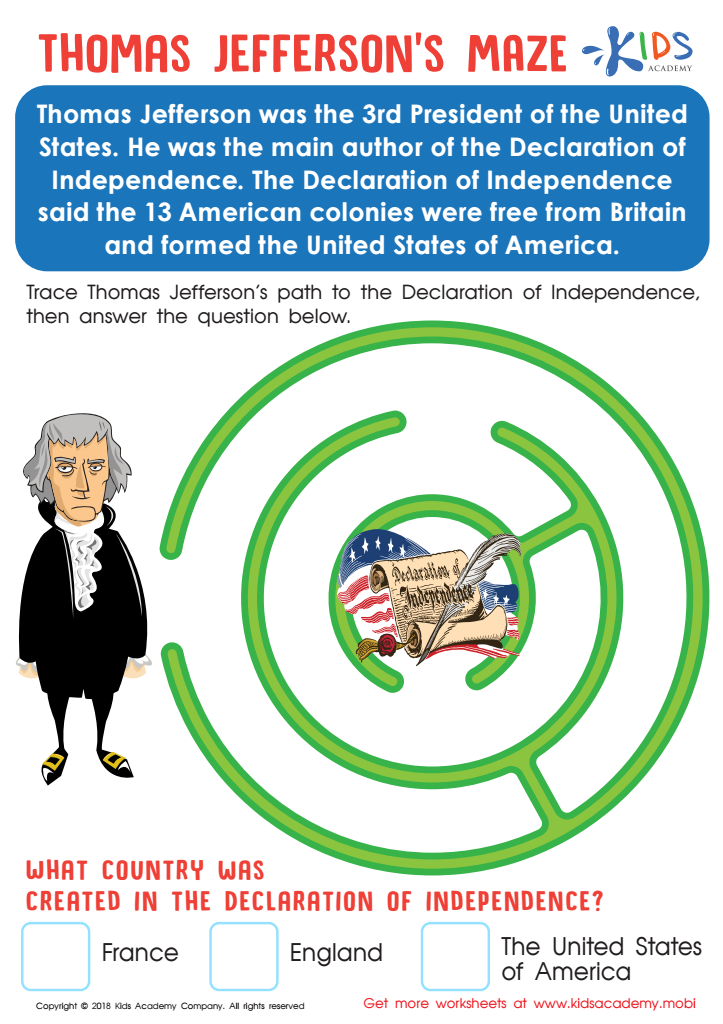
Thomas Jefferson's Maze Worksheet
Do your students know who Thomas Jefferson was? He was the 3rd US president and wrote the Declaration of Independence, setting the 13 Original Colonies free from British rule. This momentous act shaped American history and helped build the nation we know today.
Thomas Jefferson's Maze Worksheet
Worksheet
Join Kids Academy for Free
Who is primarily going to use this learning content?







Improving problem-solving skills in 8-year-olds is crucial for their cognitive development and future success. At this age, children are beginning to encounter more complex challenges in school and life, making it essential for parents and teachers to foster these skills. Strong problem-solving abilities encourage critical thinking, creativity, and resilience, helping children learn to approach difficulties with confidence and persistence.
Moreover, developing problem-solving skills prepares children for academic and real-world scenarios. Rather than relying solely on memorization, problem-solving engages them in deeper learning, promoting comprehension and application of knowledge. It cultivates a growth mindset, encouraging students to view mistakes as opportunities for learning rather than setbacks.
Engaging students in collaborative problem-solving activities also promotes social development, as they learn teamwork, communication, and empathy through shared challenges. Parents and teachers can enhance these skills through fun, hands-on activities like puzzles, games, and open-ended questions, making learning enjoyable.
Ultimately, problem-solving skills are foundational for lifelong learning, equipping children to navigate the complexities of future educational challenges, social interactions, and everyday decisions. By fostering these abilities early on, parents and teachers are setting the stage for both academic success and personal growth.








