Improving mental math Worksheets for 8-Year-Olds
3 filtered results
-
From - To
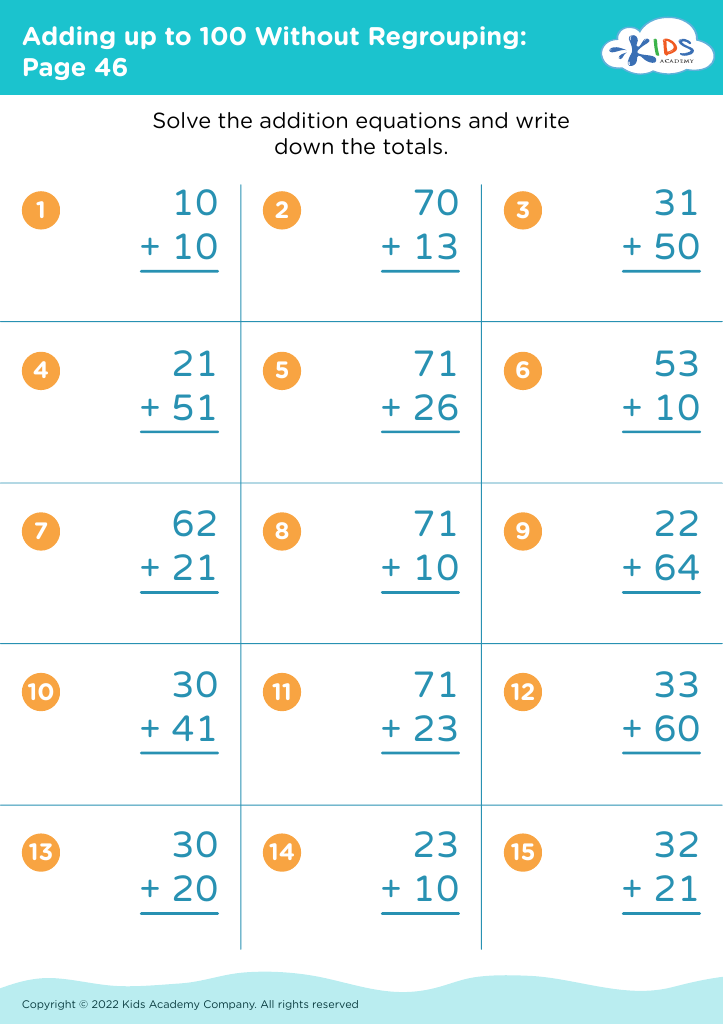
Welcome to our "Improving Mental Math Worksheets for 8-Year-Olds" page! Here, you’ll discover a fantastic collection of engaging worksheets designed to boost your child's mental math skills. Tailored specifically for eight-year-olds, these resources promote quick thinking and confidence in arithmetic through fun and interactive activities. With various exercises, including addition, subtraction, multiplication, and division challenges, children will develop their ability to solve problems mentally, enhancing their overall math proficiency. Perfect for homeschooling or classroom use, our worksheets make learning enjoyable and help build strong foundational math skills. Empower your child to become a math whiz today!
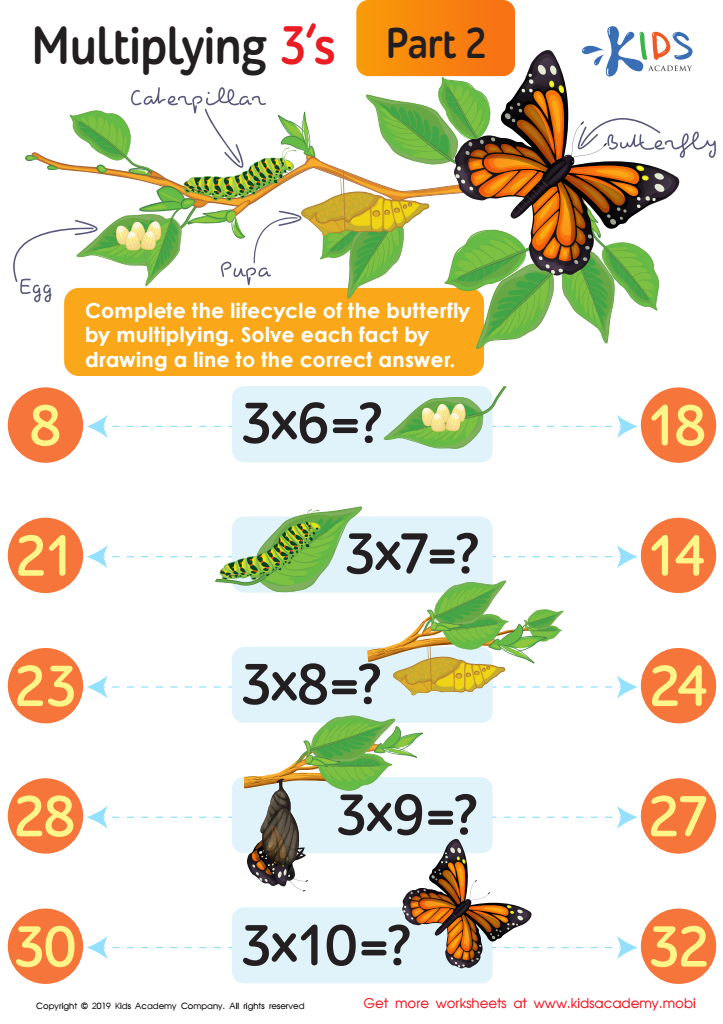
Multiplying 3s Part 2 Worksheet
 Assign to My Students
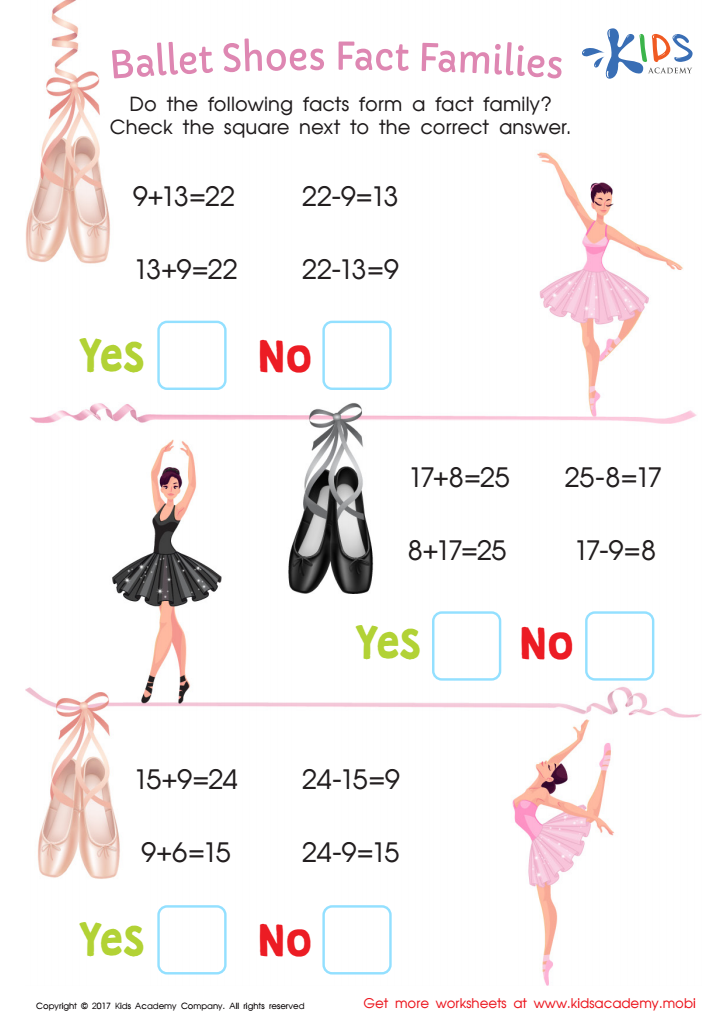
Ballet Shoes Fact Family Printable







Improving mental math skills for 8-year-olds is crucial for several reasons, making it a top priority for parents and teachers. Firstly, mental math enhances children's confidence in their mathematical abilities. Mastering arithmetic operations such as addition, subtraction, multiplication, and division mentally helps them to develop a stronger mathematical foundation and boosts their self-esteem in problem-solving situations.
Secondly, mental math promotes critical thinking and cognitive flexibility. Children learn to recognize patterns and relationships in numbers, which helps them make connections and apply their knowledge in real-world situations. This foundational skill supports future learning in more complex mathematical concepts.
Furthermore, improving mental math encourages greater engagement in classroom activities. Children who feel confident in their math abilities are likely to participate more actively, fostering a positive classroom environment. This engagement can enhance their overall academic performance, leading to better grades and a love for learning.
Lastly, strong mental math skills can have implications beyond the classroom, supporting financial literacy and everyday decision-making. By investing time in developing these skills, parents and teachers equip children with essential life skills that will serve them well throughout their educational journey and beyond.








