
Rhyming skills Worksheets for 8-Year-Olds
3 filtered results
Difficulty Level
Grade
Age
-
From - To
Subject
Activity
Standards
Enhance your child's language skills with our engaging Rhyming Skills Worksheets designed for 8-year-olds! These worksheets provide a fun and interactive way to improve phonetic recognition and vocabulary through rhyme. Children will enjoy diverse activities that include matching, filling in blanks, and creating their own rhyming words, making learning both effective and enjoyable. Our carefully crafted materials cater to various learning styles, fostering creativity and critical thinking. Perfect for classrooms or at-home learning, these worksheets help build a strong foundation in literacy. Explore our collection today and watch your child's confidence in reading and writing soar!
Favorites
With answer key
Interactive
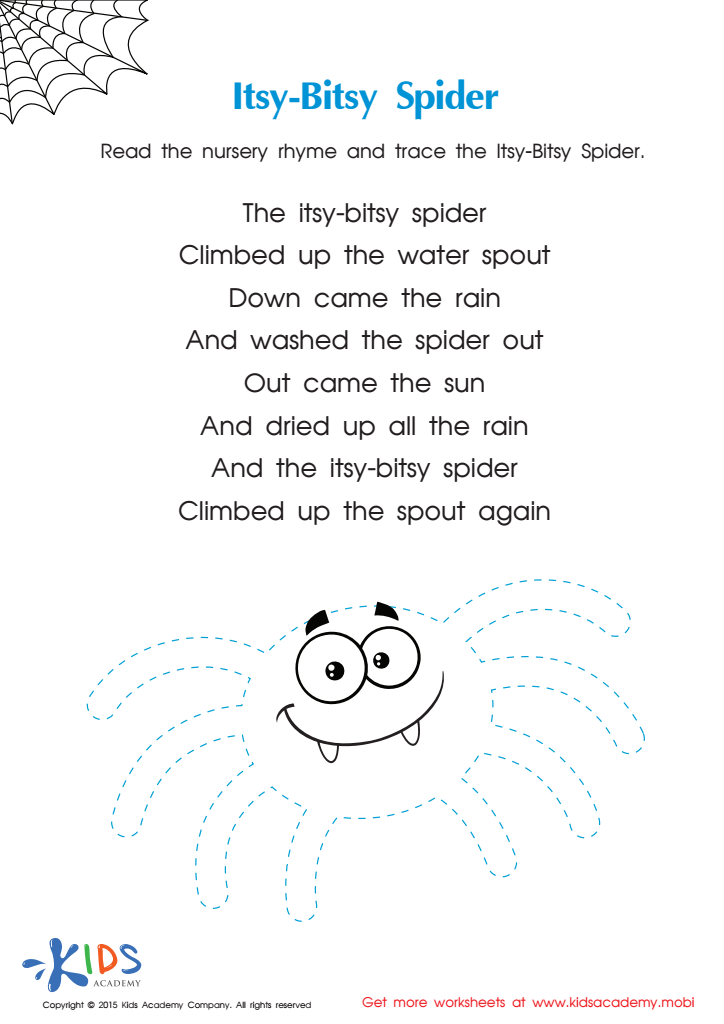
Itsy Bitsy Spider Nursery Rhyme PDF Worksheet
Introduce your child to the classic nursery rhyme with this worksheet. They'll learn the song, develop their motor skills, and find and count the letters 'A'. Pick up your crayons and add some color to the missing spider!
 Assign to My Students
Itsy Bitsy Spider Nursery Rhyme PDF Worksheet
Worksheet
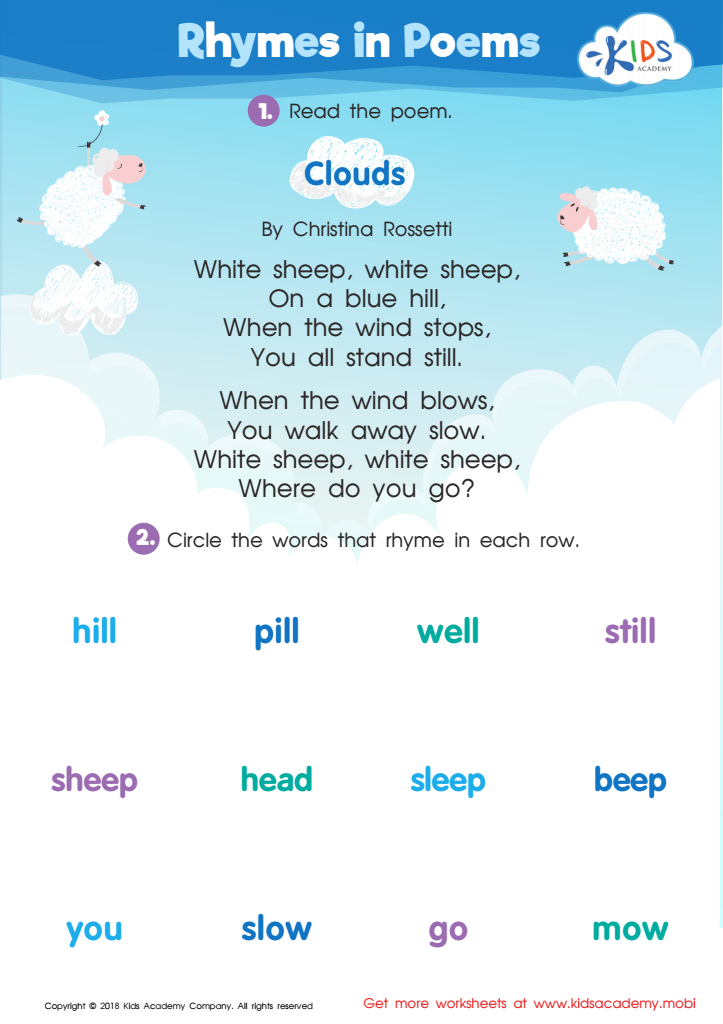
Rhymes in Poems Worksheet
Poems are lovely works of literature; some with rhymes, and some without. This poem for kids is full of rhymes and tells the tale of a sheep. Read it aloud to your kids, then help them circle the rhyming words.
Rhymes in Poems Worksheet
Worksheet
Join Kids Academy for Free
Who is primarily going to use this learning content?







Rhyming skills play a crucial role in early literacy development, particularly for 8-year-olds. At this age, children are refining their reading and writing abilities, and understanding rhyme enhances phonemic awareness—the ability to hear, identify, and manipulate sounds in words. This skill is foundational for spelling and reading fluency, enabling children to decode new words more easily.
Moreover, when children engage with rhyming, they develop their vocabulary and strengthen their comprehension skills. Rhymes can make learning more enjoyable and engaging, turning lessons into playful experiences that foster a love of language. This enjoyment encourages both reading and writing, helping to build confidence in literacy endeavors.
Parents and teachers should also recognize that rhyming fosters creativity and cognitive skills. It encourages pattern recognition, which is vital not just in language arts but in mathematics and other subjects as well. Furthermore, exploring rhyming can facilitate social skills through group activities, enhancing teamwork and communication among peers.
In summary, promoting rhyming skills is essential for developing essential reading, writing, and critical thinking competencies in children, making it a key focus for parents and educators alike.








