Spatial Orientation Worksheets for 8-Year-Olds
3 filtered results
-
From - To
Enhance your child's spatial awareness with our engaging Spatial Orientation Worksheets designed specifically for 8-year-olds! These worksheets are perfect for developing essential skills such as directional understanding, object positioning, and visual perception. Through fun and interactive activities, children will learn to interpret maps, solve puzzles, and improve their ability to visualize spaces. Our thoughtfully crafted worksheets cater to varying skill levels, ensuring that each child can progress at their own pace. Help your child build a strong foundation in spatial orientation, which is critical for math, science, and everyday problem-solving. Download these worksheets today and watch them excel!
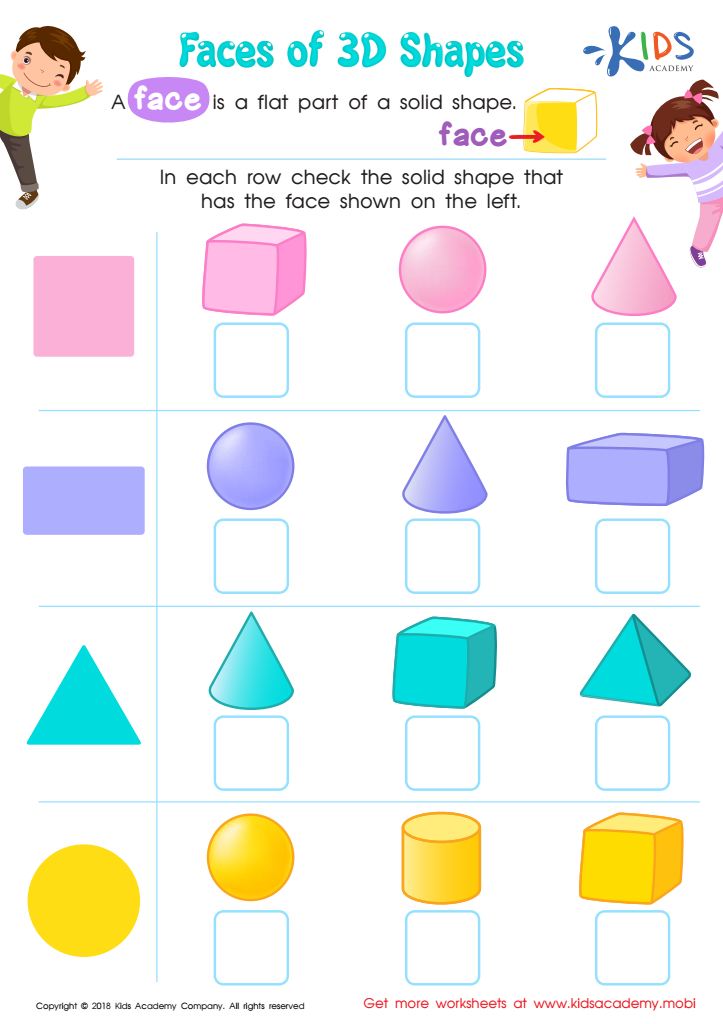
Faces of 3D Shapes Worksheet
 Assign to My Students
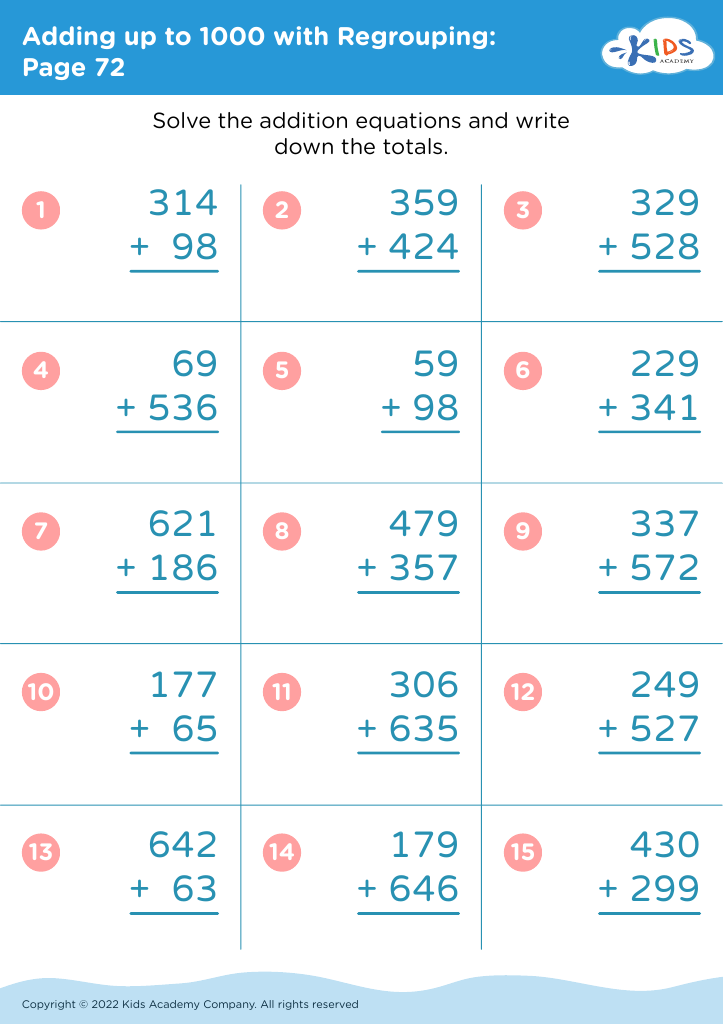
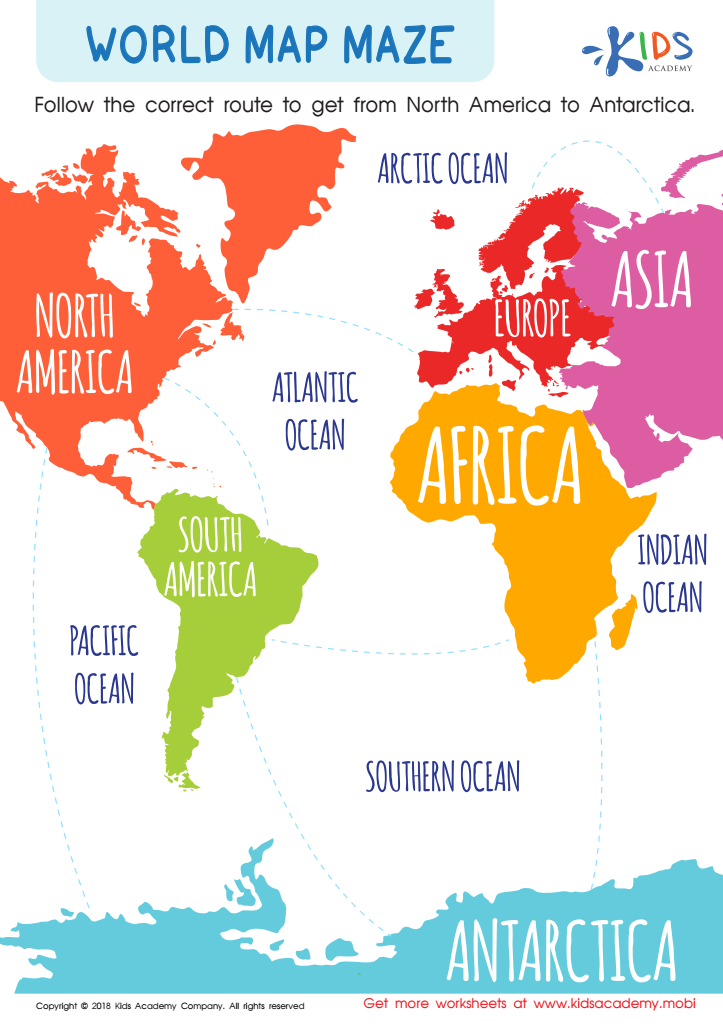
World Map Maze Worksheet







Spatial orientation is crucial for the cognitive and physical development of 8-year-olds. At this age, children are not only refining their motor skills but also beginning to understand complex relationships between objects and spaces, which lays the foundation for lifelong learning in subjects like math, science, and geography.
Parents and teachers should care about spatial orientation because it enhances problem-solving skills and critical thinking. When children understand how objects relate to one another in space, they become better equipped to approach challenges with creativity. For example, spatial awareness is essential for tasks like reading maps, estimating distances, and predicting outcomes.
Furthermore, engaging activities that develop spatial orientation, such as puzzles, building blocks, and navigation games, promote teamwork and communication skills. These experiences foster social interactions and emotional growth, vital at this developmental stage.
Additionally, strong spatial skills are linked to future academic success, particularly in STEM (science, technology, engineering, and mathematics) fields, which are increasingly important in our technology-driven world. By nurturing children's spatial orientation now, parents and teachers can support their overall development and set them on a path toward a bright and versatile future.








