Understand number relationships Worksheets for 8-Year-Olds
4 filtered results
-
From - To
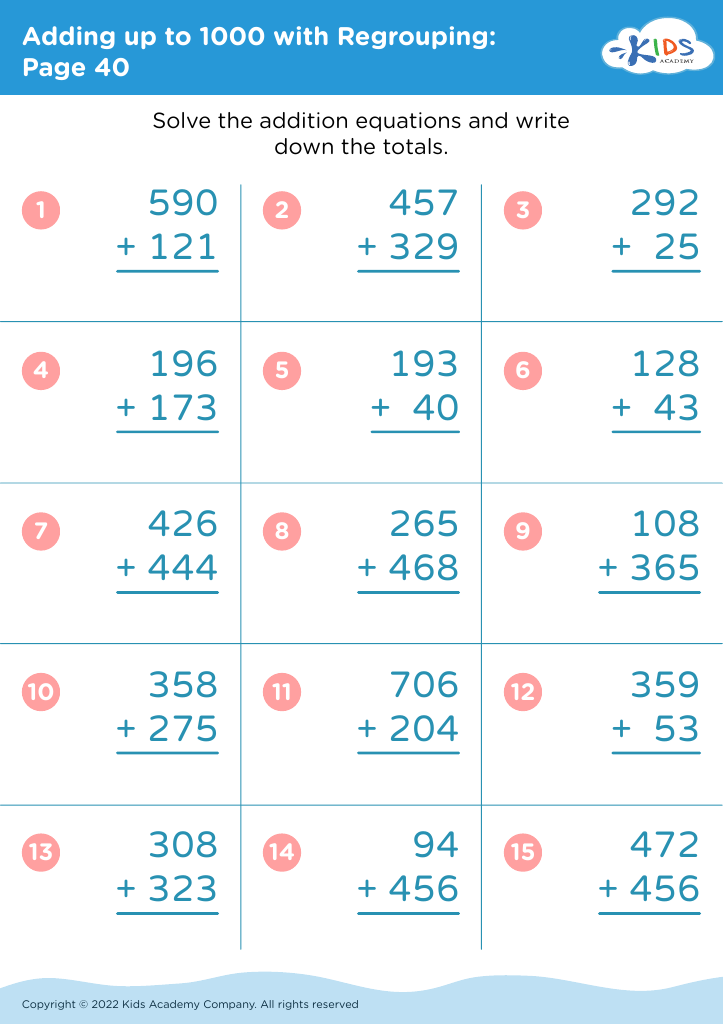
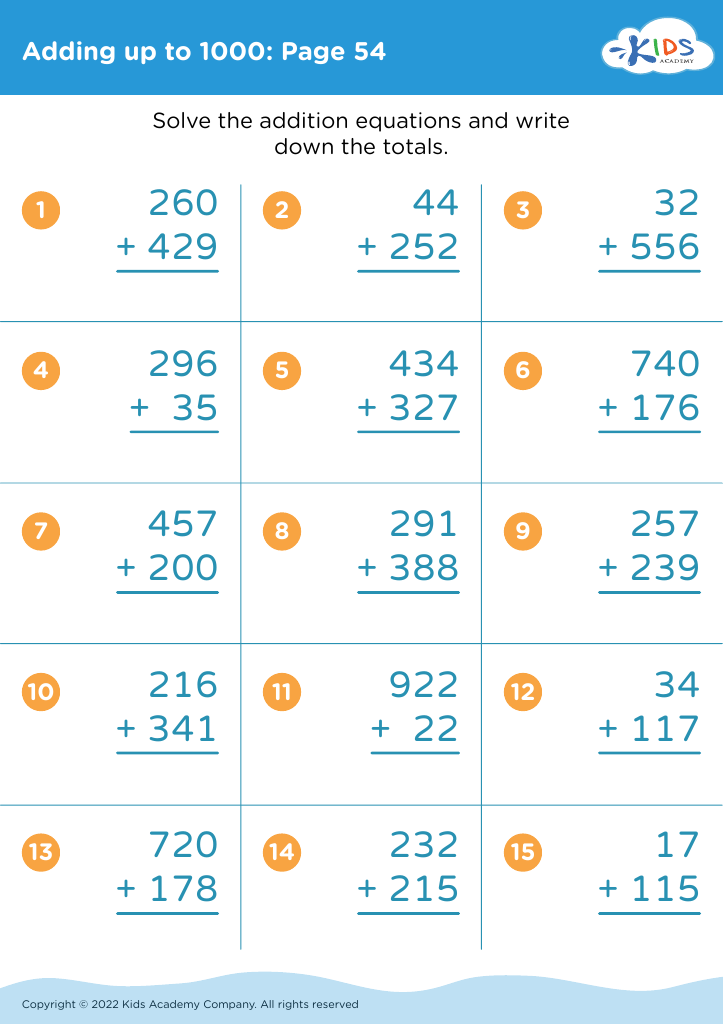
Discover our engaging "Understand Number Relationships Worksheets" designed specifically for 8-year-olds to enhance their mathematical skills! These printable worksheets focus on key concepts like identifying and demonstrating number relationships, understanding greater than and less than, and mastering addition and subtraction patterns. Tailored to align with learning standards, our worksheets promote critical thinking and problem-solving, making math enjoyable. With a variety of fun activities, your child will practice finding connections between numbers while building confidence in their math abilities. Perfect for classroom or at-home learning, these resources provide the foundation necessary for future mathematical success. Start exploring today!
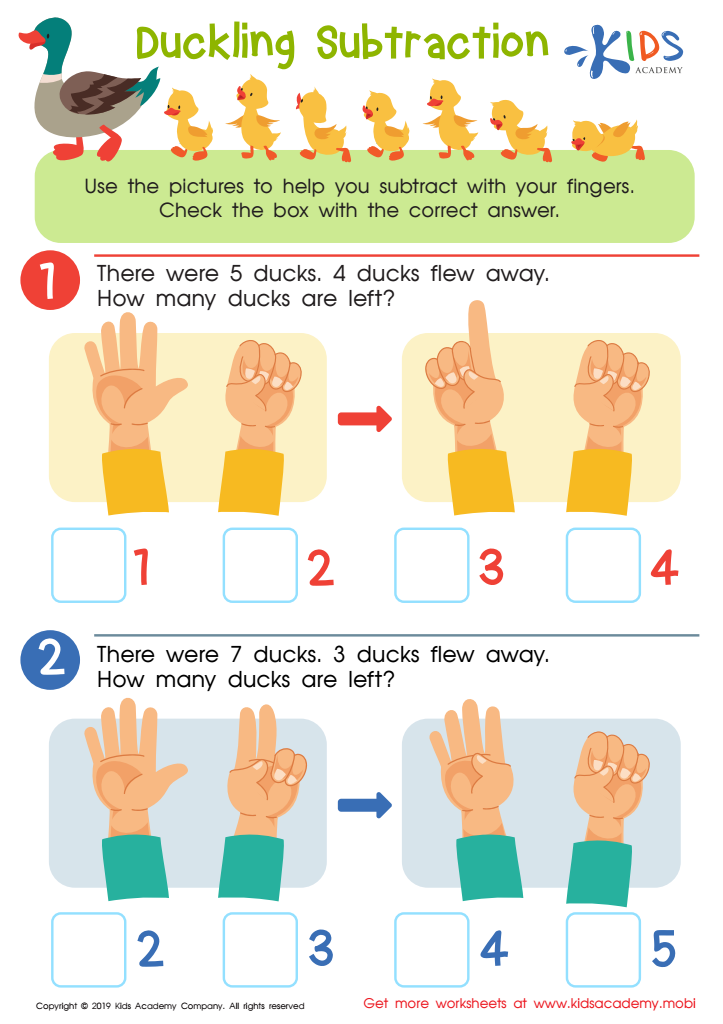
Duckling Subtraction Worksheet
 Assign to My Students








Understanding number relationships is crucial for 8-year-olds as it lays the foundation for their mathematical development and critical thinking skills. At this age, children are transitioning from basic arithmetic to more complex concepts, such as fractions, multiplication, and division. Grasping number relationships helps them recognize how numbers interact, which promotes better problem-solving abilities.
When parents and teachers prioritize number relationships, they encourage children to think deeply about mathematics rather than relying solely on memorization. For example, understanding that 8 is double 4 allows students to build strong mathematical connections that can apply in various contexts, such as real-life scenarios and more advanced math topics in the future.
Furthermore, a solid understanding of number relationships boosts children's confidence in mathematics. This confidence can lead to a positive attitude towards learning, reducing math anxiety and encouraging inquisitiveness. By fostering these skills early on, mothers, fathers, and educators equip children with the tools needed to approach math with a growth mindset, ultimately helping to prepare them for future academic challenges. In a world increasingly driven by data and analysis, these foundational skills will serve them well throughout their educational journey and beyond.








