Discover engaging "Understanding Symmetry Worksheets for 8-Year-Olds" at Kids Academy! These expertly designed printables help children explore the fascinating world of symmetry through fun, hands-on activities. Your child will learn to identify symmetrical shapes, draw reflective patterns, and understand symmetry in nature and art. Our colorful, easy-to-follow worksheets make mastering this foundational math skill enjoyable. Perfect for at-home learning or classroom use, they reinforce critical thinking and visual-spatial skills. Join us at Kids Academy and give your child the tools they need to thrive in their mathematical journey. Unveil the magic of symmetrical wonders today!
Check out this FREE "Understanding symmetry" Trial Lesson for age 8!

Solve Story Problems -Using Your Fingers

Favorites
With answer key
Interactive
  • 8
  • Understanding symmetry
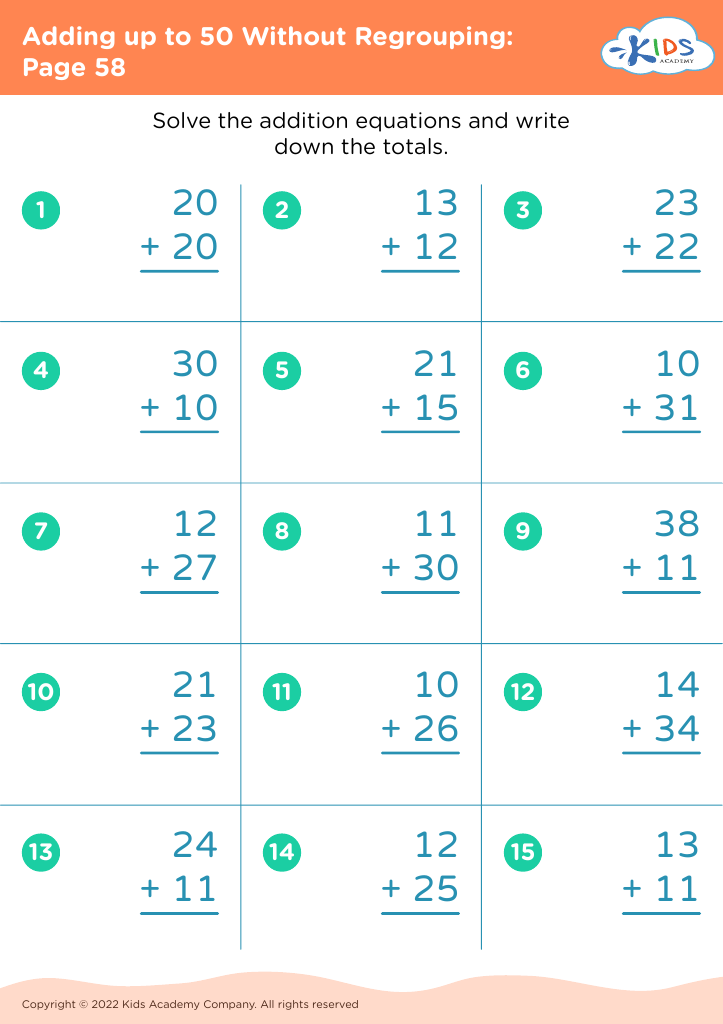
Adding up to 50 Without Regrouping: Page 58
Worksheet
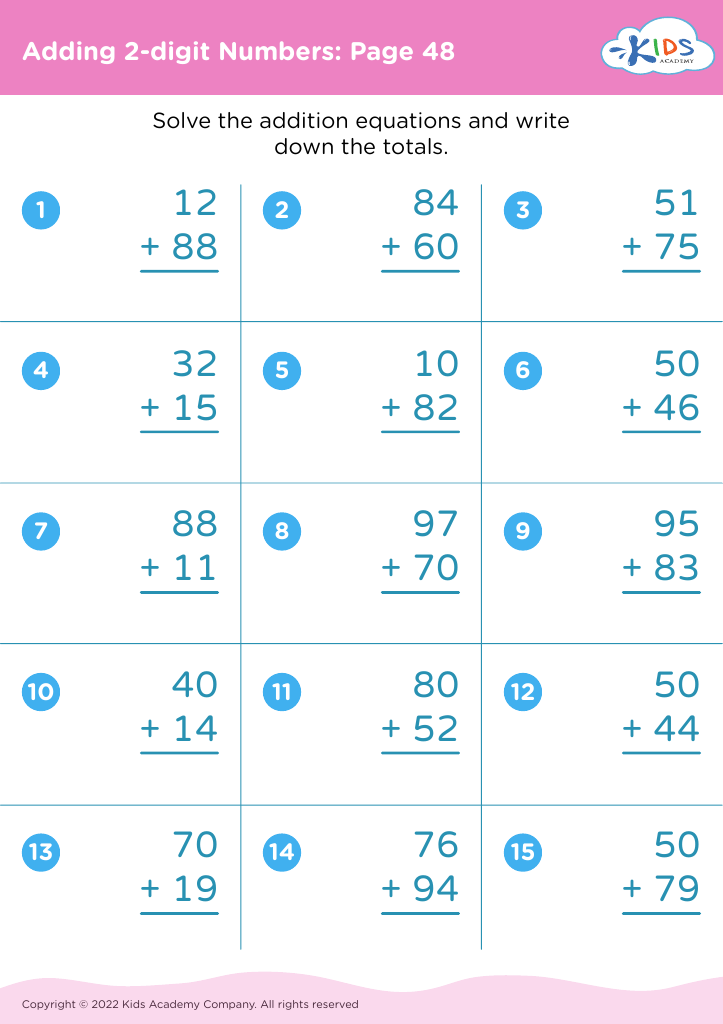
Adding 2-digit Numbers: Page 48

Adding 2-digit Numbers: Page 48

Adding 2-digit Numbers: Page 48
Worksheet
Butterfly Addition Worksheet

Butterfly Addition Worksheet

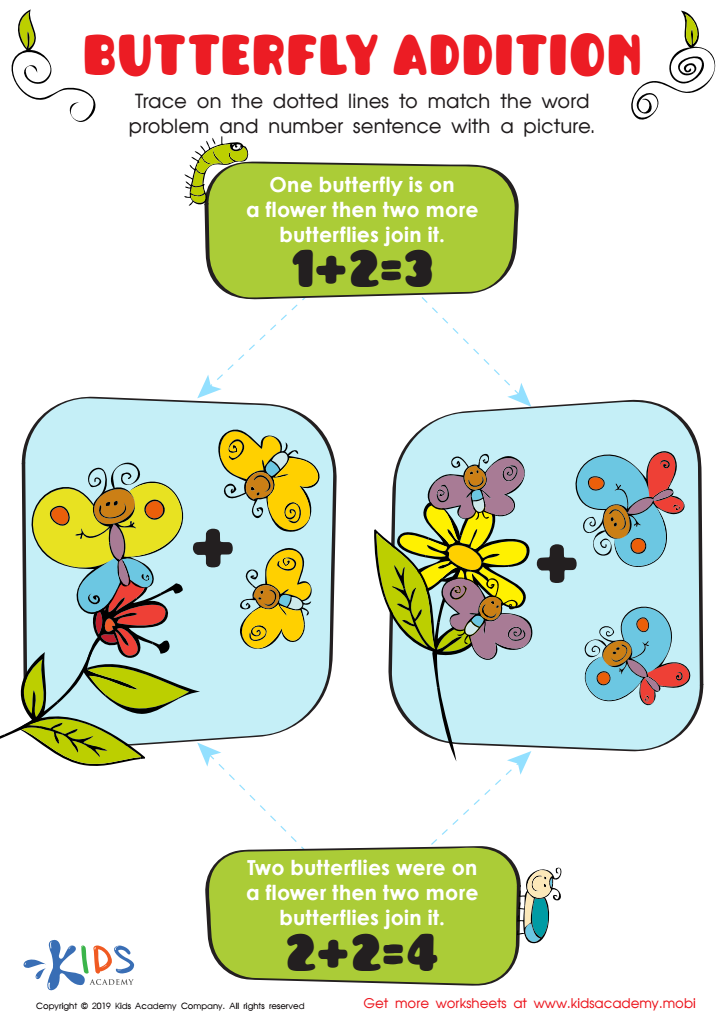
This tracing sheet is great for kids to work on math skills and have fun too. Read the word problems to them, then help them trace the dotted lines to match the problem and number sentence to a picture. Not only is it educational, it's beautiful too - your kids will love learning about butterflies!
Butterfly Addition Worksheet
Worksheet
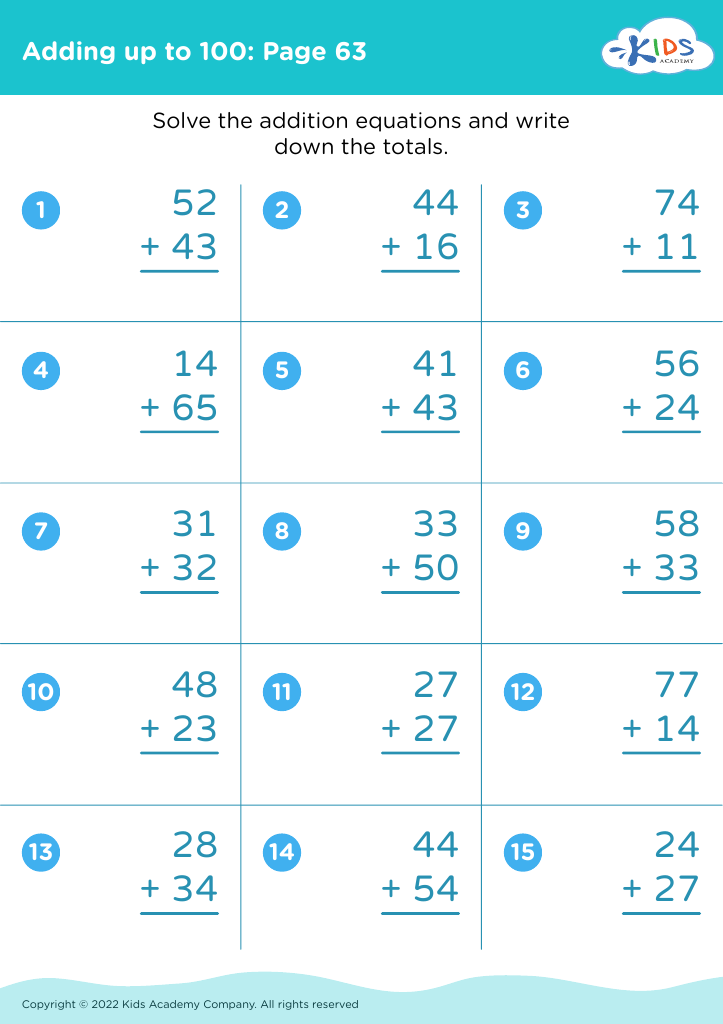
Adding up to 100: Page 63

Adding up to 100: Page 63

Adding up to 100: Page 63
Worksheet
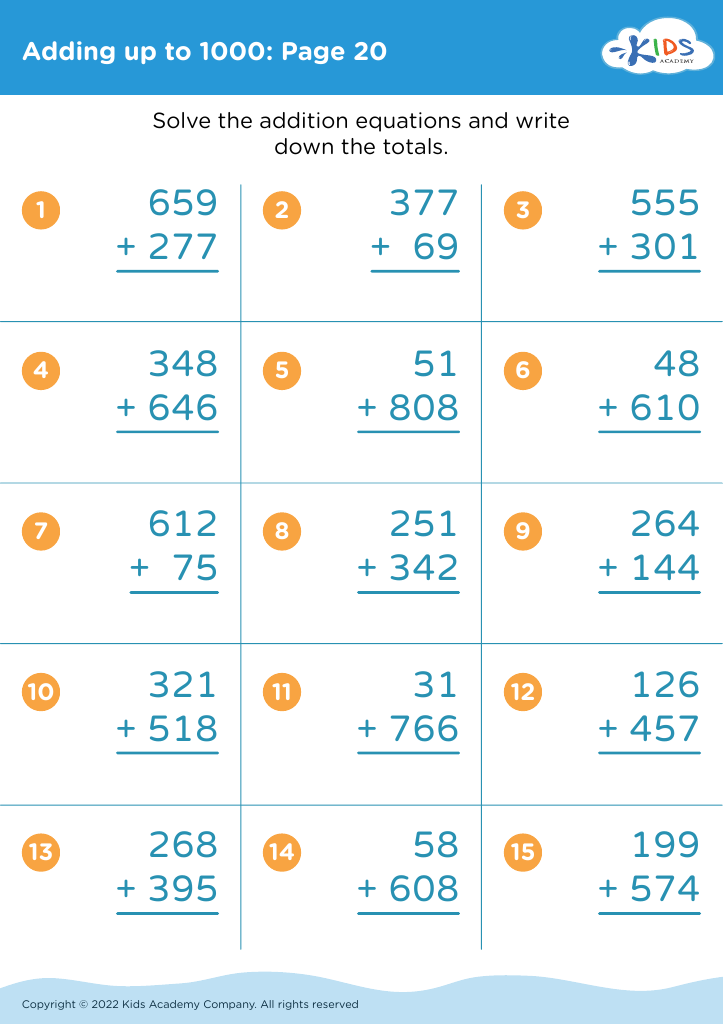
Adding up to 1000: Page 20

Adding up to 1000: Page 20

Adding up to 1000: Page 20
Worksheet
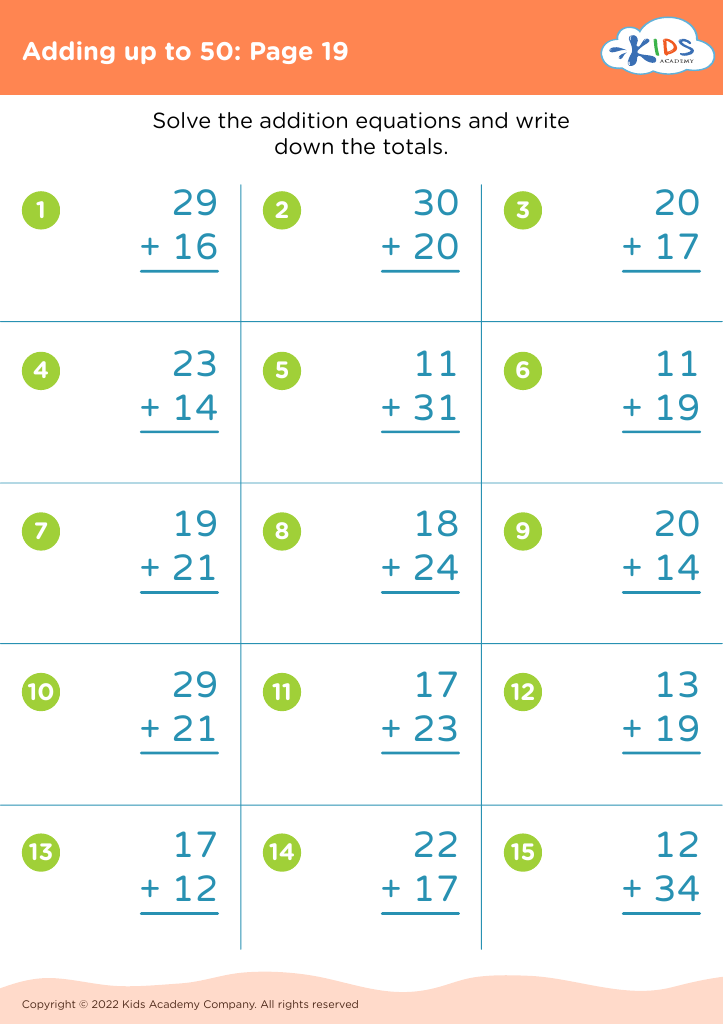
Adding up to 50: Page 19

Adding up to 50: Page 19

Adding up to 50: Page 19
Worksheet
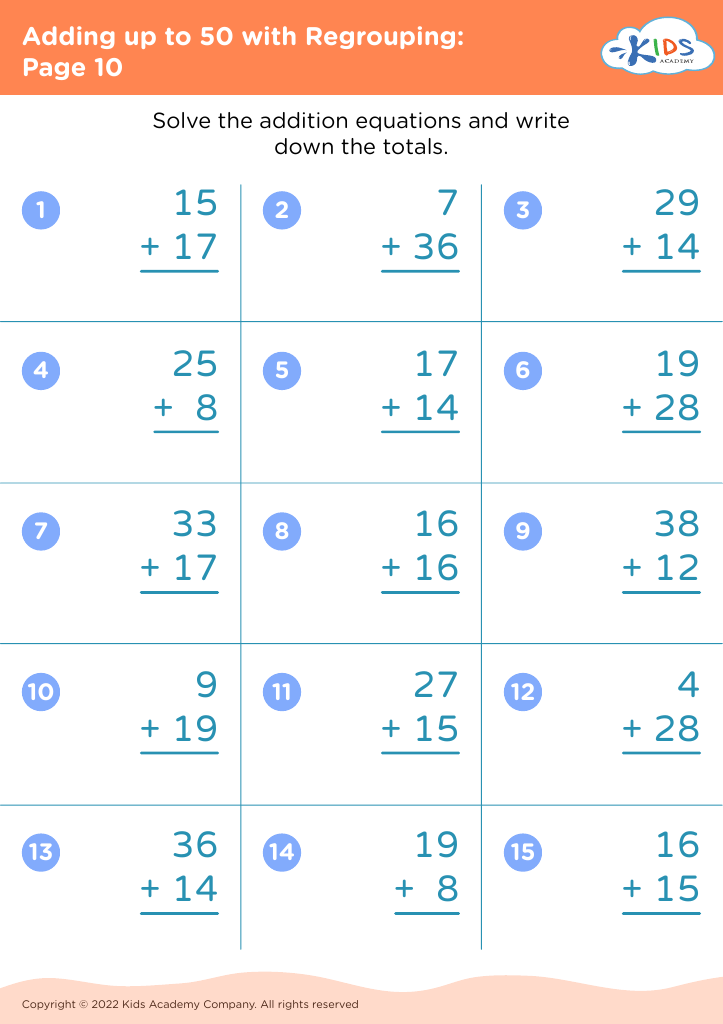
Adding up to 50 with Regrouping: Page 10
Worksheet
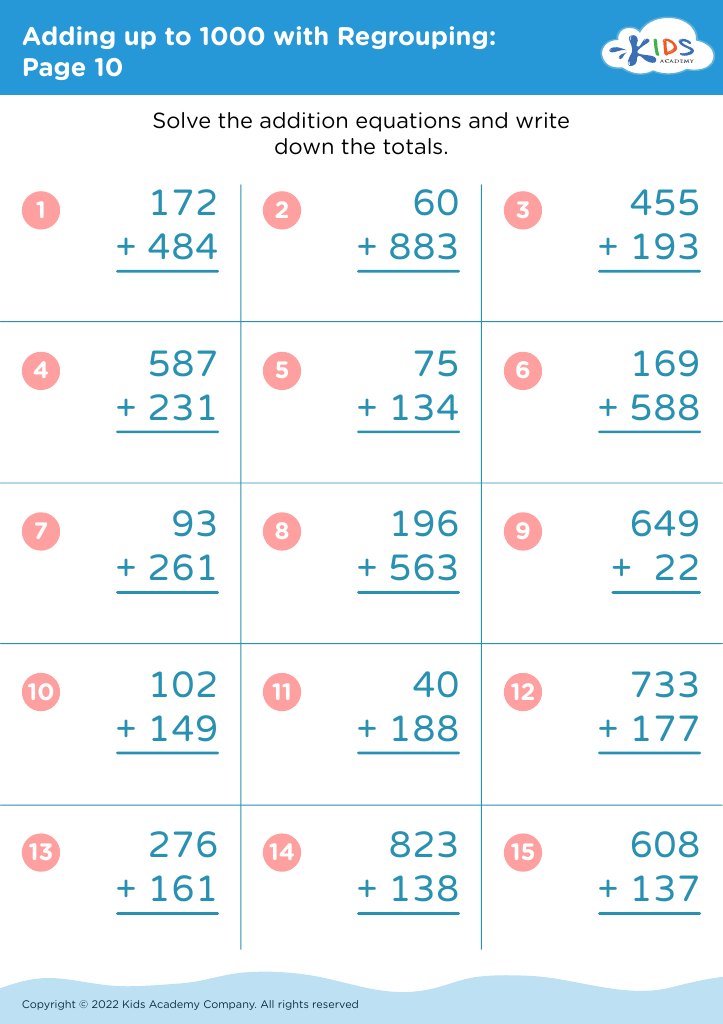
Adding up to 1000 with Regrouping: Page 10
Worksheet
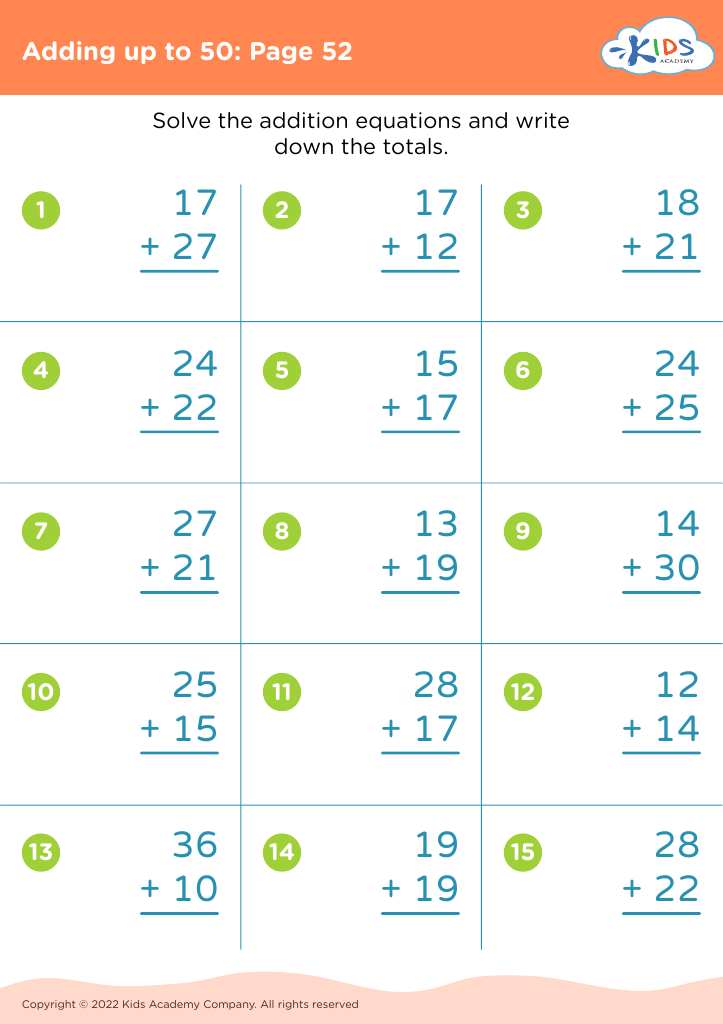
Adding up to 50: Page 52

Adding up to 50: Page 52

Adding up to 50: Page 52
Worksheet
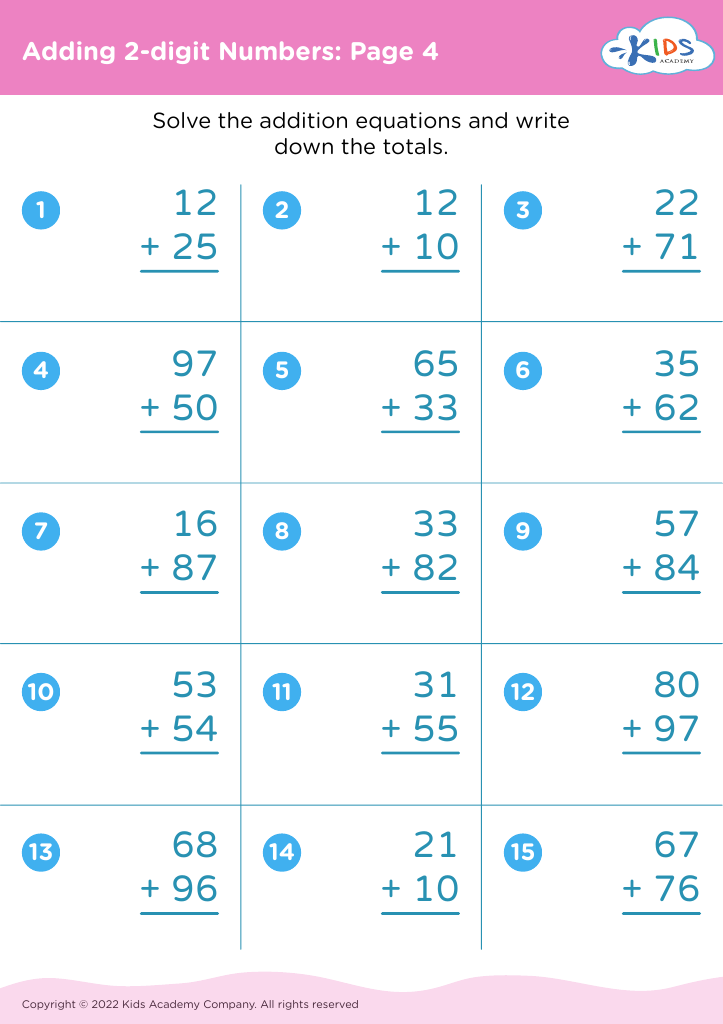
Adding 2-digit Numbers: Page 4

Adding 2-digit Numbers: Page 4

Adding 2-digit Numbers: Page 4
Worksheet
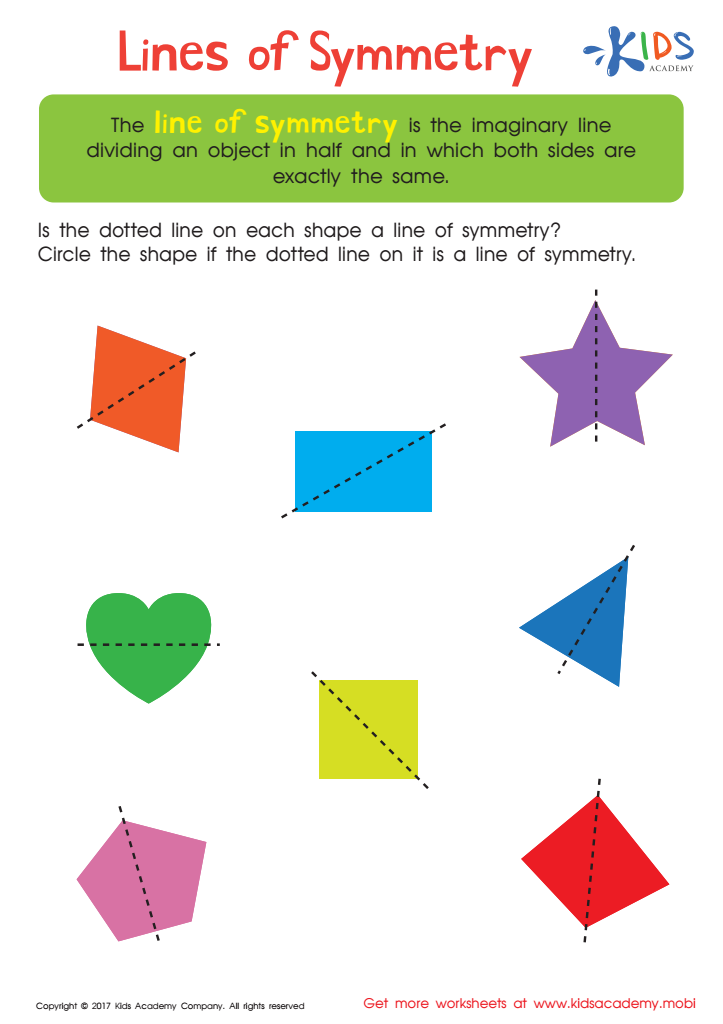
Lines of symmetry worksheet

Lines of Symmetry Printable
Symmetry is a key math concept that kids must learn to develop their geometry skills. This fun worksheet helps build this skill, by encouraging kids to recognize symmetrical shapes and find equal parts.
Lines of Symmetry Printable
Worksheet
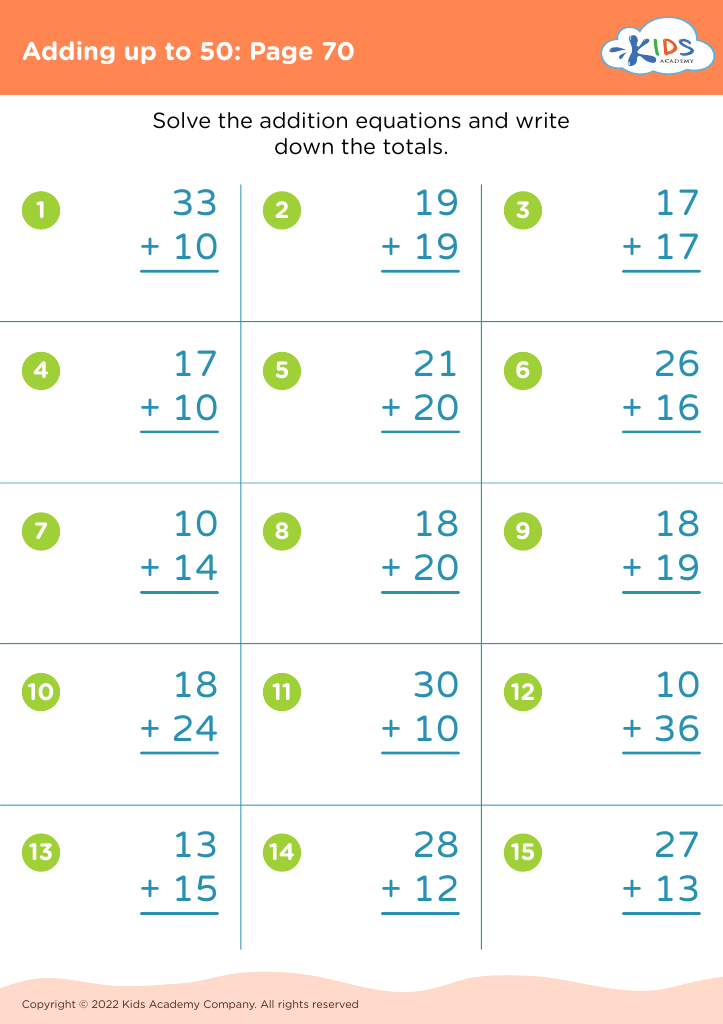
Adding up to 50: Page 70

Adding up to 50: Page 70

Adding up to 50: Page 70
Worksheet
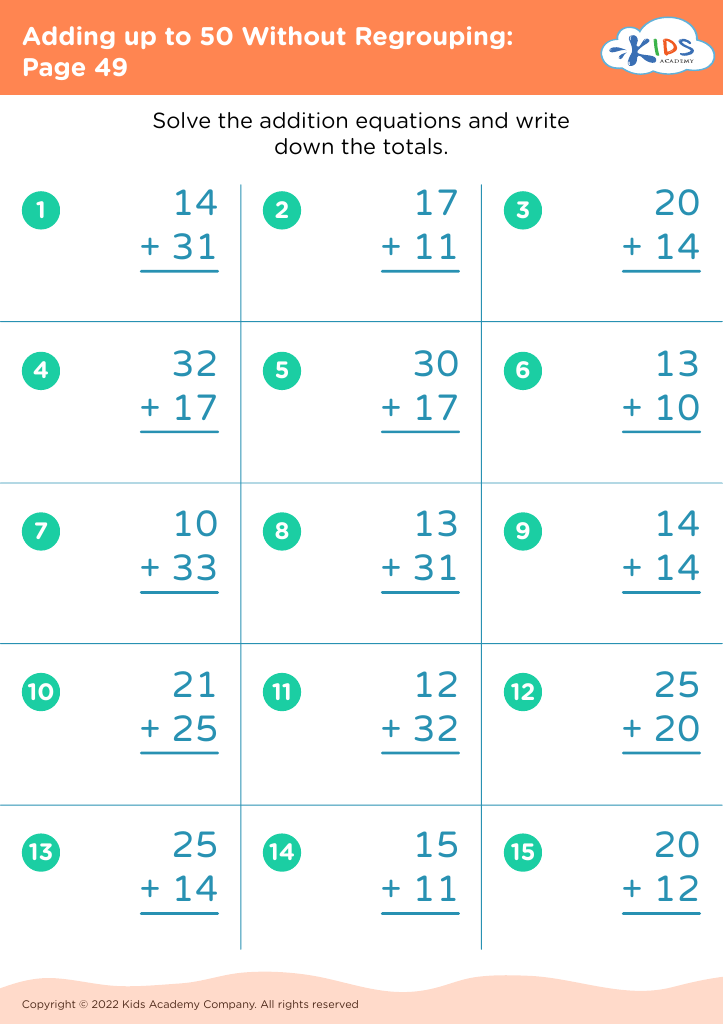
Adding up to 50 Without Regrouping: Page 49
Worksheet
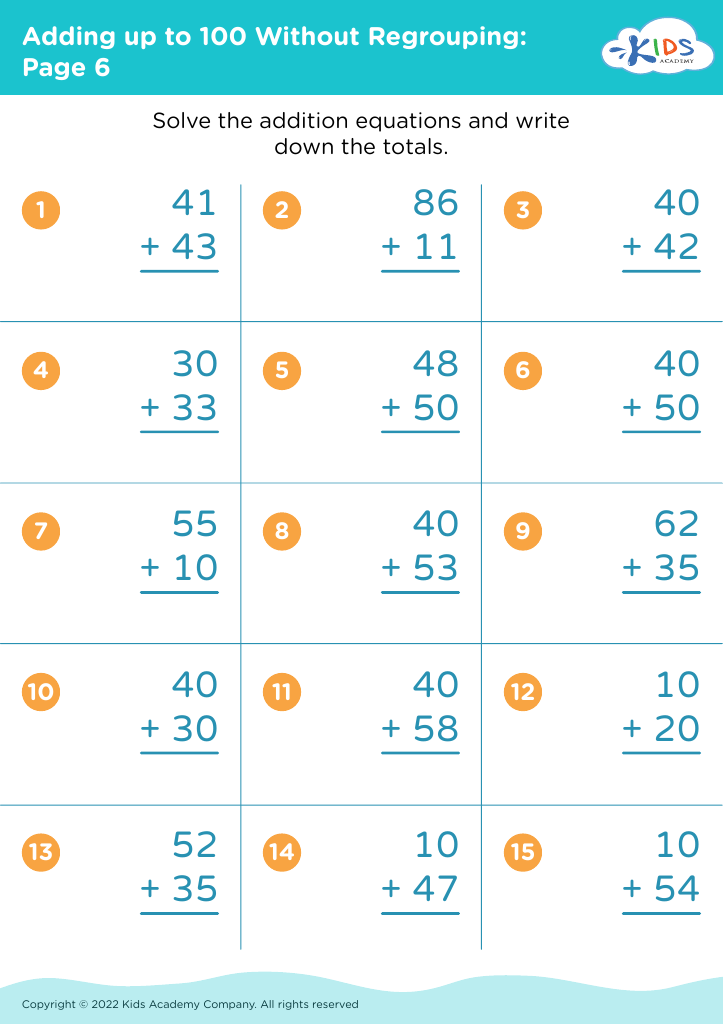
Adding up to 100 Without Regrouping: Page 6
Worksheet
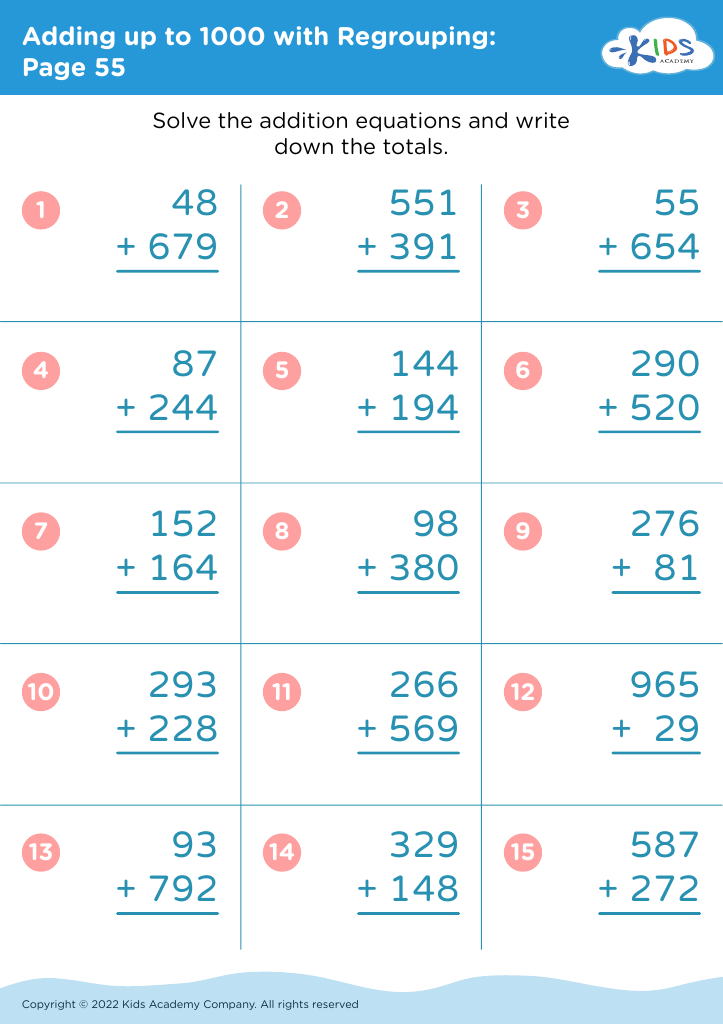
Adding up to 1000 with Regrouping: Page 55
Worksheet
Flowery Arrays Worksheet


Flowery Arrays Worksheet

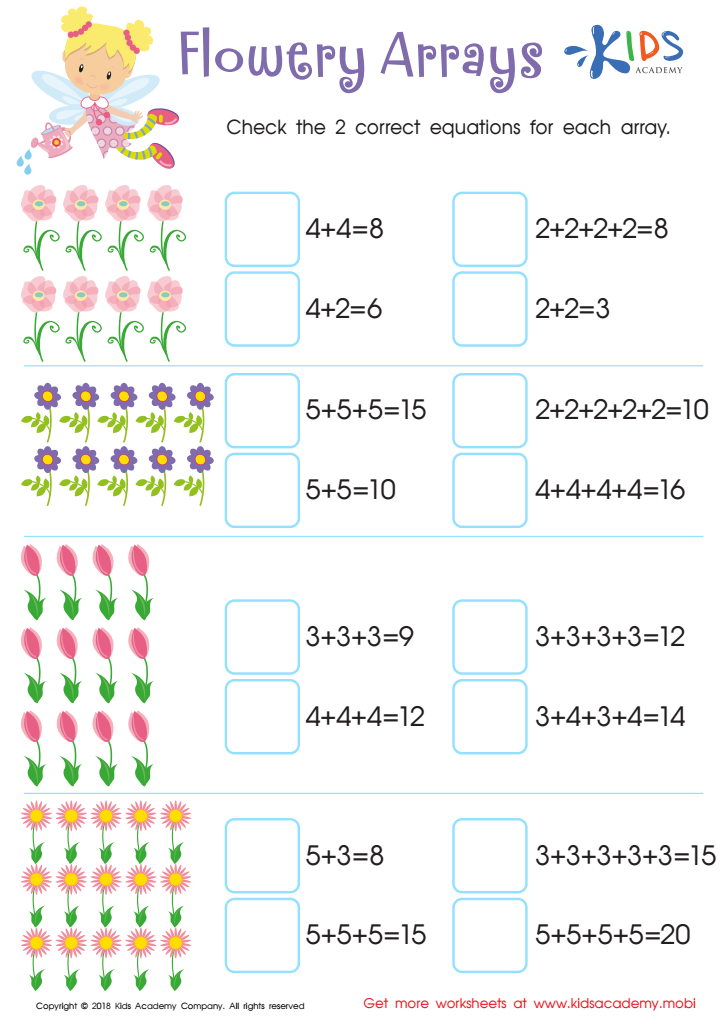
This worksheet helps your child learn to identify and represent arrays. For example, both 3+3+3+3=12 and 4+4+4=12 are arrays but the first is arranged in rows and the second in columns. Let your child use this knowledge to answer the four questions in this pdf and check the two correct equations.
Flowery Arrays Worksheet

Worksheet
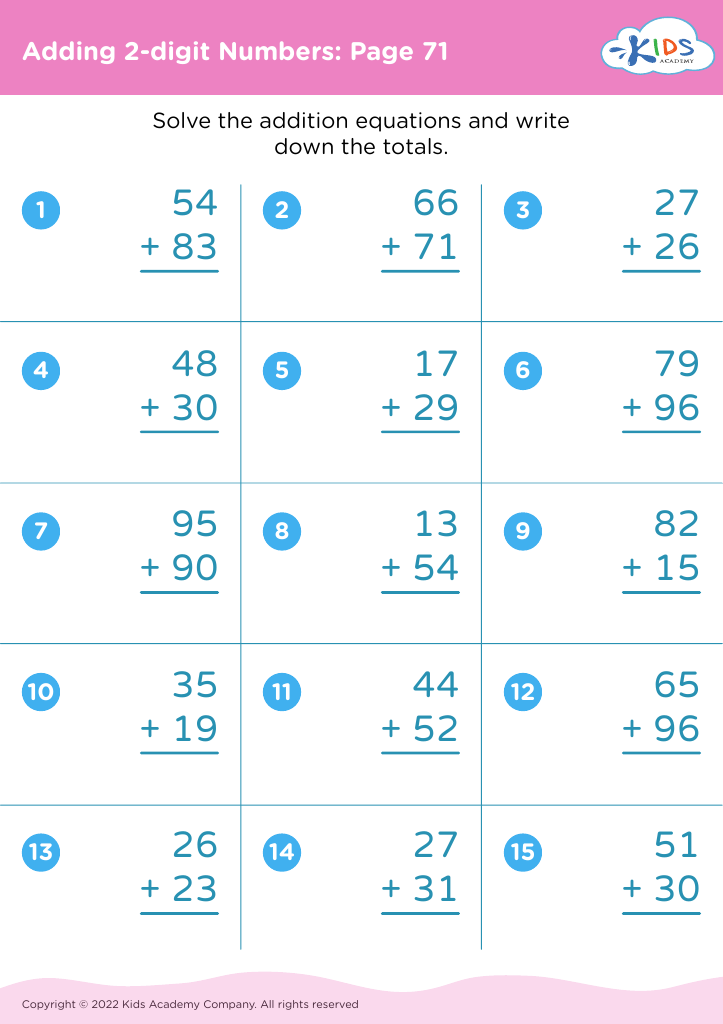
Adding 2-digit Numbers: Page 71

Adding 2-digit Numbers: Page 71

Adding 2-digit Numbers: Page 71
Worksheet
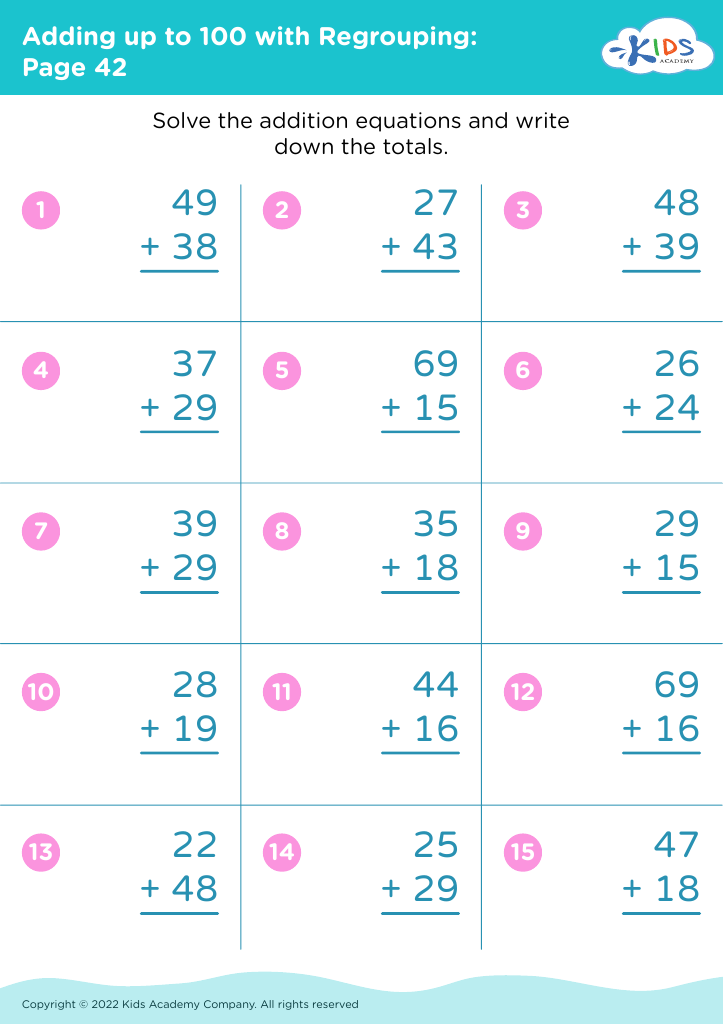
Adding up to 100 with Regrouping: Page 42
Worksheet
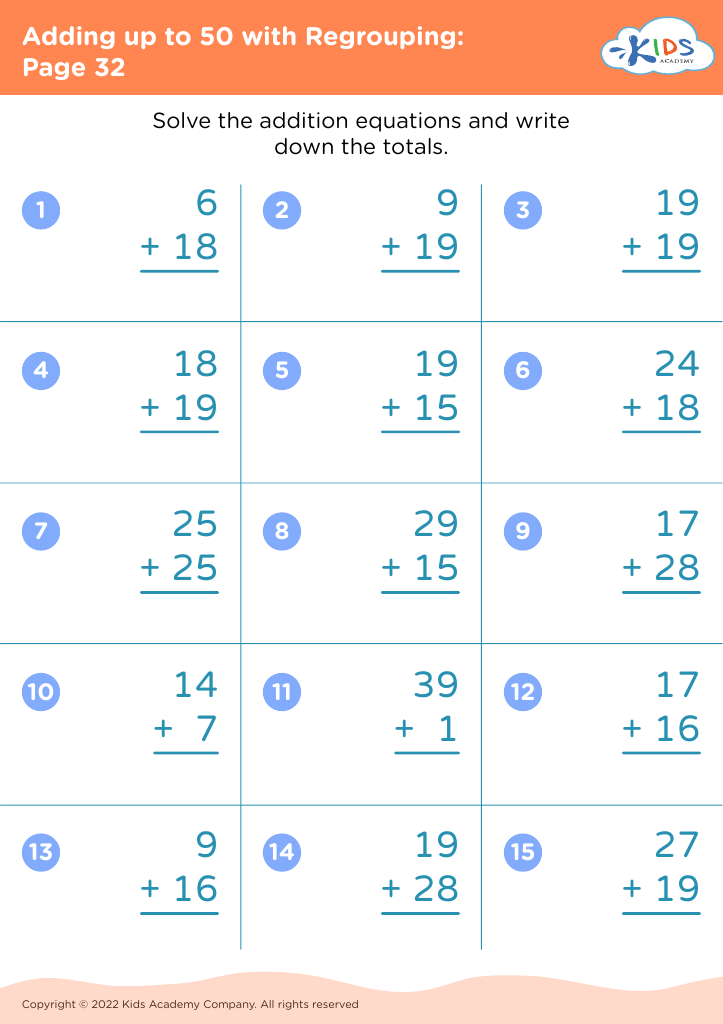
Adding up to 50 with Regrouping: Page 32
Worksheet
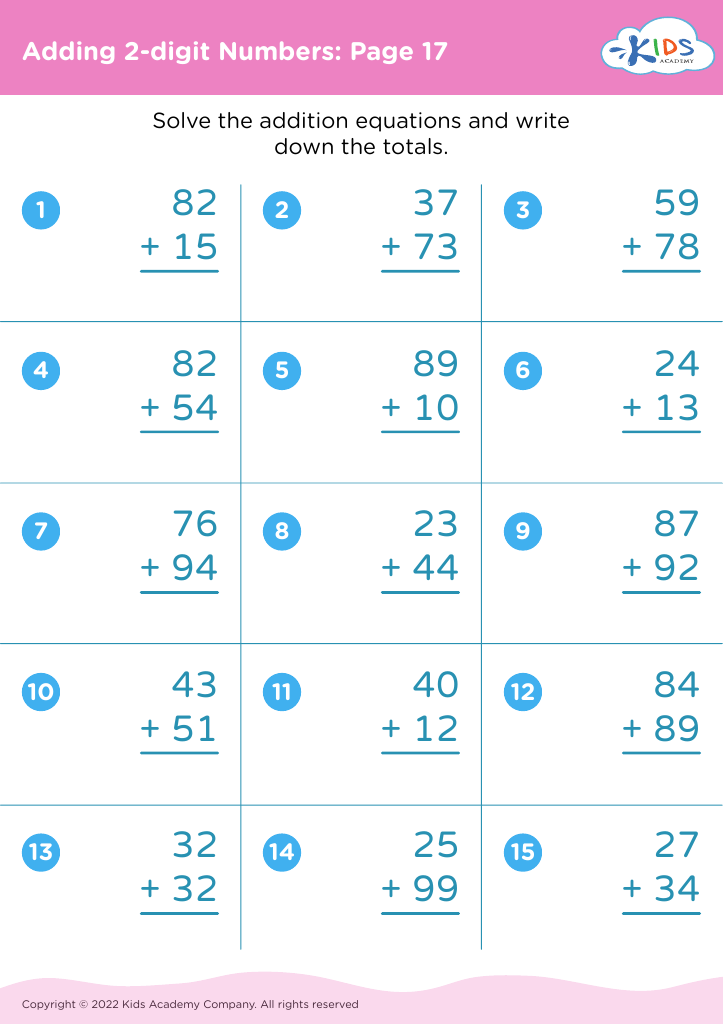
Adding 2-digit Numbers: Page 17

Adding 2-digit Numbers: Page 17

Adding 2-digit Numbers: Page 17
Worksheet
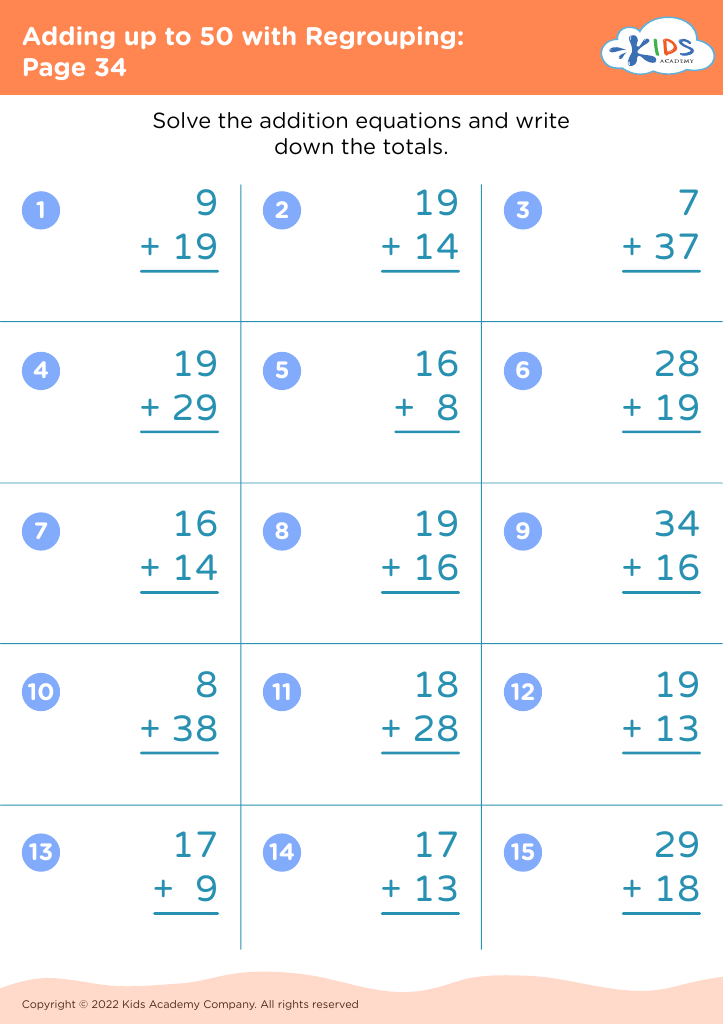
Adding up to 50 with Regrouping: Page 34
Worksheet
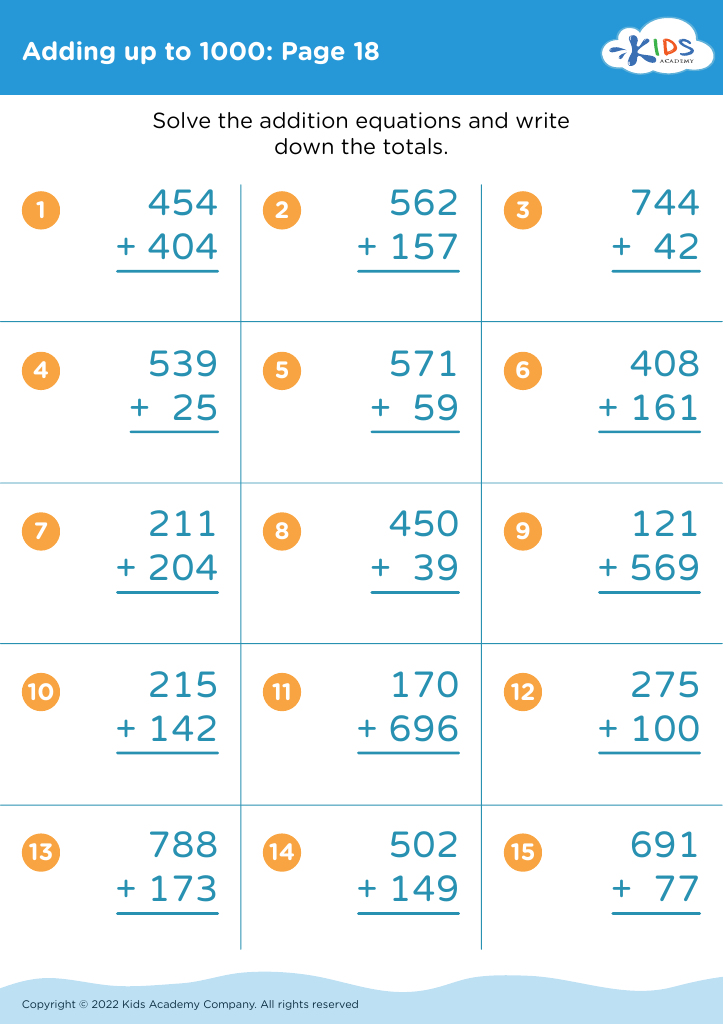
Adding up to 1000: Page 18

Adding up to 1000: Page 18

Adding up to 1000: Page 18
Worksheet
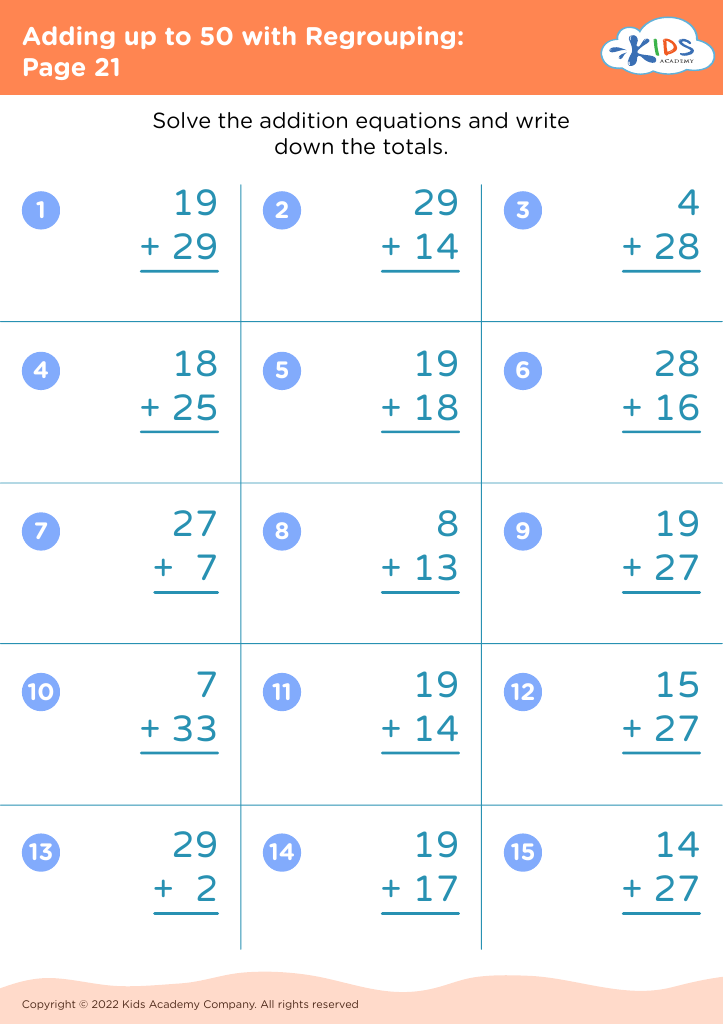
Adding up to 50 with Regrouping: Page 21
Worksheet
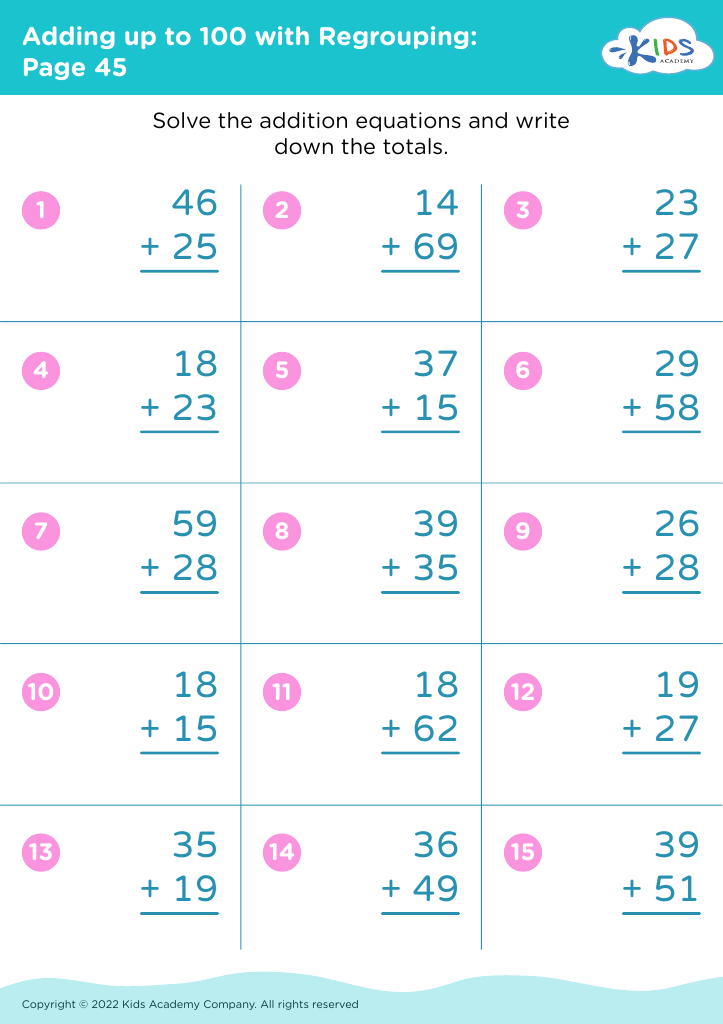
Adding up to 100 with Regrouping: Page 45
Worksheet


Understanding symmetry is crucial for 8-year-olds as it lays the foundation for broader math and cognitive skills. Firstly, symmetry enhances spatial awareness, allowing children to understand shapes and patterns more intuitively. This skill is essential for geometry, a key component of the math curriculum.

Symmetry also fosters problem-solving skills. When children recognize that certain transformations don't alter the overall shape, they can approach problems in creative and flexible ways. This encourages them to look for balanced and harmonious solutions.

Additionally, encountering symmetry in nature, art, and daily life helps children appreciate aesthetics and pattern recognition, enriching their sensory and cognitive development. For example, recognizing symmetrical patterns in leaves or butterfly wings can make science and nature study more engaging and meaningful.

Furthermore, symmetry is linked with brain development. Handling symmetrical objects can enhance motor skills and coordination because it often requires exact placement and balancing exercises.

Lastly, learning about symmetry helps in developing critical thinking and analytical skills. Recognizing symmetrical patterns or objects requires attention to detail and the ability to compare and contrast differing elements based on specific criteria, substantially aiding intellectual growth.

Overall, understanding symmetry is about more than just appreciating shapes; it's about developing diverse cognitive abilities that can benefit children in multiple academic and real-life scenarios.