Understanding synonyms Worksheets for 8-Year-Olds
3 filtered results
-
From - To
Enhance your 8-year-old's vocabulary with our engaging Understanding Synonyms Worksheets! Designed to make learning fun, these worksheets help young learners recognize and use synonyms in everyday language. Through interactive activities and playful exercises, children will explore how different words can convey similar meanings, thereby enriching their communication skills. Each worksheet promotes critical thinking while encouraging creativity and broader word usage. Perfect for classroom settings or home study, these resources are tailored to reinforce language concepts in an enjoyable way. Help your child express themselves more effectively with our thoughtful, age-appropriate synonym worksheets today!
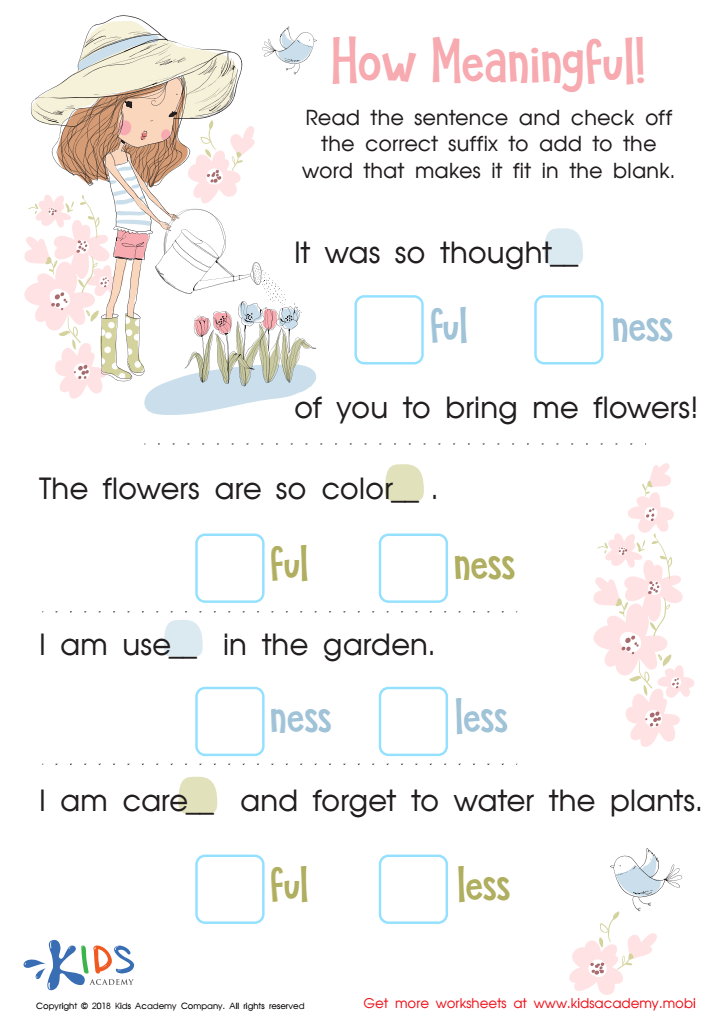
How Meaningful! Worksheet
 Assign to My Students
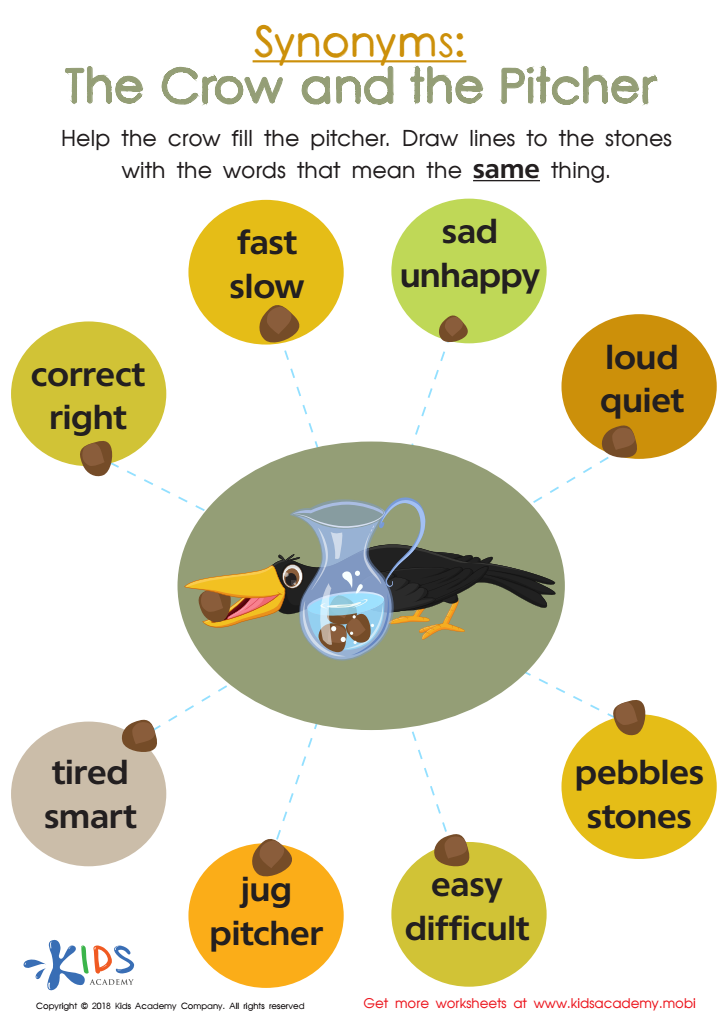
The Crow and the Pitcher Synonyms Worksheet




.jpg)


Understanding synonyms is crucial for 8-year-olds as it significantly enhances their language skills and comprehension. Firstly, knowing synonyms expands a child's vocabulary, allowing them to express themselves more precisely and creatively. For example, if a child learns that "happy" can also be expressed as "joyful" or "cheerful," they'll find it easier to convey their feelings in varied contexts.
Moreover, synonyms support reading comprehension. When children encounter unfamiliar words in texts, knowing synonyms aids their understanding and fosters a love for reading. It allows them to see the connections between words, promoting better retention and recall of information.
From an educational perspective, building a strong vocabulary lays the groundwork for writing skills. Children with a rich vocabulary are more likely to construct complex sentences, making their writing more engaging.
Additionally, teaching synonyms can be a fun and interactive learning experience through games and activities. This approach not only solidifies their understanding but also motivates them to learn further.
Ultimately, fostering familiarity with synonyms equips children with essential communication tools, enhancing their academic performance and social interactions—benefits that resonate far beyond the classroom. It's an investment in their lifelong language development.








