Identify shapes Adding up to 100 with Regrouping Worksheets for 8-Year-Olds
3 filtered results
-
From - To
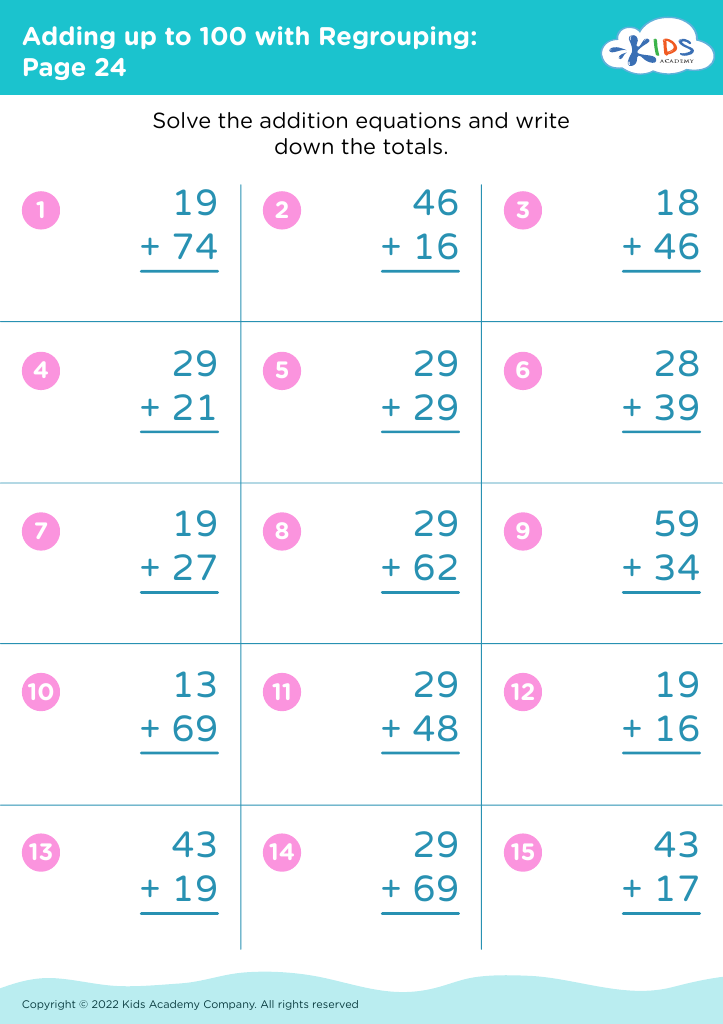
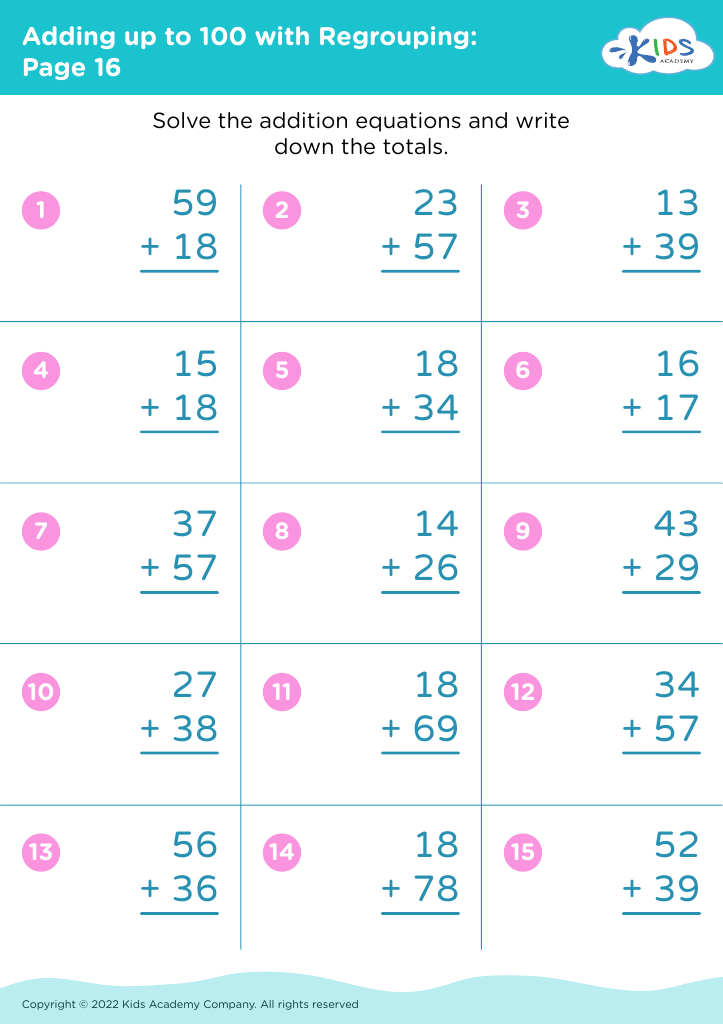
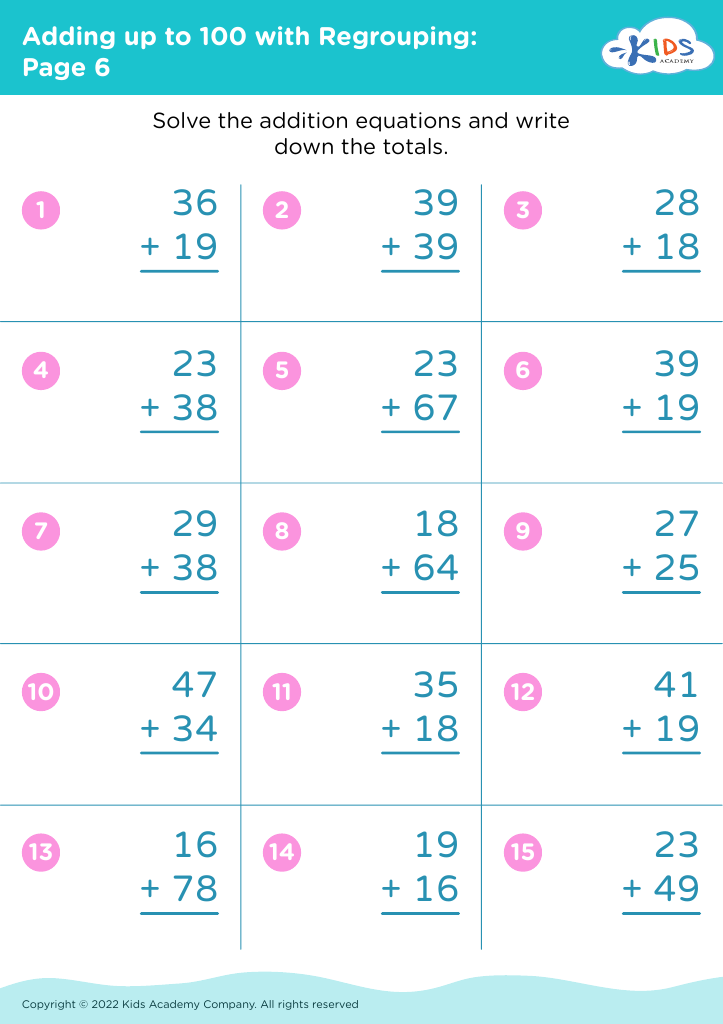
Discover our engaging "Identify Shapes Adding up to 100 with Regrouping Worksheets" specifically designed for 8-year-olds! These comprehensive worksheets seamlessly integrate shape recognition and addition skills, enhancing critical math abilities through fun visual aids. Your child will learn essential math strategies, including regrouping, while identifying various shapes in an interactive way. Each worksheet encourages hands-on learning, allowing students to visualize concepts and strengthen their problem-solving skills. Perfect for home or classroom use, our resources promote a deeper understanding of mathematics while keeping learning enjoyable. Help your child build a strong foundation in math with these valuable educational tools!




Parents and teachers should prioritize teaching 8-year-olds about identifying shapes and addition with regrouping for several reasons. First, spatial reasoning is critical at this age; understanding shapes enhances children's ability to visualize and manipulate objects, fostering creativity and problem-solving skills. These foundational geometry concepts set the stage for more complex mathematical understanding in the future.
Furthermore, mastering addition with regrouping is essential for developing strong computational skills. This technique not only helps children perform calculations more effectively, but it also encourages a deeper understanding of number relationships. As young learners encounter bigger numbers, regrouping provides them with strategies to solve problems they will encounter in real-life situations, such as budgeting or planning.
Incorporating both shape identification and number regrouping into their education promotes critical thinking and cognitive flexibility. It helps children learn to approach problems from multiple angles and apply different strategies to find solutions. By fostering these skills early on, parents and teachers equip children with the necessary tools to tackle more complex mathematical concepts as they progress, thus building confidence and a love for learning in mathematics. Ultimately, engaging 8-year-olds in these areas sets a solid foundation for their future academic success.