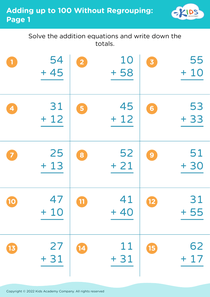
Recognize patterns Adding up to 100 with Regrouping Worksheets for 8-Year-Olds
3 filtered results
-
From - To
Discover our "Recognize Patterns Adding up to 100 with Regrouping Worksheets" for 8-year-olds! These engaging worksheets are designed to help young learners sharpen their math skills while recognizing patterns in addition. Perfect for 3rd graders, each worksheet provides hands-on practice for adding numbers up to 100 with regrouping. Your child will gain confidence as they solve fun, colorful problems that promote critical thinking and pattern recognition. Ideal for classroom use or as homework, these resources blend enjoyment with education. Boost your child's math proficiency today with these expertly crafted printable worksheets!
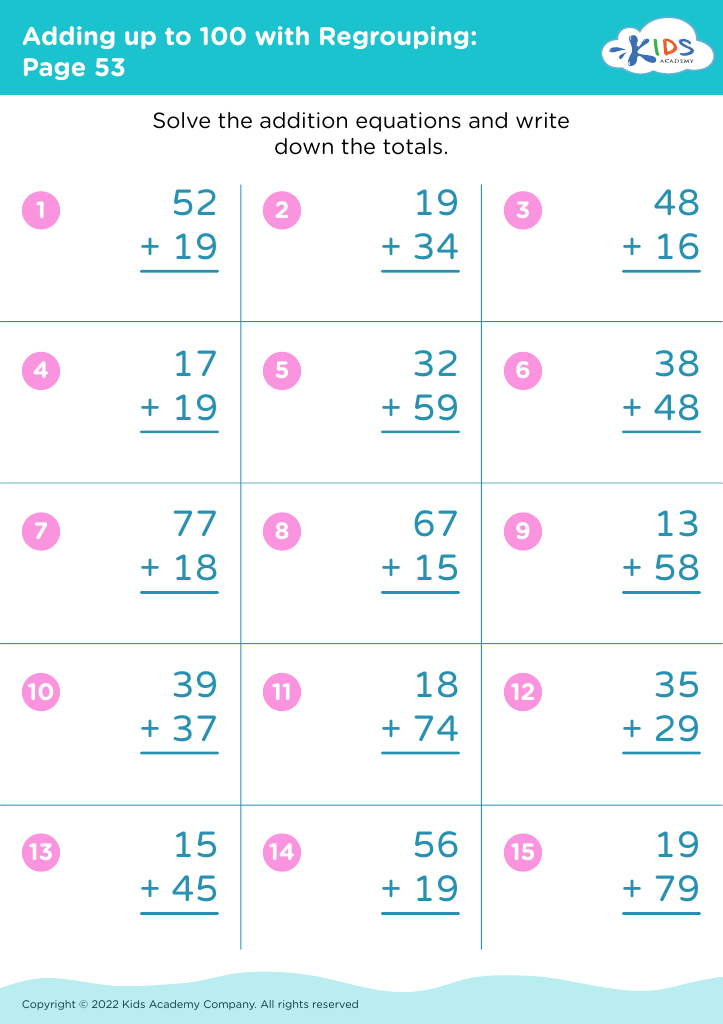
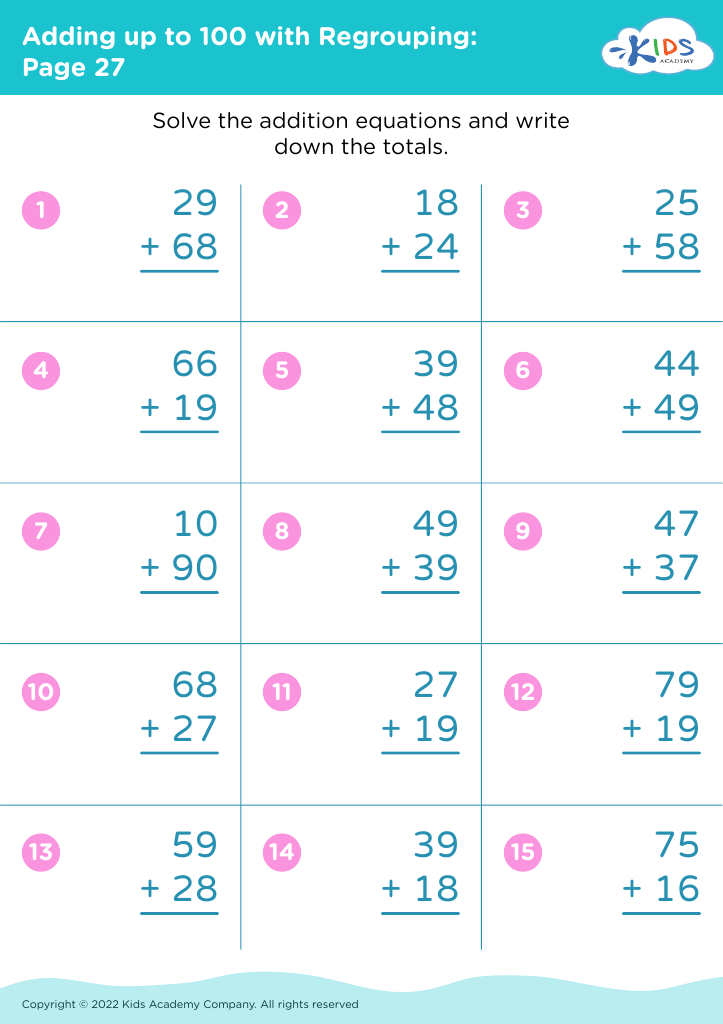
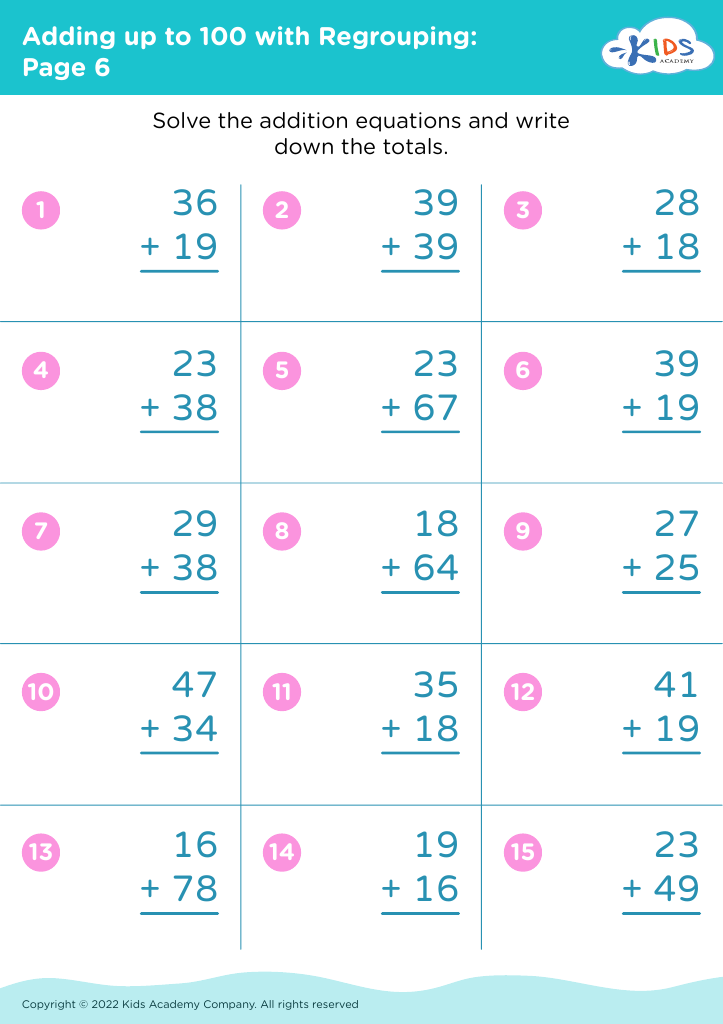




Recognizing patterns and learning to add up to 100 with regrouping are foundational skills critical for 8-year-olds. At this age, children are rapidly developing their mathematical understanding, and grasping these concepts paves the way for more complex math in the future.
-
Cognitive Development: Recognizing patterns improves logical thinking and problem-solving abilities. When children discern patterns, they enhance their ability to predict outcomes and make connections between concepts, both in math and other subjects.
-
Arithmetic Skills: Adding up to 100, especially with regrouping, is crucial for developing fluency in basic arithmetic. It teaches children the practical use of place value, which is key for understanding larger numbers and performing more complex calculations. This early practice nurtures accuracy and speed in math.
-
Confidence and Independence: Success in early math skills builds confidence. When children master these basic operations, they are more likely to approach new challenges with a positive attitude, knowing they have a solid foundation.
-
Real-World Application: Beyond the classroom, these skills have practical benefits. For instance, children learn to effectively manage their allowances, understand measurements in recipes, or participate in games that involve math.
For parents and teachers, supporting these skills helps ensure children not only succeed academically but also possess critical thinking skills needed in everyday life.