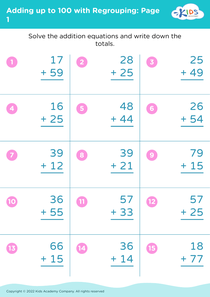
Basic Math Skills Adding up to 100 Without Regrouping Worksheets for 8-Year-Olds
4 filtered results
-
From - To
Enhance your child's math skills with our "Basic Math Skills: Adding Up to 100 Without Regrouping Worksheets" designed for 8-year-olds! These engaging worksheets focus on helping young learners master addition within 100, ensuring they build a strong foundation in arithmetic without the complexity of regrouping. Our easy-to-follow activities are tailored to promote confidence and competence, allowing kids to practice and reinforce their adding skills in an enjoyable way. Perfect for classroom use or at-home learning, these worksheets transform math practice into a fun, effective experience. Get started today and watch your child excel in basic math!
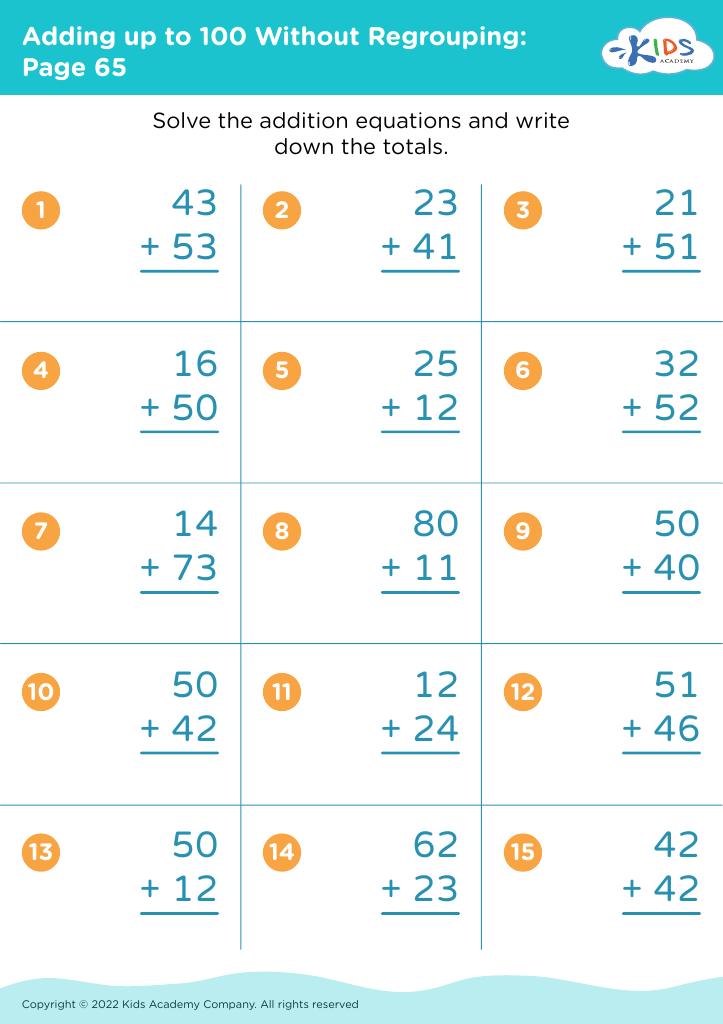
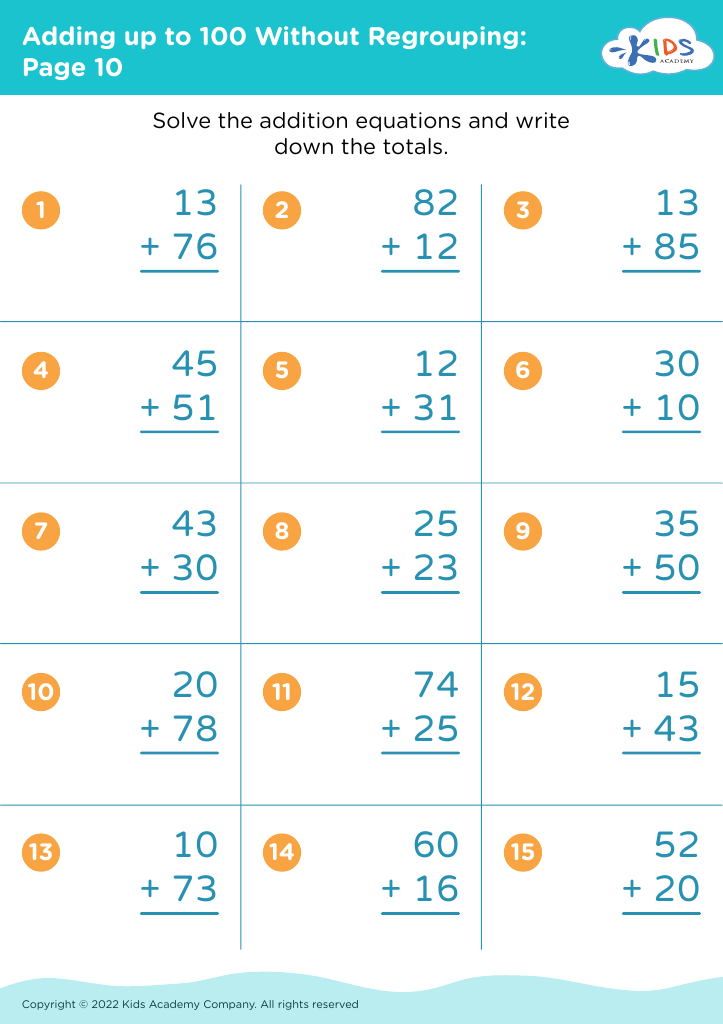
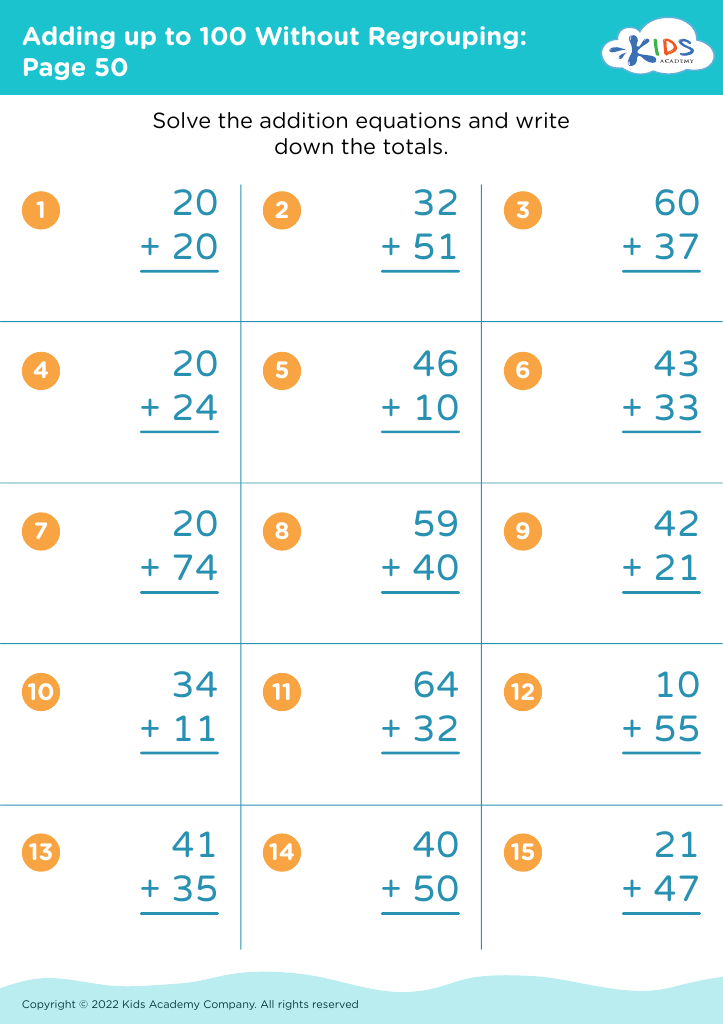
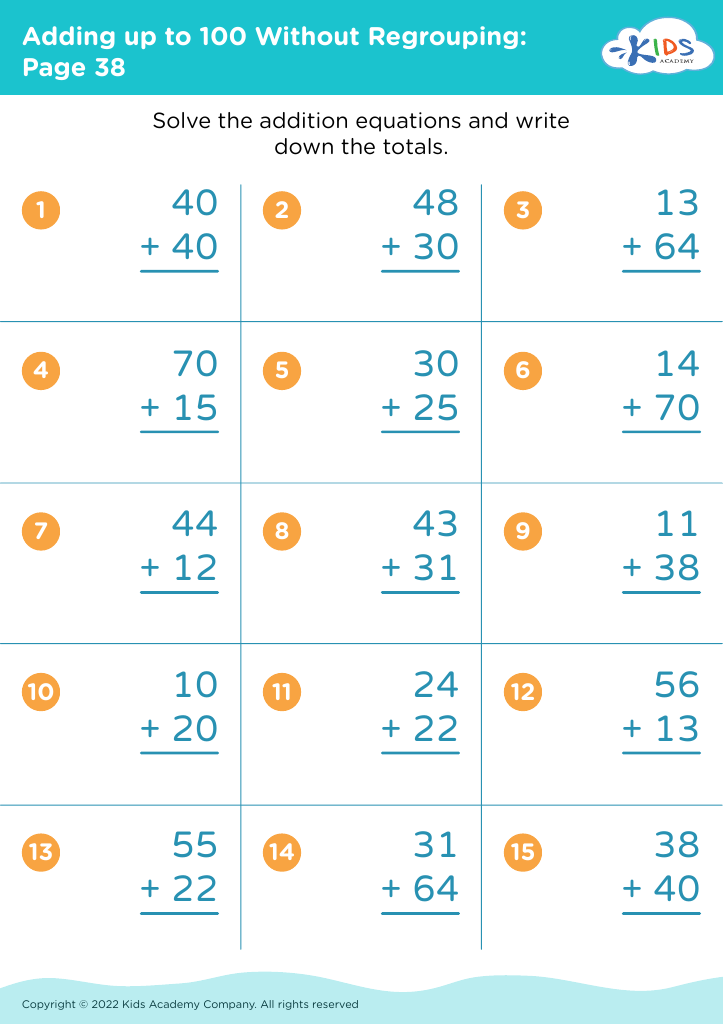




Basic math skills, such as adding up to 100 without regrouping, are fundamental for 8-year-olds as they serve as building blocks for more advanced mathematical concepts. Mastering this skill enables children to gain confidence in their abilities and helps develop their overall number sense. At this age, children are transitioning from simple arithmetic to more complex problem-solving, making it essential for parents and teachers to focus on mastering these foundational skills.
Adding up to 100 without regrouping allows students to practice addition using manageable numbers, reinforcing their understanding of place value and number relationships. This comprehension is vital in helping them approach multi-digit addition, subtraction, and even multiplication and division in the future.
Additionally, proficiency in basic math skills supports literacy and analytical thinking, as children learn to approach problems methodically and logically. If students struggle with these foundational skills, they may experience frustration and setbacks in their overall math education, leading to a lack of interest in the subject. Thus, by nurturing these basic skills, parents and teachers set children on a path toward mathematical fluency, encouraging positive attitudes toward learning and a solid working knowledge that will be useful throughout their academic lives and beyond.