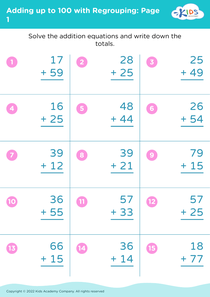
Number Recognition Adding up to 100 Without Regrouping Worksheets for 8-Year-Olds
8 filtered results
-
From - To
Welcome to our engaging "Number Recognition Adding Up to 100 Without Regrouping Worksheets" specially designed for 8-year-olds! These worksheets offer an excellent opportunity for young learners to enhance their number recognition skills while mastering addition without regrouping. With colorful, fun graphics and a variety of interactive exercises, children will practice recognizing and adding numbers up to 100 in an enjoyable way. This resource not only reinforces essential math concepts but also fosters confidence in their abilities. Perfect for classrooms or home learning, our worksheets provide the right blend of fun and education to make math a delightful experience for every child!
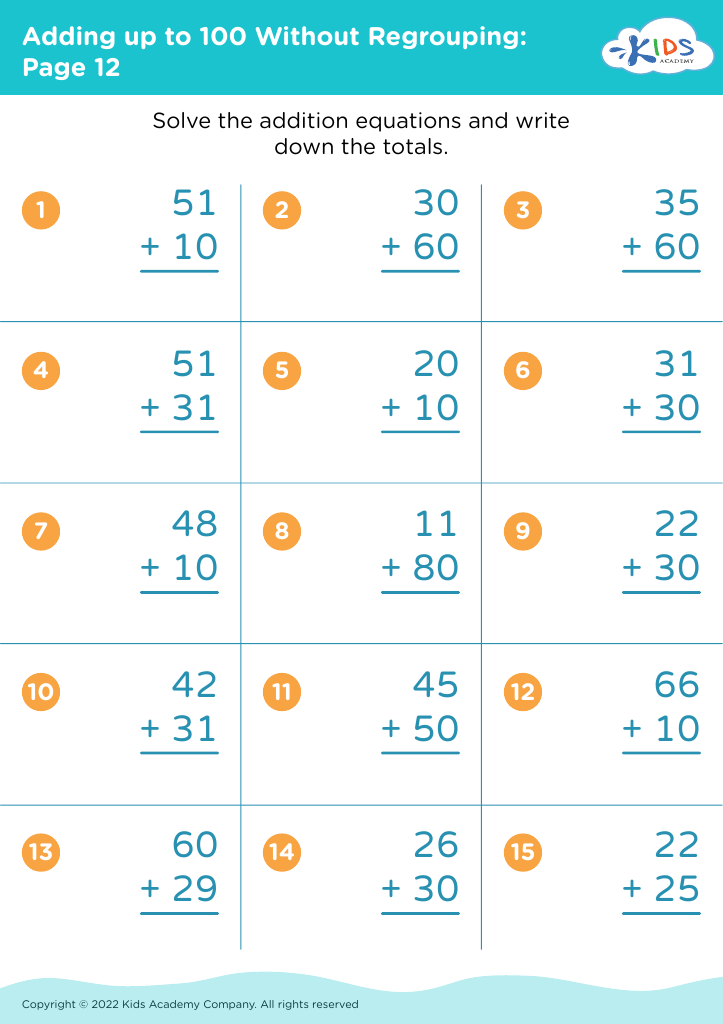
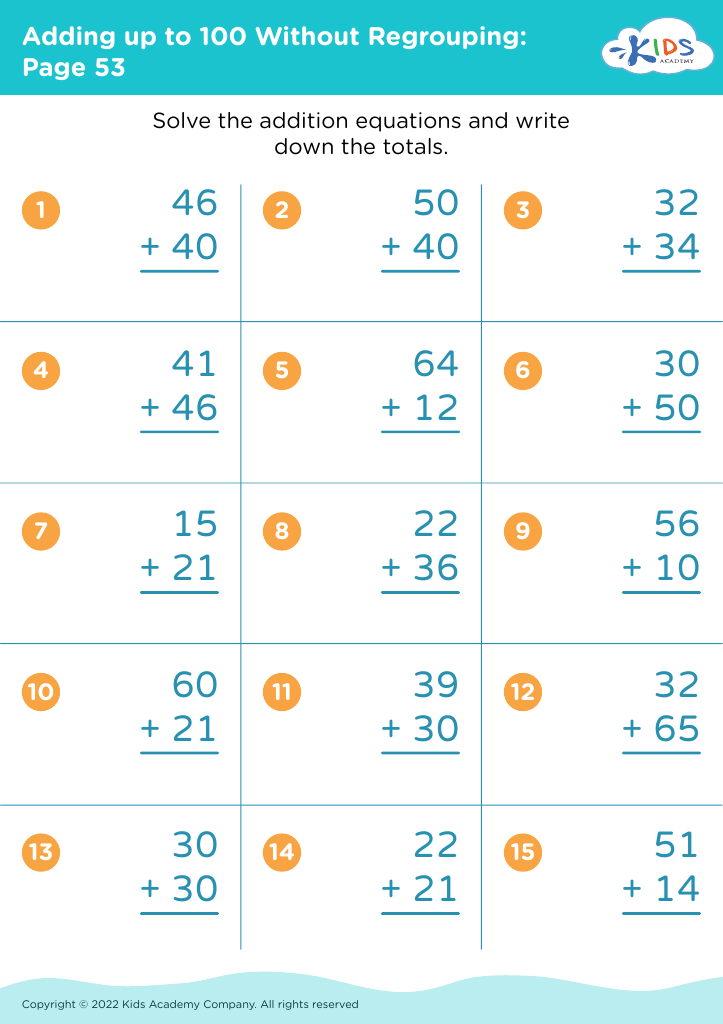
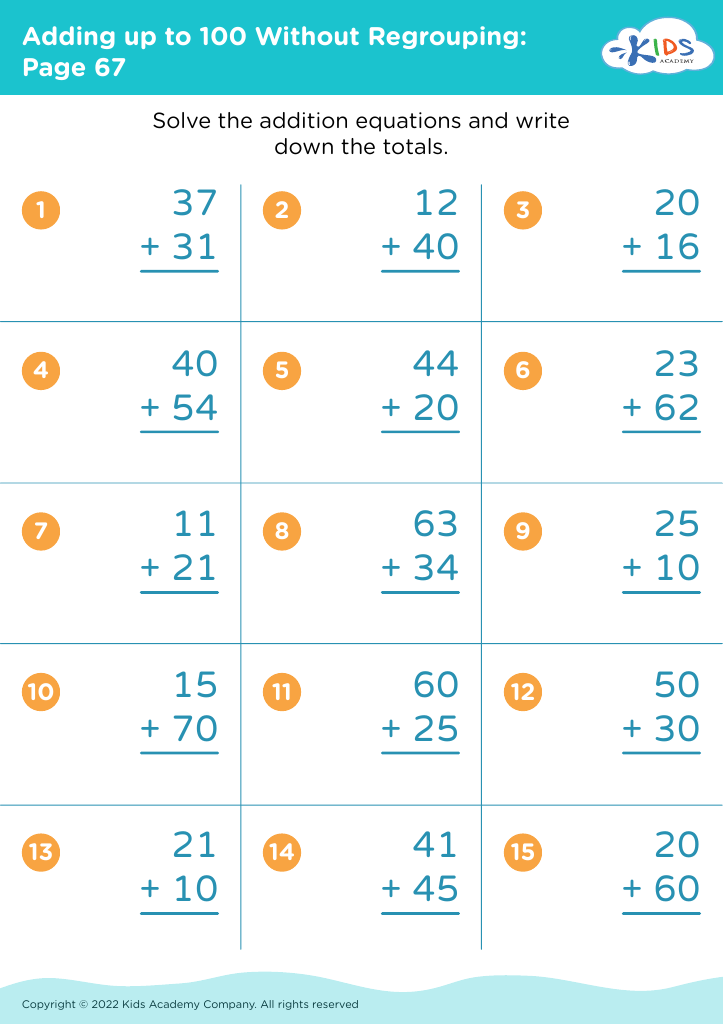
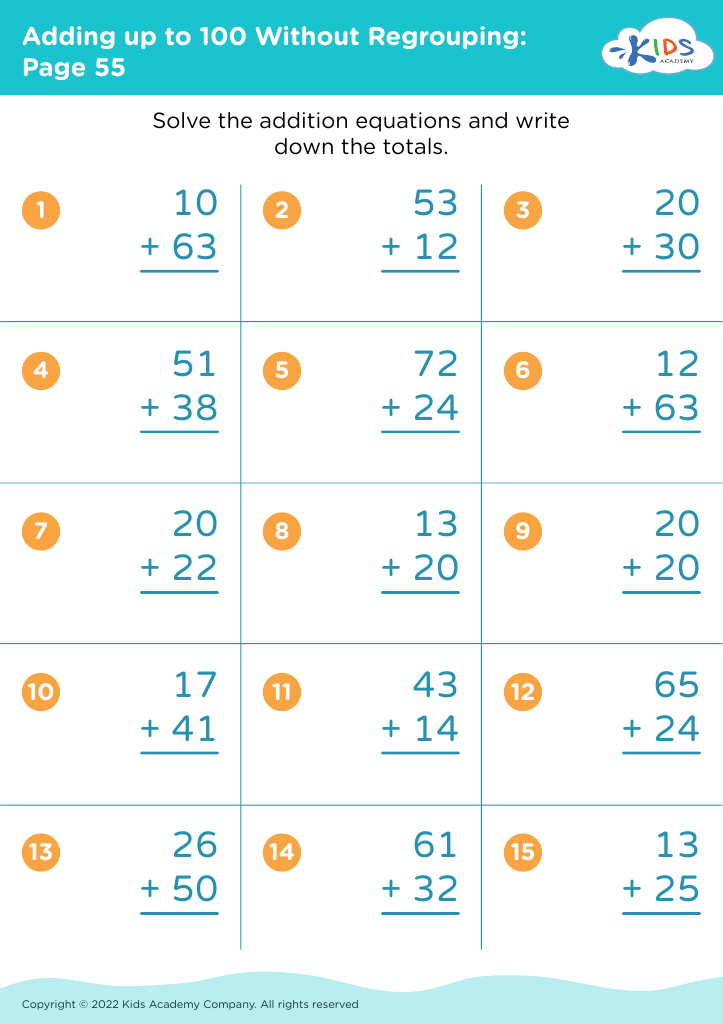
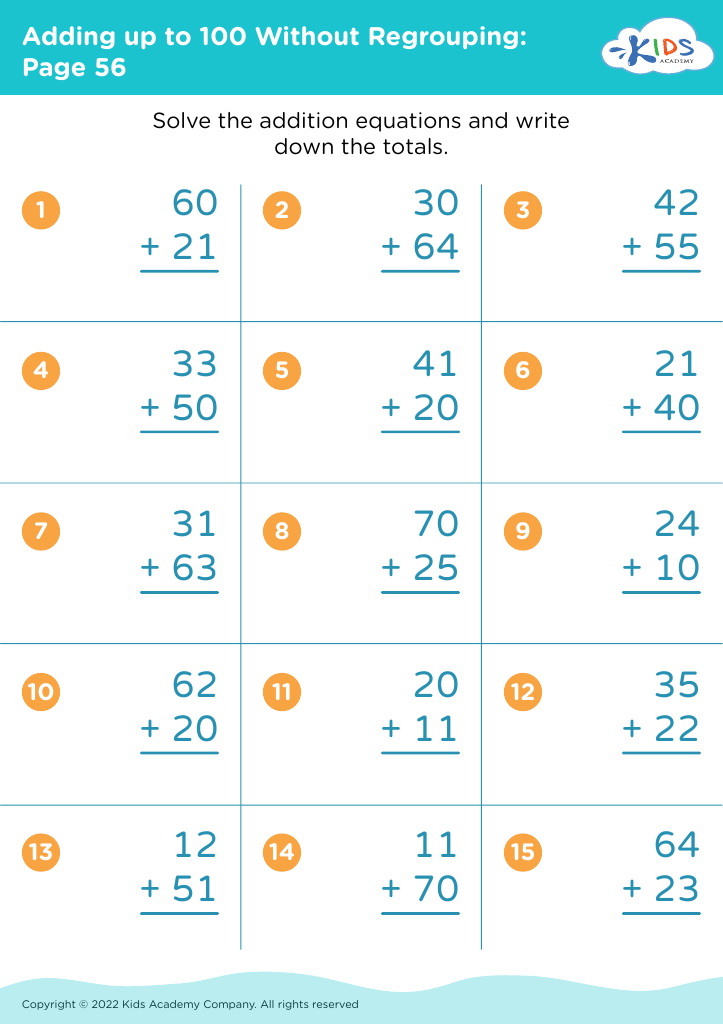
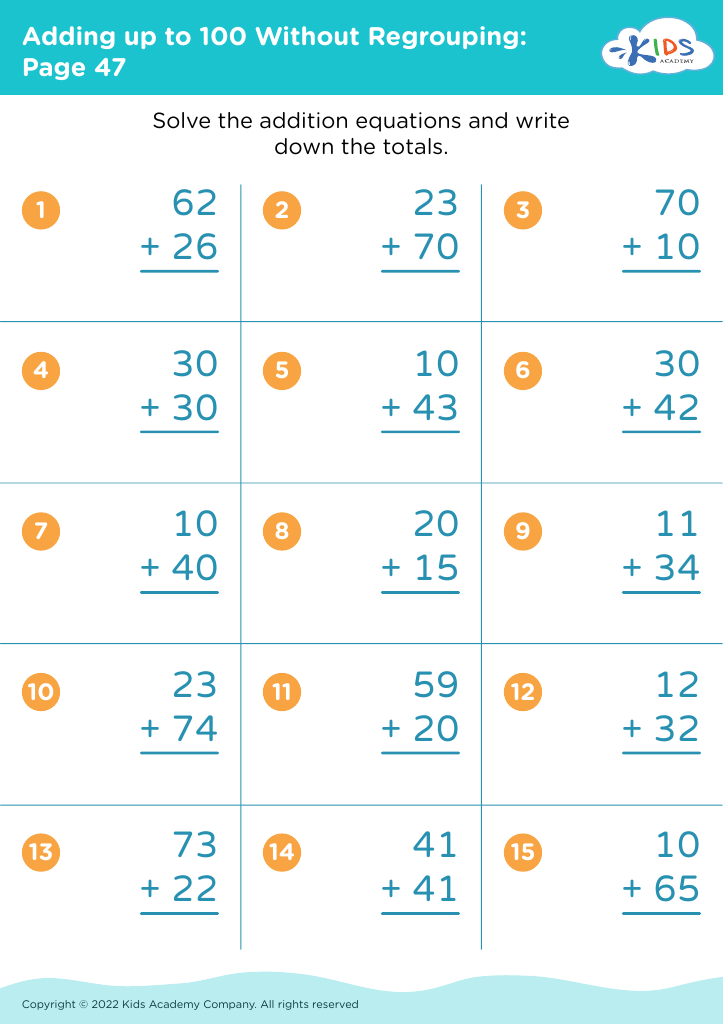
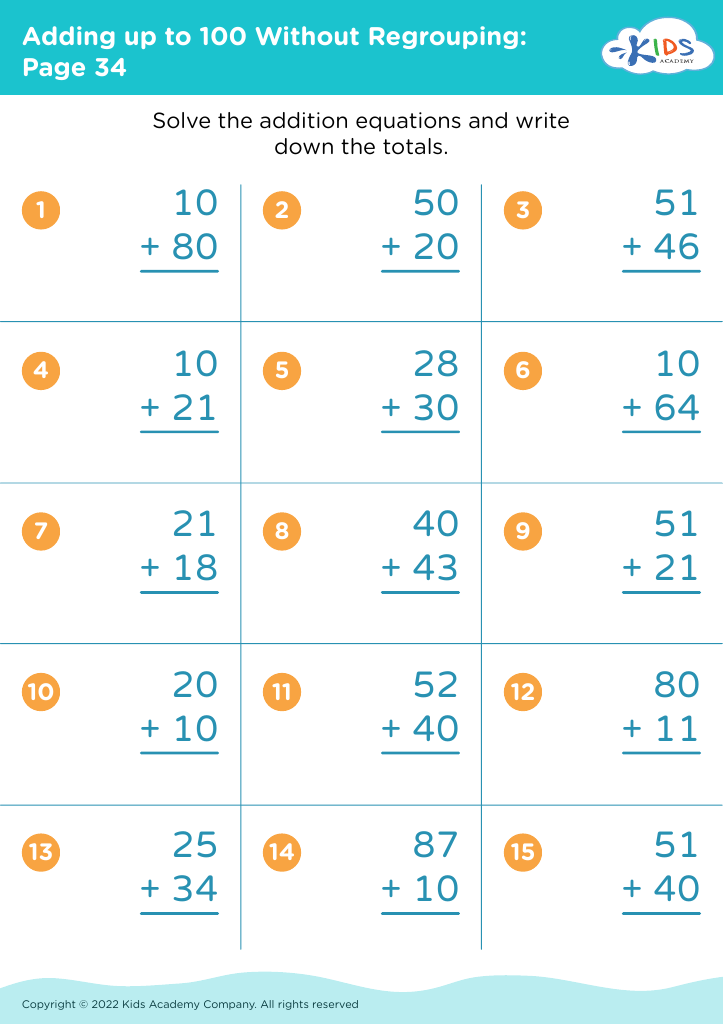
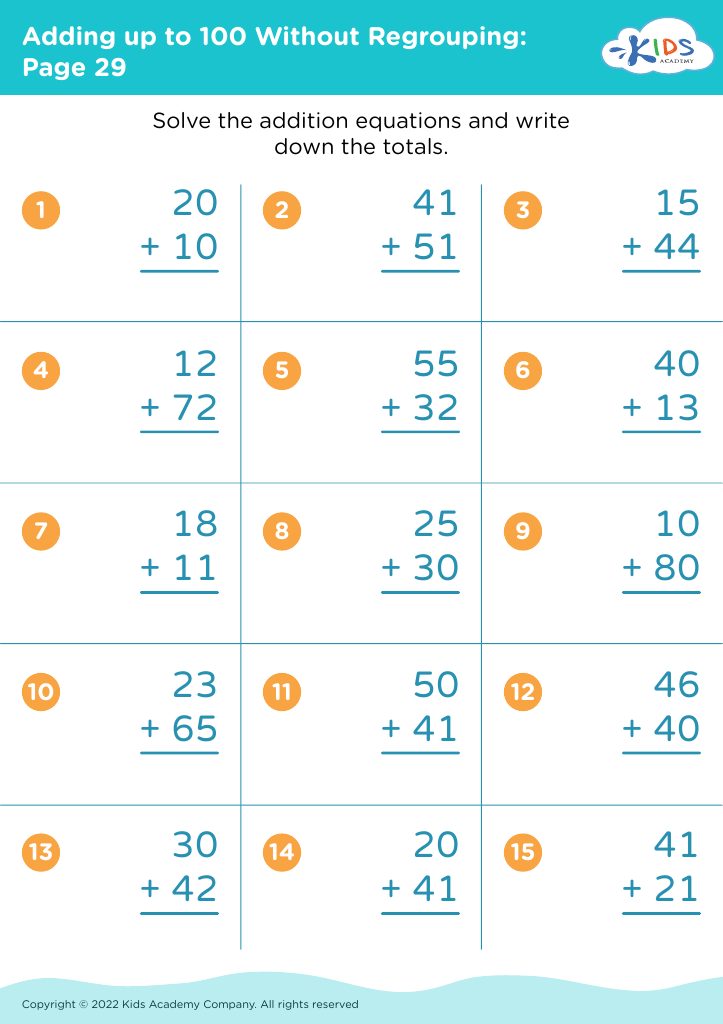




Number recognition and the ability to add up to 100 without regrouping are foundational skills for 8-year-olds and serve as essential building blocks for future math learning. First and foremost, number recognition helps children identify and understand the value of numbers. This facilitates a smoother transition into more complex mathematical concepts such as subtraction, multiplication, and division.
Mastering addition without regrouping allows children to develop confidence in their math abilities. When children can effortlessly add numbers to 100, they strengthen their computational skills, which are crucial for daily tasks and real-world problem-solving. By focusing on this skill at an early age, parents and teachers equip children to tackle more demanding math challenges in middle school and beyond.
Furthermore, fluency in addition fosters a greater interest in math as a subject, encouraging positive attitudes towards learning. When children grasp basic arithmetic effectively, they are more likely to engage in lessons enthusiastically and participate in class activities.
In short, prioritizing number recognition and addition skills not only enhances mathematical competence but also contributes to a child's overall cognitive development, self-esteem, and love for learning. This makes the topic significantly important for both parents and educators.