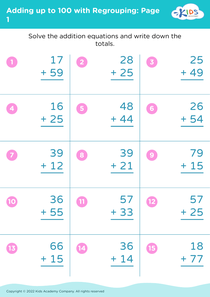
Understanding fractions Adding up to 100 Without Regrouping Worksheets for 8-Year-Olds
19 filtered results
-
From - To
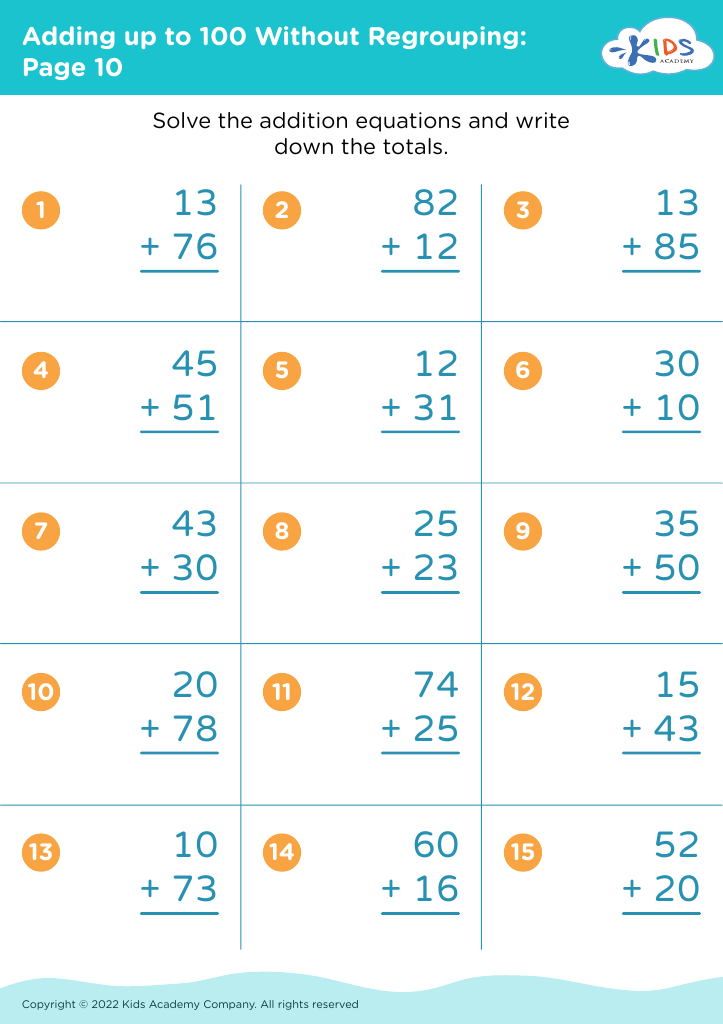
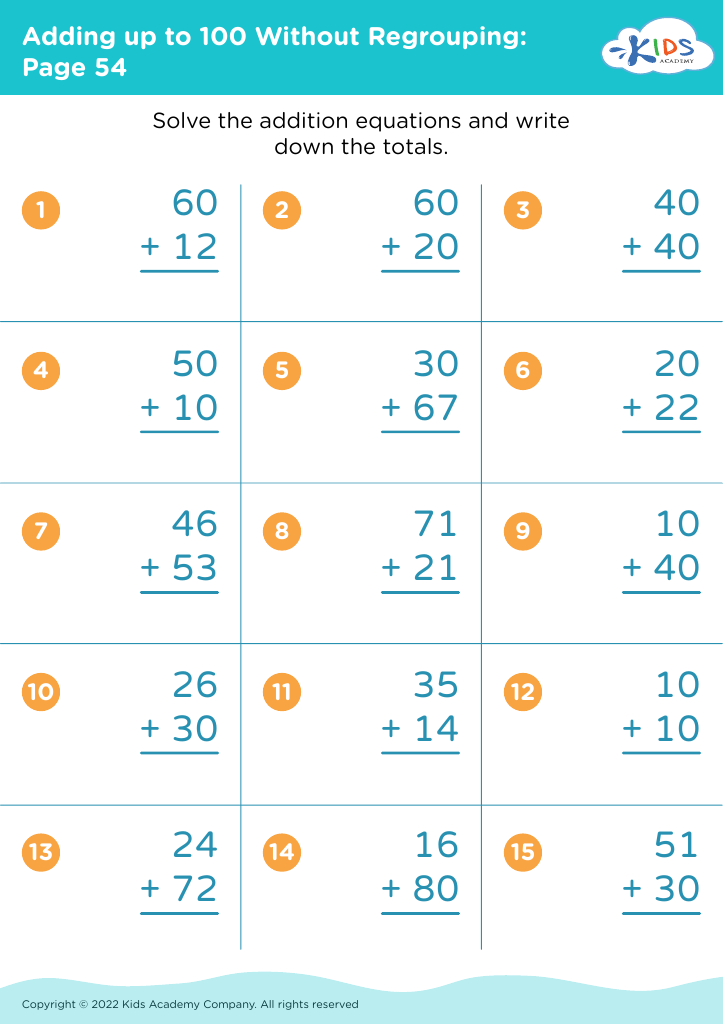
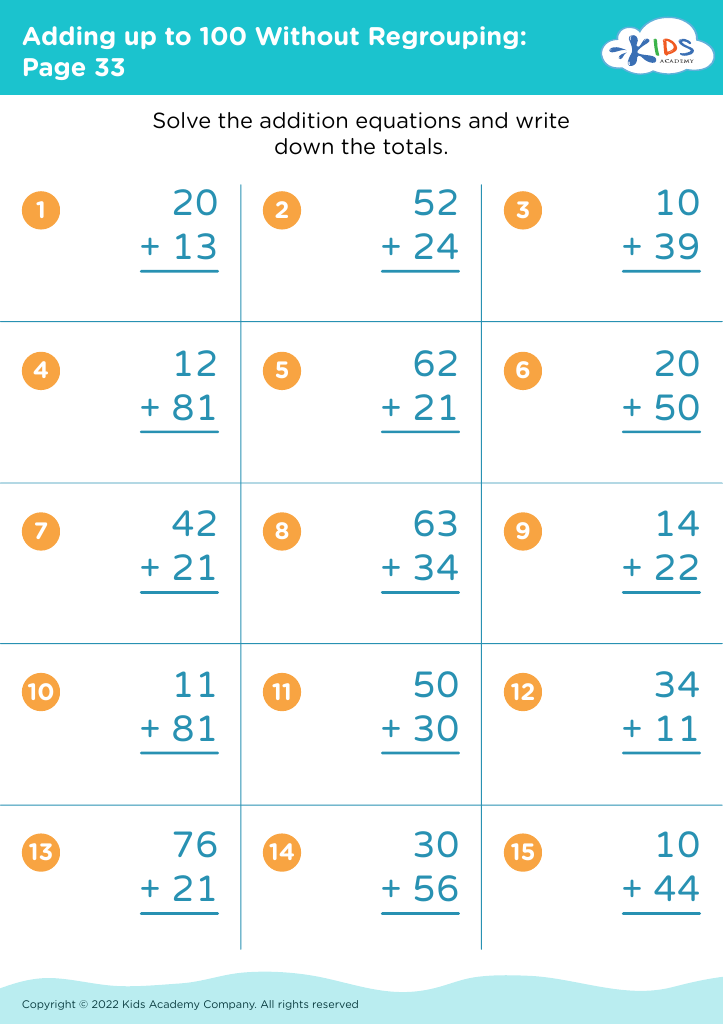
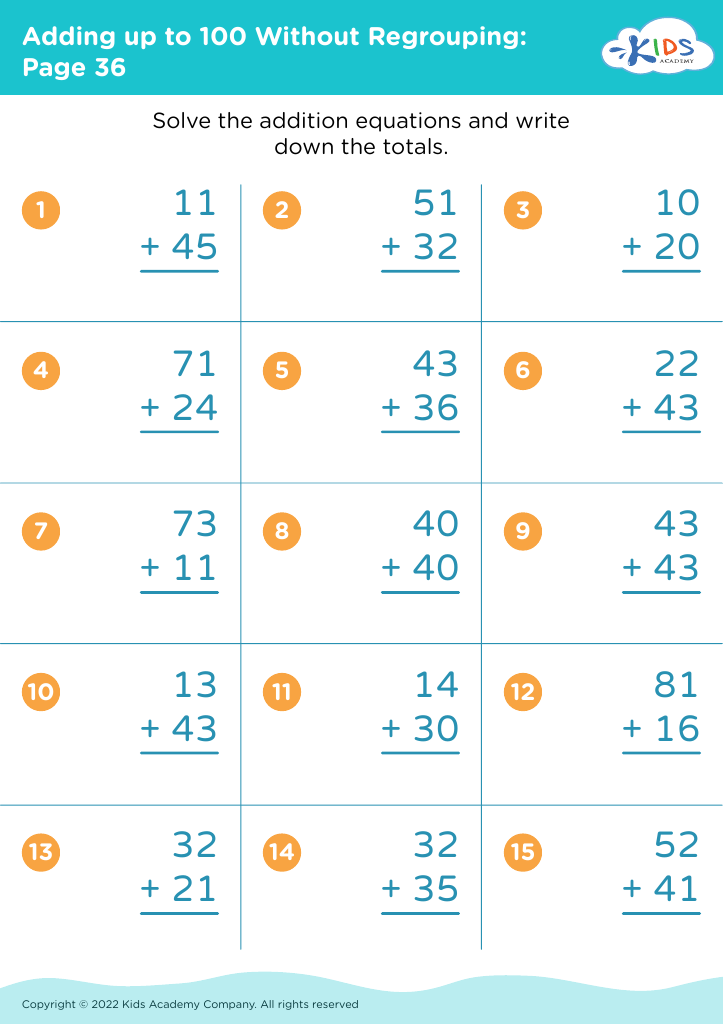
Discover our engaging "Understanding Fractions Adding Up to 100 Without Regrouping Worksheets," specifically designed for 8-year-olds! These worksheets focus on helping young learners understand fractions in a fun and interactive way. Children will practice adding fractions that total 100 without the need for regrouping, enhancing their mathematical skills and boosting their confidence. With a variety of problems tailored to their skill level, these worksheets facilitate hands-on learning and reinforce essential concepts. Perfect for classroom use or at-home practice, our resources ensure that learning about fractions is enjoyable and effective. Explore our worksheets today and make math fun for your child!
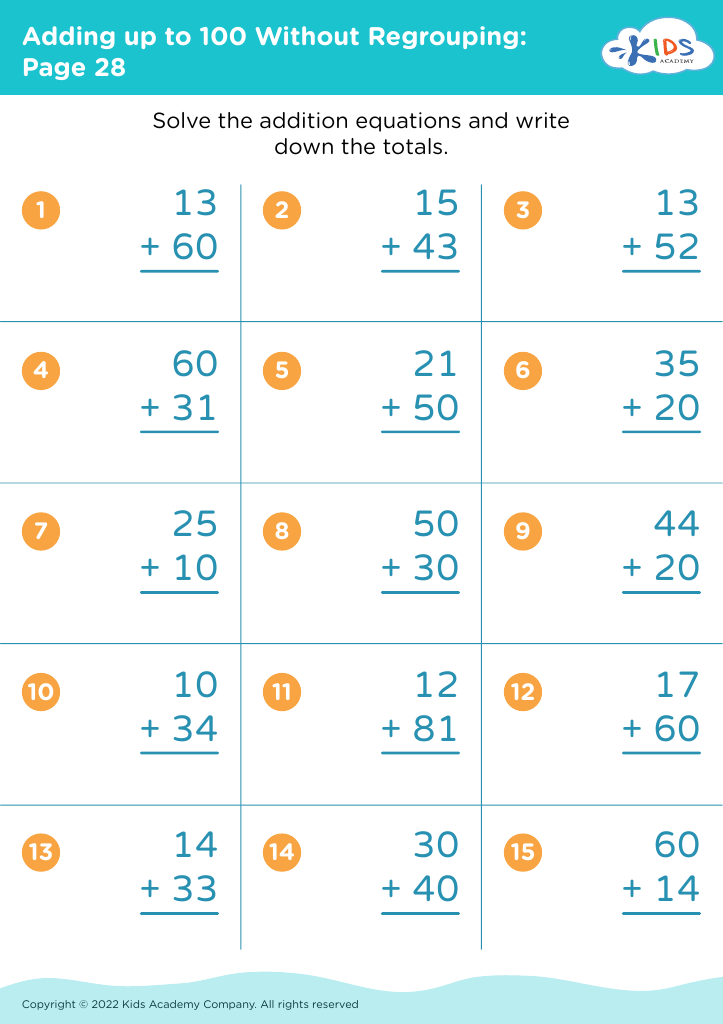
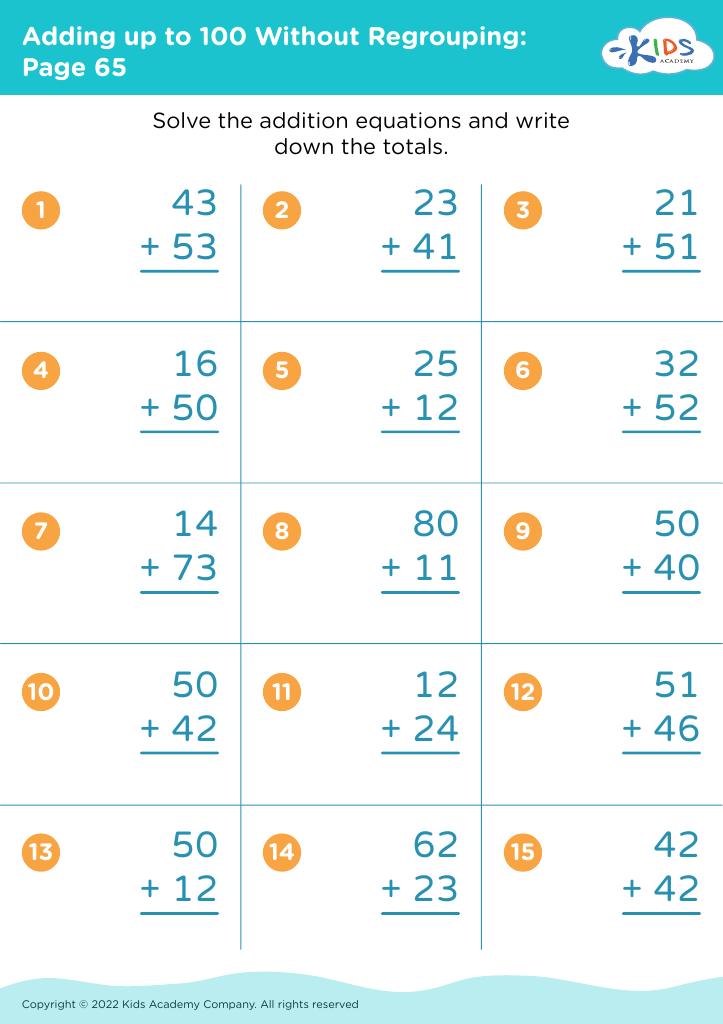
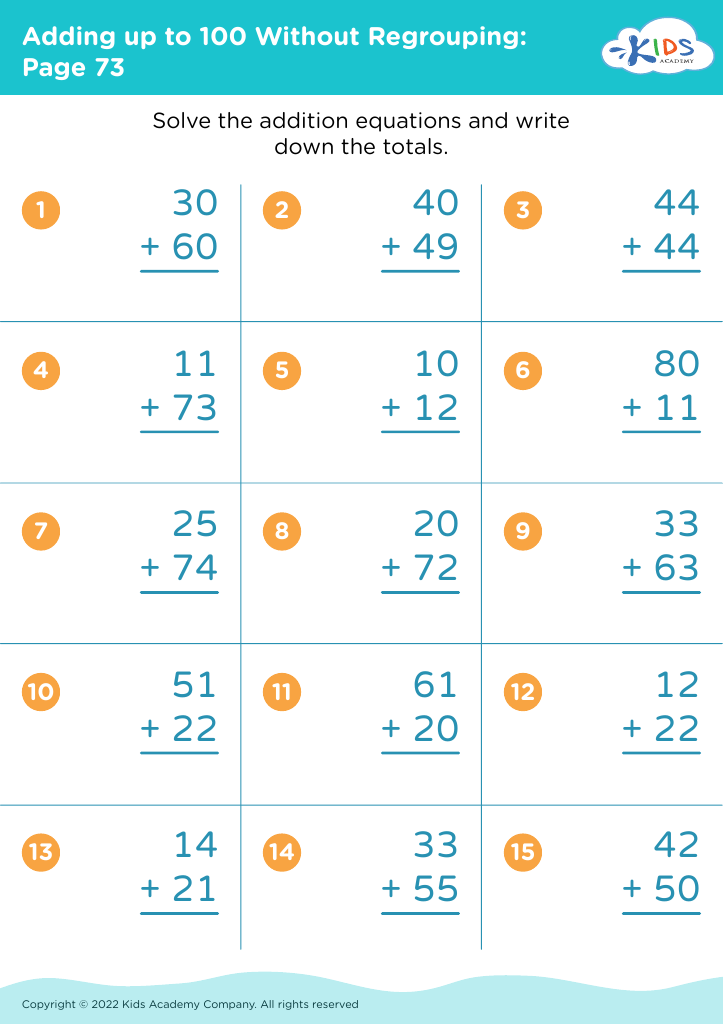
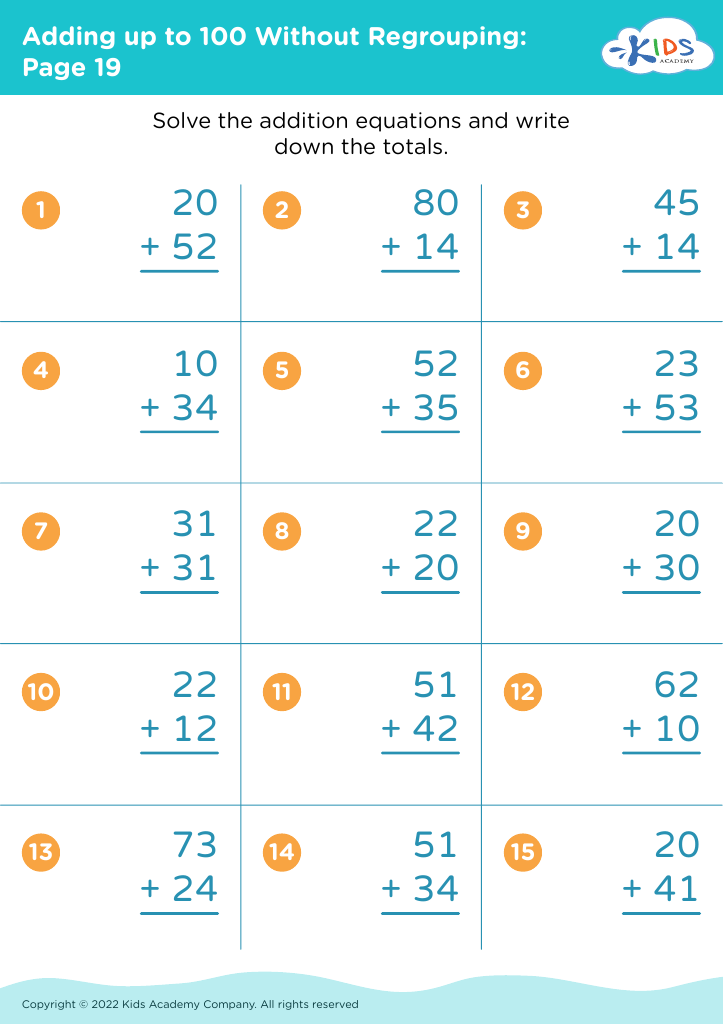
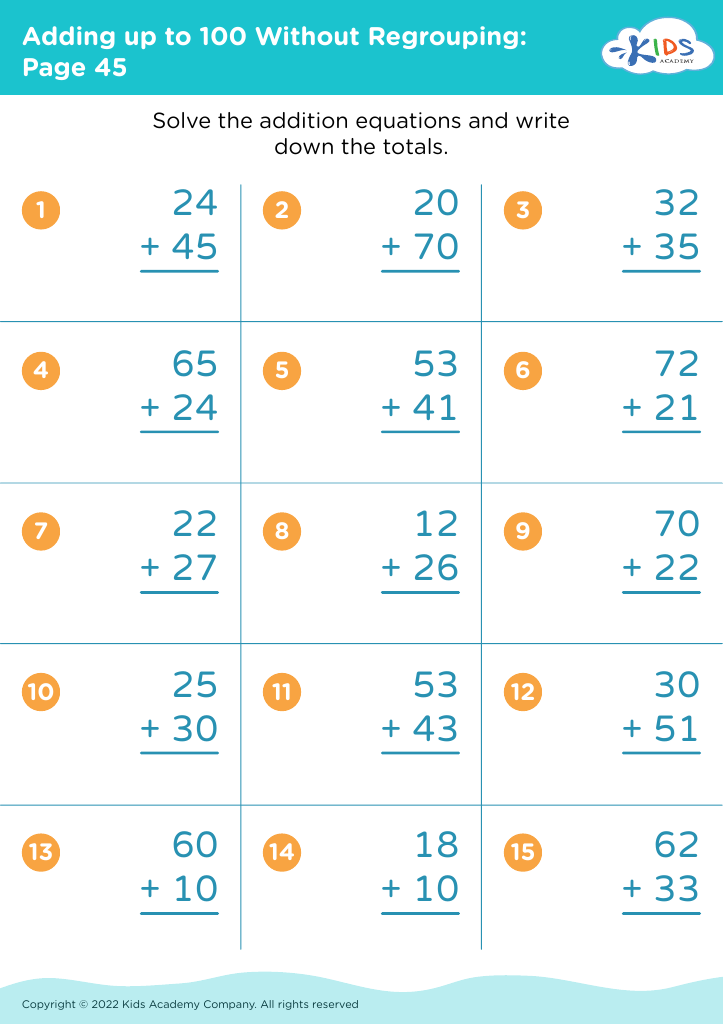
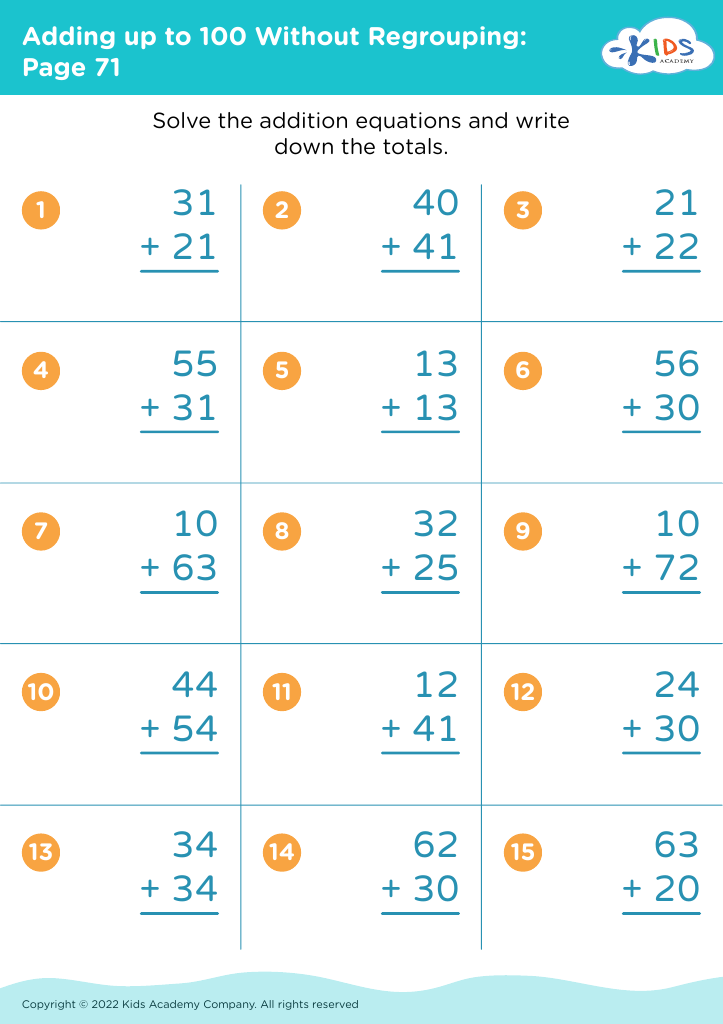
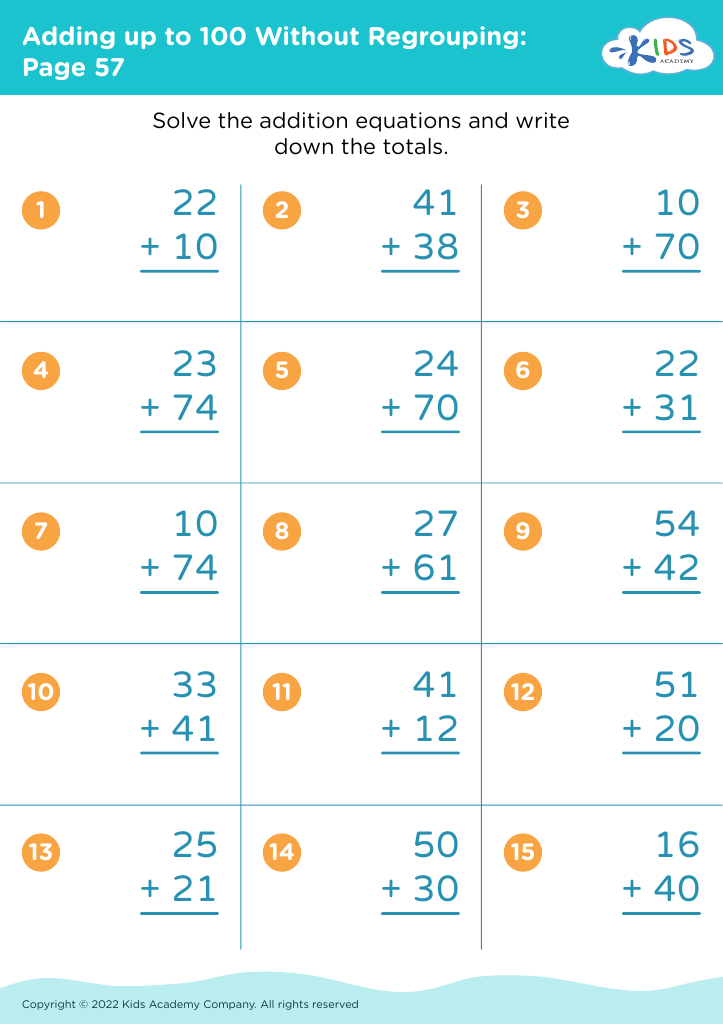
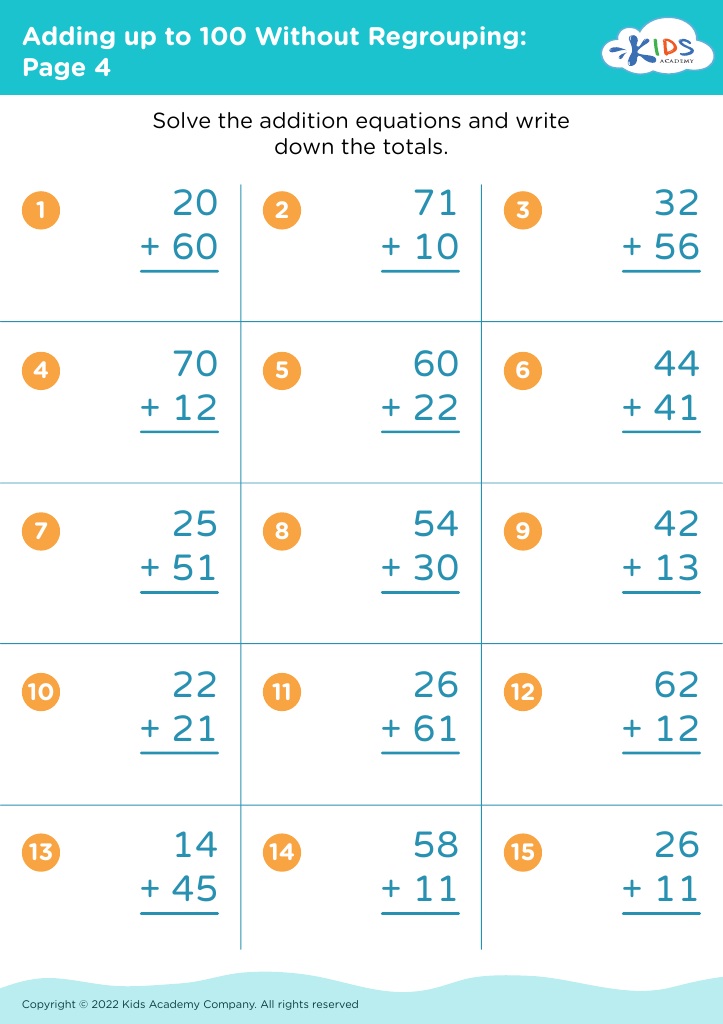
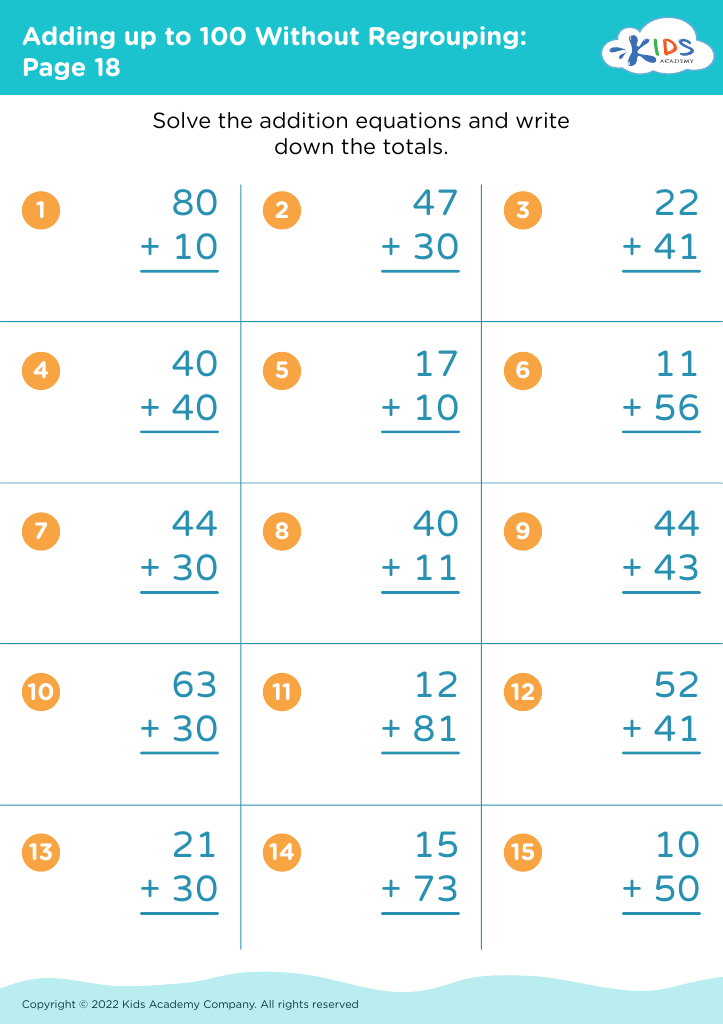
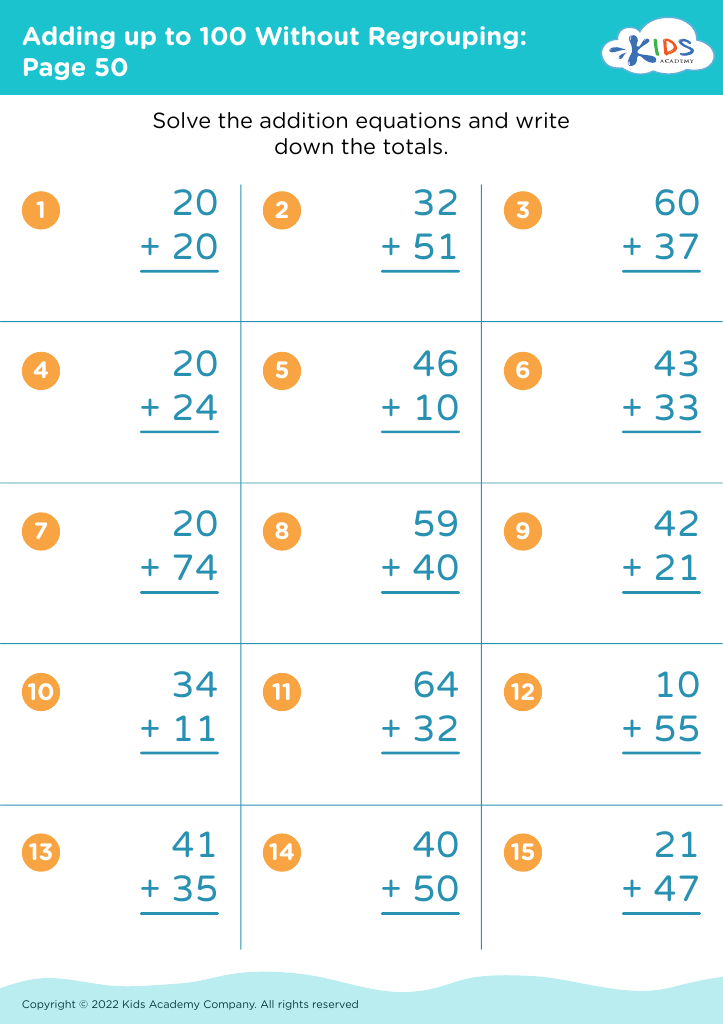
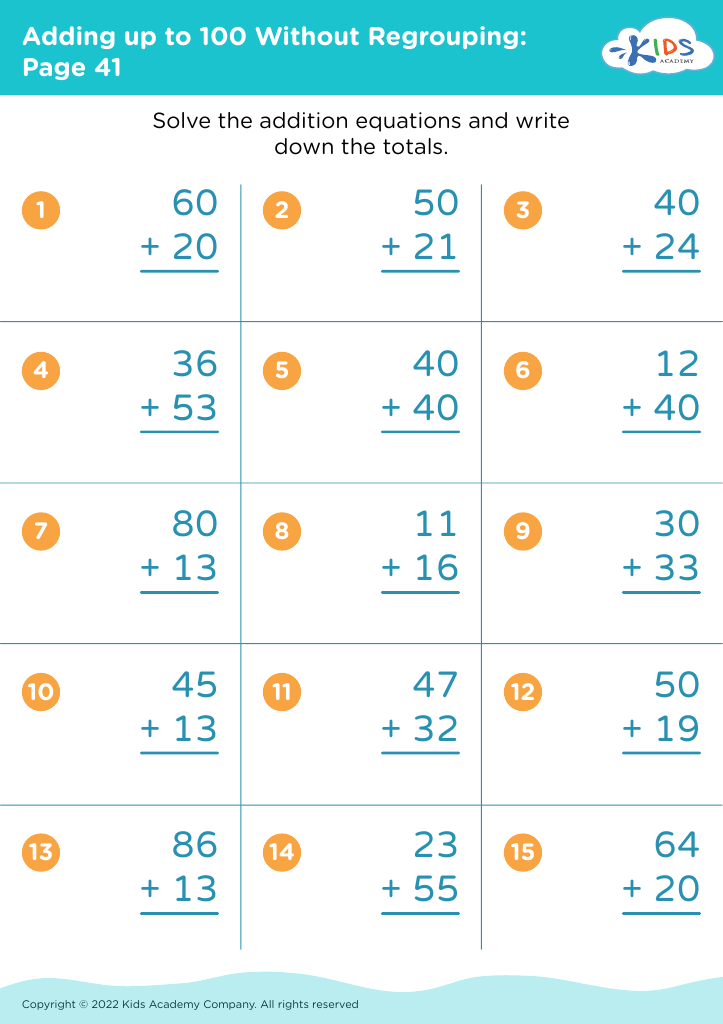
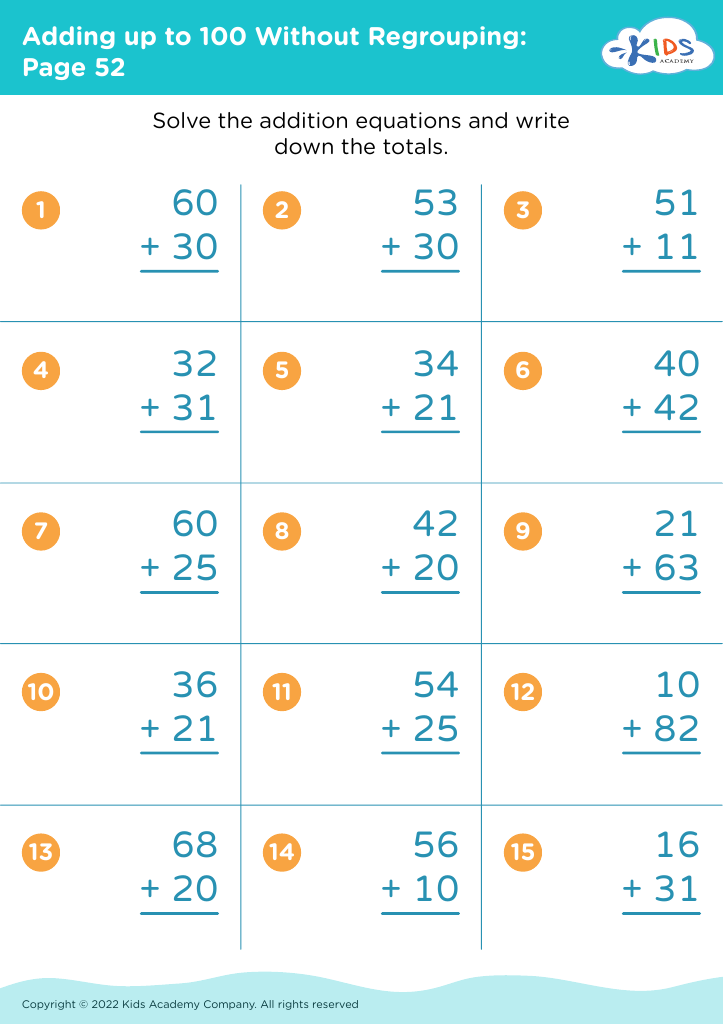
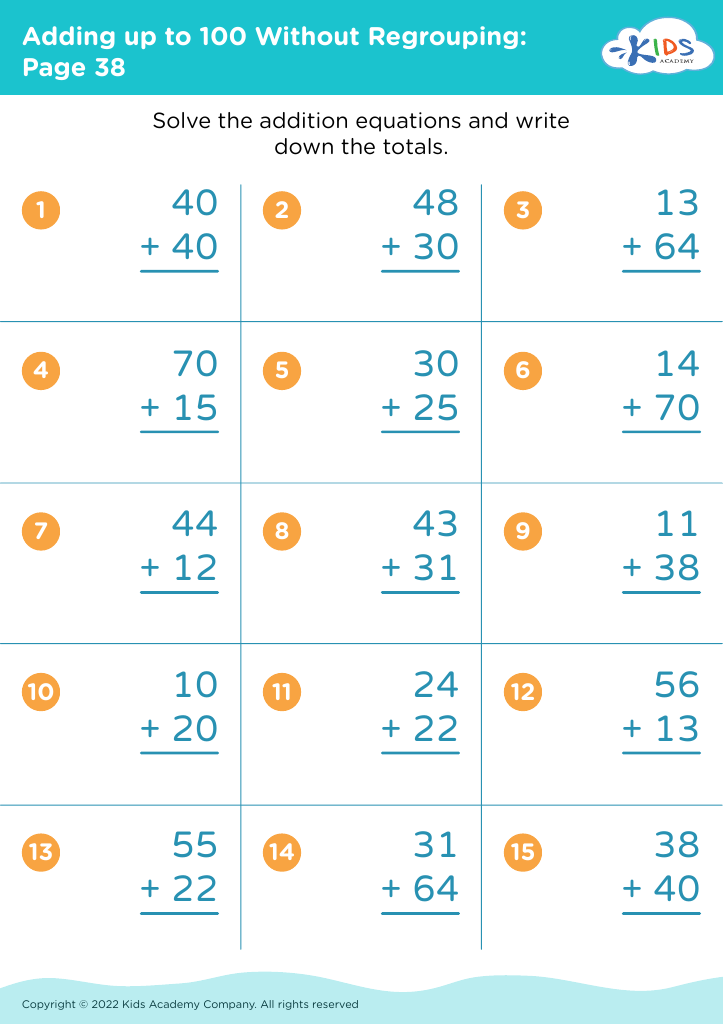
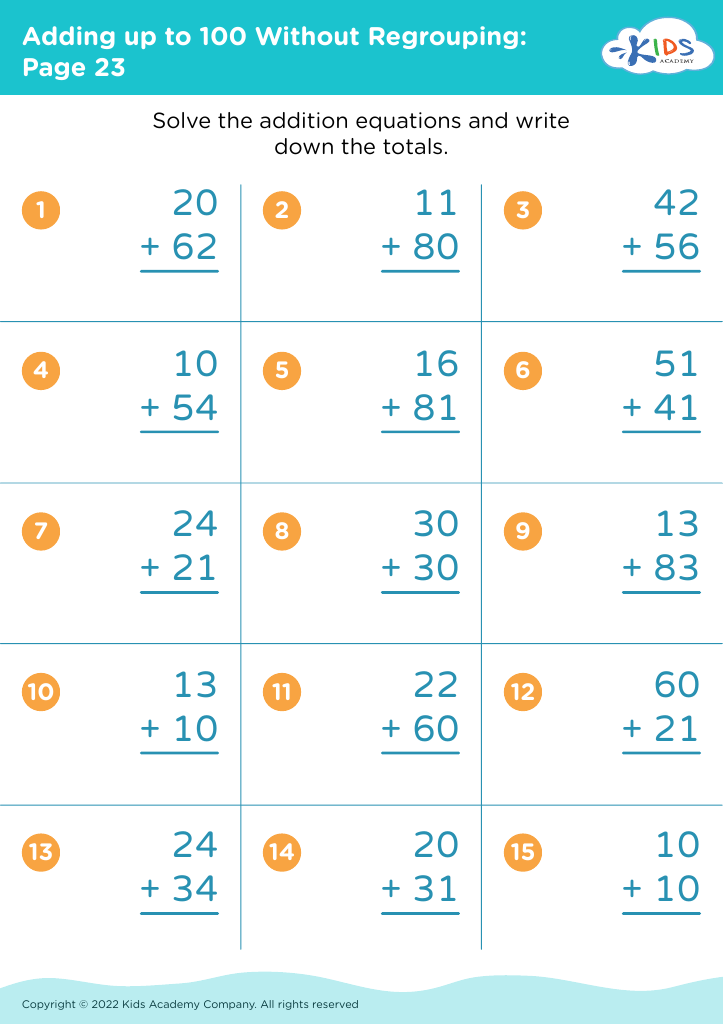
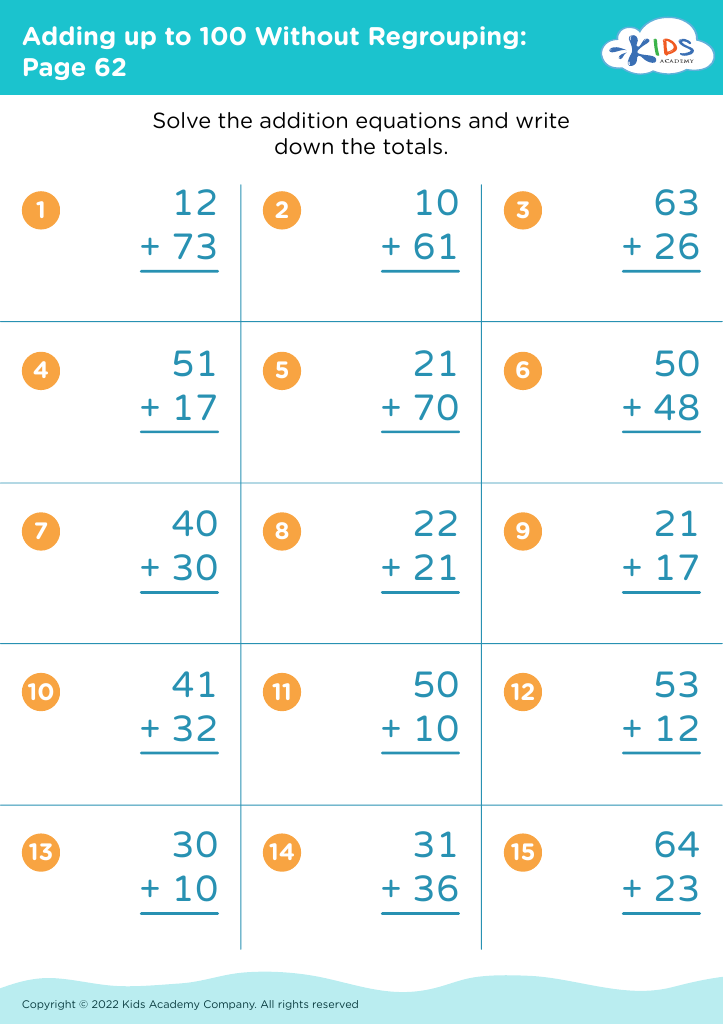




Understanding fractions and the concept of adding up to 100 without regrouping is crucial for 8-year-olds, and there are several compelling reasons for both parents and teachers to prioritize this skill. Firstly, mastering fractions forms the foundation for more complex mathematical concepts, such as percentages and ratios, which are essential for future academic success. When students grasp how to manipulate fractions effectively, they build essential problem-solving skills that extend beyond math and into real-life situations they will encounter as they grow older.
Secondly, working with fractions helps develop critical thinking and reasoning abilities. It encourages children to visualize portions of a whole, enhancing their spatial awareness and cognitive flexibility. By adding fractions that total 100, children gain an understanding of proportional relationships, which is vital in many real-world applications, from cooking to budgeting.
Moreover, this skill fosters confidence in young learners. When children master adding fractions without regrouping, they feel a sense of accomplishment that boosts their overall attitude toward math. Positive experiences with mathematics at a young age can significantly impact their future learning attitudes. Therefore, both parents and teachers should intentionally engage children in activities that build fractional understanding, laying the groundwork for lifelong mathematical competence.