Develop critical thinking Adding up to 100 Worksheets for 8-Year-Olds
5 filtered results
-
From - To
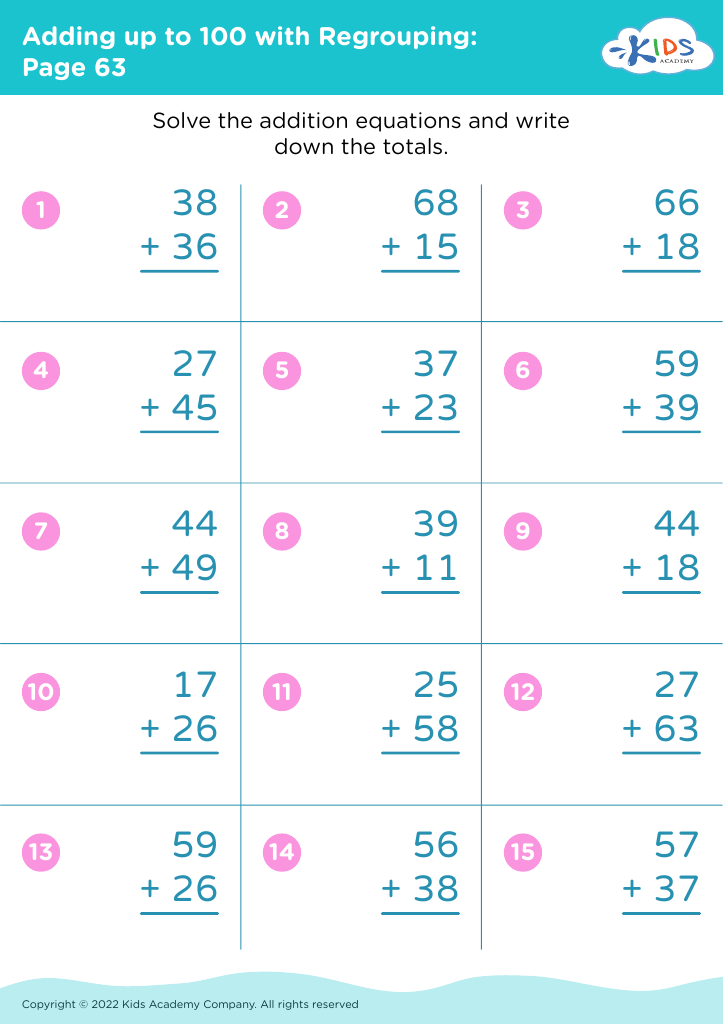
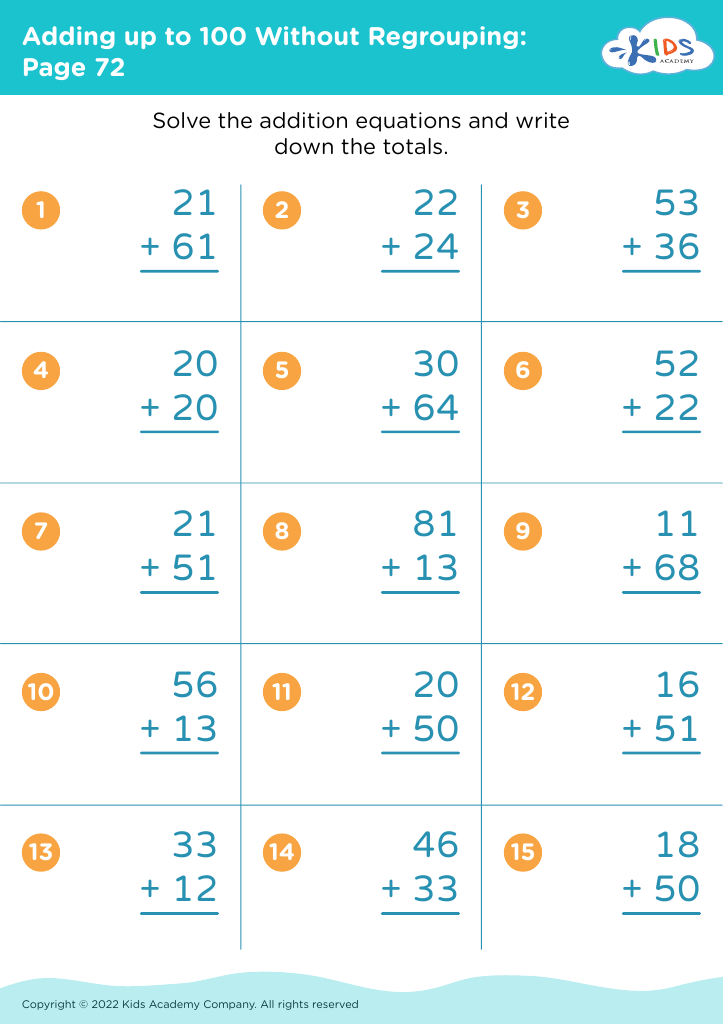
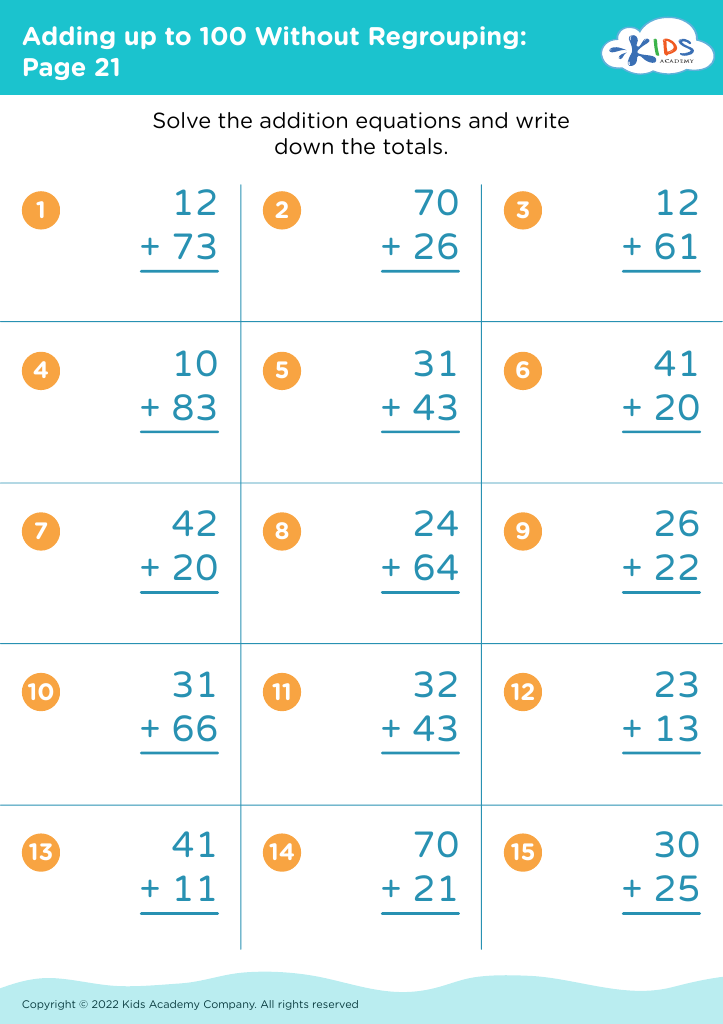
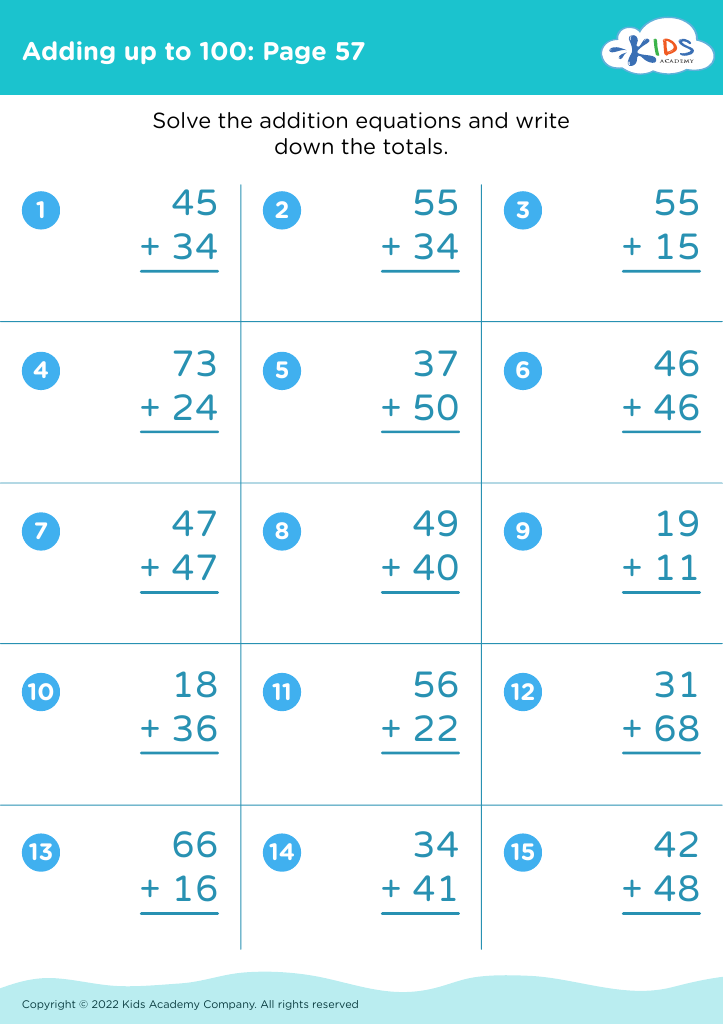
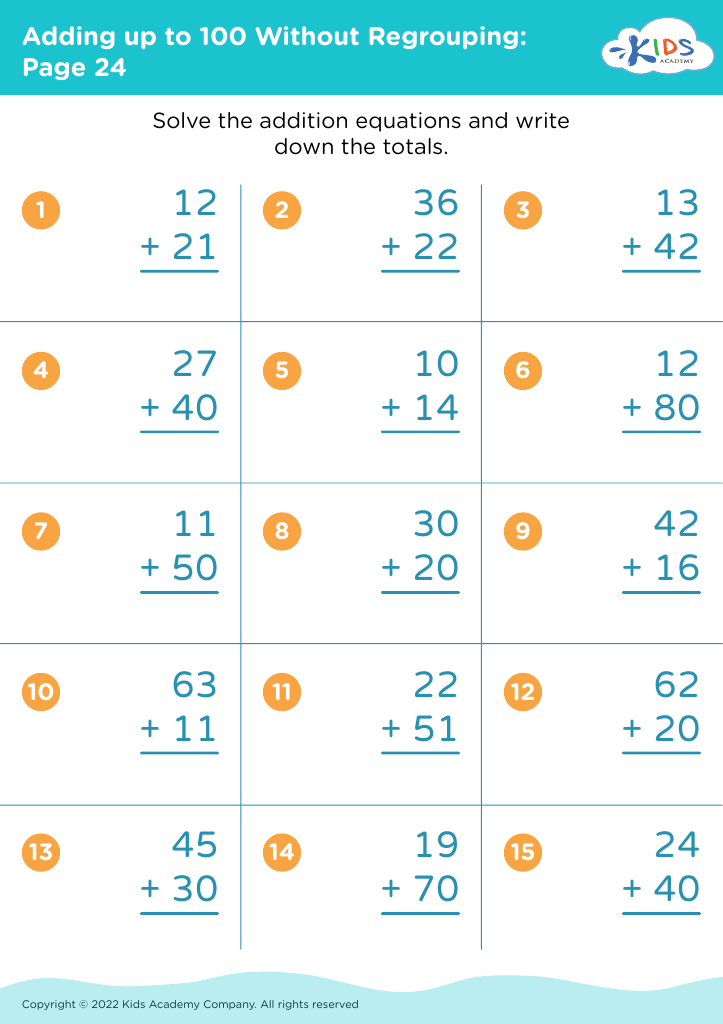
Our "Develop Critical Thinking: Adding up to 100 Worksheets for 8-Year-Olds" are designed to enhance your child's math and cognitive skills. These educational resources focus on building strong foundational arithmetic, all while encouraging logical reasoning and problem-solving abilities. Perfectly tailored for young learners, these worksheets make mastering addition fun and challenging. By exploring various techniques to sum numbers up to 100, kids gain confidence and improve their critical thinking. Created by experts, our engaging activities ensure your child enjoys learning while achieving remarkable progress in independent thought and mathematical proficiency. Unlock your child’s potential with our targeted, skill-building worksheets.


%20(1).jpg)




Parents and teachers should prioritize developing critical thinking skills and understanding of addition up to 100 among 8-year-olds because these foundational skills are crucial for later success in both academics and real-life problem-solving. Critical thinking enables children to analyze information, assess situations, and make reasoned decisions, which are essential skills for lifelong learning and adaptability. By encouraging logical reasoning, pattern recognition, and decision-making from a young age, children become equipped to tackle more complex subjects and challenges with confidence.
Mathematical skills, particularly mastering addition up to 100, support cognitive development and enhance mental arithmetic abilities. Proficiency in basic math also builds a child's confidence and reduces math anxiety, promoting a positive attitude towards further math learning. These skills are not only necessary for more advanced math concepts but are also applied in everyday situations, such as handling money, measuring ingredients, or planning divisional tasks.
Integrating critical thinking in math lessons encourages children to explore multiple problem-solving methods and understand why particular strategies work, deepening their comprehension and retention. By fostering these skills, parents and teachers lay a solid groundwork for academic success and prepare students to face real-world situations with sharpened analytical capabilities and practical math proficiency.








