Enhance critical thinking Adding up to 100 Worksheets for 8-Year-Olds
3 filtered results
-
From - To
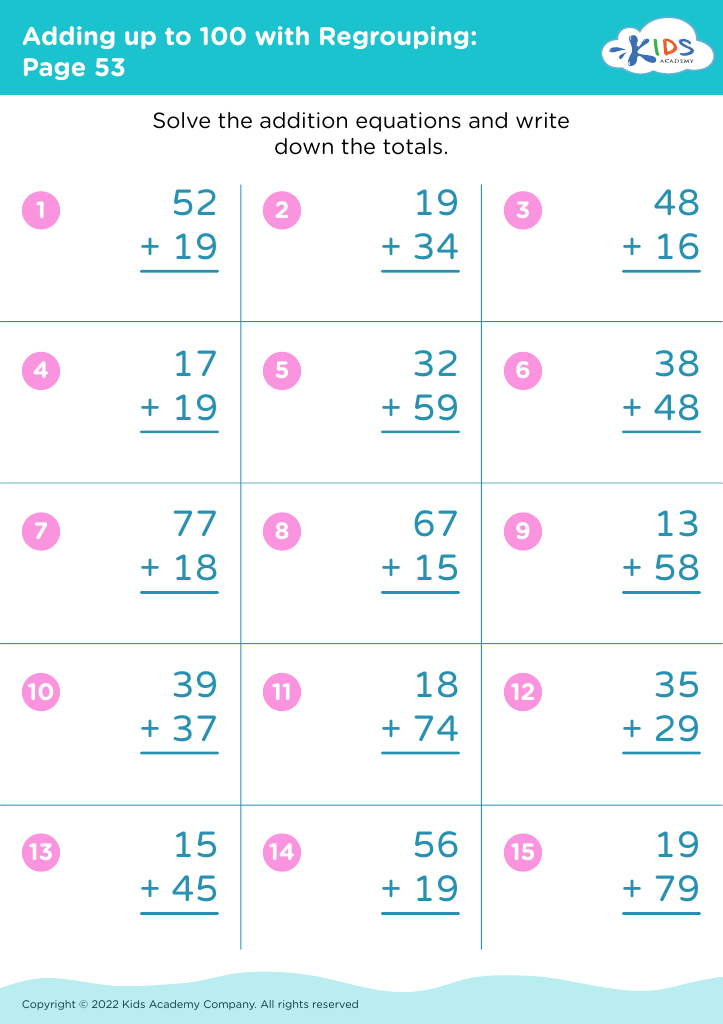
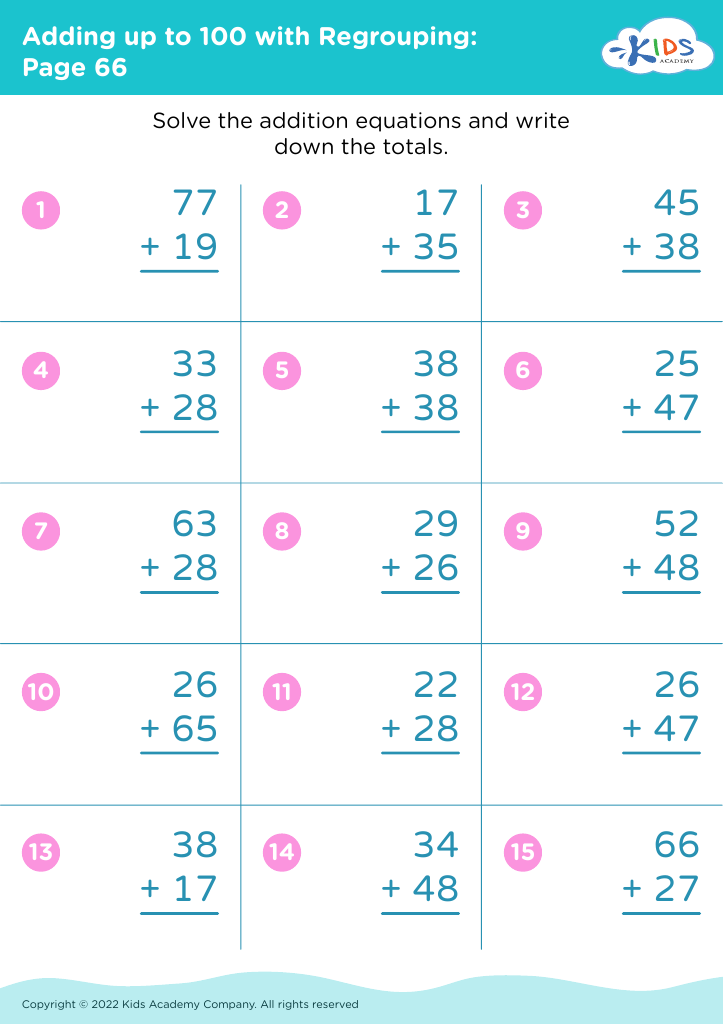
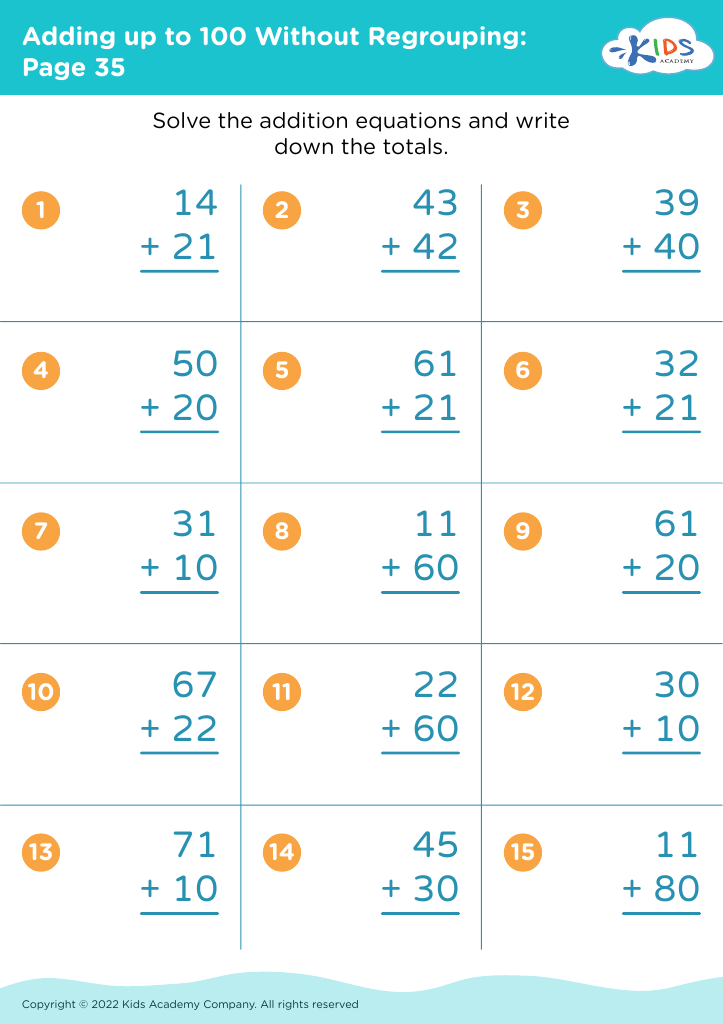
Enhance critical thinking skills in 8-year-olds with our Adding Up to 100 Worksheets! This collection features 100 engaging worksheets designed to develop essential math abilities while fostering analytical thinking. Students will explore various addition problems involving sums that total up to 100, encouraging them to not only calculate but also understand the process behind the numbers. Each worksheet incorporates fun challenges, promoting problem-solving and reasoning skills that are vital for academic growth. Perfect for classroom use or at-home learning, these worksheets provide an interactive way to reinforce math concepts while stimulating budding critical thinkers. Start enhancing their skills today!


%20(1).jpg)




Enhancing critical thinking in 8-year-olds is essential for their cognitive development and future success. At this age, children begin to explore complex ideas and understand multiple perspectives. Encouraging critical thinking helps them analyze situations, solve problems creatively, and make informed decisions. Parents and teachers play a crucial role in fostering these skills, which are vital for academic achievement and personal growth.
When children engage in critical thinking activities, they develop important cognitive skills such as inference, evaluation, and reasoning. This process promotes a sense of curiosity and resilience, enabling them to tackle challenges and learn from mistakes. Skills in critical thinking also translate to improved literacy and mathematics, as children learn to interpret information, recognize patterns, and apply logical reasoning.
Furthermore, these skills prepare children for future educational endeavors and real-world challenges. As today's classrooms increasingly value collaborative work and interdisciplinary learning, critical thinking becomes even more integral. By nurturing these abilities, parents and teachers are equipping children not just to pass tests but to navigate life’s complexities with confidence and adaptability. Ultimately, empowering children to think critically ensures they become proactive, informed citizens capable of contributing positively to society.








