Enhancing problem-solving skills Adding up to 100 Worksheets for 8-Year-Olds
3 filtered results
-
From - To
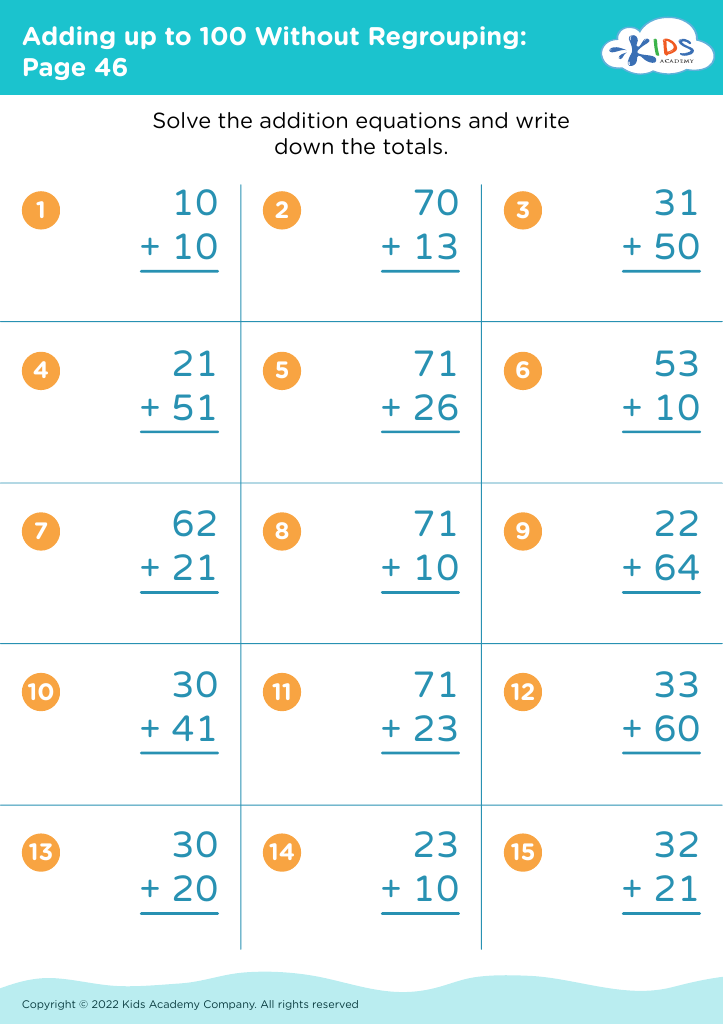
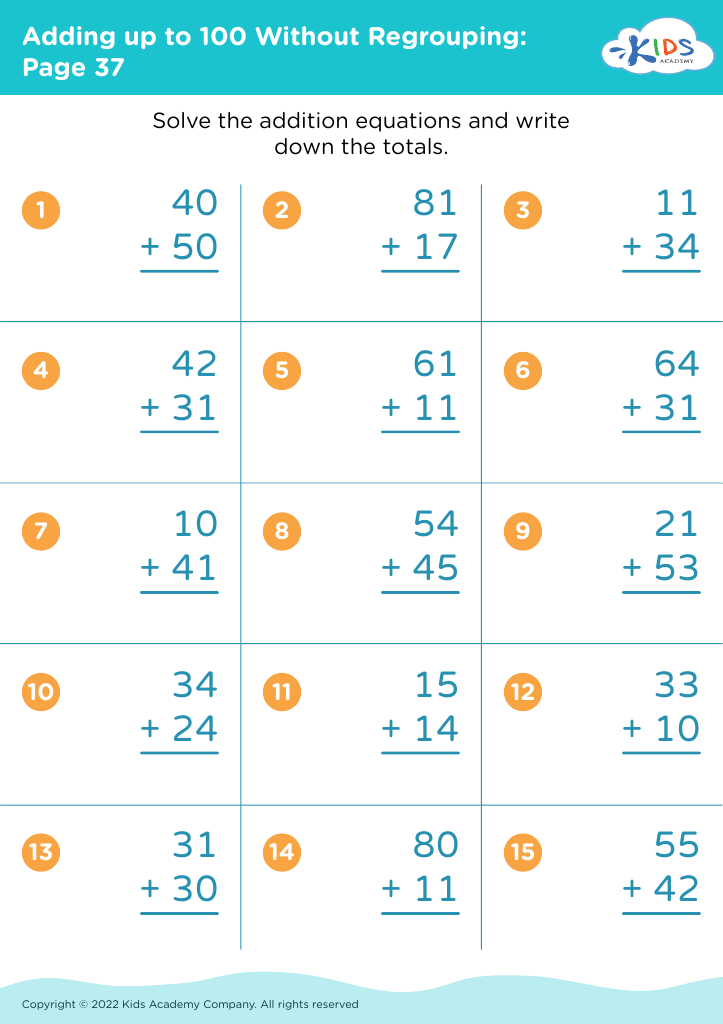
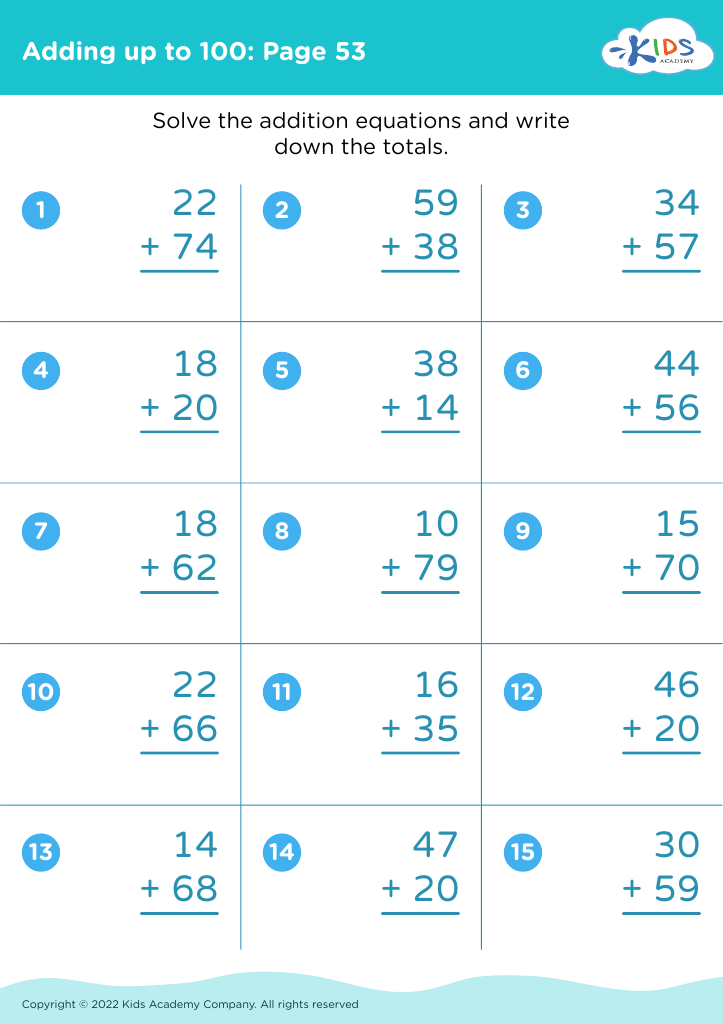
Our "Enhancing Problem-Solving Skills: Adding up to 100 Worksheets for 8-Year-Olds" offer young learners engaging activities tailored to boost their arithmetic prowess. These meticulously crafted exercises focus on nurturing a deep understanding of addition within 100, encouraging confident problem-solving. Perfect for classroom settings or home practice, each worksheet presents creative, age-appropriate challenges that make learning fun and effective. Our resources emphasize critical thinking, accuracy, and speed, empowering children to tackle math problems with ease and enthusiasm. Start your 8-year-old's journey towards math mastery today with our carefully designed, educational worksheets!


%20(1).jpg)




Enhancing problem-solving skills while ensuring 8-year-olds can add up to 100 is crucial for several reasons. These skills form the foundation for more complex mathematical concepts and real-life applications, building a child's confidence in their academic abilities and practical achievements. For parents and teachers, focusing on these areas means fostering essential cognitive development at a critical stage.
Problem-solving skills are not confined to math; they enhance logical thinking, encourage kids to think critically, and promote perseverance in the face of challenges. These abilities translate into everyday problem-solving and decision-making, preparing children for life's varied situations.
Additionally, being fluent in basic addition up to 100 solidifies number sense and essential arithmetic skills. It impacts their capacity to tackle more intricate tasks, from making financial decisions like counting money to understanding more advanced mathematical theories in higher grades.
Both these skills combined create a cumulative positive effect: they improve standardized test performances, contribute to better academic outcomes, and equip children with essential life skills. Investing time in developing these areas early on sets the stage for continual success, making it an essential focus for parents and teachers who want to ensure a well-rounded, capable, and confident child.








