Fraction comparison Adding up to 100 Worksheets for 8-Year-Olds
6 filtered results
-
From - To
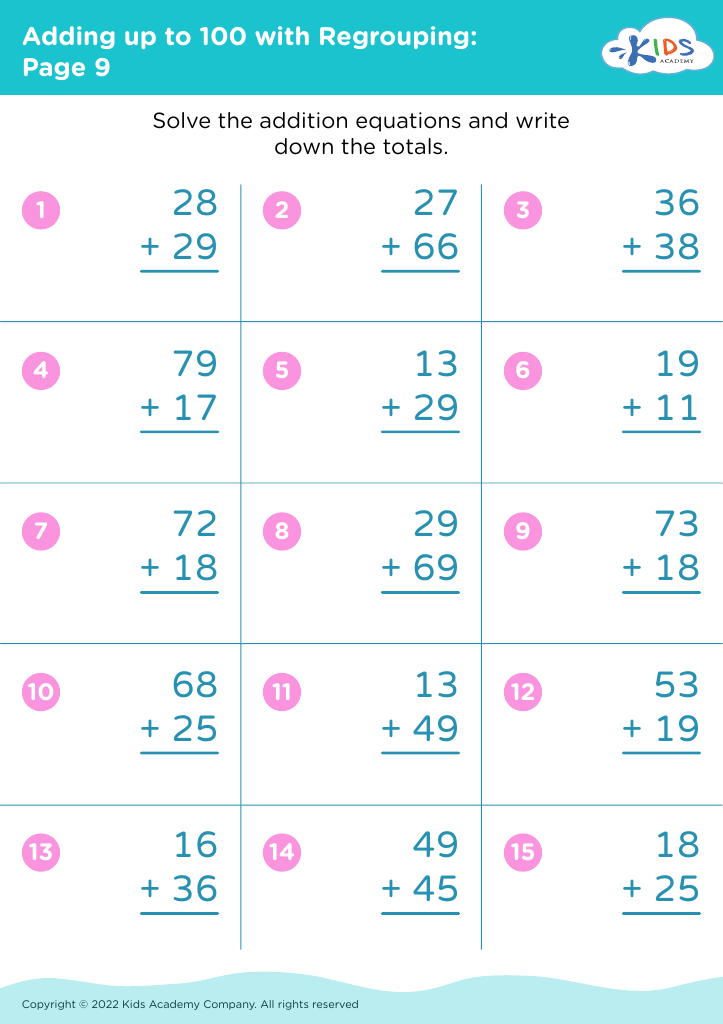
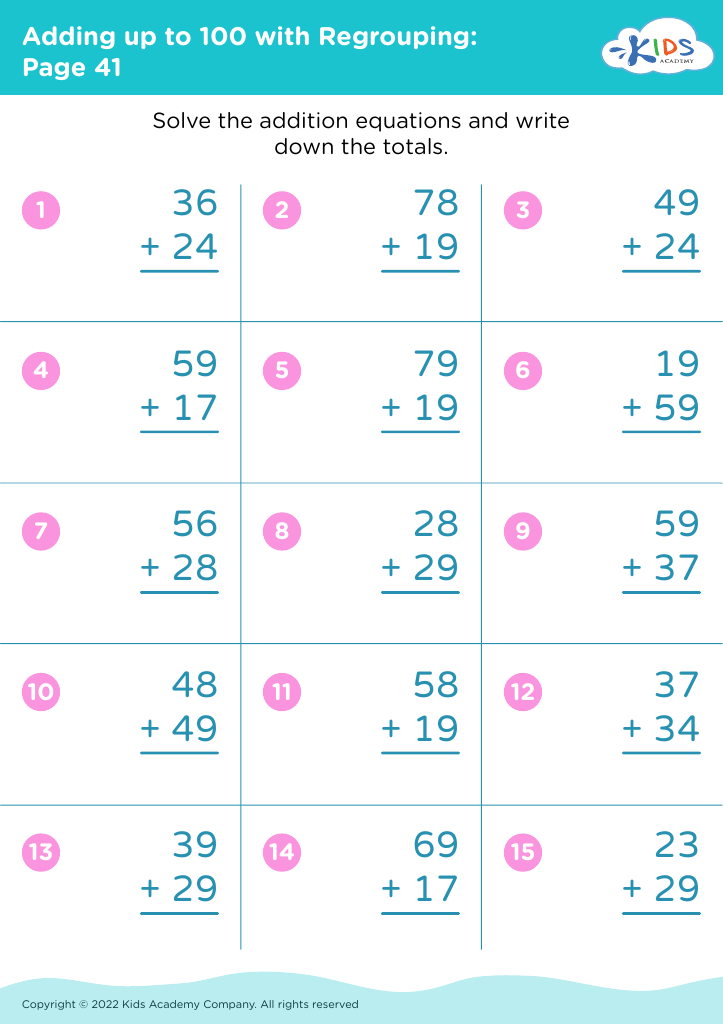
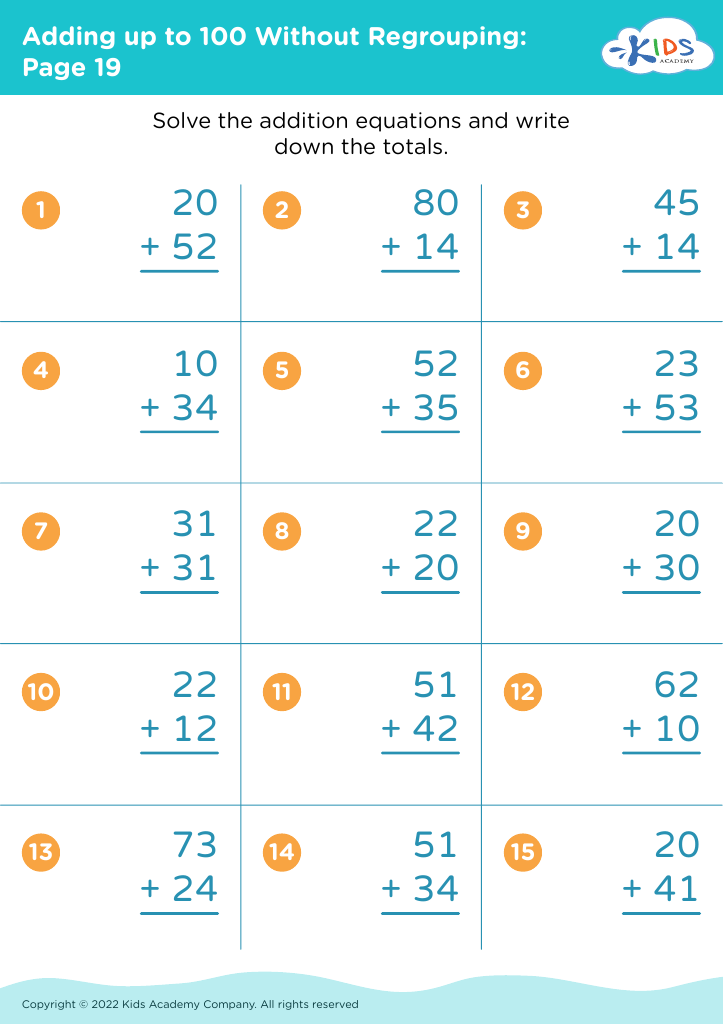
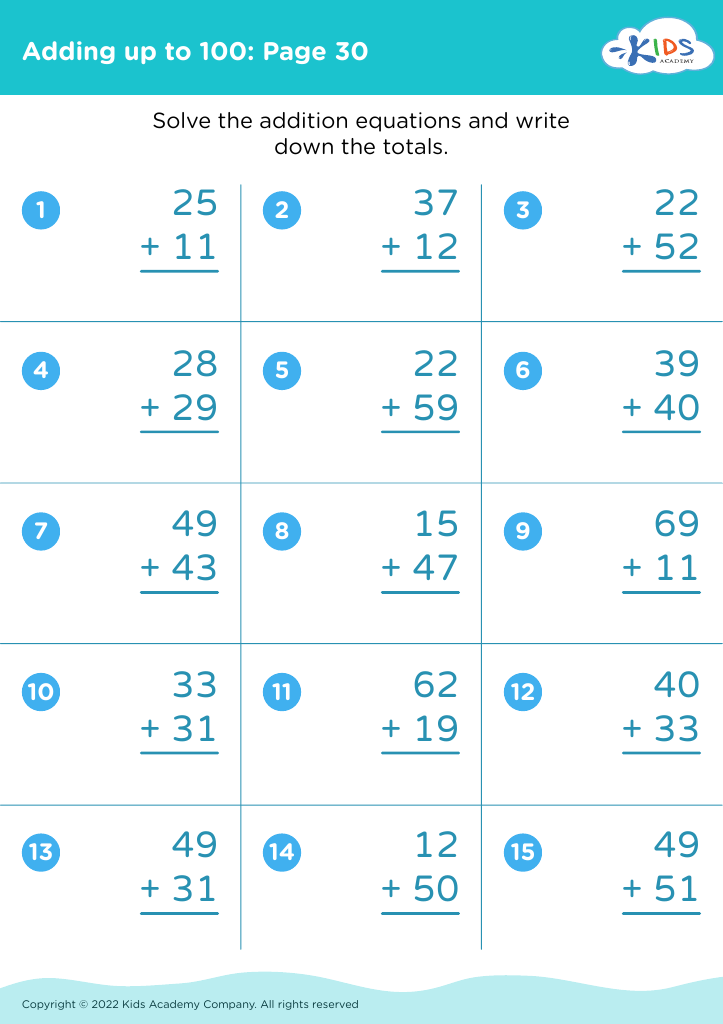
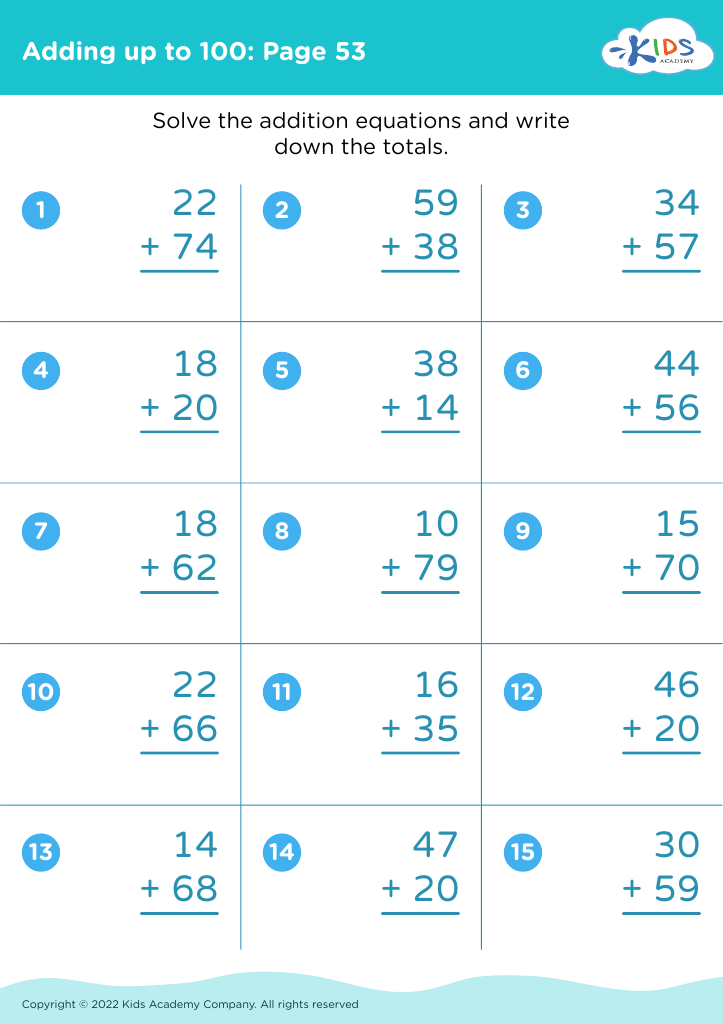
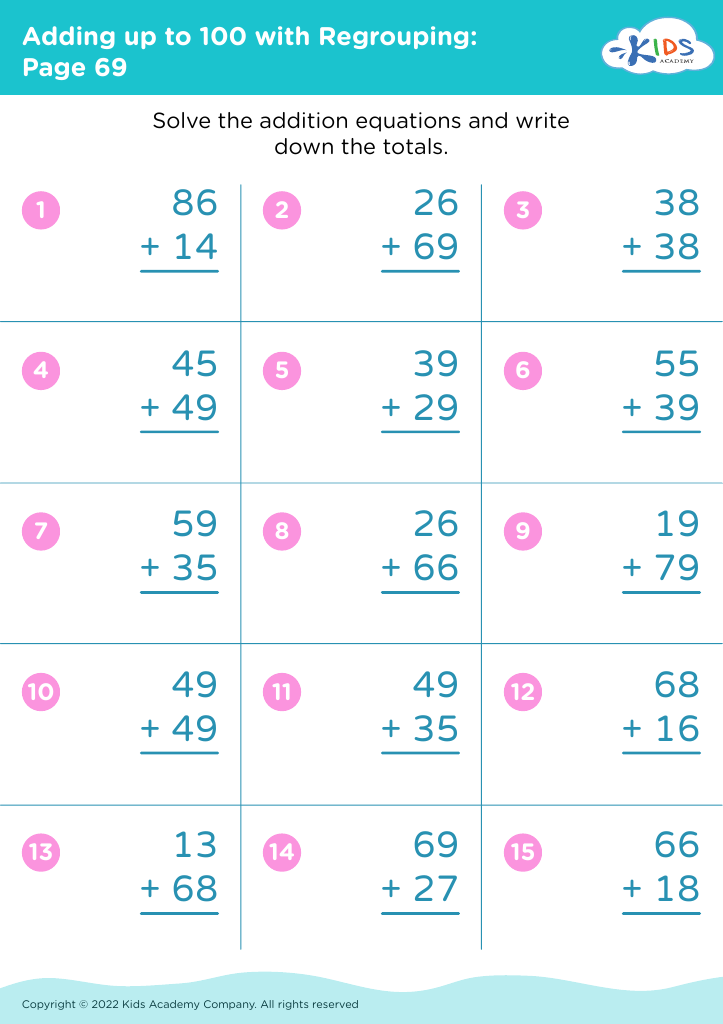
Discover our engaging "Fraction Comparison Adding up to 100 Worksheets" designed specifically for 8-year-olds. These worksheets provide a fun and interactive way for children to enhance their understanding of fractions while practicing their addition skills. Through a variety of challenging problems and visual aids, kids will learn to compare fractions effectively, fostering a deeper comprehension of mathematical concepts. Perfect for supplementary learning at home or in the classroom, our resources encourage critical thinking and boost confidence in young learners. Equip your child with the tools they need to excel in math while enjoying the journey of discovering fractions!



%20(1).jpg)



Parents and teachers should care about teaching 8-year-olds fraction comparison, especially when introducing the concept of fractions adding up to 100, because it lays a foundational understanding of mathematics crucial for future academic success. At this age, children are developing critical thinking and problem-solving skills; mastering fractions helps them recognize relationships between numbers and enhances their ability to work with parts of a whole.
Learning to compare fractions and understand equivalent fractions allows children to manipulate and organize information more effectively, which is essential in more advanced math topics. By grasping how fractions can represent portions of a whole, they gain confidence in applying math to real-world situations, such as calculating discounts, among others.
Additionally, incorporating fun games and interactive activities centered around fractions increases engagement and retention of the material. Educators and parents play vital roles in motivating young learners, making math enjoyable and relatable. This early exposure to fraction comparison not only boosts mathematical skills but also fosters a positive attitude towards math as they advance in their education. Ultimately, fostering a strong math foundation in early years promotes confidence and a deeper understanding of quantitative reasoning that will benefit students throughout their academic journey.








