Hand-eye Coordination Adding up to 100 Worksheets for 8-Year-Olds
3 filtered results
-
From - To
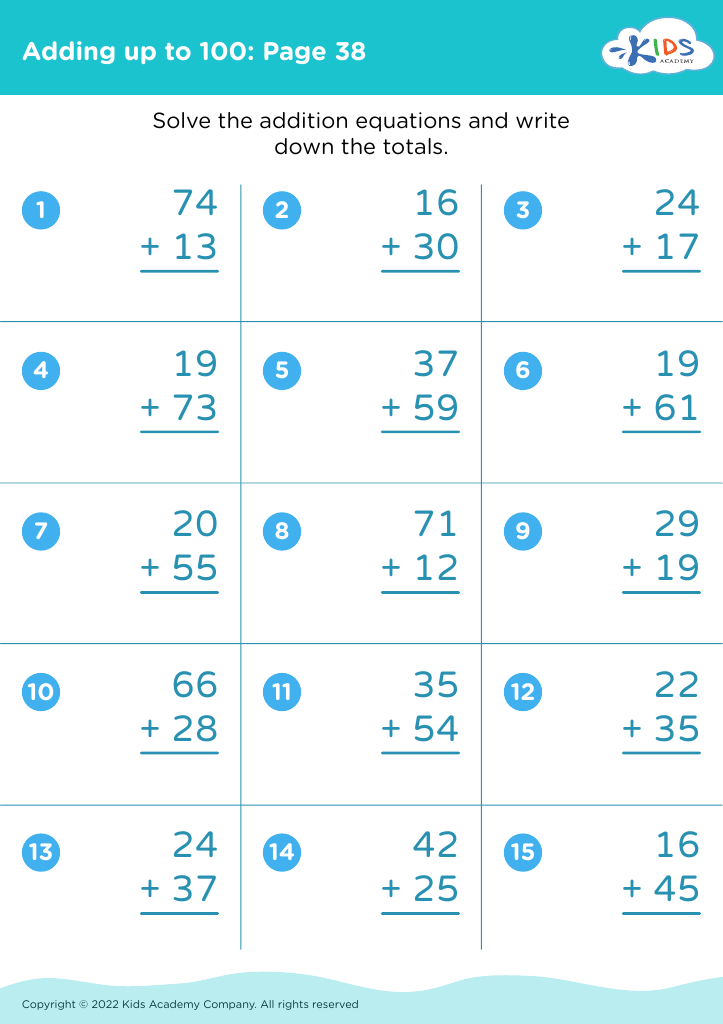
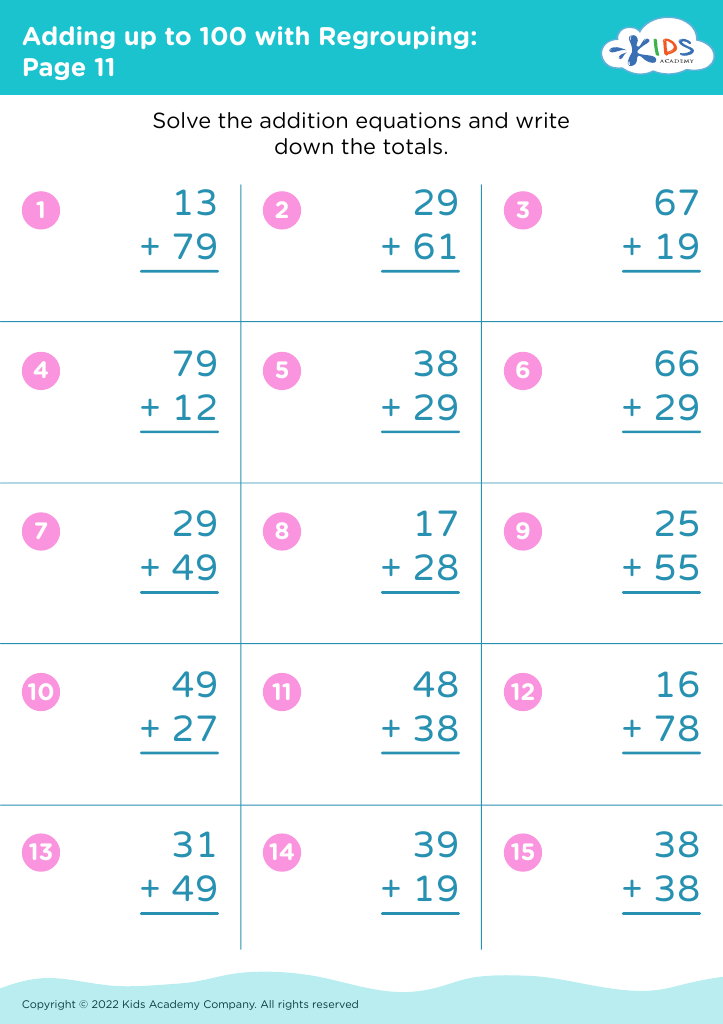
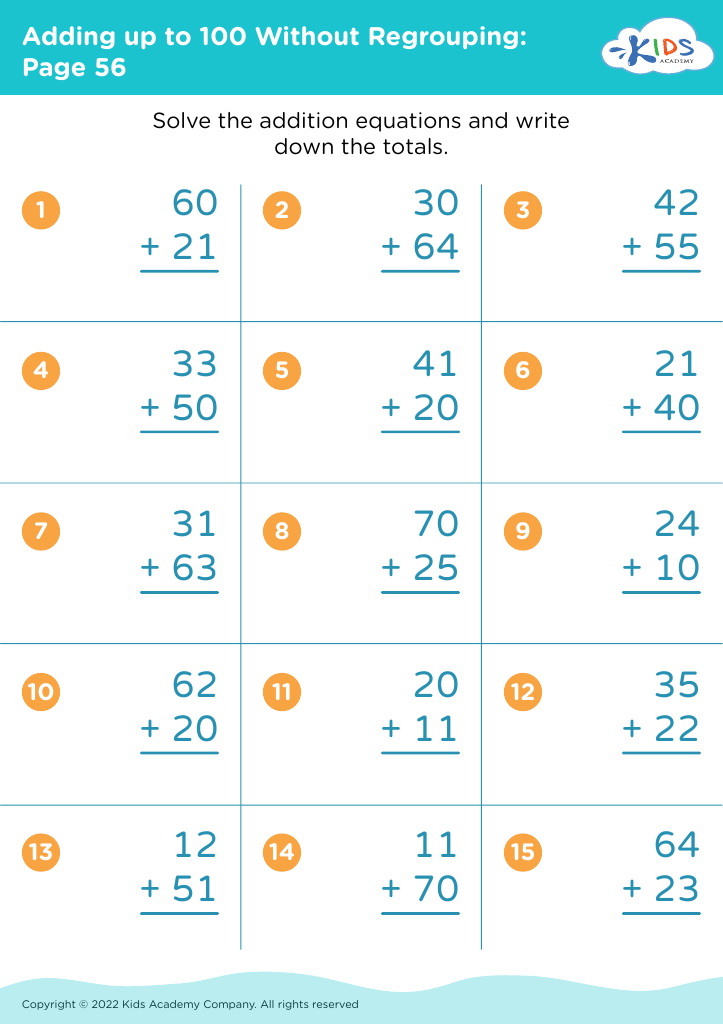
Enhance your 8-year-old's hand-eye coordination with our engaging "Adding Up to 100" worksheets! These fun activities combine math practice with physical movement, allowing children to develop both their arithmetic skills and fine motor abilities. Each worksheet encourages kids to solve addition problems while engaging in activities that require precise movements, making learning interactive and enjoyable. By mastering addition up to 100 in stimulating ways, children can effectively build a solid foundation in math while improving their coordination skills. Download our printable worksheets today and watch your child flourish through play and learning!


%20(1).jpg)




Hand-eye coordination is a crucial skill for 8-year-olds, particularly when it comes to activities that require precision and accuracy, such as math, art, and sports. Developing strong hand-eye coordination can significantly influence a child's ability to add, which is foundational for understanding more complex mathematical concepts. When children engage in activities that improve this coordination, they not only enhance their physical abilities but also boost cognitive skills.
Furthermore, mastering the ability to add up to 100 ties into everyday tasks that children encounter, from counting money to telling time. This mathematical competency contributes to their confidence, reducing anxiety in future academic challenges. Parents and teachers should care about this skill because it impacts broad areas of development, from academic performance to social interactions. Collaborative activities that involve counting games or manipulatives can strengthen these skills while also fostering teamwork and communication.
Finally, as children grow, strong hand-eye coordination serves as a basis for engaging in more complex tasks, such as writing, gaming, and sports. Encouraging activities that enhance this skill will not only prepare children for the academic press but will also assist them in building a foundation for personal and social success.








