Identifying equivalent fractions Adding up to 100 Worksheets for 8-Year-Olds
5 filtered results
-
From - To
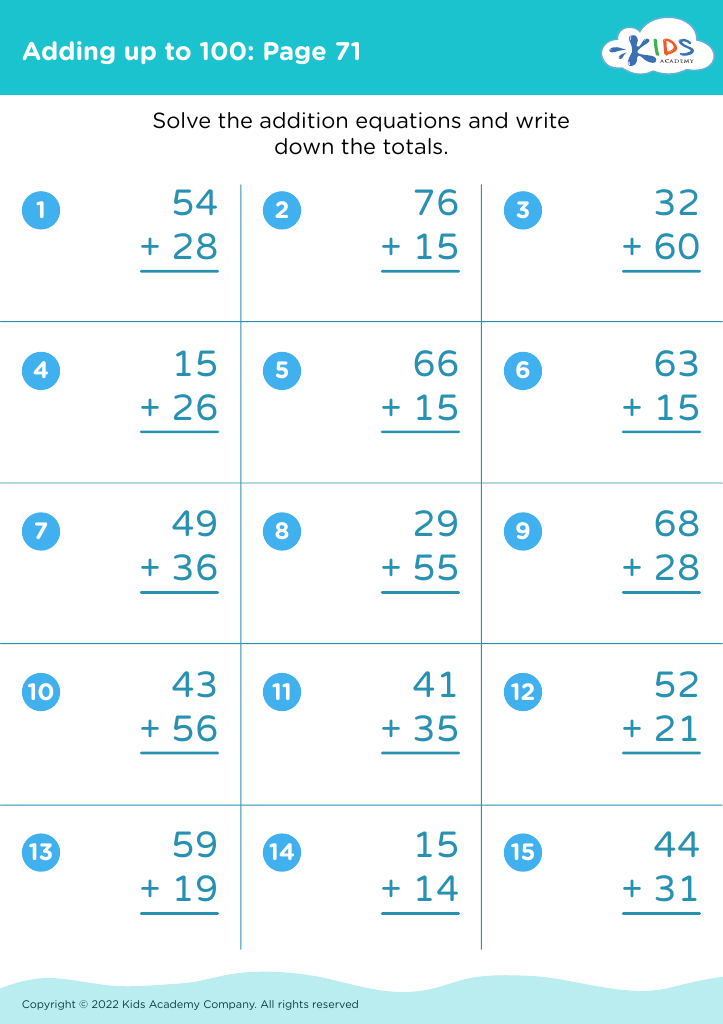
Help your 8-year-old master the concept of equivalent fractions with our engaging "Identifying Equivalent Fractions Adding Up to 100" worksheets! Designed specifically for young learners, these worksheets combine fun and educational activities that promote a deeper understanding of fractions. Students will practice identifying and comparing equivalent fractions in a unique context that reinforces their math skills. Each worksheet provides clear instructions and colorful visuals to keep children motivated and excited about learning. Ideal for home or classroom use, these activities will make mastering fractions an enjoyable experience. Start building a solid foundation in maths today with our easily accessible and effective resources!
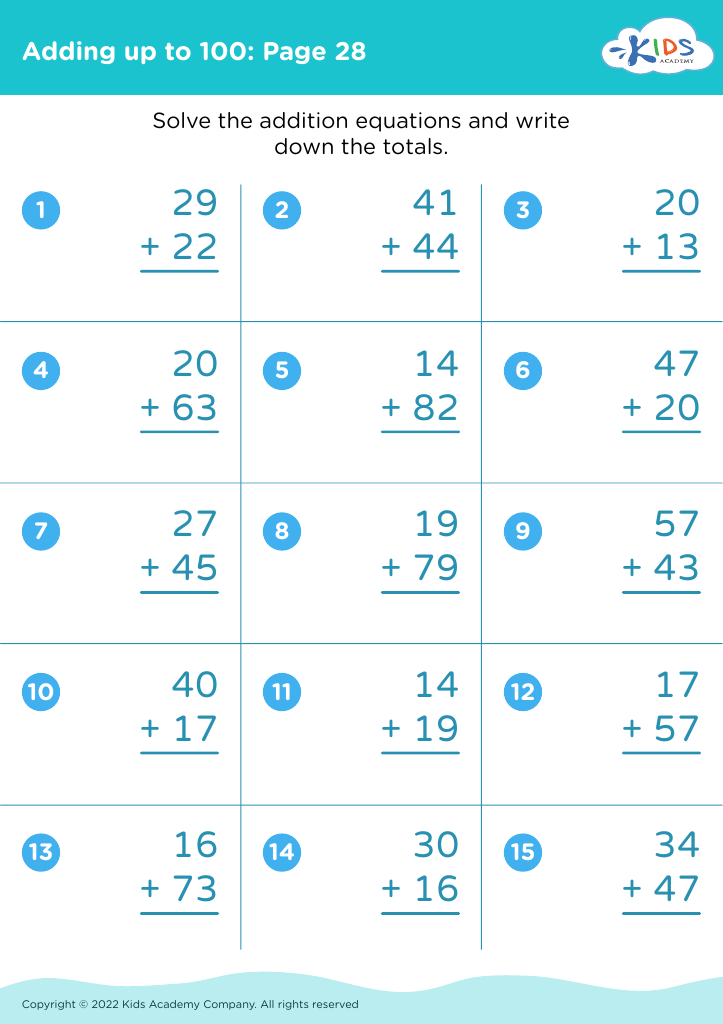
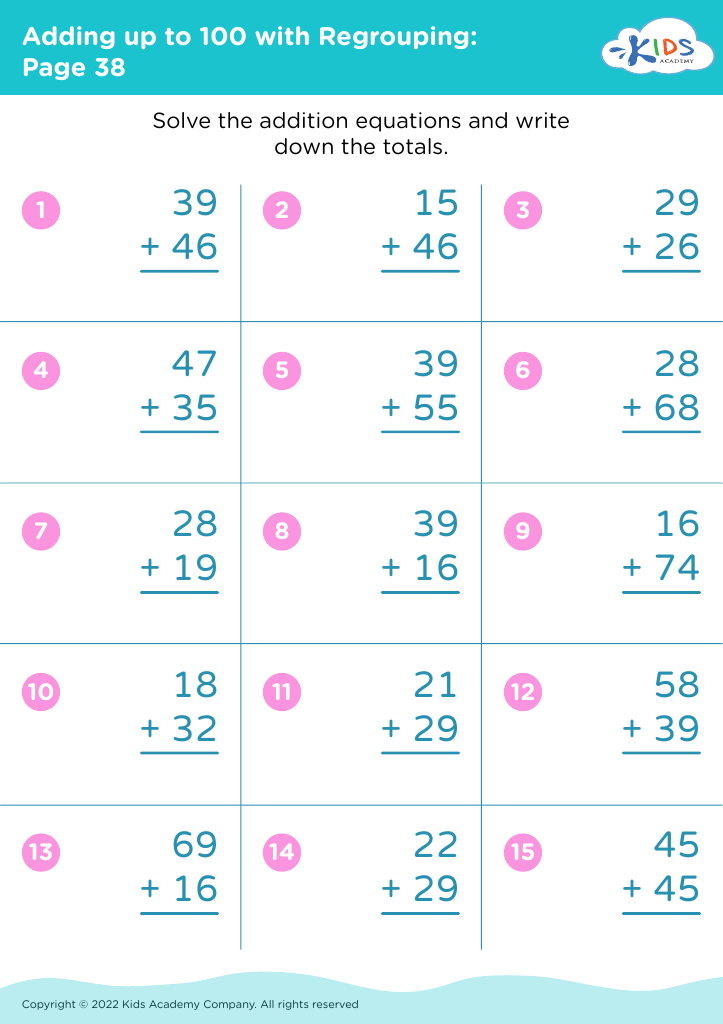
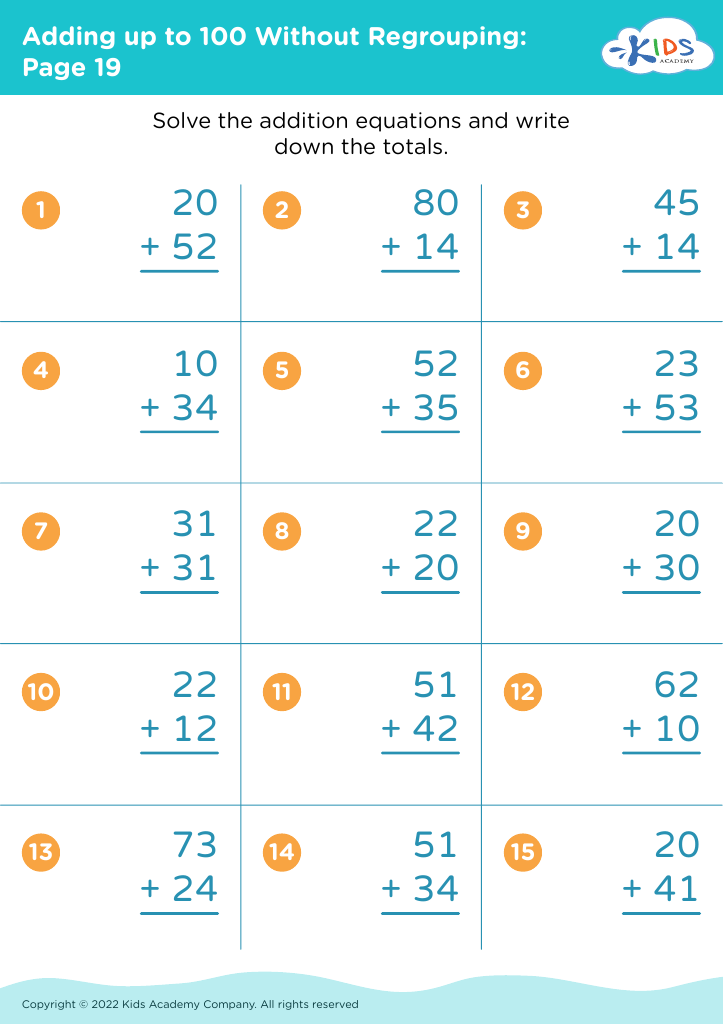
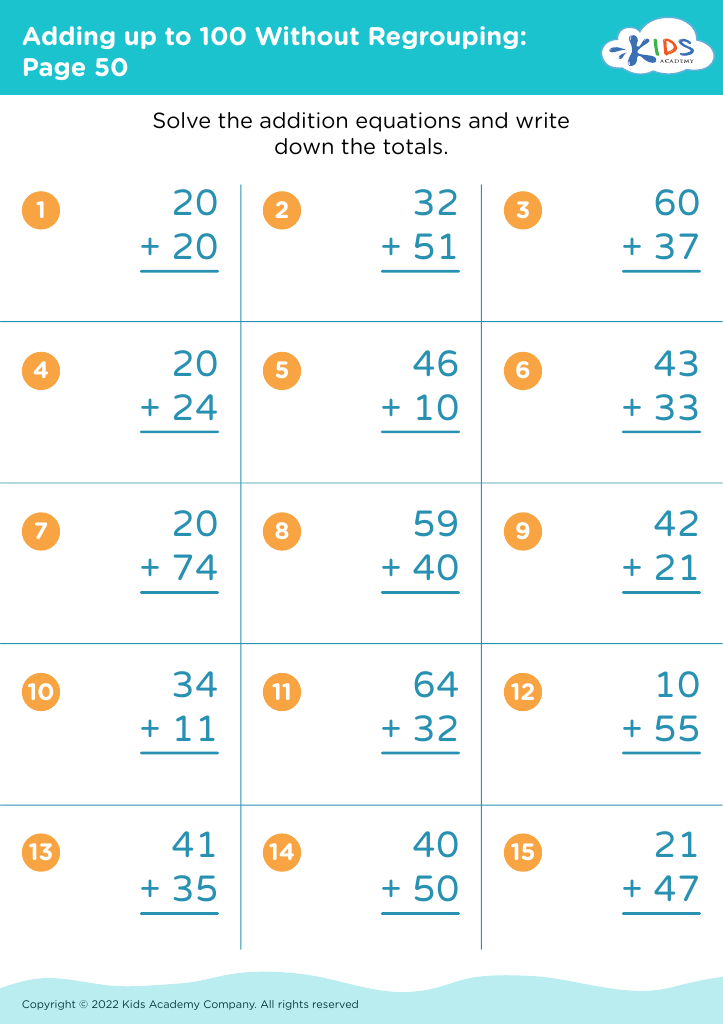


%20(1).jpg)




Identifying equivalent fractions and understanding how they add up to 100 is essential for 8-year-olds, as it forms a foundational skill in mathematics and promotes critical thinking. When children learn to recognize equivalent fractions—fractions that represent the same value despite different numerators and denominators—they enhance their conceptual understanding of fractions, allowing them to solve problems more effectively.
This skill is crucial as it prepares students for more advanced mathematical concepts, such as adding and subtracting fractions and ratios. It also promotes numeracy skills needed in everyday life, such as measuring, cooking, and financial literacy. Additionally, teaching children to add fractions that total 100 reinforces their understanding of percentages, a foundational element in mathematics.
For parents and teachers, focusing on these skills fosters confidence in children, helping them develop a positive relationship with math. Engaging students through games and activities that illustrate these concepts can make the learning process enjoyable and participatory. Understanding equivalent fractions and their relationships ultimately helps students build problem-solving skills and logic, laying the groundwork for future success in both academic and real-life contexts. By investing in these foundational skills, parents and teachers equip children with vital tools for their educational journey.








