Improve reading comprehension Adding up to 100 Worksheets for 8-Year-Olds
4 filtered results
-
From - To
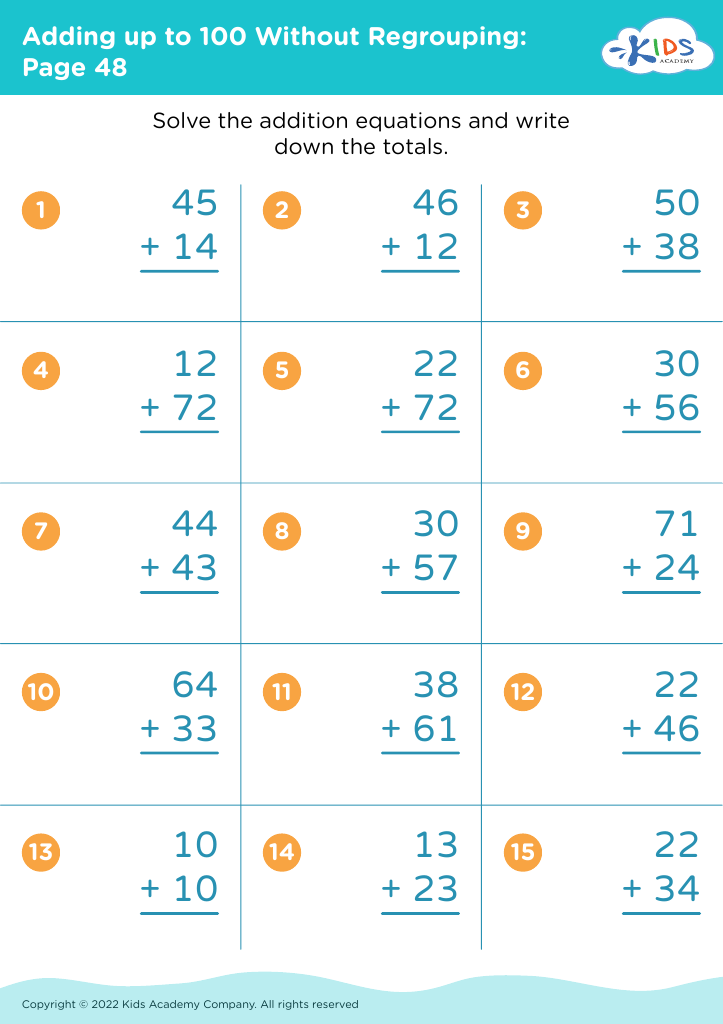
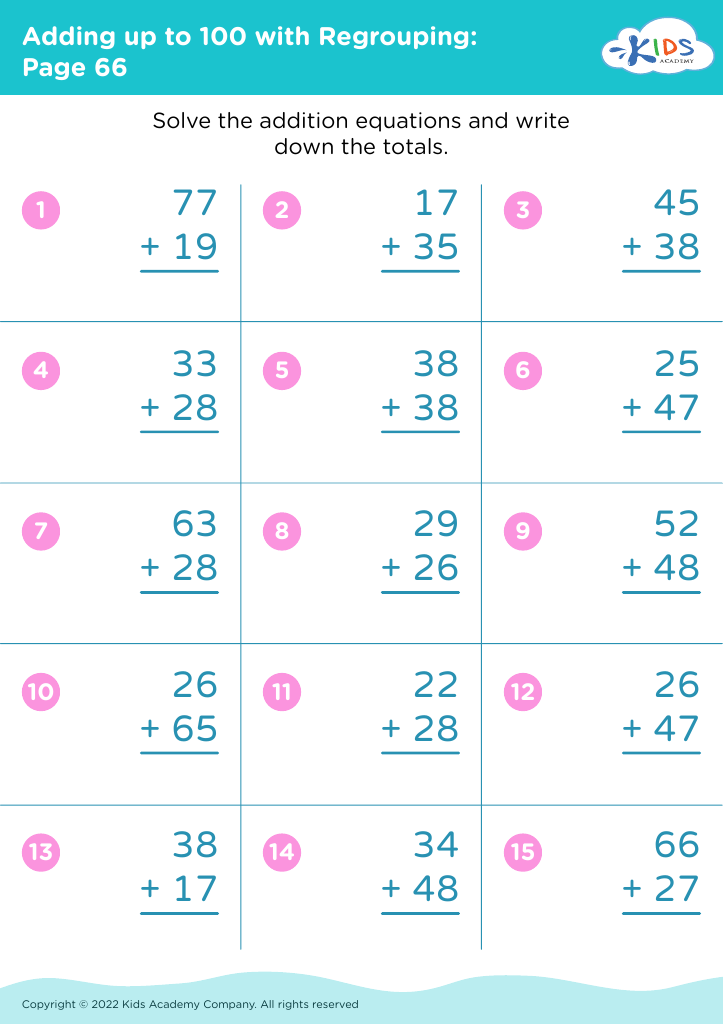
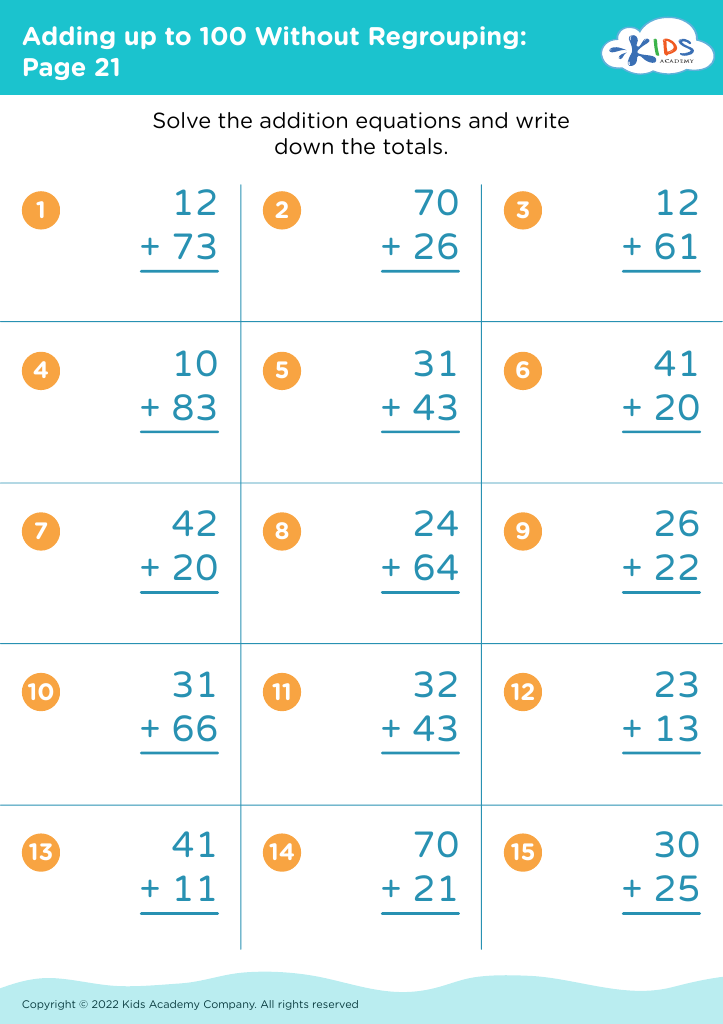
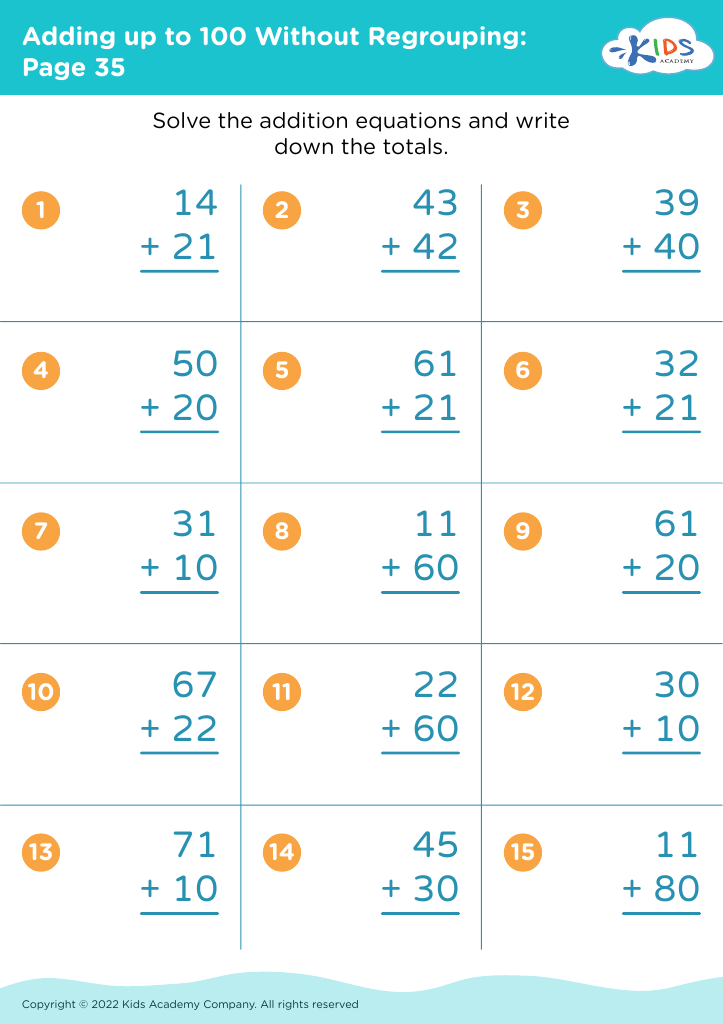
Enhance your 8-year-olds' reading comprehension skills with our "Adding Up to 100" worksheets! These engaging, interactive activities are designed to bolster both math proficiency and literacy, making learning enjoyable. As children solve addition problems while reading context clues and instructions, they sharpen their understanding of key concepts and improve overall comprehension. Our thoughtfully crafted worksheets encourage critical thinking and problem-solving, essential skills for academic success. Perfect for use at home or in the classroom, these resources provide varied challenges to keep young learners motivated. Get started today and watch your child's confidence in reading and arithmetic soar!




%20(1).jpg)


Improving reading comprehension is crucial for 8-year-olds as it lays the foundation for their academic success and lifelong learning. At this developmental stage, children are transitioning from learning to read to reading to learn. If they struggle with comprehension, they may find it challenging to grasp concepts across various subjects, hindering overall academic performance.
For parents and teachers, fostering strong reading comprehension skills allows children to develop critical thinking abilities, enhance their vocabulary, and improve their communication skills. When children understand what they read, they are more likely to engage with texts, ask questions, and express their ideas clearly, which promotes a love for reading.
Additionally, strong comprehension skills can boost a child’s confidence in both academics and social settings. As they become more proficient readers, they will feel encouraged to explore new topics, which enriches their experience and knowledge base.
Ultimately, by prioritizing reading comprehension, parents and teachers can equip children with essential skills needed for future academic endeavors and challenge them to become lifelong learners. This investment not only fosters intellectual growth but also instills a passion for reading that will serve them well beyond their elementary years.








