Improve reading skills Adding up to 100 Worksheets for 8-Year-Olds
5 filtered results
-
From - To
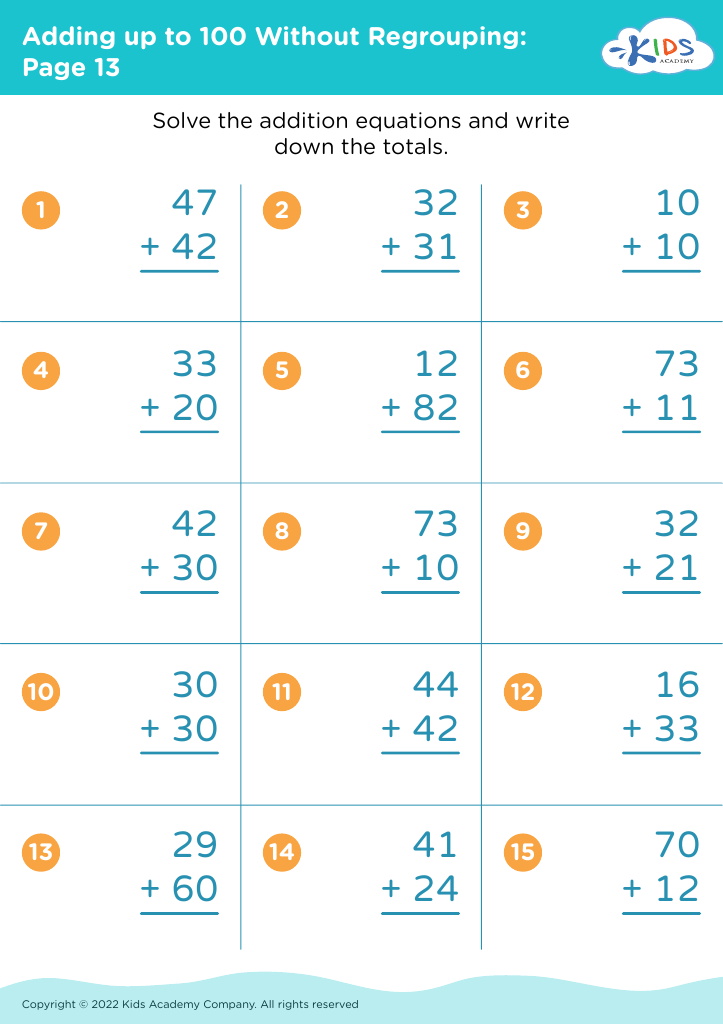
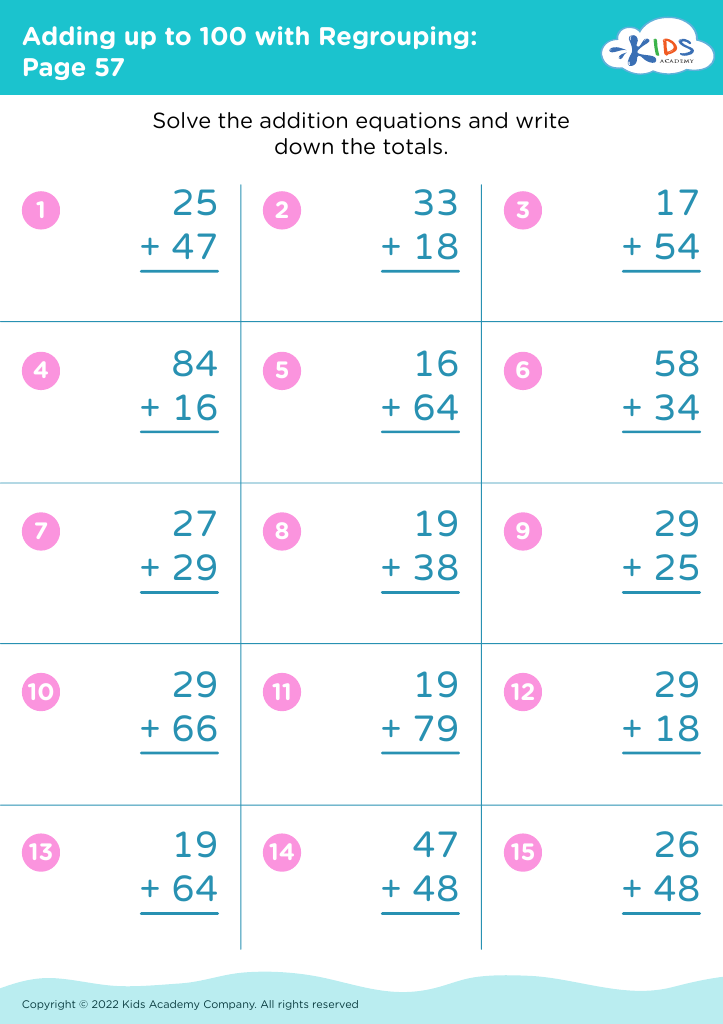
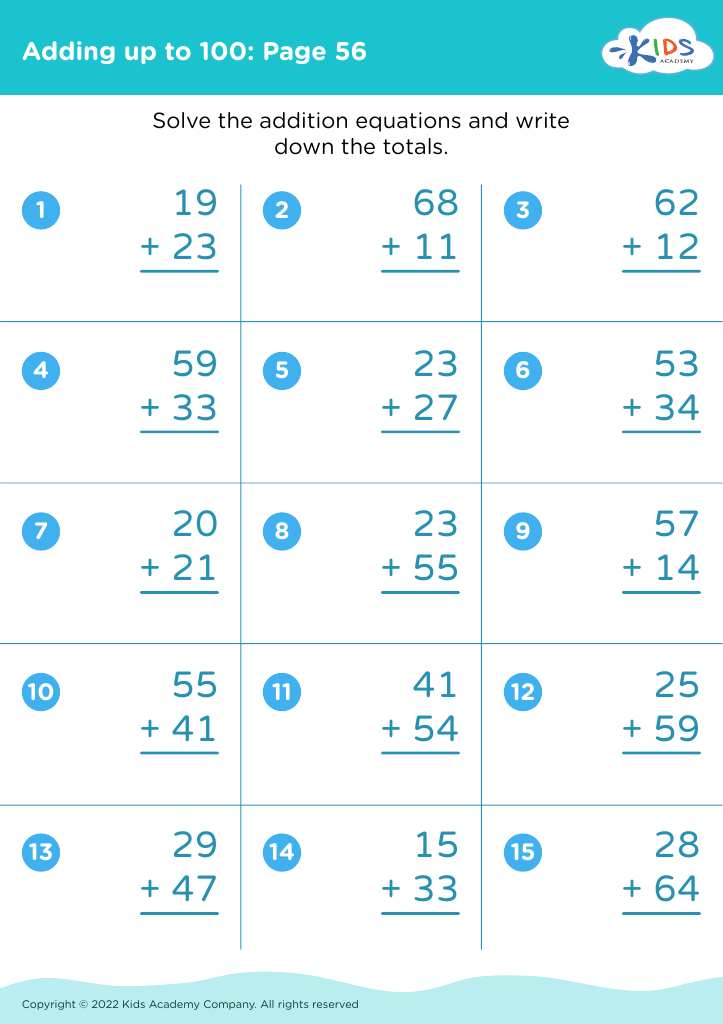
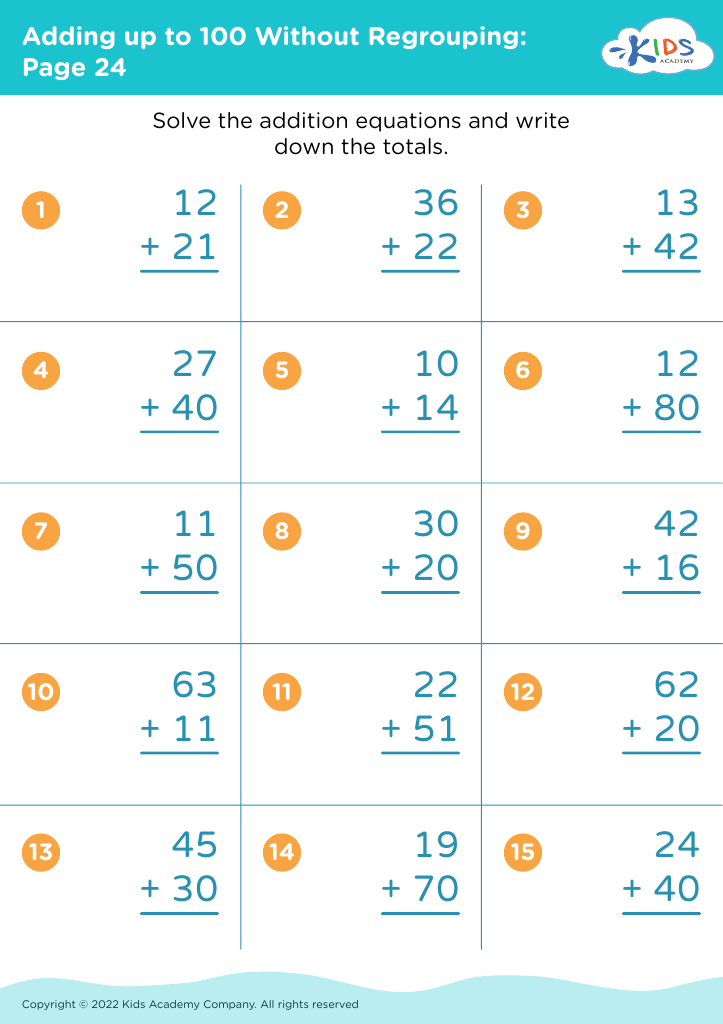
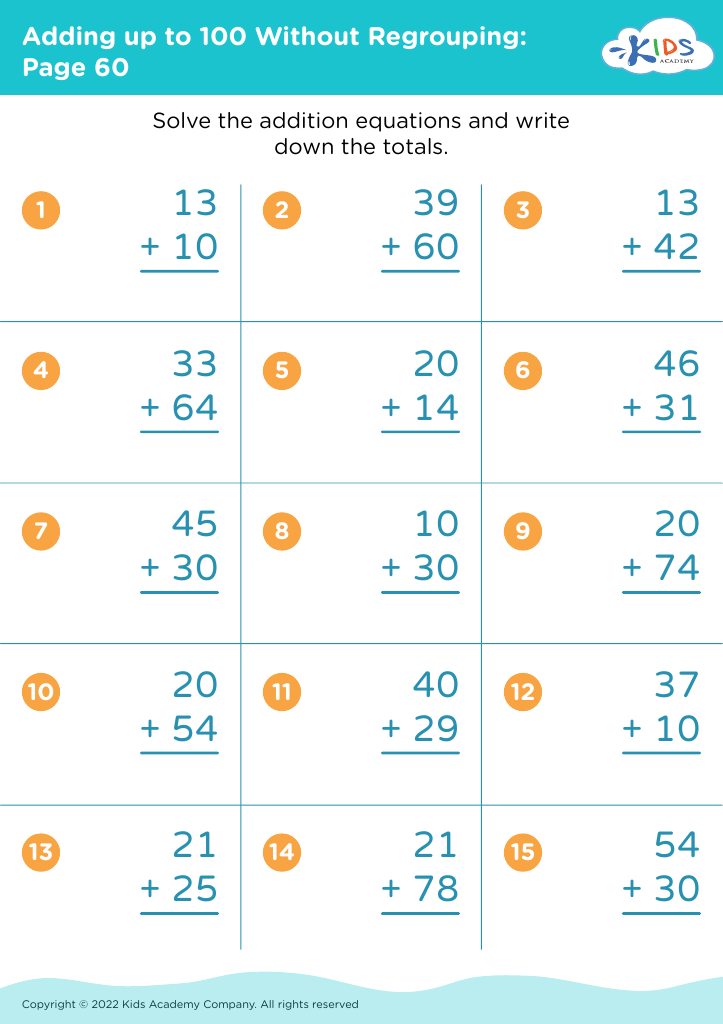
Boost your child's math and reading abilities with our "Adding Up to 100 Worksheets for 8-Year-Olds." These expertly designed worksheets from Kids Academy enhance essential arithmetic skills while simultaneously improving reading comprehension. Fun and engaging problems help children practice addition up to 100, providing both educational value and entertainment. Each exercise promotes critical thinking and problem-solving skills, laying a strong foundation for future academic success. Explore our printable worksheets and transform learning into a captivating experience. Effective and easy to use, these resources ensure that mastering math and reading has never been more enjoyable!


%20(1).jpg)




Parents and teachers should be deeply invested in improving reading skills and math abilities—like adding up to 100—for 8-year-old children. At this age, key cognitive development occurs, laying a foundation for future academic success and overall cognitive growth.
Reading skills are crucial because they shape a child’s ability to understand and process information across all subjects. Strong readers can follow instructions better, decipher complex problems, and develop a love for learning. A child proficient in reading by age 8 is more likely to perform well academically, reducing the risk of future educational challenges. Readers who face difficulties are at higher risk for long-term academic issues and decreased self-esteem, which can impact their life's trajectory.
Similarly, basic arithmetic skills like adding up to 100 form the cornerstone of all higher-level math. Mastery of these fundamental math skills builds confidence and enables children to tackle more complex math topics with ease. It develops logical thinking and problem-solving abilities, essential for everyday decision-making and future vocational skills.
In sum, by focusing on improving reading and arithmetic skills at an early age, we provide children with the essential tools they require for lifelong learning and success. Investing in these areas not only boosts academic performance but also fosters a well-rounded, confident individual.








