Number Recognition Adding up to 100 Worksheets for 8-Year-Olds - Page 2
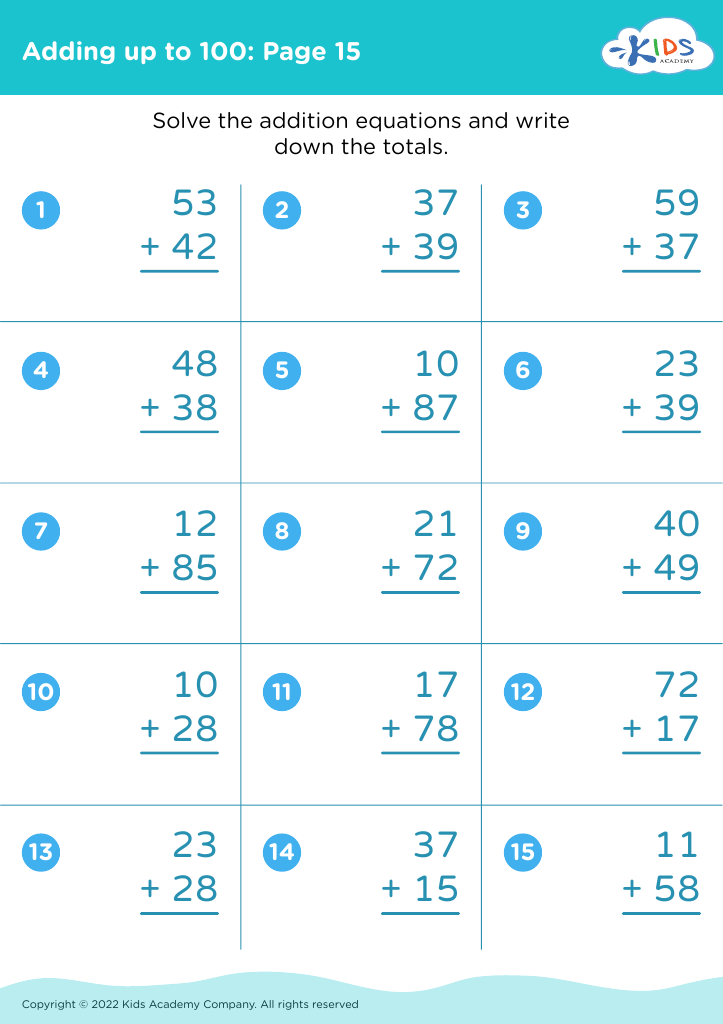
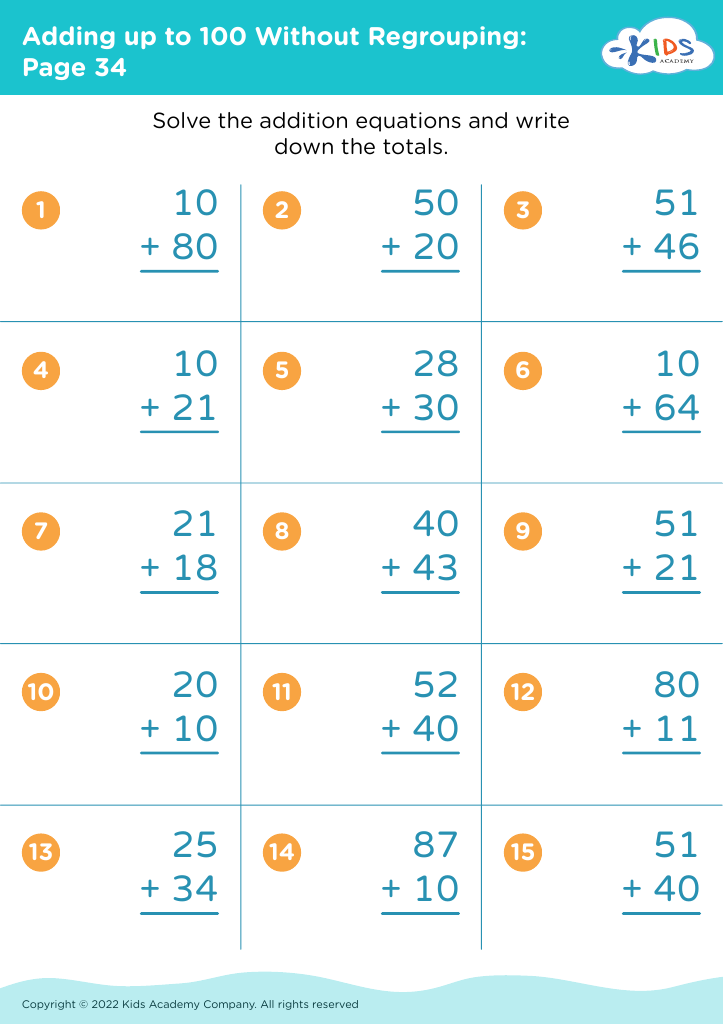
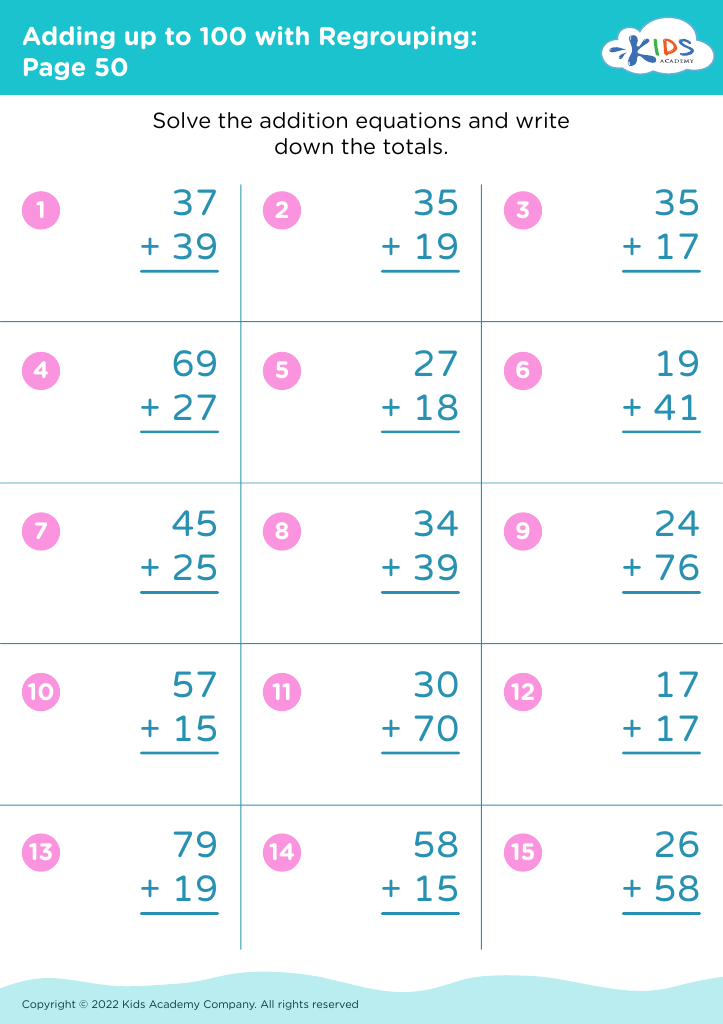
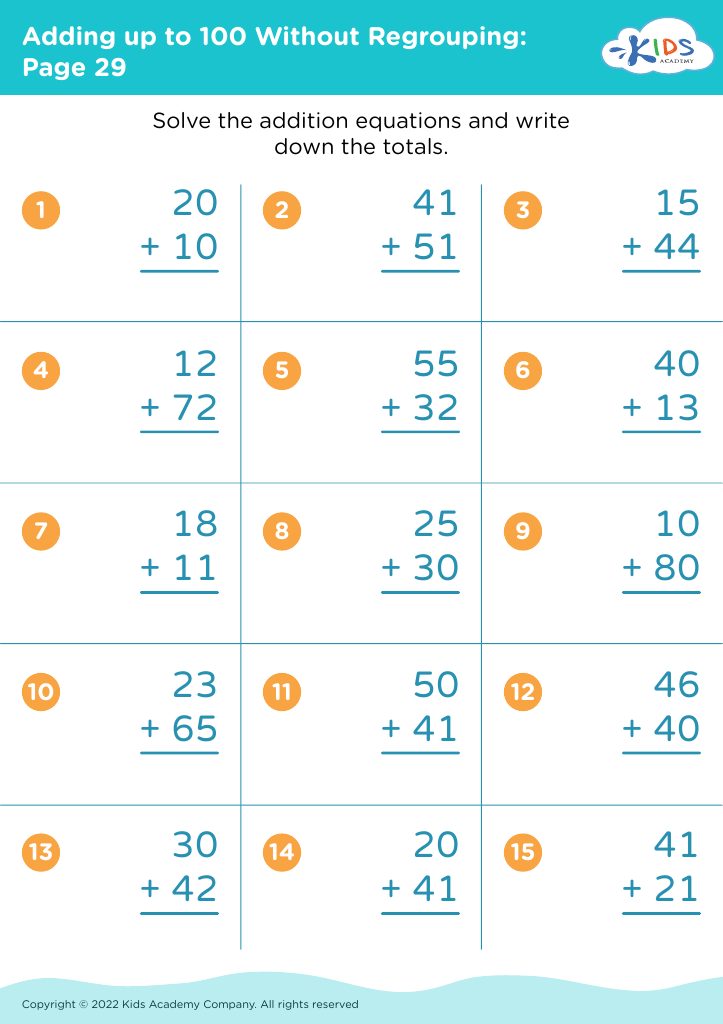


%20(1).jpg)





Number recognition and adding up to 100 are foundational skills for 8-year-olds that parents and teachers should prioritize for several reasons. Firstly, these skills lay the groundwork for more complex arithmetic and mathematical concepts. Understanding how to recognize and manipulate numbers up to 100 is crucial for grasping topics like addition, subtraction, place value, and, later on, multiplication and division.
Secondly, proficiency in number recognition and basic arithmetic fosters cognitive development. By learning to add numbers up to 100, children enhance their pattern recognition, problem-solving abilities, and logical thinking. These cognitive skills transcend math, aiding in the holistic development necessary for success in other academic subjects.
Confidence, too, is built when children master fundamental math skills. This self-assurance can lead to a positive attitude towards learning and a higher likelihood of engaging with more challenging material. Additionally, early math skills are correlated with future academic achievements, making early interventions critical.
From a practical standpoint, number recognition and basic addition are essential life skills. Everyday tasks, like telling time, following a recipe, or handling money, require basic arithmetic. Early proficiency ensures that children can navigate these tasks easily and set a foundation for financial literacy.
In summary, developing number recognition and adding up to 100 for 8-year-olds isn't just about succeeding in school—it's about fostering lifelong cognitive skills and capabilities that underpin daily life and future academic success.








