Practice multiplication Adding up to 100 Worksheets for 8-Year-Olds
4 filtered results
-
From - To
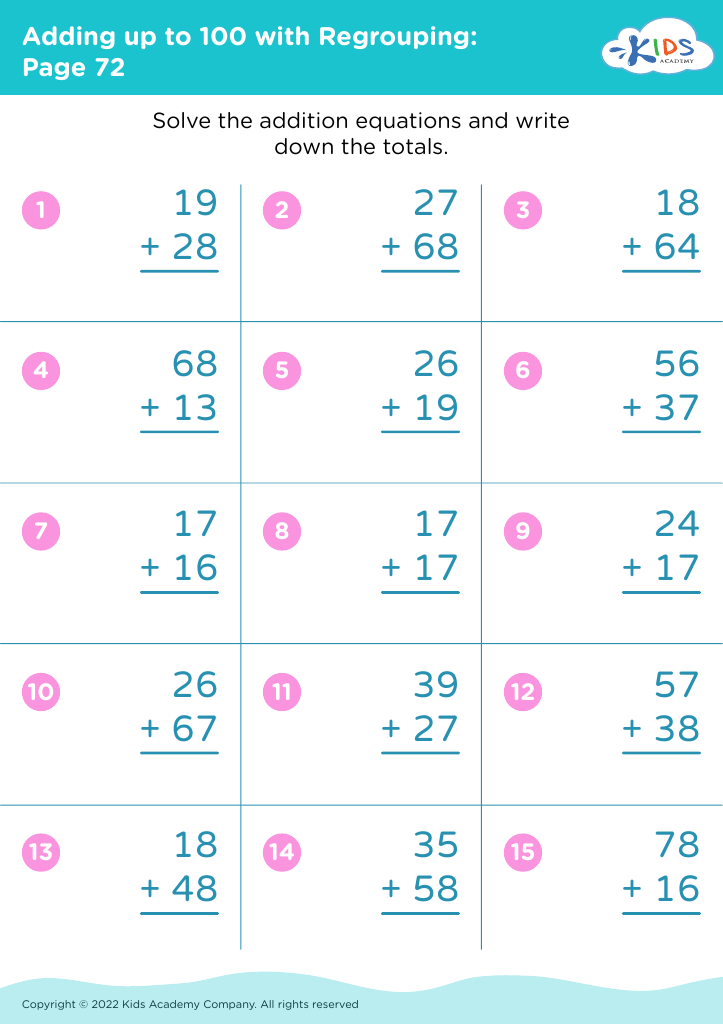
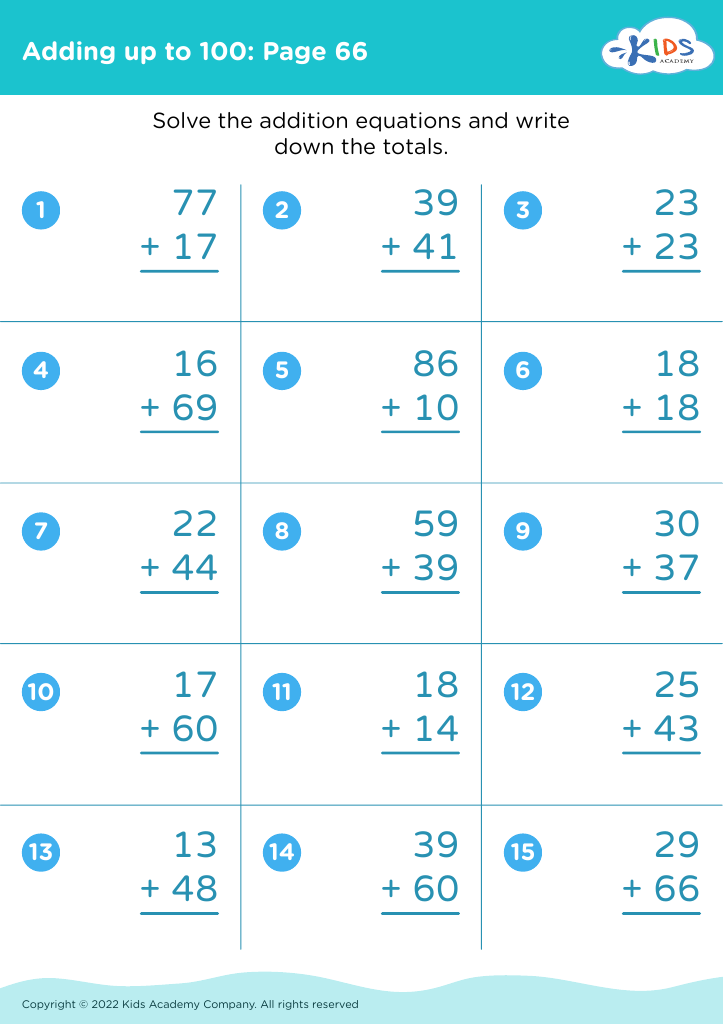
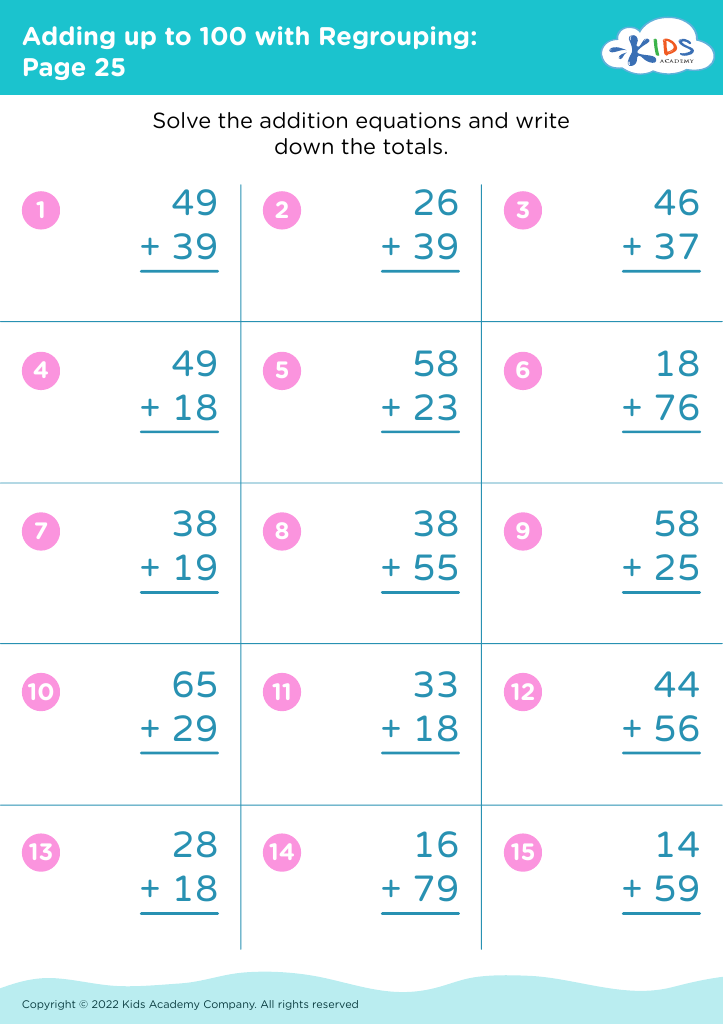
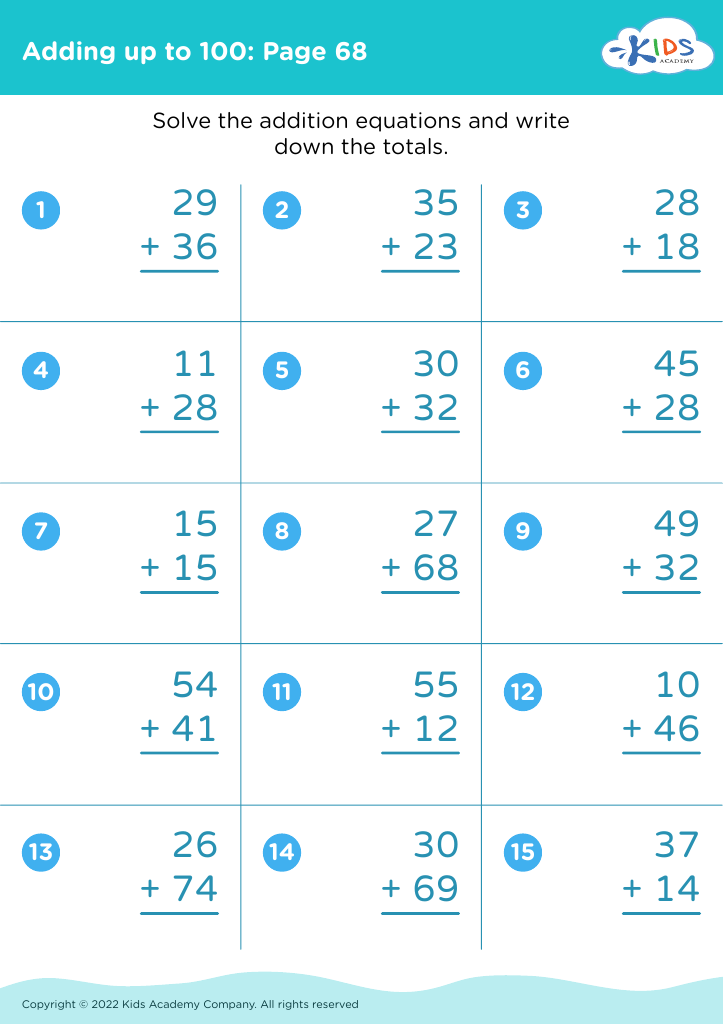
Transform math into a fun adventure with our "Practice Multiplication Adding up to 100 Worksheets for 8-Year-Olds." Tailored for young, eager learners, these engaging worksheets are designed to build confidence and mastery over essential multiplication concepts while working with sums upto 100. Colorful and exciting exercises ensure that kids grasp multiplication efficiently through visual learning and repetitive practice. Each worksheet is thoughtfully crafted to align with educational standards, giving your child the tools needed to succeed. Spark a love for math and strengthen fundamental skills with these easily accessible printables! Start making multiplications easy and enjoyable today.






%20(1).jpg)
For 8-year-olds, mastery in basic math skills forms the foundation for future academic success and real-world problem-solving abilities, making practice in multiplication and addition up to 100 crucial for their development. At this stage, children transition from concrete to more abstract thinking, and confidence in basic arithmetic fosters higher cognitive skills. Learning multiplication facts and the ability to add numbers up to 100 aids in enhancing memory, providing a reliable strategy for tackling multi-step math problems encountered in upper grades.
Parents and teachers play a pivotal role in encouraging and guiding this practice. Regular engagement with these math concepts helps develop numerical fluency, leading to quicker and more accurate calculations. This proficiency is essential not just for higher-level math courses but also for everyday tasks such as making purchases, managing time, and understanding the world quantitatively. Additionally, children who struggle with basic math are prone to math anxiety, which can hinder their overall academic performance and self-esteem. Hence, ensuring a solid grasp of these fundamentals early on can avert future challenges. This not only builds mathematical competence but also instills a positive mental attitude towards the subject, paving the way for a smoother transition to more complex mathematical concepts.








