Problem-solving practice Adding up to 100 Worksheets for 8-Year-Olds
5 filtered results
-
From - To
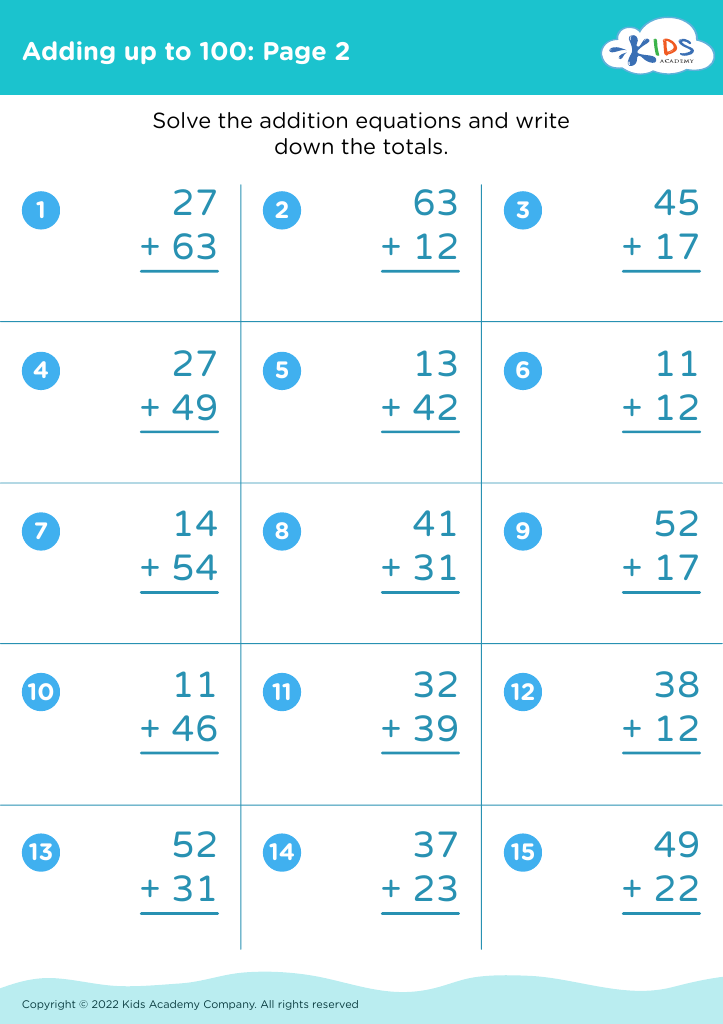
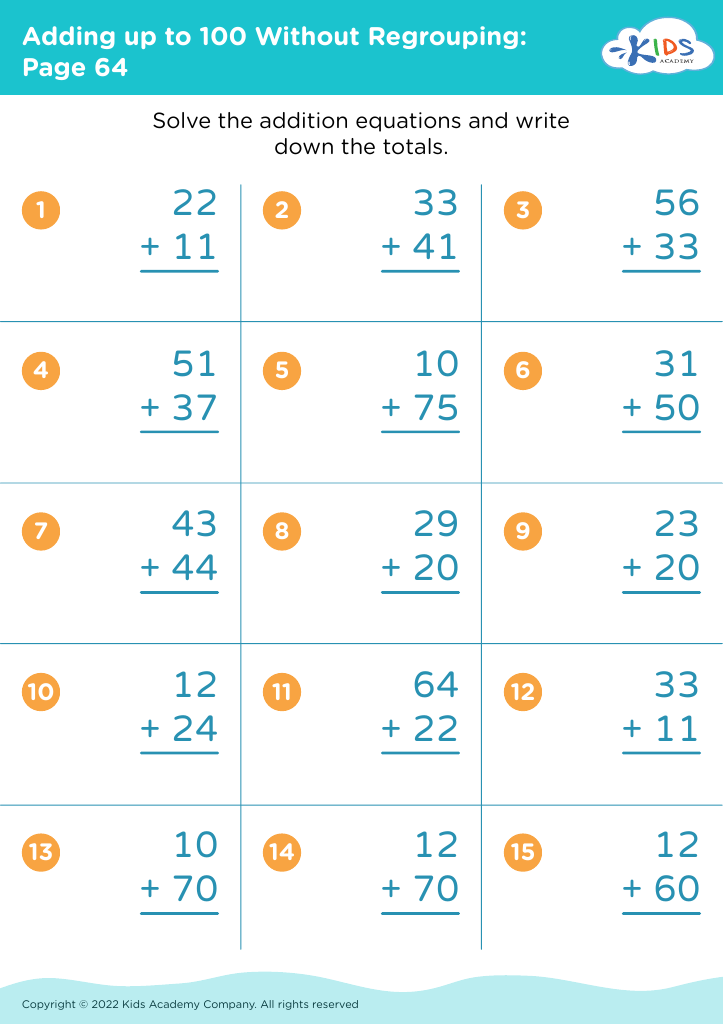
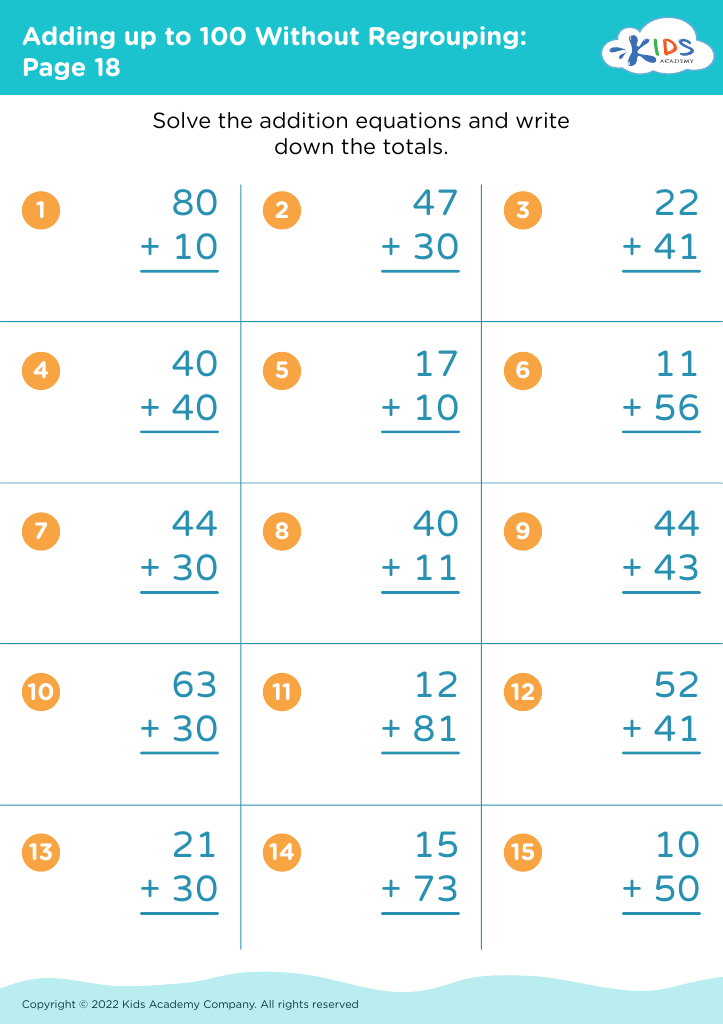
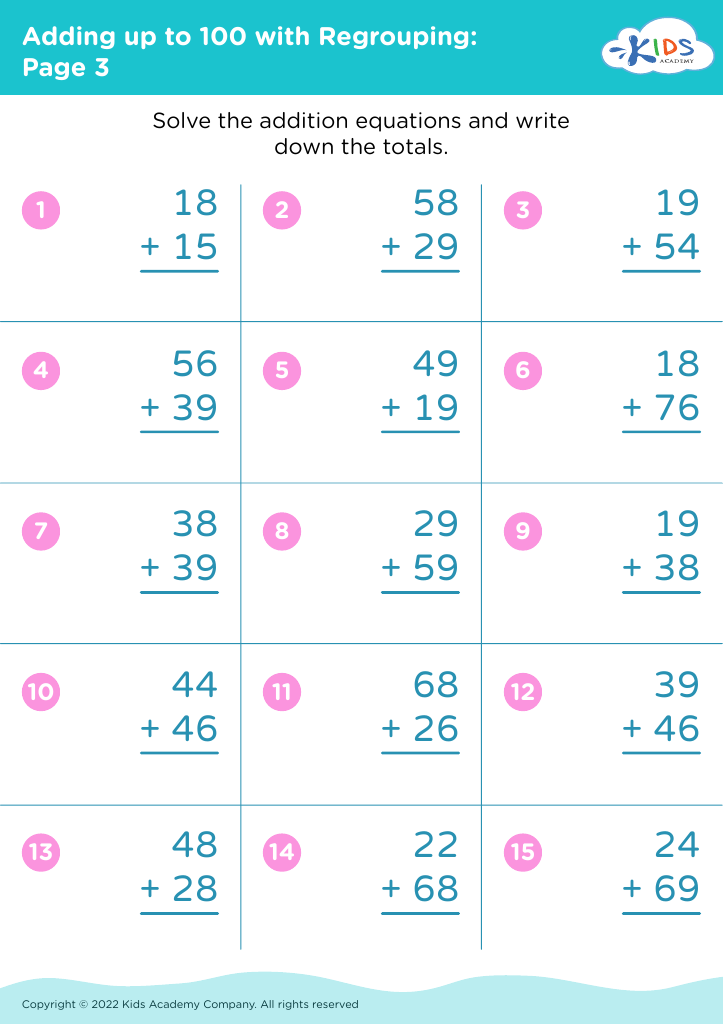
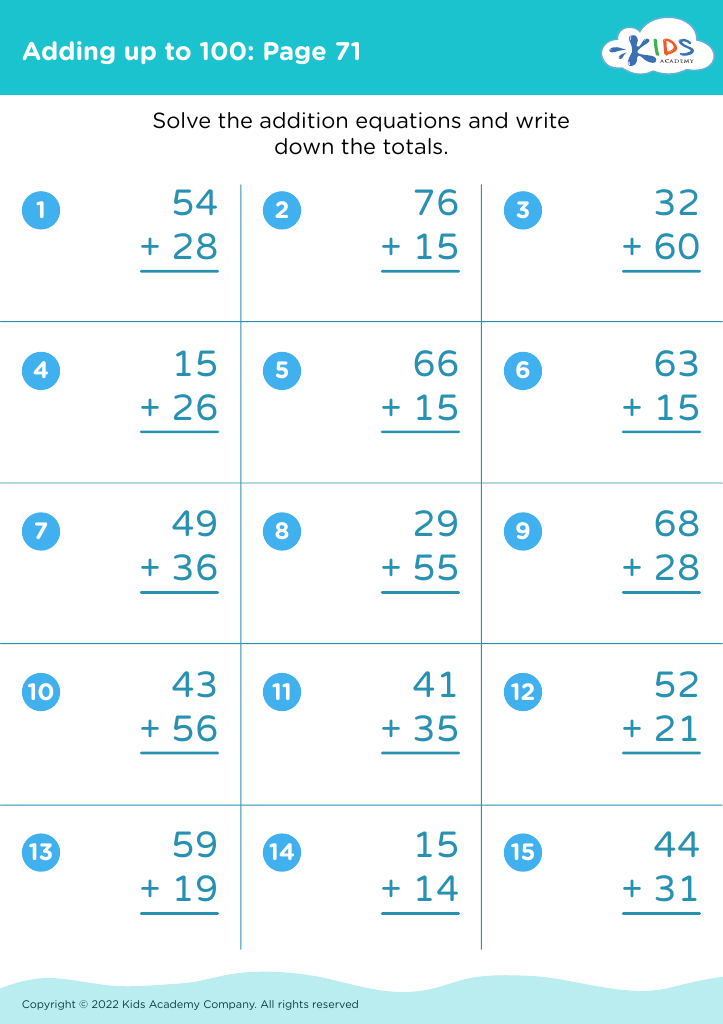
Unlock your child's potential with our "Problem-solving Practice: Adding Up to 100 Worksheets" designed for 8-year-olds! These engaging worksheets help kids develop critical math skills through fun and interactive problem-solving activities. Focused on addition concepts, children will tackle various math scenarios that require them to think analytically and apply their knowledge. Each worksheet encourages logical reasoning and boosts confidence in math, making learning enjoyable. Perfect for both classroom and home practice, these printable resources ensure your child can master adding up to 100 while enhancing their computational fluency. Start building a strong math foundation today!




%20(1).jpg)


Problem-solving practice is crucial for 8-year-olds, particularly when it comes to adding up to 100. At this age, children are developing critical thinking and reasoning skills that set the foundation for later learning. Mastering addition within this range helps them understand larger numerical concepts and improve their overall math fluency.
Engaging children in problem-solving involving sums up to 100 fosters their ability to break down complex problems into manageable parts. It encourages logical thinking and helps them recognize patterns, a skill vital in both mathematics and everyday life. Moreover, these practices promote persistence and resilience when faced with challenges, teaching them that mistakes are stepping stones to success.
For parents and teachers, prioritizing this practice can enhance a child's self-confidence in their math abilities. This confidence not only makes them more willing to engage with difficult concepts but also prepares them for future academic challenges. Lastly, problem-solving additions are a fun, interactive way to bond with children, turning learning into an enjoyable experience. Overall, fostering problem-solving skills in addition contributes significantly to children’s cognitive development, ensuring they are well-prepared for the academic challenges ahead.








