Recognizing Patterns Adding up to 100 Worksheets for 8-Year-Olds
5 filtered results
-
From - To
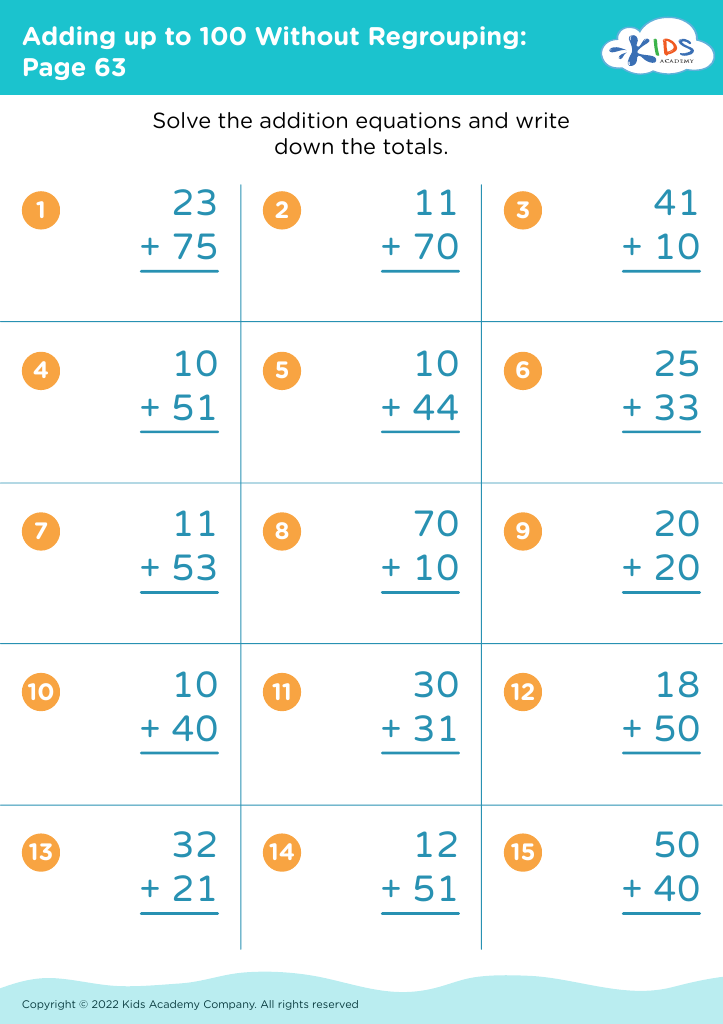
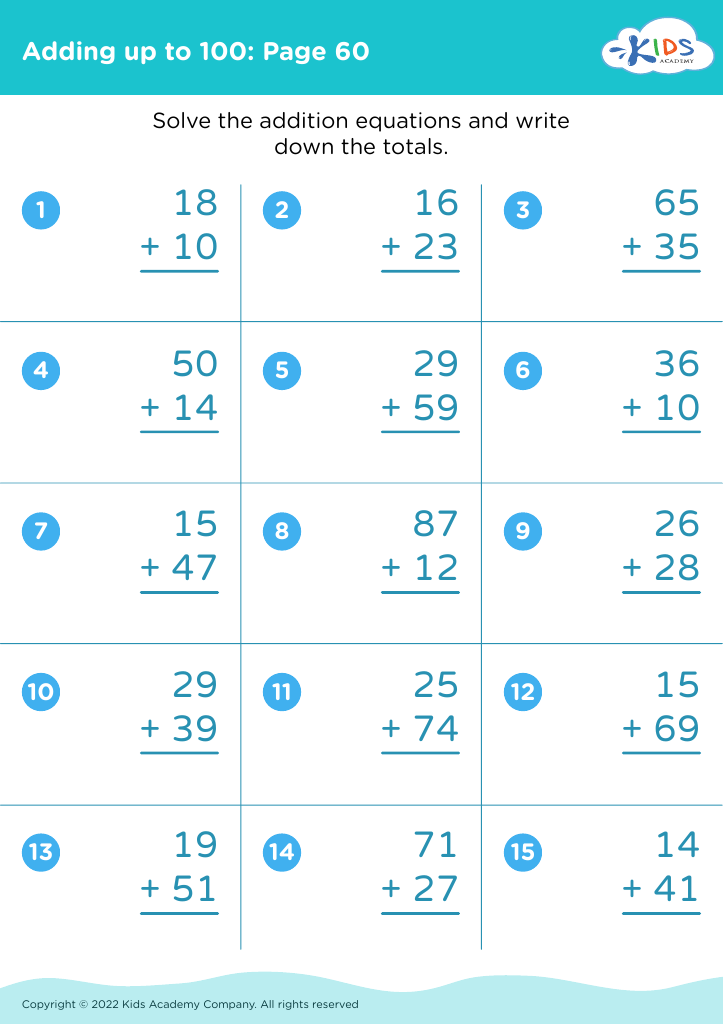
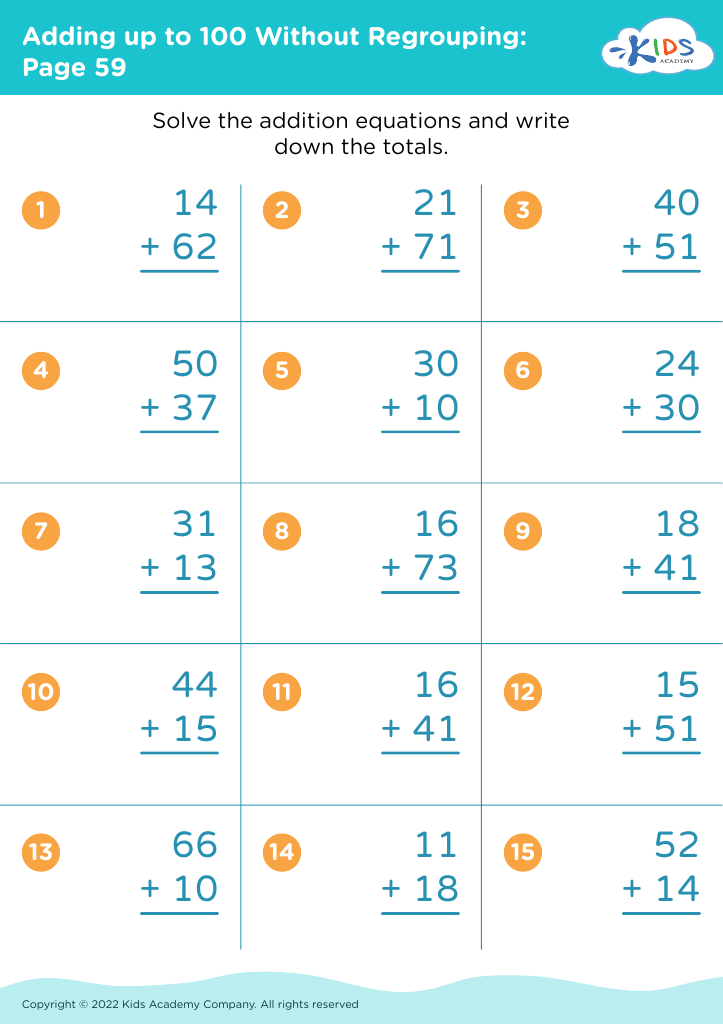
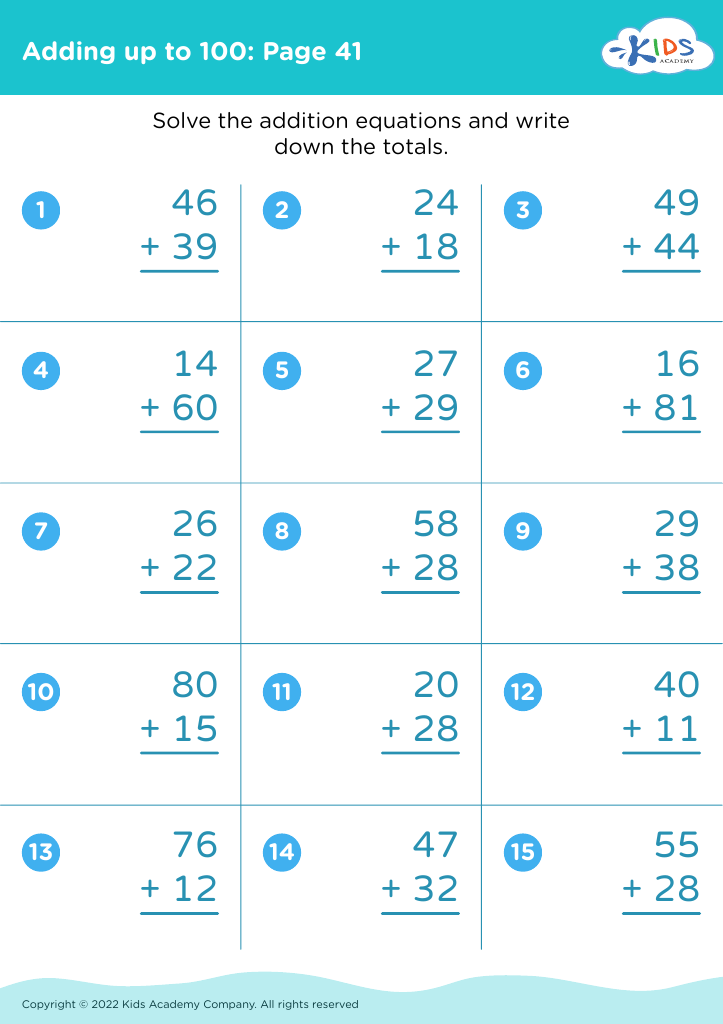
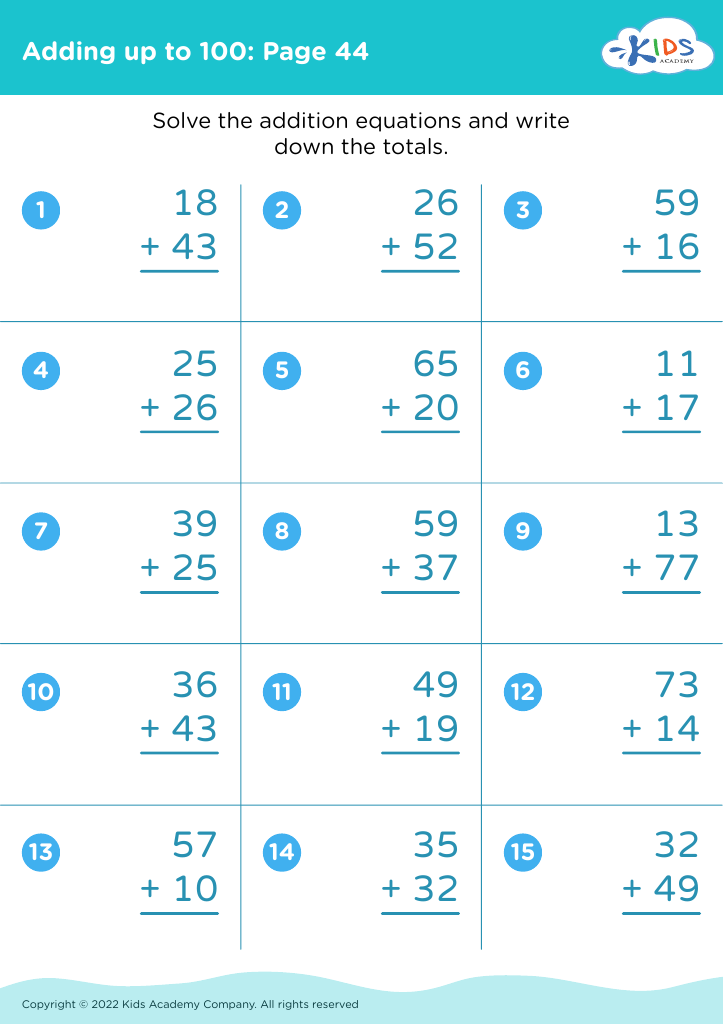
Introducing our "Recognizing Patterns Adding up to 100 Worksheets for 8-Year-Olds"! Tailored to make learning both fun and effective, these worksheets are designed to help young learners master the concept of addition within 100 by identifying and recognizing number patterns. Each worksheet is packed with engaging exercises that stimulate critical thinking and problem-solving skills. Perfect for reinforcing classroom lessons, these printable resources cater to different learning paces, allowing kids to confidently tackle adding up to 100. Ideal for both classroom and home use, these worksheets are guaranteed to make math practice enjoyable for your 8-year-old!





%20(1).jpg)

Recognizing patterns that add up to 100 is a fundamental math skill for 8-year-olds, offering numerous cognitive and educational benefits. Mastering this skill significantly bolsters a child's number sense and fosters a deeper understanding of arithmetic. When children discern relationships within numbers, it's not just about solving isolated problems but about gaining insight into the structure of mathematics itself.
Learning to identify these patterns can enhance a child's ability to perform mental math, making them more flexible and efficient problem-solvers. This capability is invaluable as it lays the groundwork for more advanced mathematical concepts such as multiplication, division, and fractions. Teachers and parents should prioritize this because it directly impacts future academic success by fostering a strong mathematical foundation.
Beyond academics, recognizing such patterns enhances critical thinking and logical reasoning. It trains children to look for consistency, make predictions, and approach challenges systematically. These are vital skills not only in math but across all subjects and everyday life.
Moreover, exploring patterns up to 100 can be engaging and fun, incorporating games and activities that appeal to young learners. By making learning interactive and enjoyable, parents and teachers can foster a positive attitude towards math, commencing an enjoyable and rewarding educational journey for the child.








