Understanding symmetry Adding up to 100 Worksheets for 8-Year-Olds
5 filtered results
-
From - To
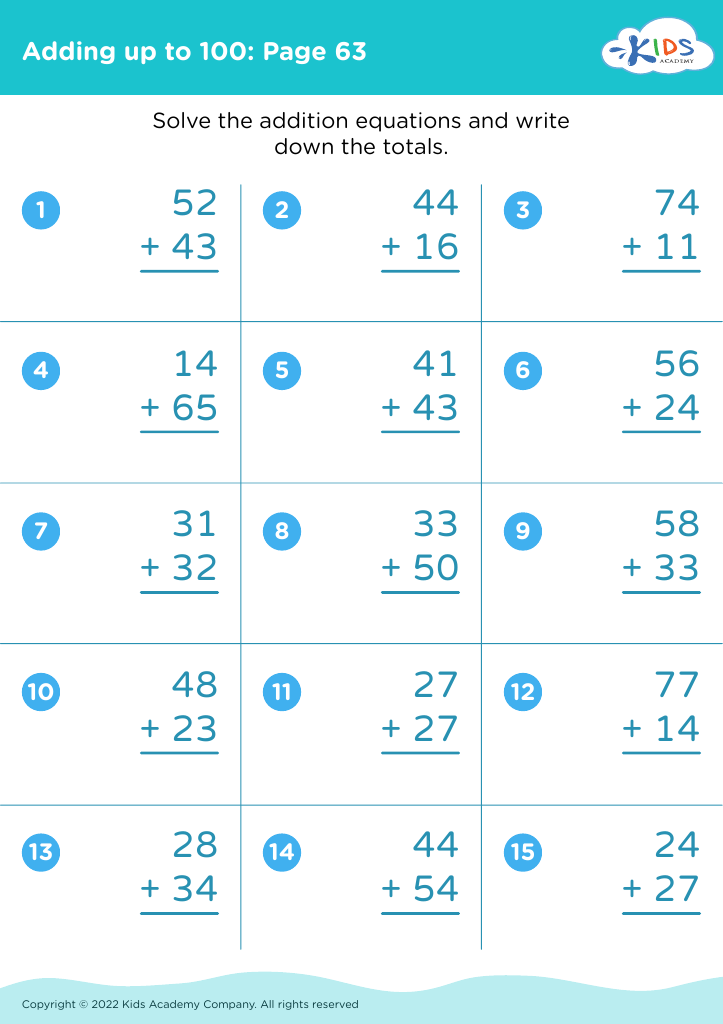
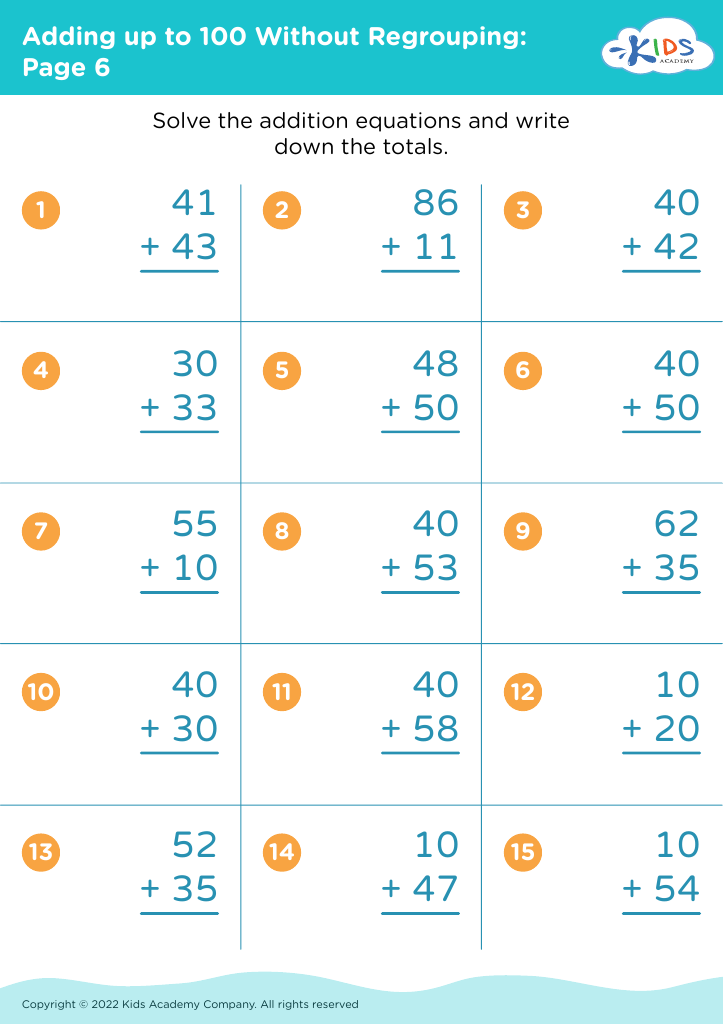
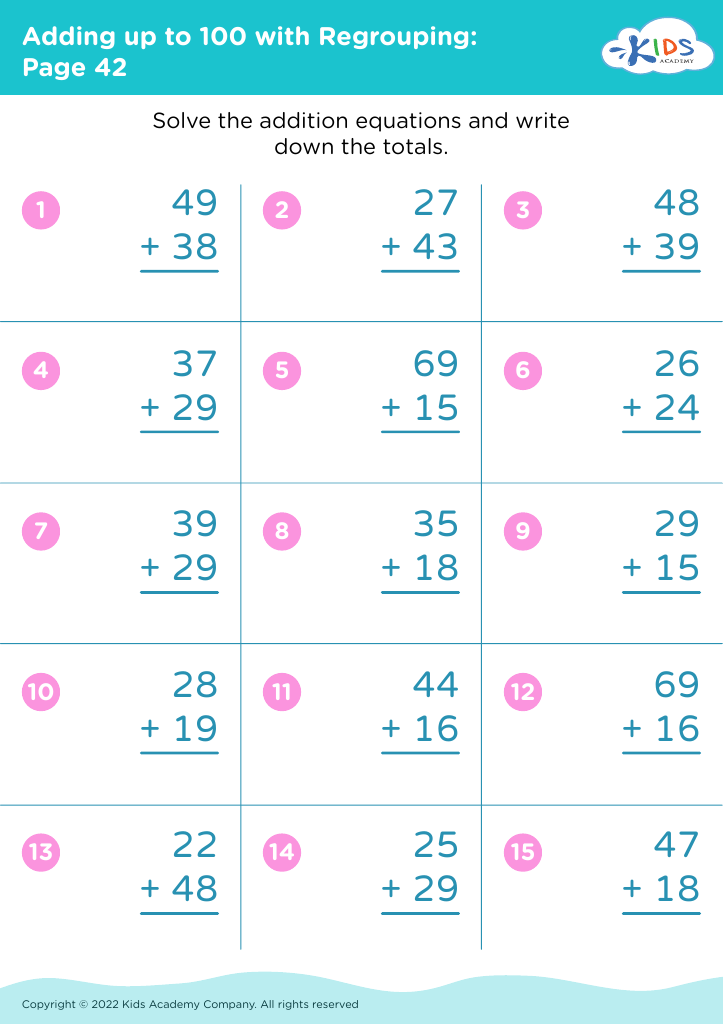
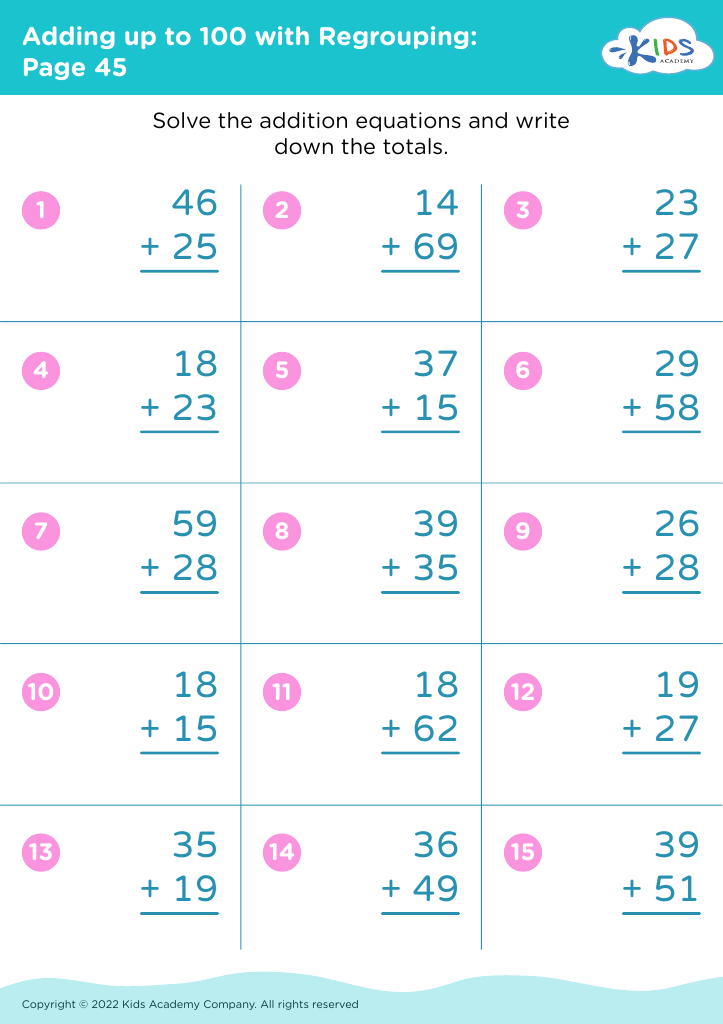
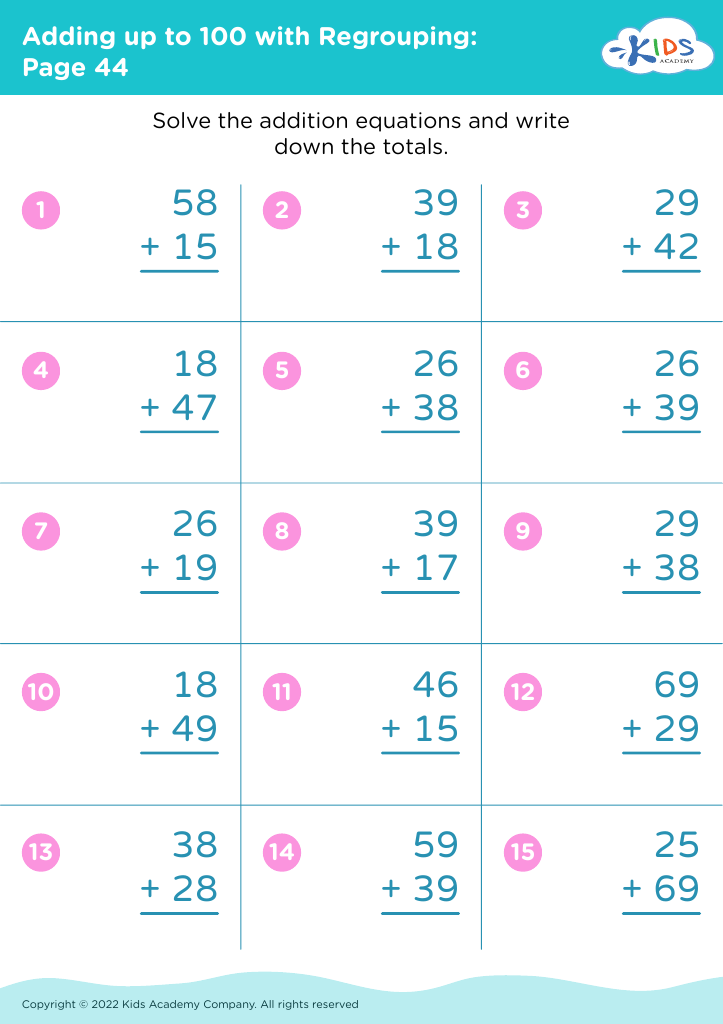
Welcome to our "Understanding Symmetry Adding Up to 100 Worksheets" for 8-year-olds! This engaging resource combines the fascinating concept of symmetry with essential math skills, helping young learners develop their number sense while reinforcing geometrical understanding. Our worksheets feature colorful visuals and interactive exercises that encourage students to identify symmetrical shapes and patterns while practicing addition up to 100. Ideal for classroom use or homework, these worksheets will spark creativity and critical thinking in children. Empower your child to master symmetry and addition in a fun and dynamic way, setting the groundwork for future mathematical success! Explore and download today!



%20(1).jpg)



Understanding symmetry and addition concepts, like adding up to 100, is crucial for 8-year-olds as it lays the foundation for advanced mathematical reasoning and problem-solving skills. Symmetry helps children recognize patterns and shapes, fostering spatial awareness and critical thinking. When they engage with symmetrical concepts, they learn to identify and appreciate balance in both mathematics and the world around them, enhancing their visual literacy.
Moreover, mastering addition to 100 equips children with essential computational skills. This milestone is not just about performing calculations; it also enables them to grasp larger number systems, patterns in arithmetic, and financial literacy concepts in real-life scenarios. As they learn to break numbers down into tens and units, they develop strategies for mental math, which can significantly boost their confidence in math class.
Lastly, early exposure to these concepts encourages a growth mindset, aiding in emotional and social development. Building these skills collaboratively with parents or teachers fosters an environment of support and curiosity. Thus, understanding symmetry and addition up to 100 is not merely an academic goal; it is an integral part of holistic child development that enhances their overall learning experience.








