
Vocabulary enhancement Adding up to 100 Worksheets for 8-Year-Olds
3 filtered results
Difficulty Level
Grade
Age
-
From - To
Subject
Activity
Standards
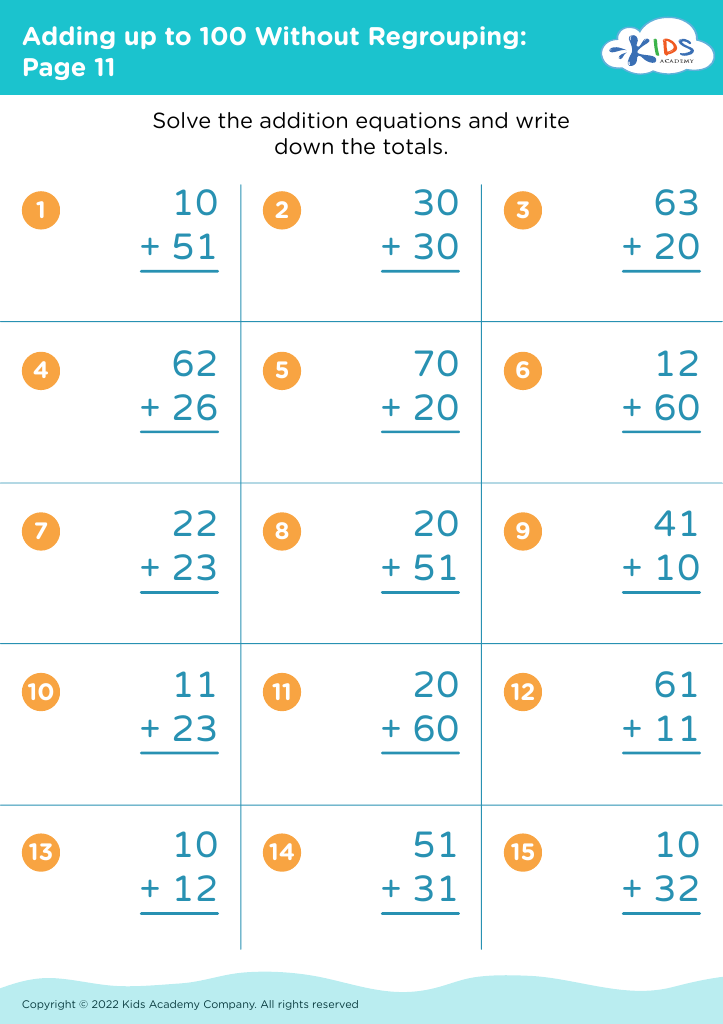
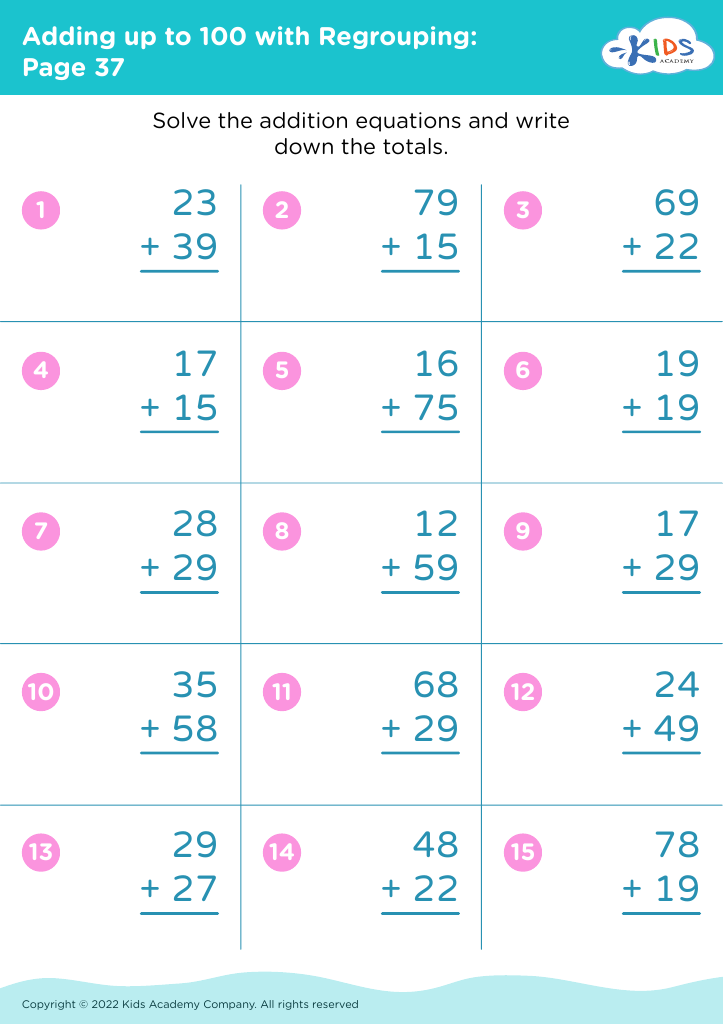
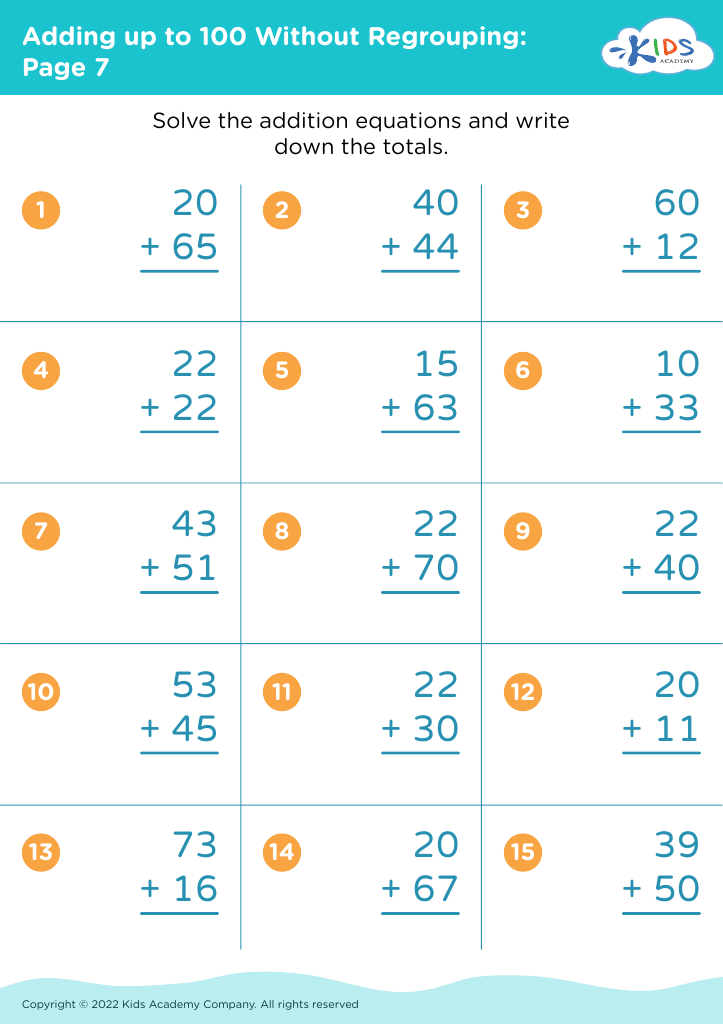
Boost your child's vocabulary with our "Vocabulary Enhancement: Adding up to 100 Worksheets" designed specifically for 8-year-olds! These engaging worksheets integrate mathematical concepts of addition while introducing new words and phrases in a fun, interactive way. Each worksheet is crafted to enhance language skills, making learning enjoyable and effective. Children will develop their vocabulary as they solve addition problems and participate in exciting activities. Ideal for classroom use or at-home learning, these resources will not only support math skills but also enrich your child's linguistic abilities. Download now and watch your child's vocabulary soar while they master adding up to 100!
Favorites
With answer key
Interactive
Join Kids Academy for Free
Who is primarily going to use this learning content?






%20(1).jpg)
Enhancing vocabulary for 8-year-olds is crucial for their overall academic and social development. At this age, children are transitioning from learning to read to reading to learn. A robust vocabulary enables them to comprehend more complex texts, engage in critical thinking, and express themselves clearly. This proficiency not only aids in their academic success but also builds confidence in communication, fostering participation in discussions and social interactions.
Vocabulary enhancement plays a key role in literacy skills. A diverse word bank helps children understand language nuances, leading to better writing abilities and more effective storytelling. Furthermore, a well-developed vocabulary lays the foundation for mastering subjects like science and math, as terminology becomes more intricate.
Parents and teachers should also recognize that vocabulary is linked to emotional intelligence and empathy. Distinguishing feelings and expressing thoughts requires a strong command of words, encouraging children to articulate their emotions and understand others better.
In a competitive world where communication is critical, prioritizing vocabulary development equips children with the tools they need for lifelong learning and adaptability. Thus, investing time in vocabulary enhancement ensures that children thrive academically and socially, setting them up for future success.








