Enhance comprehension Adding up to 50 Worksheets for 8-Year-Olds
5 filtered results
-
From - To
Unlock the full potential of your 8-year-old's math skills with our "Enhance Comprehension: Adding Up to 50" worksheets! Designed to reinforce addition concepts, these engaging activities help children master numbers through fun and interactive exercises. Each worksheet encourages critical thinking and problem-solving while building a solid foundation in math. As kids work through various problems, they not only improve their computation skills but also enhance their comprehension abilities. Perfect for home or classroom use, our worksheets cater to diverse learning styles, ensuring your child becomes confident in their math skills. Explore our carefully crafted resources today and make learning math enjoyable!
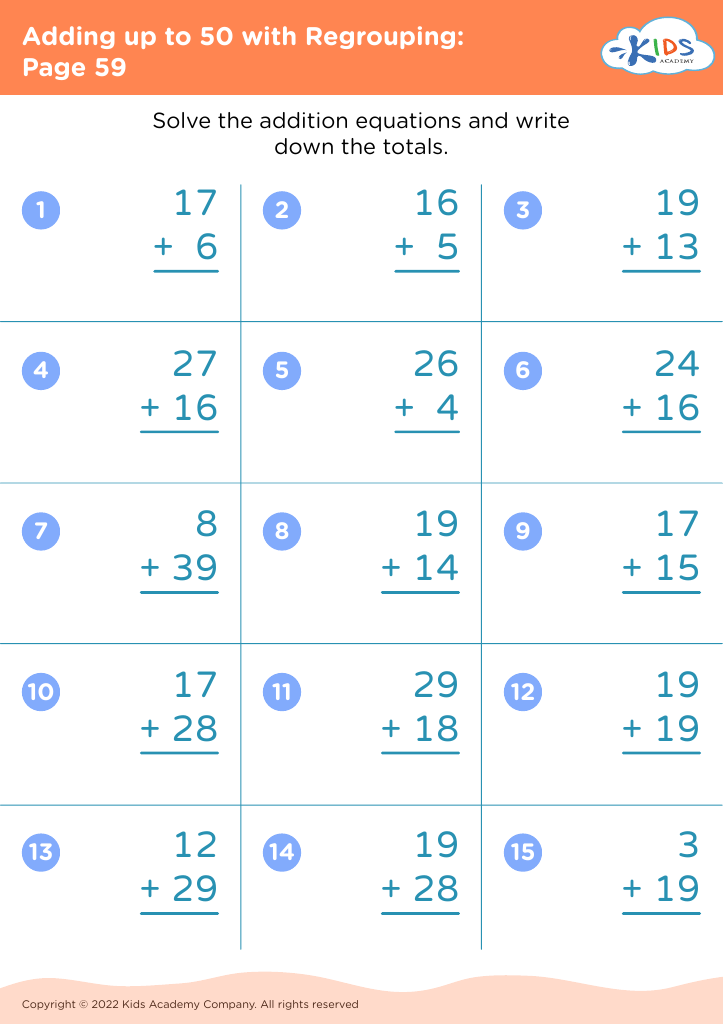
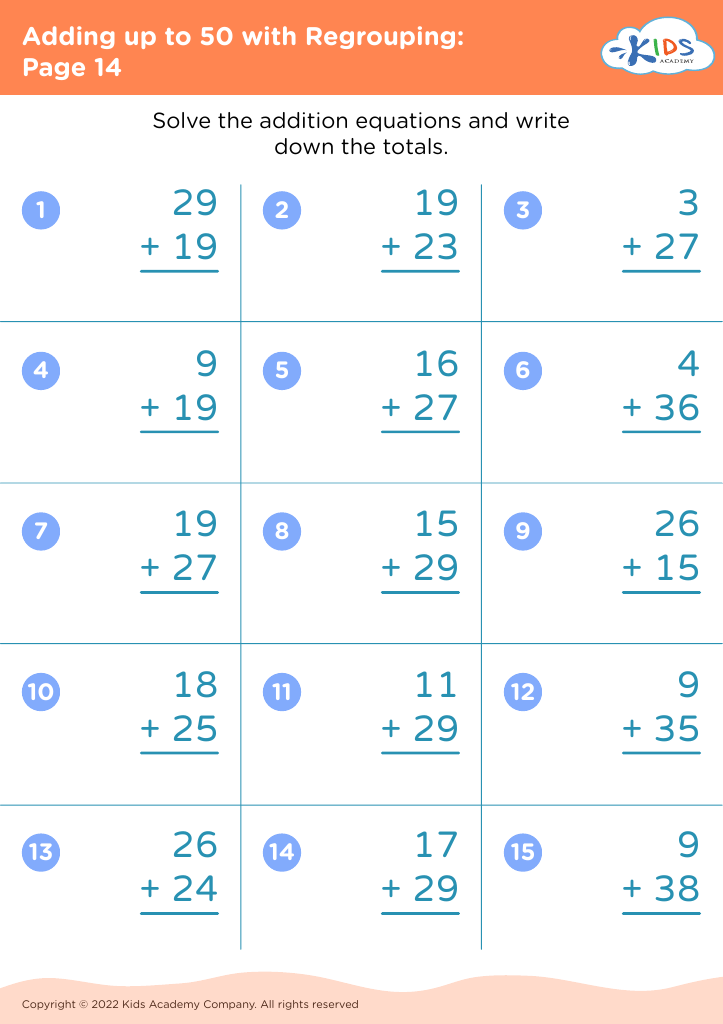
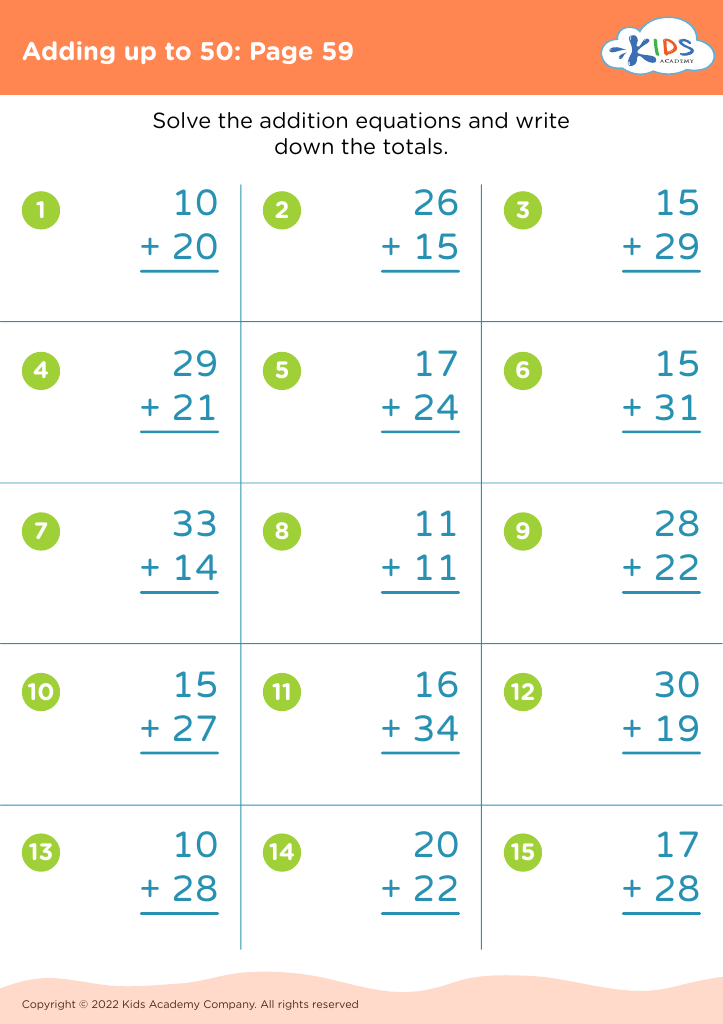
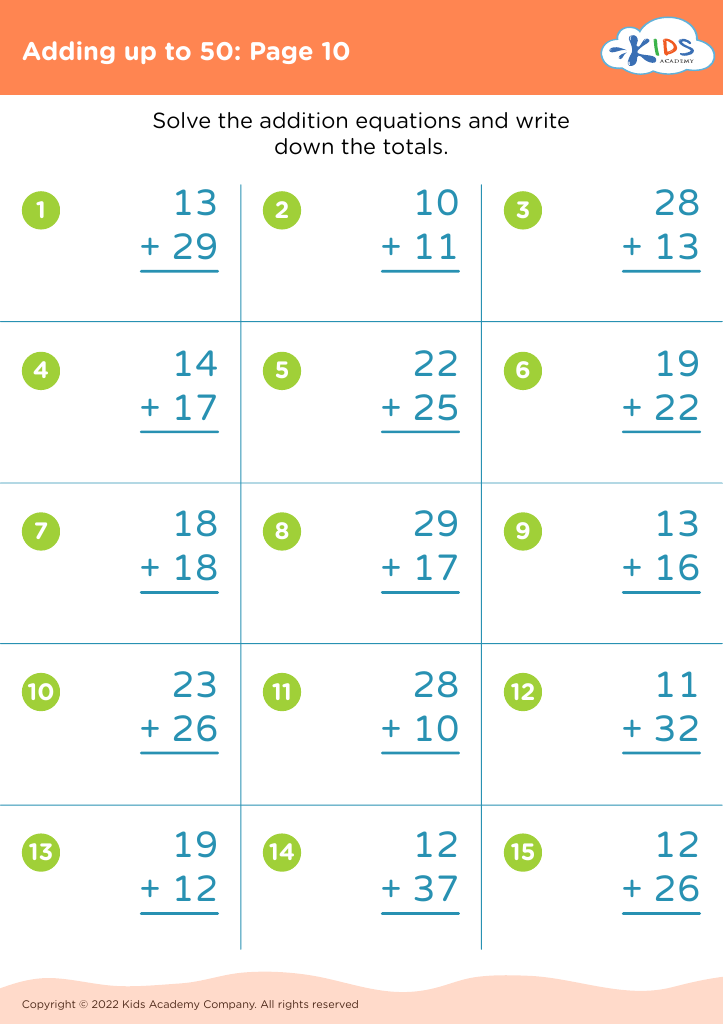
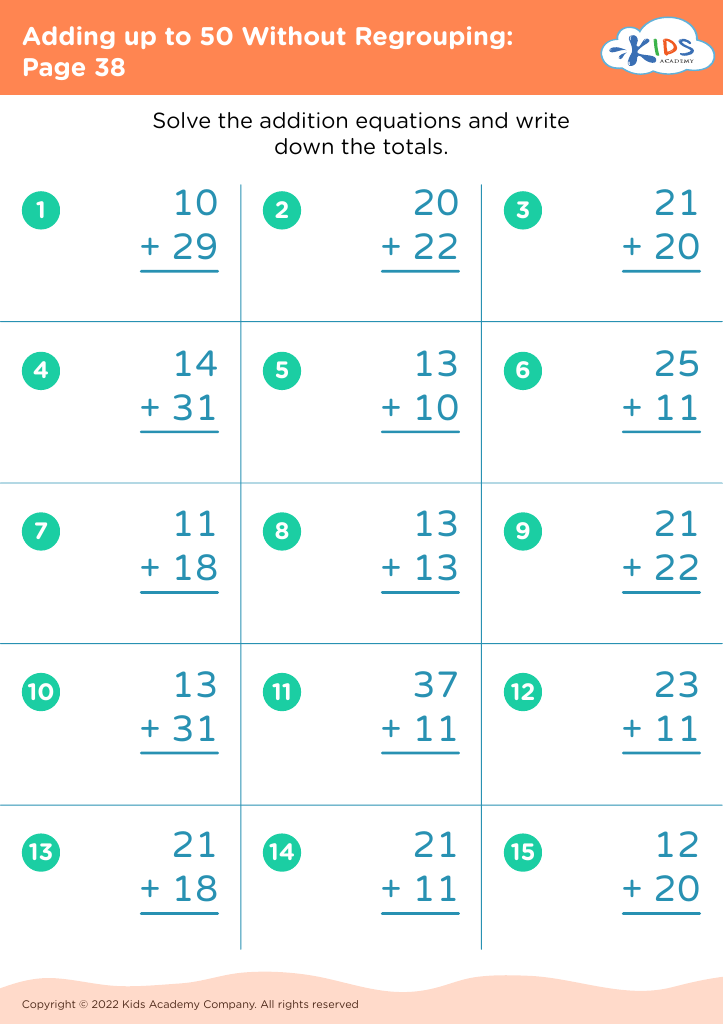




Enhancing comprehension and mathematical skills such as "adding up to 50" for 8-year-olds is crucial for several reasons. First, comprehension lays the foundation for future learning. At this age, children are making significant cognitive strides; mastering addition helps them understand more complex mathematical concepts later on.
Second, skills in comprehending and solving numeracy problems foster critical thinking and problem-solving abilities. This not only applies to mathematics but also translates into other subjects and daily life situations. For example, it can aid in budgeting or resource management as they grow.
Moreover, developing strong comprehension skills improves a child's confidence, enabling them to participate more actively in classroom discussions and activities. When children feel competent in math, they are more likely to enjoy these subjects and pursue them with enthusiasm, reducing the likelihood of math anxiety in the future.
Finally, parents and teachers play a significant role in shaping a child's attitude towards learning. By investing time and effort into enhancing comprehension and numeracy skills, they create a supportive environment that promotes lifelong learning habits. In essence, fostering these skills is an investment in a child’s academic success and personal development.








