Understand fractions Adding up to 50 Worksheets for 8-Year-Olds
9 filtered results
-
From - To
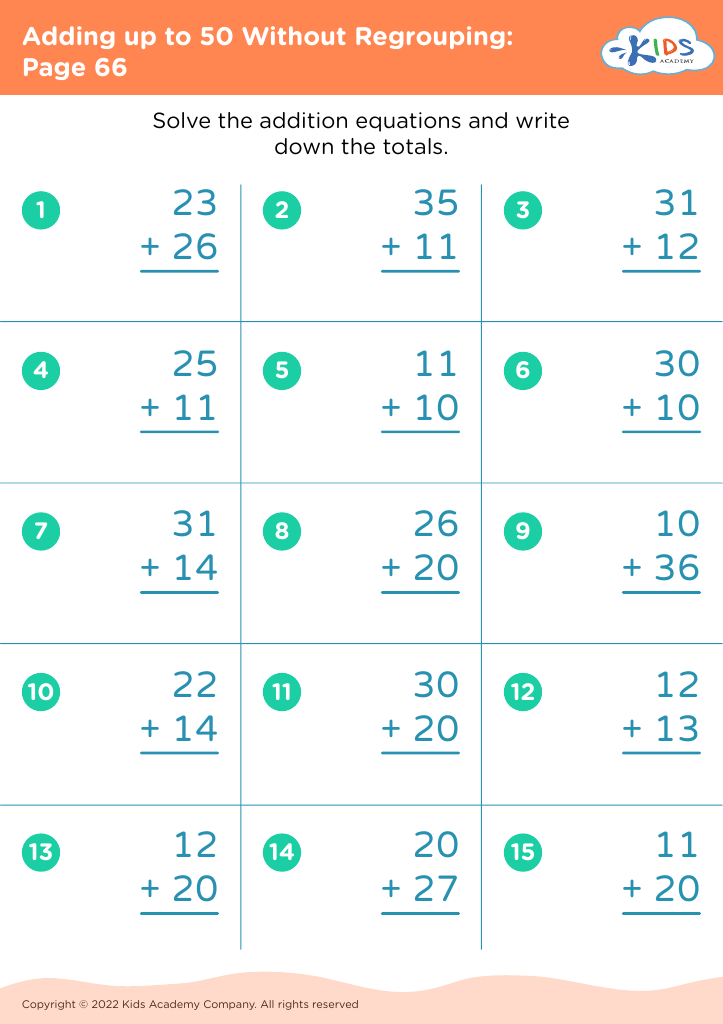
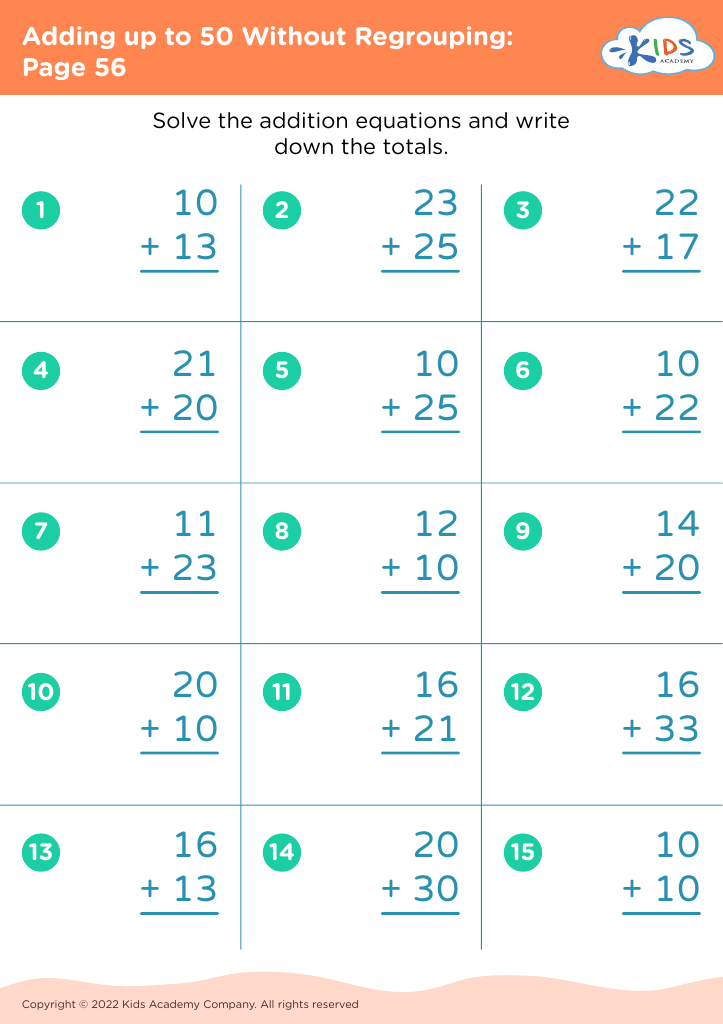
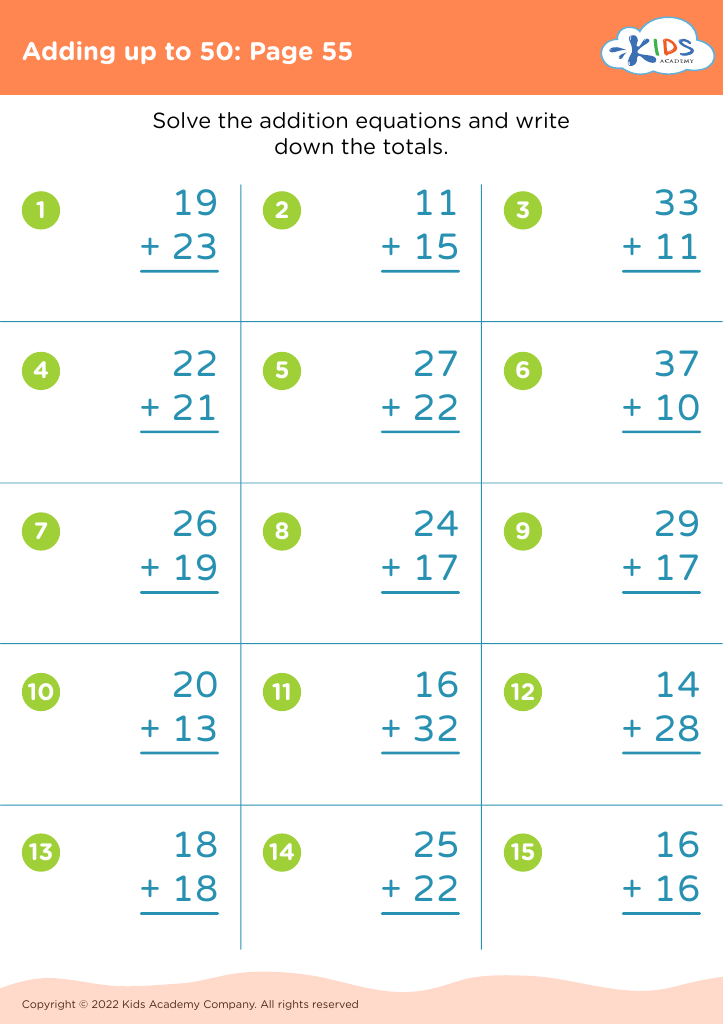
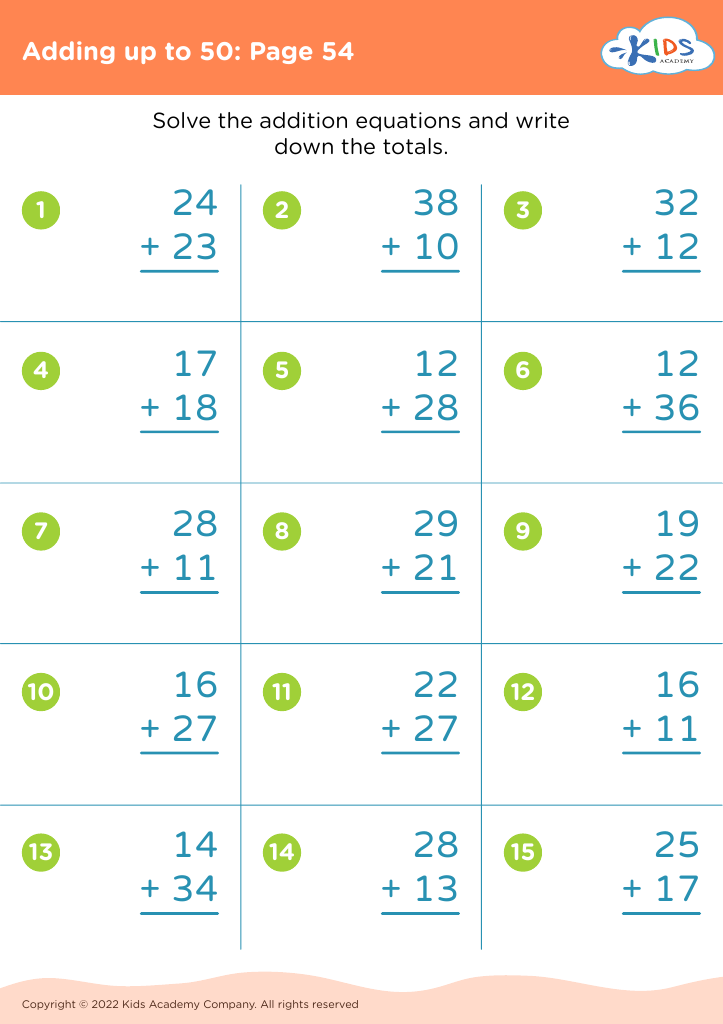
Our "Understand Fractions Adding up to 50 Worksheets for 8-Year-Olds" are expertly designed to blend math mastery with interactive learning. Perfect for young learners, these worksheets help kids grasp fractions and addition up to 50 through engaging exercises. Each activity aims to build a solid mathematical foundation while making learning fun and effective. Whether used in the classroom or at home, these resources foster critical thinking and problem-solving skills. Develop your child's confidence in math with our easy-to-follow, educationally rich worksheets tailored to meet the needs of 8-year-olds. Ideal for guiding your child towards math success!
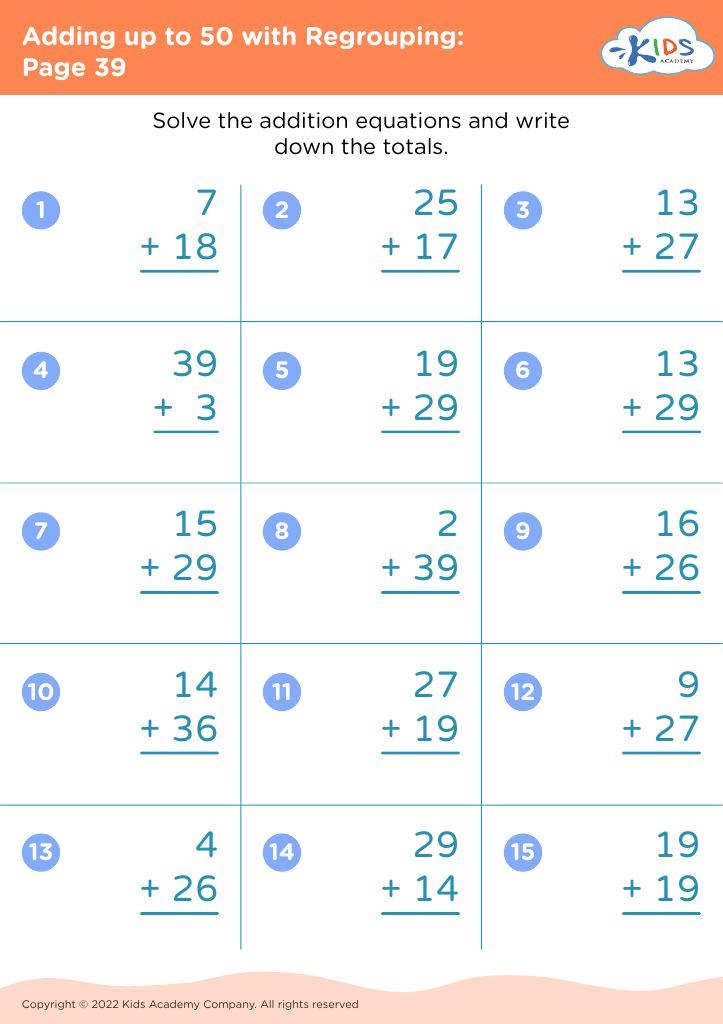
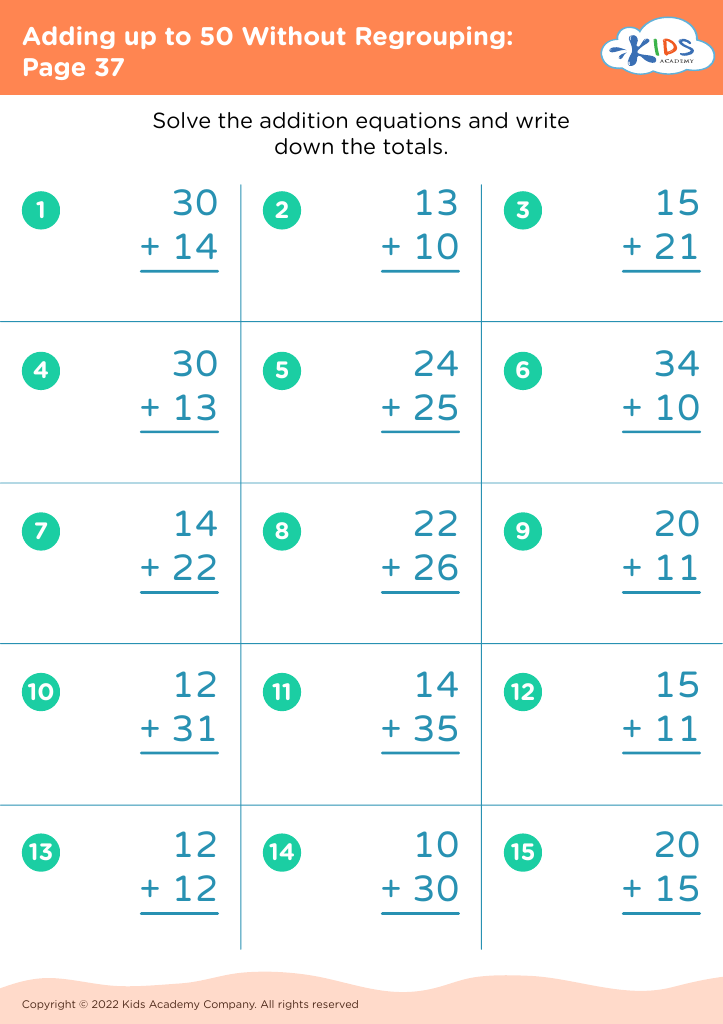
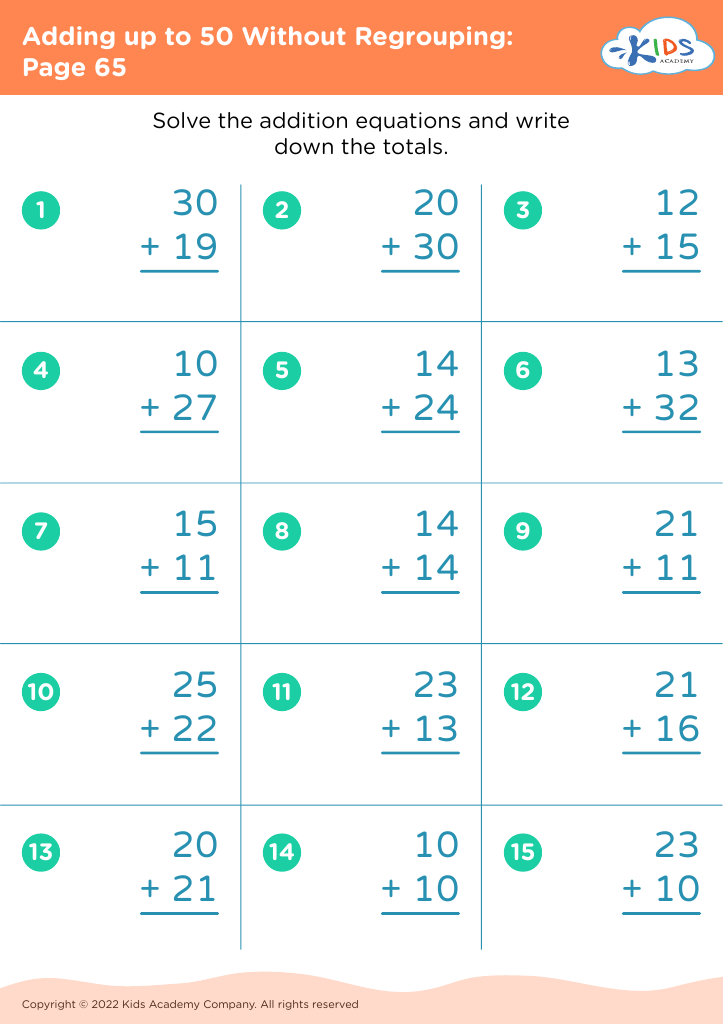
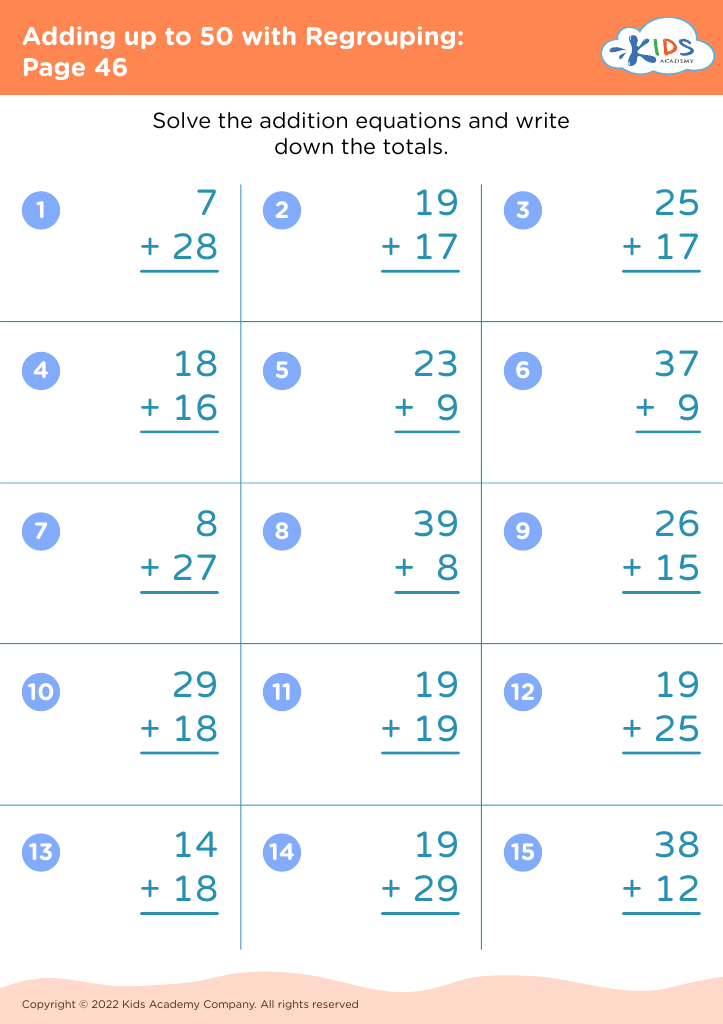
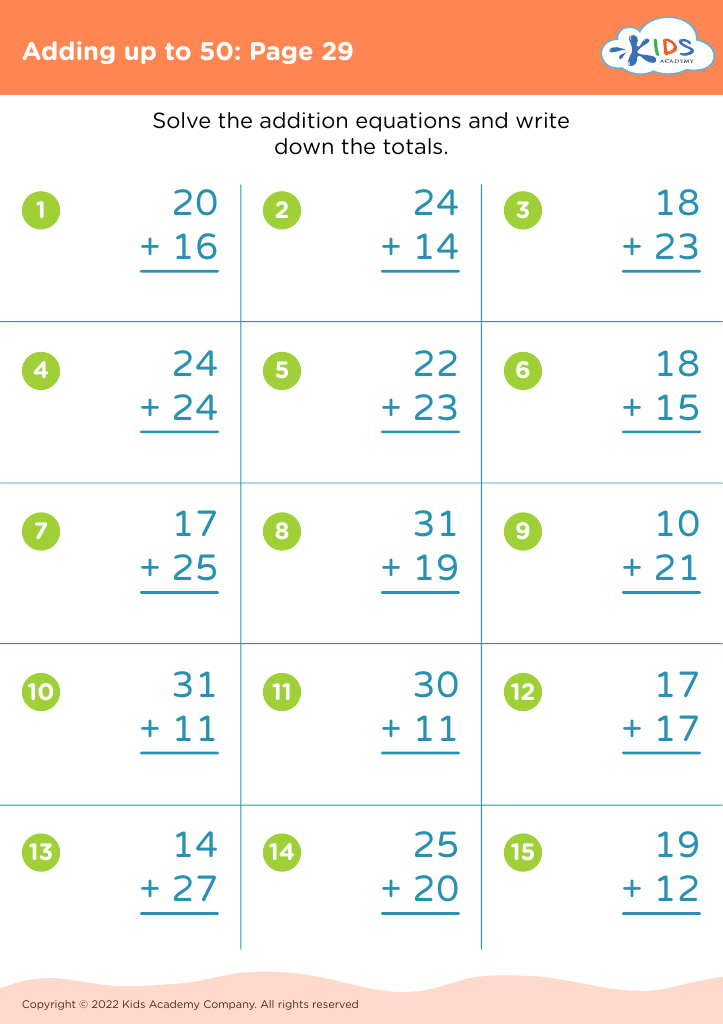




Understanding fractions is a foundational math skill that significantly impacts a child's ability to perform more complex mathematical operations in the future. At around 8 years old, children typically transition from basic whole number arithmetic to concepts like fractions. These principles help develop their number sense, a crucial component of mathematical literacy.
Fractions represent parts of a whole and are essential for understanding proportions, ratios, and divisions — skills used in everyday life scenarios like cooking, sharing, and time management. Parents and teachers should prioritize fraction education to ensure kids grasp these ideas early, facilitating smoother learning in later subjects like algebra and geometry.
Being able to add fractions up to fifty underscores the importance of operational fluency with fractions. It strengthens arithmetic capabilities and highlights patterns in numbers, creating a solid mathematical foundation. For young learners, it’s also an opportunity to cultivate persistence and problem-solving skills, encouraging a growth mindset.
Moreover, early proficiency in fractions often corresponds with better performance in other areas of math and science, enhancing overall academic success and boosting confidence. Ultimately, supporting children in understanding fractions early enables more successful educational journeys, providing essential skills that are valuable throughout their lives.








