Filters

15 filtered results

Clear all filters
Favorites
With answer key
Interactive

15 filtered results

Difficulty Level

Grade


Enhance your child's math abilities with our "Cognitive Development Addition & Subtraction Worksheets for 8-Year-Olds". Designed to complement your child’s school curriculum, these worksheets focus on boosting cognitive skills through engaging exercises. They help children master fundamental math concepts, improve problem-solving techniques, and build confidence in addition and subtraction. Ideal for both classroom and at-home learning, each worksheet incorporates fun and challenging activities tailored to an 8-year-old’s developmental stage. Start building a strong math foundation for your child by integrating these resources into their daily practice routine. Ensure your child thrives academically with structured, enjoyable, and effective math practice.
Check out this FREE Trial Lesson on Addition & Subtraction for age 8!

Enrichment

Favorites
With answer key
Interactive
  • 8
  • Cognitive Development
  • Addition & Subtraction
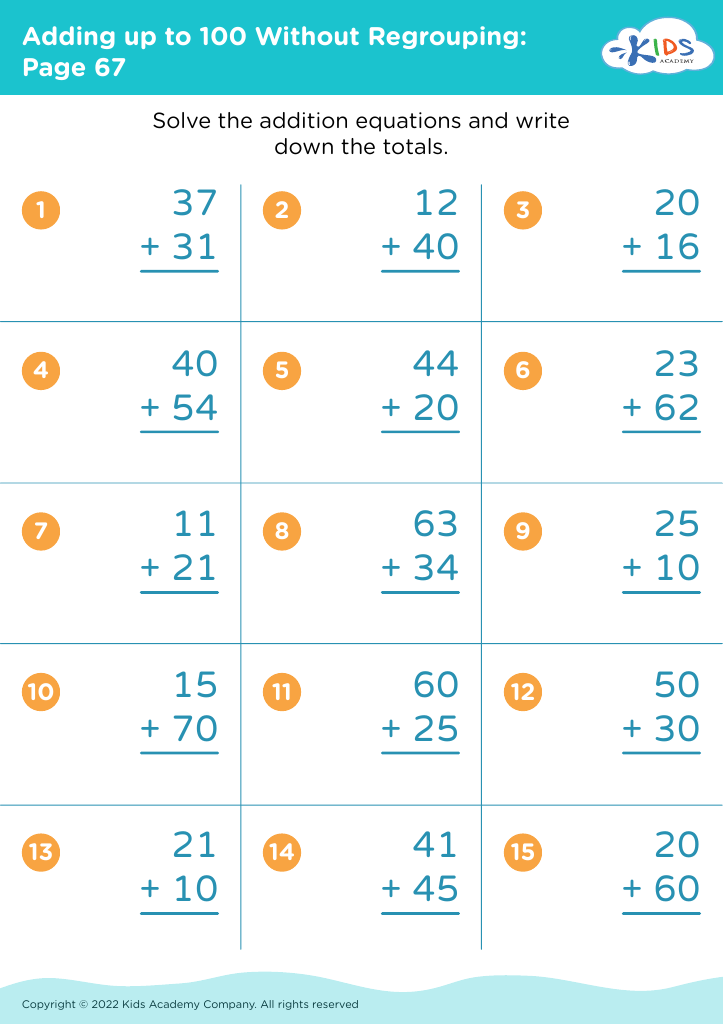
Adding up to 100 Without Regrouping: Page 67
Worksheet
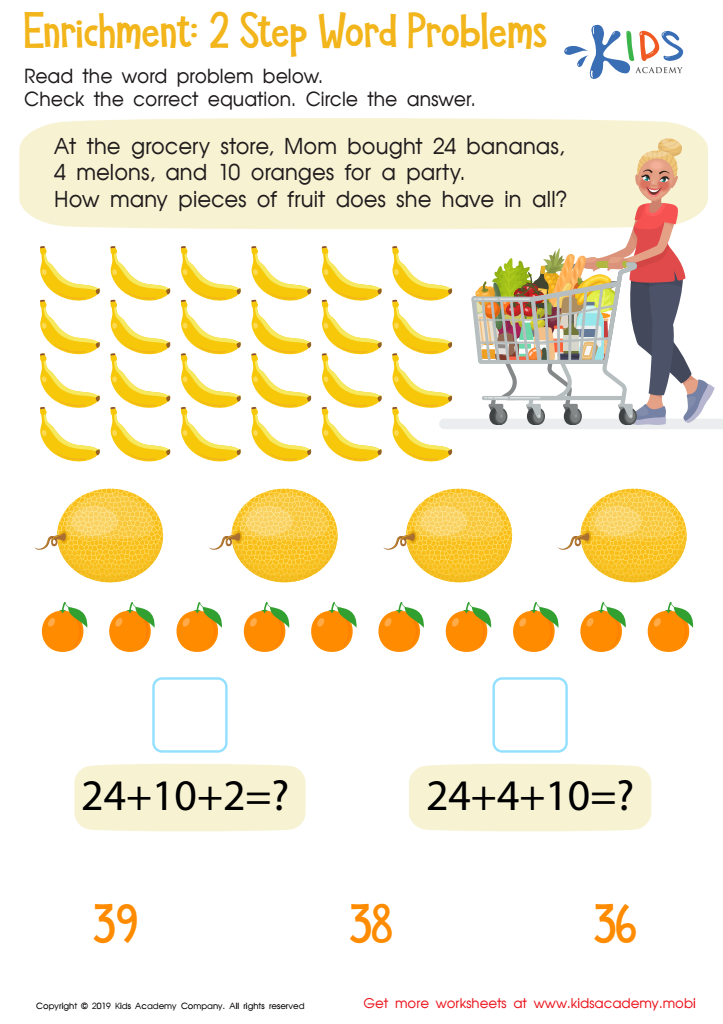
Enrichment -2 Step Word Problems Worksheet

Enrichment -2 Step Word Problems Worksheet

Help your students learn math easier and faster with this colorful worksheet. Read the word problem and then guide them in checking the correct equation and finding the answer. Your students will benefit from the extra help, as they work through new concepts each day.
Enrichment -2 Step Word Problems Worksheet
Worksheet
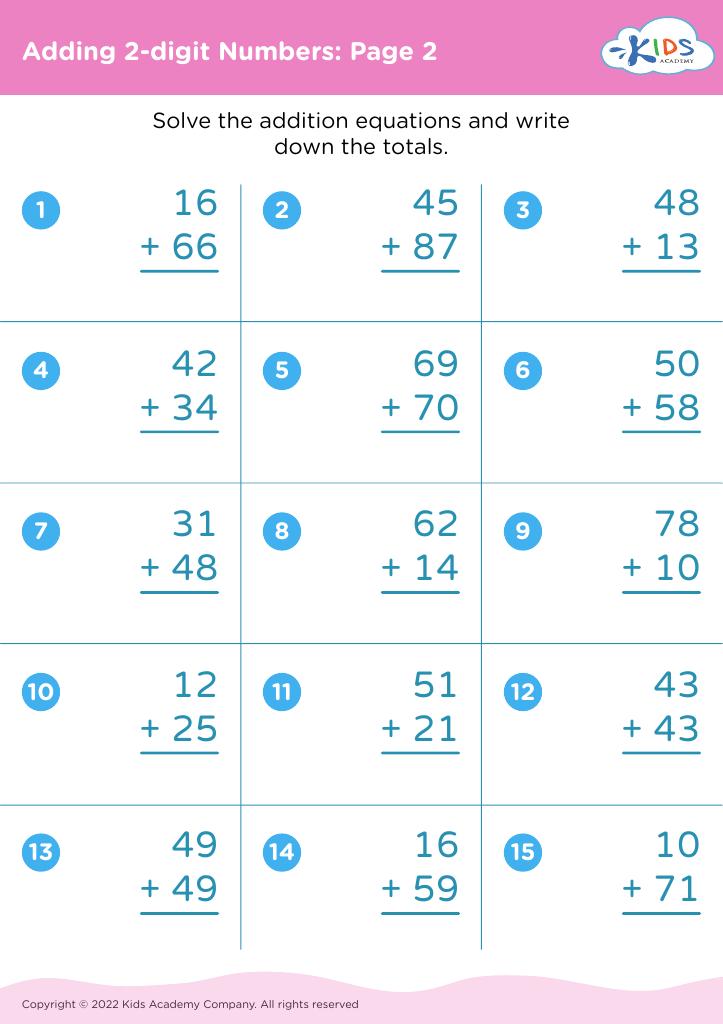
Adding 2-digit Numbers: Page 2

Adding 2-digit Numbers: Page 2

Adding 2-digit Numbers: Page 2
Worksheet
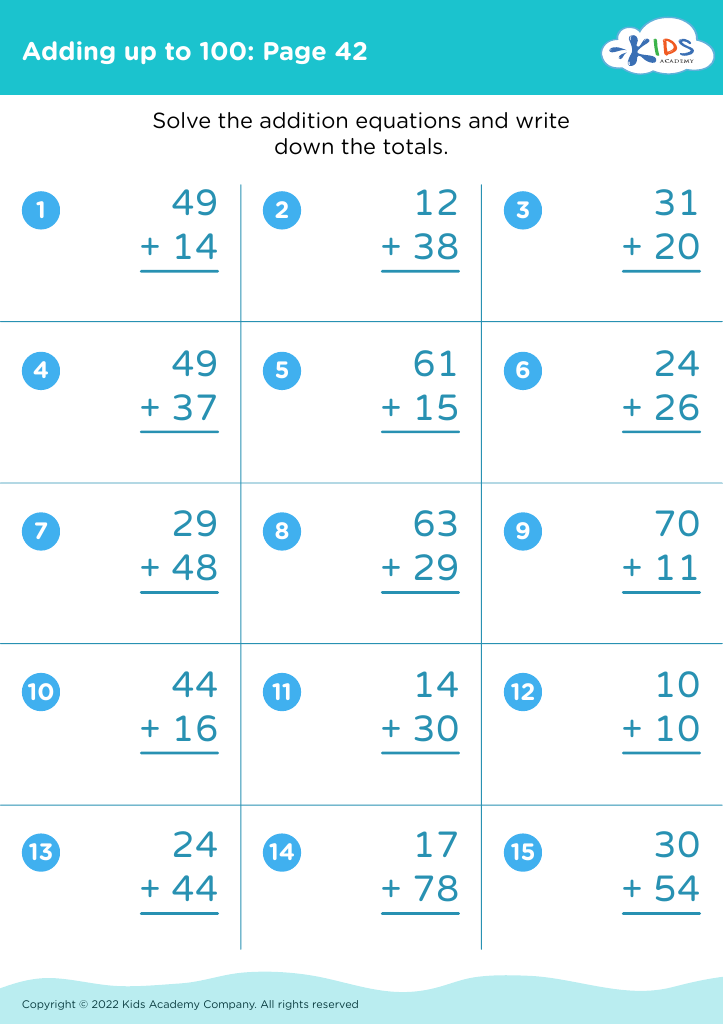
Adding up to 100: Page 42

Adding up to 100: Page 42

Adding up to 100: Page 42
Worksheet
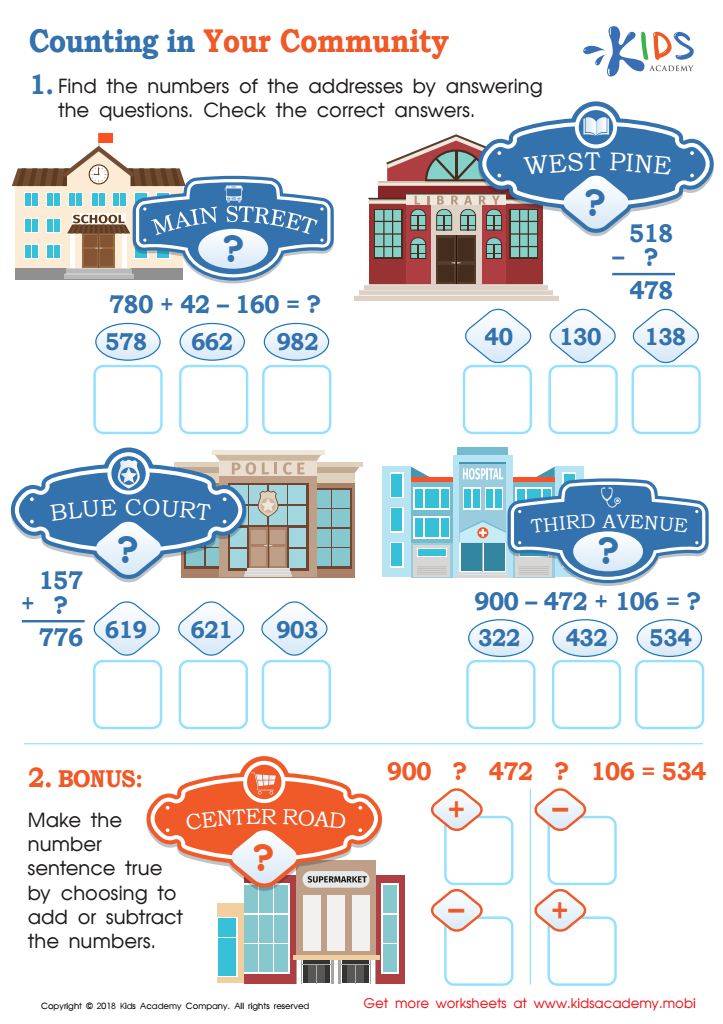
Counting in Your Community Worksheet
Counting in Your Community Worksheet

Introduce your kids to the idea of a community, where different people and buildings co-exist, each playing their part for the community's progress. Ask them to name the buildings they see in their community. Then work through this worksheet to find the numbers of the addresses by answering the questions. Check the answers once they've solved the equations.
Counting in Your Community Worksheet
Worksheet
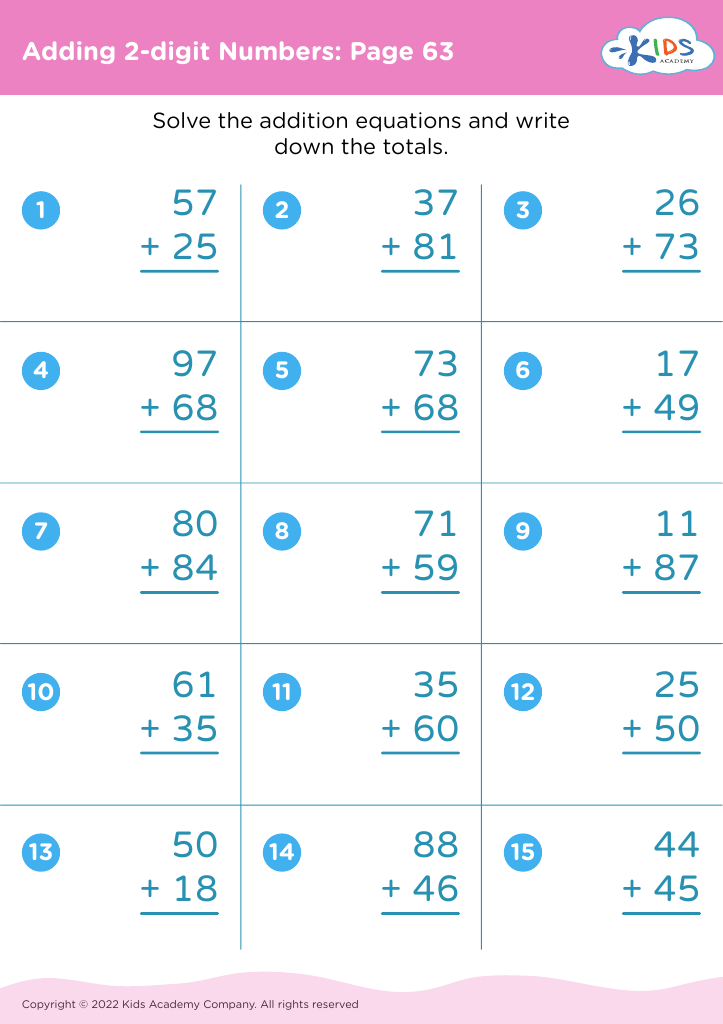
Adding 2-digit Numbers: Page 63

Adding 2-digit Numbers: Page 63

Adding 2-digit Numbers: Page 63
Worksheet
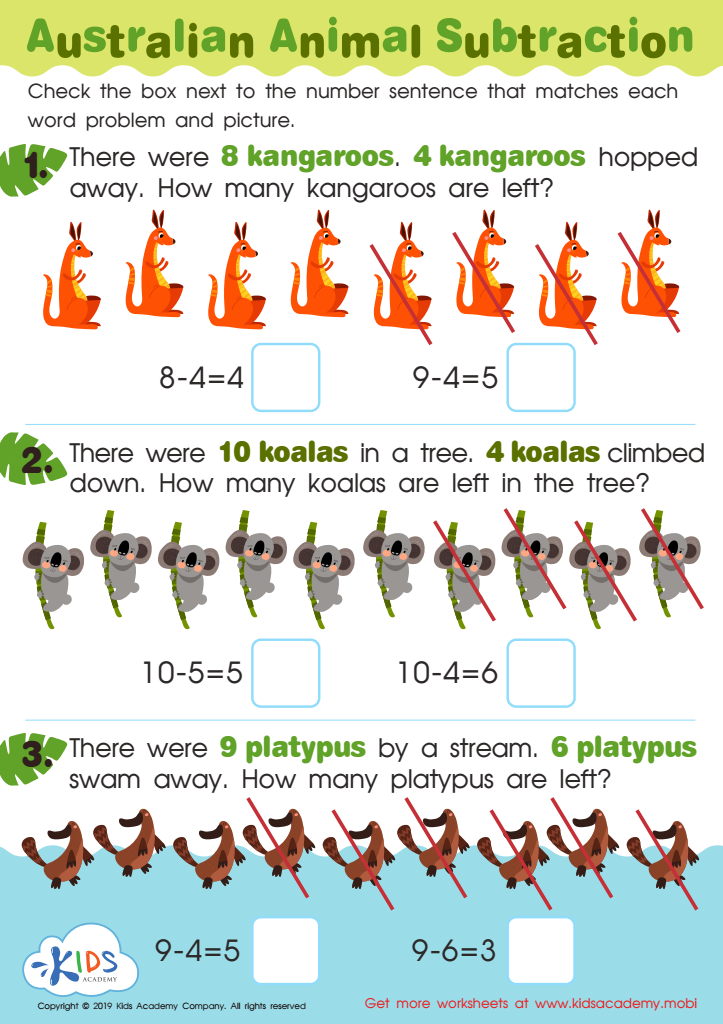
Australian Animal Subtraction Worksheet
Australian Animal Subtraction Worksheet
Test your child's wildlife knowledge. Ask them to name animals indigenous to Australia or other countries. Show them the animals in this worksheet and have them match each word problem and picture with the correct number sentence.
Australian Animal Subtraction Worksheet
Worksheet
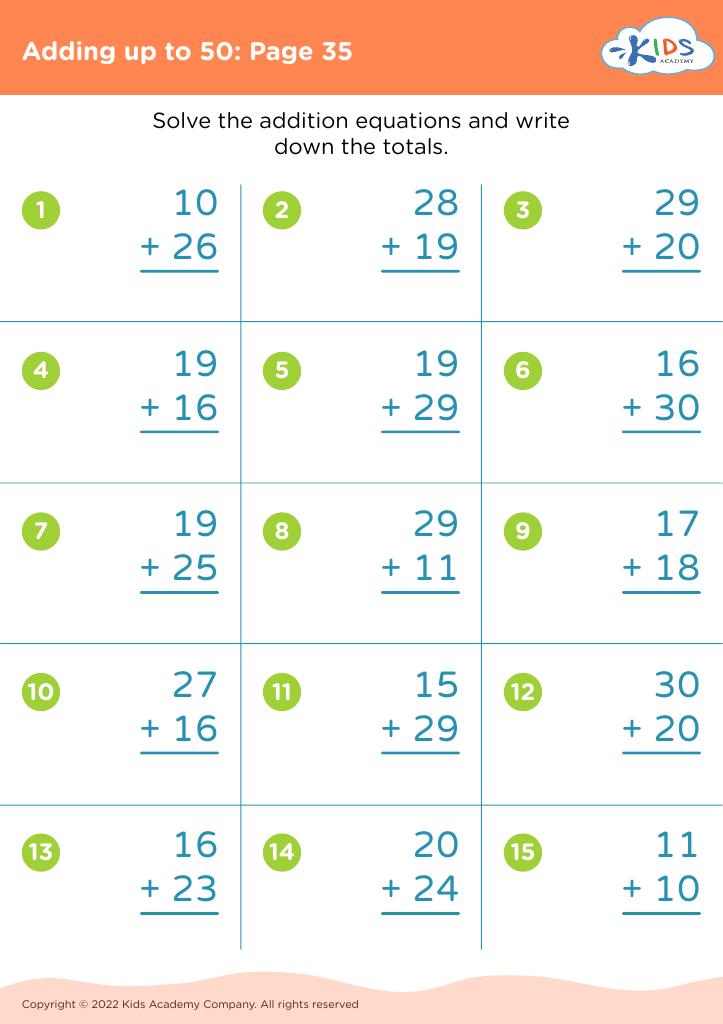
Adding up to 50: Page 35

Adding up to 50: Page 35

Adding up to 50: Page 35
Worksheet
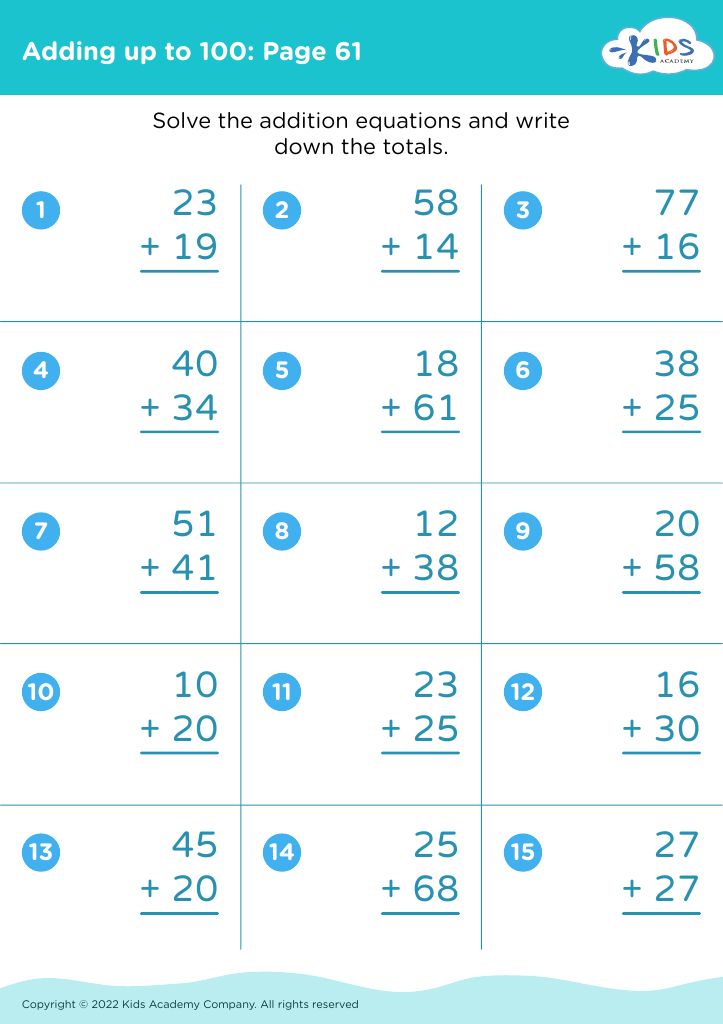
Adding up to 100: Page 61

Adding up to 100: Page 61

Adding up to 100: Page 61
Worksheet
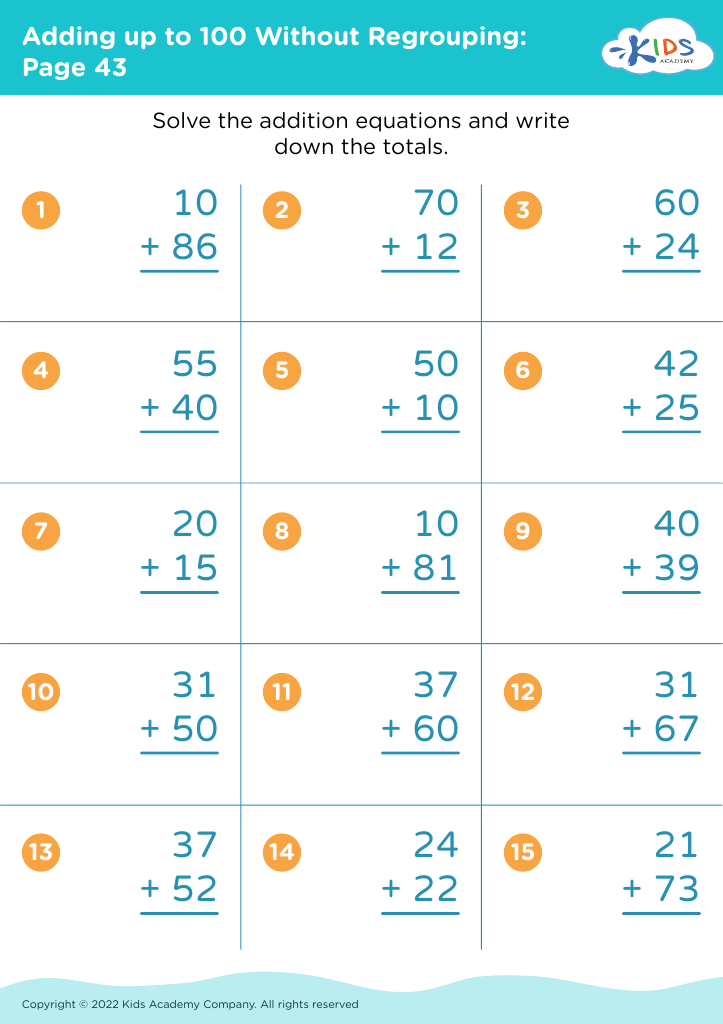
Adding up to 100 Without Regrouping: Page 43
Worksheet
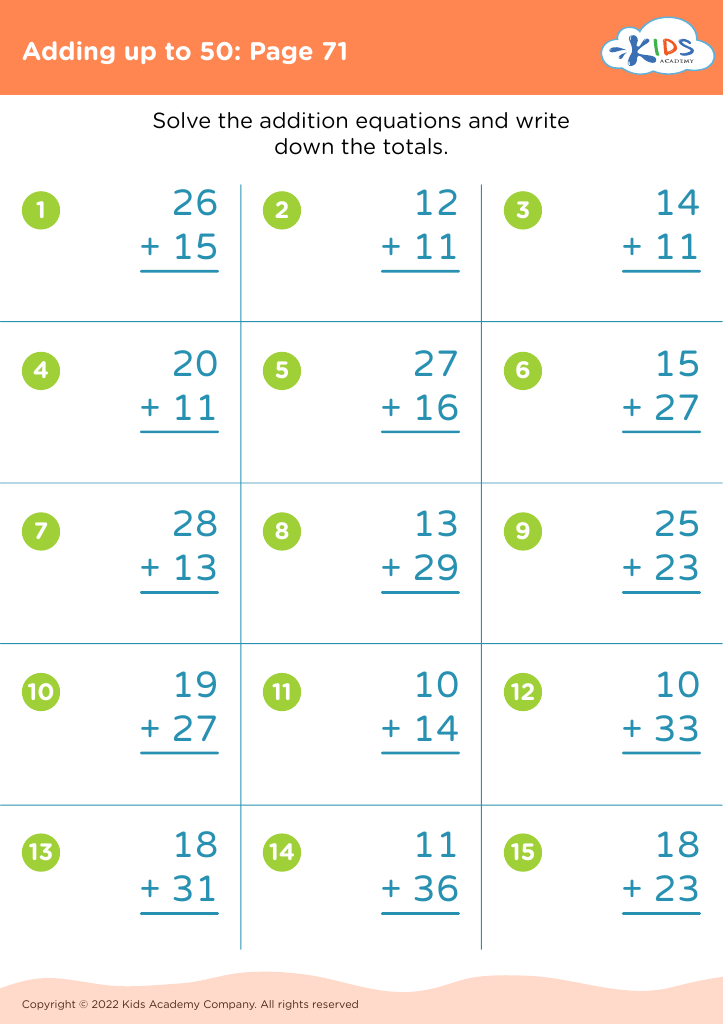
Adding up to 50: Page 71

Adding up to 50: Page 71

Adding up to 50: Page 71
Worksheet
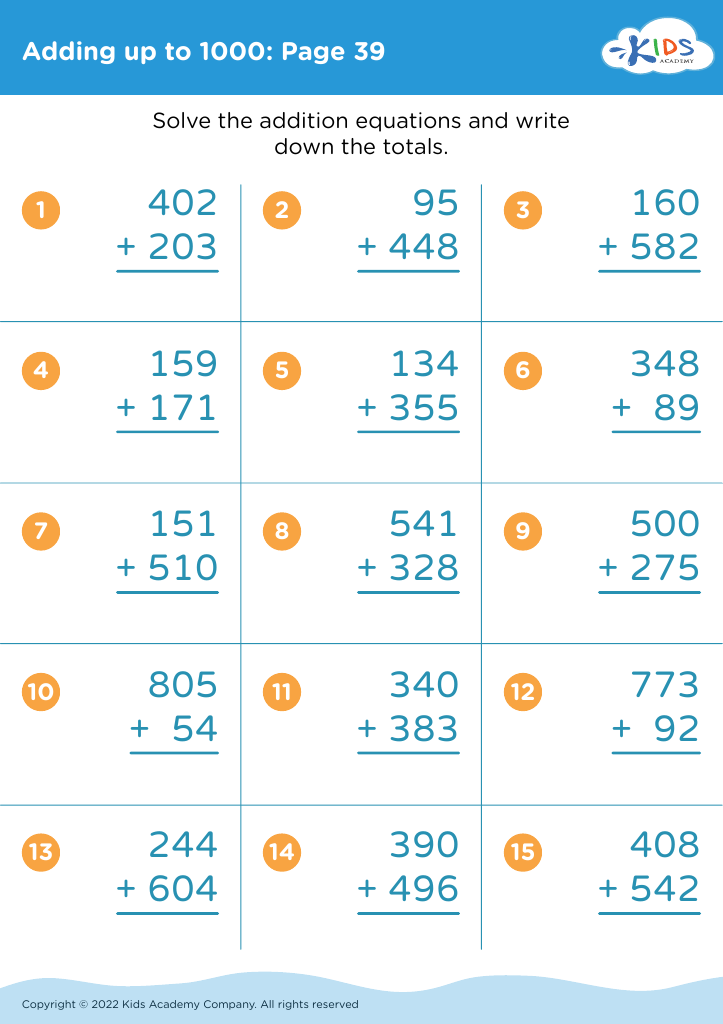
Adding up to 1000: Page 39

Adding up to 1000: Page 39

Adding up to 1000: Page 39
Worksheet
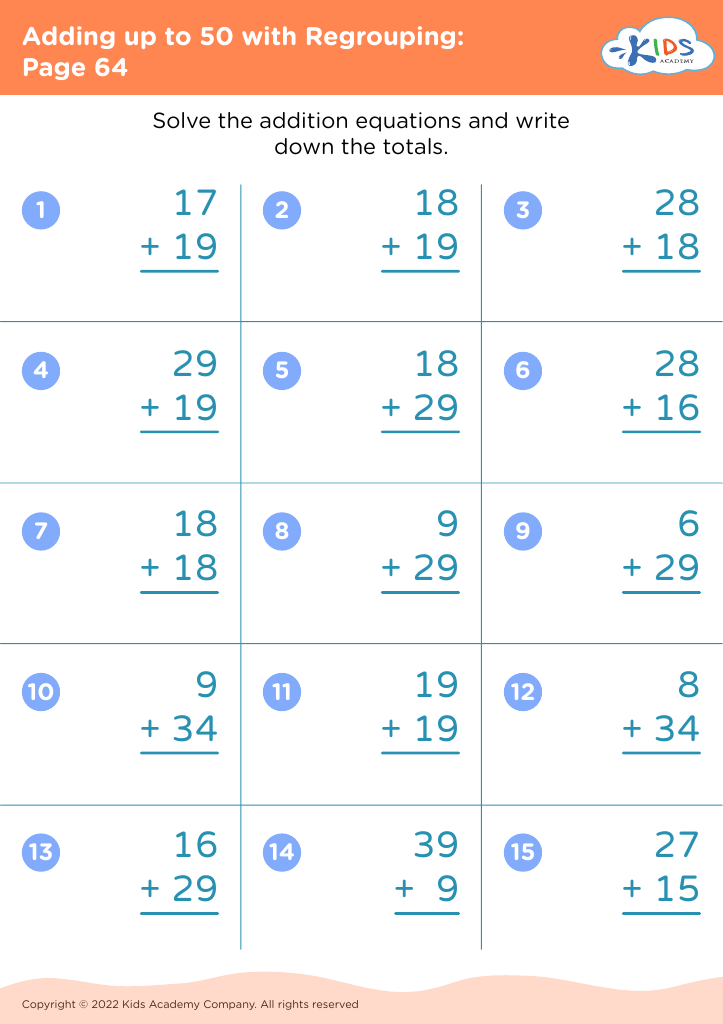
Adding up to 50 with Regrouping: Page 64
Worksheet
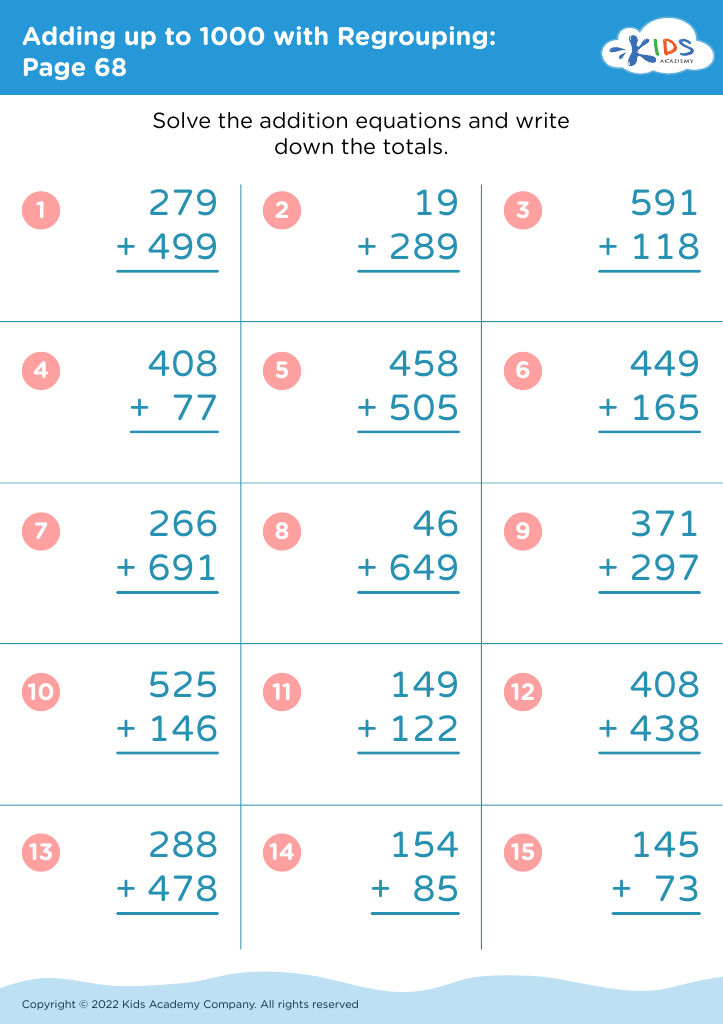
Adding up to 1000 with Regrouping: Page 68
Worksheet
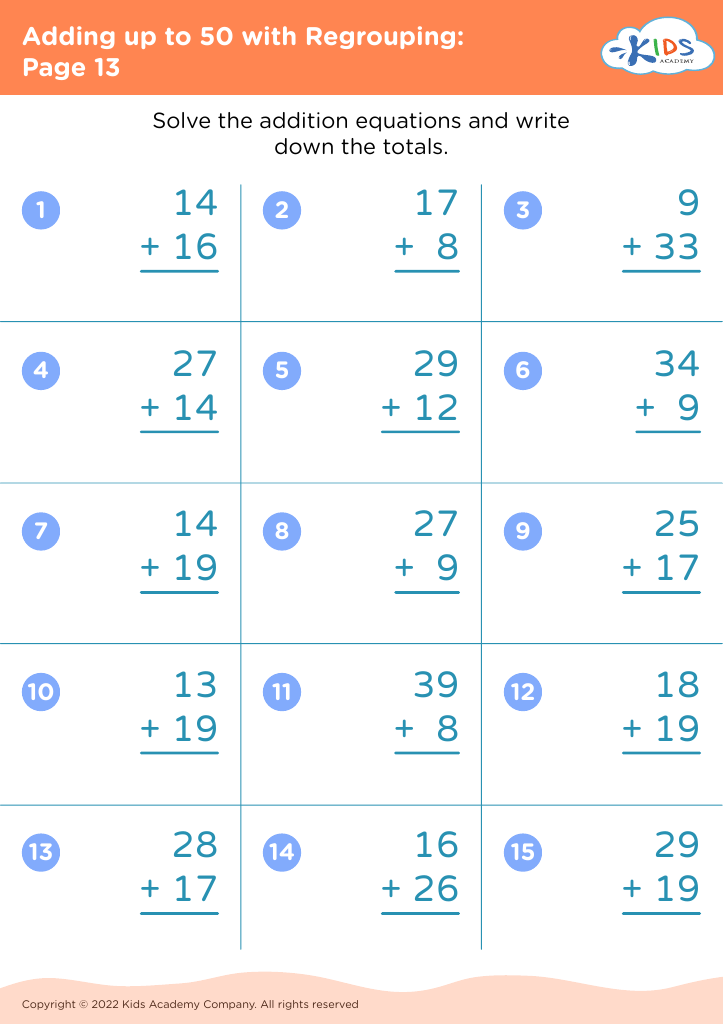
Adding up to 50 with Regrouping: Page 13
Worksheet


Cognitive development in addition and subtraction for 8-year-olds is crucial as it lays the foundational stone for higher-level math skills and overall academic achievement. At this age, children are in Piaget’s concrete operational stage, which means they are developing the ability to think logically about concrete events. Mastering addition and subtraction is not merely acquiring an ability to manipulate numbers; it instills understanding of key concepts like place value, arithmetic fluency, and problem-solving strategies.

Parents and teachers should prioritize this aspect of cognitive development because it significantly contributes to a child's confidence in handling math, ultimately determining their attitude toward the subject through their school years and beyond. Well-developed math skills translate into more than just academic competence; they enable critical thinking and logical reasoning, assisting in everyday decision-making and problem-solving tasks.

Additionally, failure to attain proficiency in these basic operations can lead to math anxiety, impeding the child's ability to undertake more complex mathematical concepts in the future. Practicing addition and subtraction helps sharpen their memory, attention, and executive functioning as well, all of which are essential cognitive skills that support other learning areas. Integrated, engaging math experiences encourage persistence, adaptability, and the confident application of knowledge — invaluable traits in both academic and real-world settings.